Prepare the dry ingredients. In a large bowl, sift the all-purpose flour and 100g of powdered sugar. Sifting is important as it aerates the ingredients and removes any lumps, resulting in a more delicate cake texture. Add two pinches of salt and mix everything thoroughly with a whisk or spoon to ensure the ingredients are evenly distributed.
Description
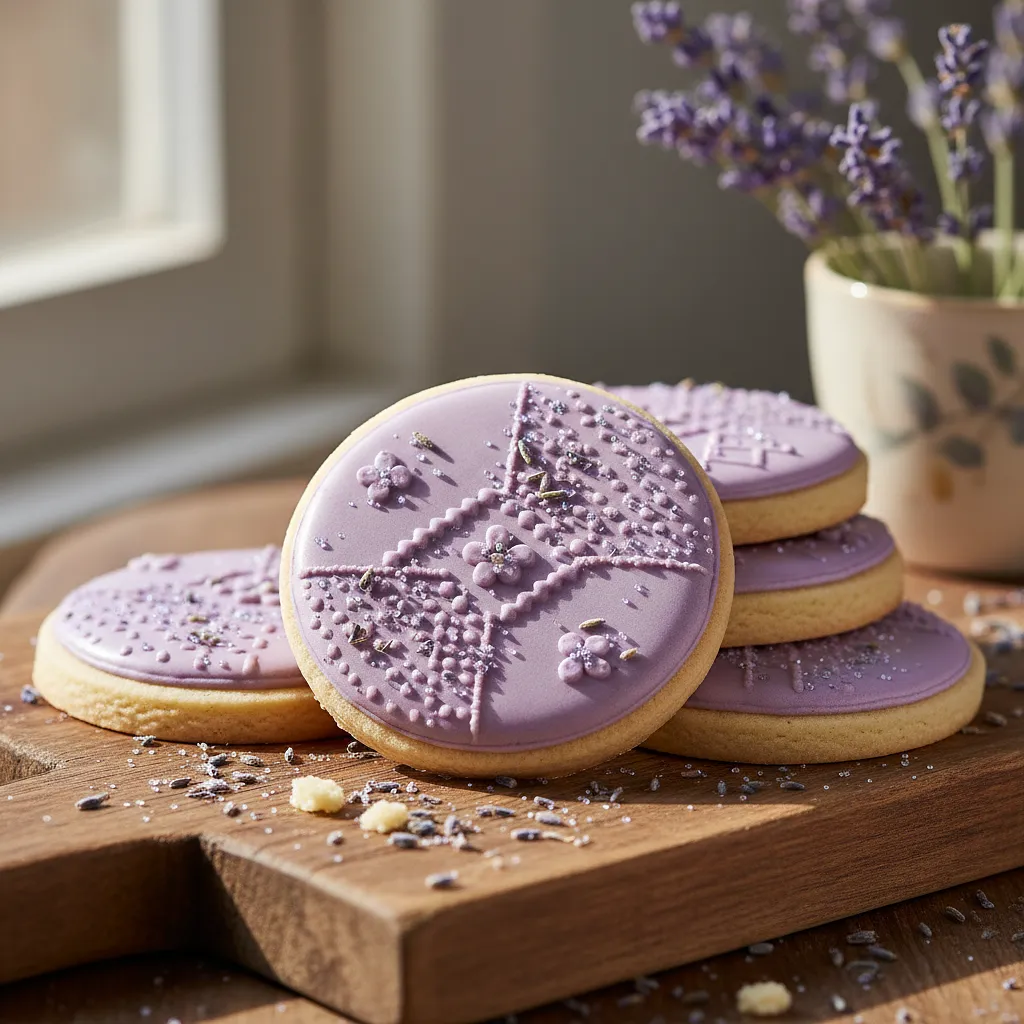
Here is a recipe that combines a love for baking with a passion for precision and modern design. Precision Pixel Cookies are small, square, buttery wonders that retain perfectly sharp edges after baking, becoming a canvas for your creativity. Their flavor is classic and deeply buttery, with a subtle hint of vanilla, and the crumbly texture literally melts in your mouth. The real magic begins with decoration – we cover them with velvety royal icing, subtly flavored with edible lavender. This unexpected addition brings an elegant, floral note that perfectly balances the sweetness of the icing. Visually, the cookies resemble pixels from a computer screen, allowing for the creation of edible mosaics and patterns. Perfect for themed parties, as a gift for a geek, or simply as a project that allows you to relax and focus on detail. Serve them with a cup of Earl Grey or white tea to fully appreciate their lavender aroma.
Składniki (11)
- Mąka pszenna tortowa typ 450 300 g
- Butter 200 g
- Powdered sugar 200 g
- Egg yolk 2.2 szt.
- Białko jaja 1.2 szt.
- Vanilla extract 5 g
- Lemon juice 5 ml
- 🌿 Przyprawy
- Salt 0.1 szczypt
- Dried lavender flowers 1 łyżeczka
- ✨ Opcjonalne
- Purple gel food coloring 1 g
- Edible glitter 1 szczypta
💡 Kliknij na składnik aby oznaczyć jako użyty
Preparation steps
Crispy Pixel Cake
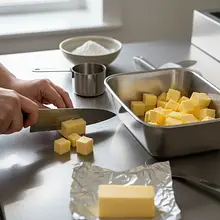
Add cold butter. Take the butter out of the fridge and cut it into small cubes (about 1x1 cm). Toss the butter cubes into the bowl with the dry ingredients. Now you need to combine the butter with the flour. You can do this in two ways: with your fingers, quickly rubbing the butter into the flour until it reaches the consistency of wet sand or crumbs, or using a pastry cutter. The key is to work quickly so that the butter doesn't warm up.
Combine the dough. In a small bowl, lightly beat two egg yolks with vanilla extract using a fork. Make a well in the center of the crumble and pour the mixture in. Now, very quickly knead the dough, just until the ingredients come together into a uniform, smooth ball. Do not knead for long! As soon as the dough stops sticking and forms a cohesive whole, stop kneading.
Chill the dough. Flatten the formed ball of dough into a disk about 2-3 cm thick. This will help it chill faster and more evenly. Wrap the disk tightly in plastic wrap and place it in the refrigerator for at least 60 minutes. The dough can be stored in the fridge for up to 2 days.
Shaping and Baking
Roll out the dough. Take the chilled dough out of the refrigerator. Prepare a large sheet of baking paper and lightly dust it with flour. Place the dough on it, dust the top as well, and cover it with a second sheet of paper. Roll the dough into a flat disc with a consistent thickness of about 4 mm. Rolling between two sheets of paper prevents sticking and eliminates the need to add a large amount of flour.
Cut the pixels. Remove the top sheet of paper. Using a long ruler and a sharp knife or pizza cutter, cut the dough into perfect squares measuring 2x2 cm. Work quickly to keep the dough cold. Remove excess dough from the edges (you can re-knead it, chill it, and roll it out again).
Chill the cookies again. Move the paper with the cut squares onto a large baking sheet. Place the sheet in the freezer for 15 minutes or in the fridge for 30 minutes. This step is to 'secure' the perfect shape. Frozen cookies placed in a hot oven won't have time to spread before they bake.
Bake the cookies. Preheat the oven to 170°C (fan) or 180°C (top-bottom). Place the chilled baking sheet with cookies in the preheated oven. Bake for about 10-12 minutes. The cookies are ready when their edges start to turn a light golden color, while the center remains pale. After removing from the oven, leave them on the baking sheet for 5 minutes, then carefully transfer to a rack to cool completely.
Lavender Royal Icing
Prepare lavender sugar. In a small, clean coffee grinder or mortar, place the dried lavender flowers and one tablespoon (about 15g) of powdered sugar from the measured portion. Blend or grind everything into a fine, aromatic powder. This will help release the essential oils from the lavender and evenly distribute its flavor in the icing.
Start whipping the icing. Pour the egg white into a perfectly clean, degreased bowl (e.g., glass or metal). Begin whipping it with a mixer on low speed. When the egg white starts to foam, add the lemon juice. Then, without stopping the whipping, start adding the remaining powdered sugar (the remaining 85g) and the lavender sugar, one tablespoon at a time. Do this slowly, waiting for each portion to combine with the mixture.
Achieve the perfect consistency. After adding all the sugar, increase the mixer speed to medium and beat the icing for about 5-7 minutes. The finished icing should be thick, white, shiny, and smooth. The ideal consistency for filling cookies ('flood consistency') is when a stream of icing flowing from the spoon dissolves on the surface within 10-15 seconds. If it is too thick, add a few drops of water. If it is too thin, add a little powdered sugar.
Decorating Pixels
Get ready to decorate. Transfer the prepared icing into a piping bag with a small round tip (nib) with a diameter of about 1-2 mm. If you don't have a piping bag, you can use a sturdy ziplock bag with a tiny corner cut off. Prepare all the cooled cookies on a flat surface, e.g., on a baking sheet lined with parchment paper.
Fill the cookies with icing. Holding the piping bag perpendicular to the cookie, first outline the contour of each square, leaving about a 1 mm margin from the edge. Then, starting from the outside and moving towards the center, fill in the outlined shape with icing, making zigzag motions. If air bubbles form, gently poke them with a toothpick.
Dry the icing. Place the decorated cookies in a dry and airy place for at least 8-12 hours, preferably overnight. The icing must harden completely to a stone-like consistency, including the inside. Only then can the cookies be safely packed or stacked on top of each other.
Fun Fact
Royal Icing got its name in the 19th century in England when it was used to decorate Queen Victoria's wedding cake. Its impeccably white and smooth appearance was deemed worthy of a royal table and has since become a standard in luxury confectionery.
Best for
Tips
Arrange the cookies on a large, flat tray or board, creating a larger image in pixel art style – a heart, a character from a game, or a simple message. They will look stunning! Serve them with a delicately flavored tea (e.g., white or jasmine) that won't overpower the subtle aroma of lavender.
Once the icing has completely dried, the cookies can be stored in an airtight metal or glass container at room temperature for up to 2 weeks. It is advisable to separate each layer of cookies with parchment paper to avoid any potential scratches on the icing.
📸 Ugotowane przez społeczność
Zaloguj się, aby dodać zdjęcieDodaj zdjęcie gotowej potrawy
Po zatwierdzeniu przez moderatora otrzymasz 10 punktów doświadczenia.
Nikt jeszcze nie dodał zdjęcia. Bądź pierwszy!
Comments (0)
Be the first to comment on this recipe!
Add a comment