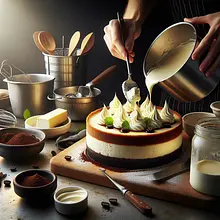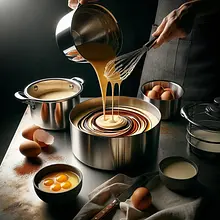
Brew 120 ml of strong espresso and set aside to cool completely (you can speed this up in the fridge). In a small bowl, pour in 100 ml of chilled espresso and (optionally) add 15 g of dark rum — mix well. Break the ladyfingers into large pieces (about 2-3 cm) — do not grind them to dust: we want visible chunks. Quickly dip the pieces of ladyfingers in the coffee mixture for 1-2 seconds and place them on a plate to drain — the ladyfingers should be moist but not soggy.
Description
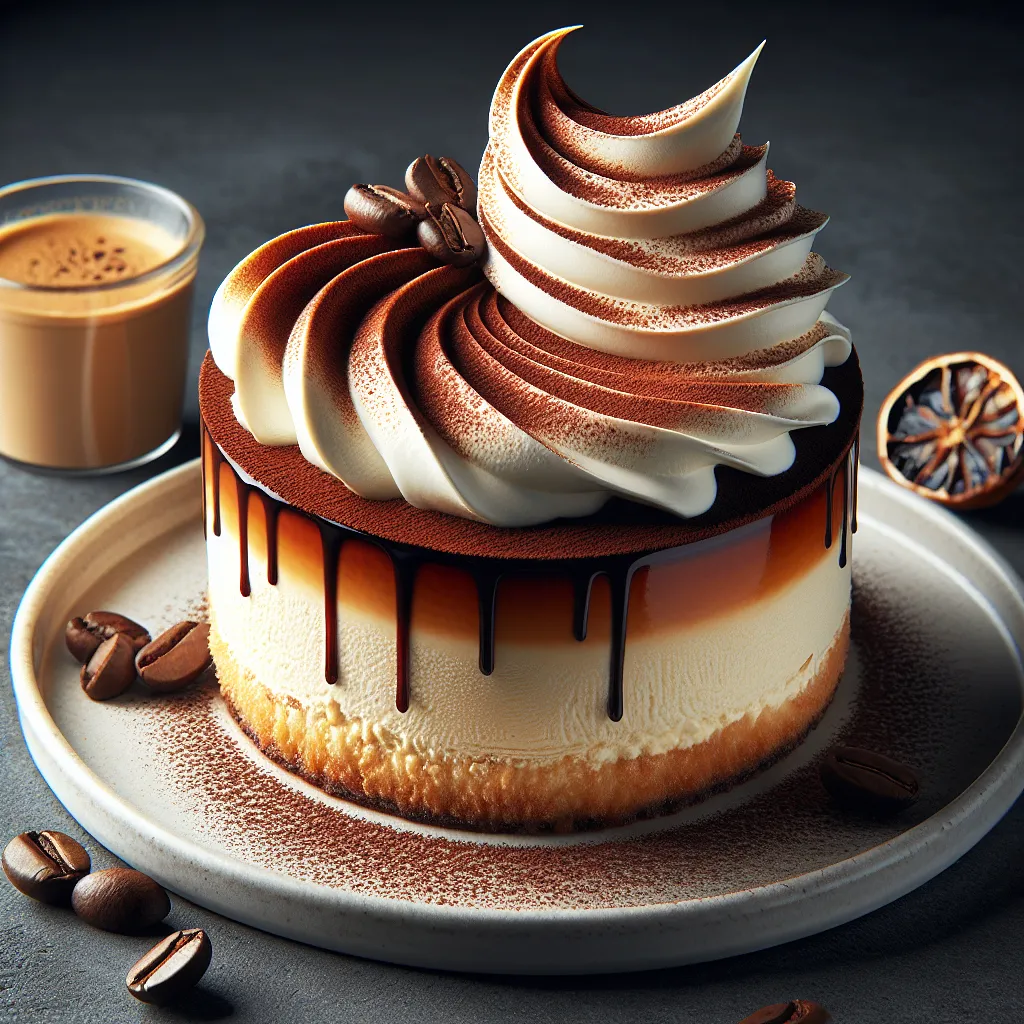
A unique combination of creamy Basque cheesecake and tiramisu flavors — a dense, slightly caramelized cheesecake on the outside with an intense espresso note and delicate strands of mascarpone. The cake does not have a traditional base layer; its surface is darkly caramelized, contrasting with the velvety interior. In my version, I add pieces of soaked ladyfingers to the batter, which gently soften during baking and create a characteristic textural structure — fragments that are both crunchy and soft like in tiramisu. Perfect for parties and holidays as well as a dessert with coffee; we serve it chilled, dusted with cocoa, and optionally drizzled with a bit of coffee liqueur. Visually striking: a dark, cracked crust, a creamy interior with visible light streaks of mascarpone and darker pieces of ladyfinger.
Składniki (13)
- Cream cheese 800 g
- Mascarpone 200 g
- White sugar 200 g
- Egg 4 szt.
- 30% heavy cream 200 g
- Wheat flour 20 g
- Cornstarch 10 g
- Chilled espresso 120 ml
- Ladyfingers 200 g
- Cocoa powder for dusting 20 g
- Vanilla extract 10 g
- 🌿 Przyprawy
- Salt 0.0 szczypt
- ✨ Opcjonalne
- Dark rum 1 łyżka
💡 Kliknij na składnik aby oznaczyć jako użyty
Preparation steps
Preparation and soaking of the sponge cakes
Preparing the baking pan
Prepare a springform pan with a diameter of 20-22 cm or a similar capacity (preferably with a removable bottom). Cut a large sheet of parchment paper (about 40×40 cm) and line the pan with it so that the paper extends high above the edges (at least 6-8 cm) — the paper will crinkle, which is characteristic of Basque cheesecake. Lightly grease the underside of the paper using spray or a bit of butter, so that the paper sticks.
Cream cheese - basic preparation
Take the cheeses (cream cheese and mascarpone) out of the fridge 20-30 minutes before mixing to soften. Place 800 g of cream cheese in a large bowl and add 200 g of sugar. Using a stand mixer with a paddle attachment (or a hand mixer), mix on low speed for 1-2 minutes until the mixture becomes creamy and free of hard lumps — mix only until the mixture is smooth to avoid over-aerating it.
Cream cheese — combining ingredients
To the smooth cheese, add 240 g of eggs (one at a time or in two batches), mixing briefly after each addition, just until combined. Then pour in 200 ml of 30% cream and 10 g of vanilla extract; mix for 20-30 seconds on low speed. Sift 20 g of flour and 10 g of cornstarch directly into the mixture and fold in on the lowest speed until fully combined — the mixture should be smooth, slightly thick, and shiny.
Making tiramisu-smug
Separate 200 g of mascarpone into a separate bowl and gently whisk it with a fork until smooth. Take 3-4 tablespoons of the cheese mixture (from step 4) and combine it with the mascarpone, creating a looser, lighter mixture. In a large bowl, pour in most of the base cheese mixture, then spoon portions of mascarpone in several places — creating spots and streaks. Do not mix vigorously; we want to achieve a marbled pattern on top.
Adding the ladyfingers
Add the soaked, cooled pieces of sponge cake to the mixture in the bowl and gently fold them in by hand with a spatula — just enough to evenly distribute the pieces without breaking them down completely. We want some pieces to remain visible as darker flecks.
Filling the mold and preparing for baking
Pour the mixture into the prepared pan lined with parchment paper. Gently tap the pan on the counter a few times to release larger air bubbles. Leave the top uneven — the characteristic rustic look of Basque cheesecake is a plus. If larger pieces of mascarpone surface, gently press them down with a spatula.
Baking
Adjust the oven rack to the middle position. Preheat the oven to 240°C (top and bottom heat, no fan). Place the pan with the batter on the rack and bake for 18 minutes at 240°C, then without opening the oven, reduce the temperature to 200°C and bake for another 22-30 minutes, for a total of about 40-48 minutes. The surface should be deeply browned to dark brown (sometimes with black spots) — the edges will be set, and the center will be slightly 'jiggly' when moved.
Cooling and chilling
After baking, remove the pan and set it on a rack to cool for 1-2 hours — the cheesecake will lower in temperature and calm down a bit. Then place it in the refrigerator (still in the pan) for at least 4 hours, preferably overnight — cooling allows the mixture to achieve its full structure and flavor.
Finishing and serving
Remove the cheesecake from the mold, gently peel off the paper, and transfer it to a serving plate. Before serving, generously sift 20 g of cocoa powder over the top using a sieve, ensuring an even dusting. Cut with a moist, sharp knife dipped in hot water and wiped clean after every few cuts — this will give you clean slices.
Fun Fact
The Basque cheesecake originally comes from San Sebastián in the Basque Country and is known for its heavily browned, almost charred surface. The combination with elements of tiramisu is a contemporary interpretation of fusion cuisine trends, which many patisseries and food bloggers are developing, seeking a contrast between the burnt flavor and the delicacy of the creams.
Best for
Tips
Serve chilled, slightly outside the fridge (10-15 minutes), to let the aromas open up. When slicing, wet the knife with hot water for clean slices. Strong espresso coffee or a shot of coffee liqueur pairs well with the cheesecake. For a contrast in texture, you can serve toasted almonds or biscuit crumble on the side.
Store the chilled cheesecake in the refrigerator, covered with plastic wrap or in a container, for up to 3-4 days. Do not freeze the whole cheesecake — its texture may be damaged after thawing; individual portions can be frozen in aluminum foil and thawed slowly in the refrigerator (for a maximum of 1 month). If the surface loses color, it can be lightly dusted with cocoa before serving.
📸 Ugotowane przez społeczność
Zaloguj się, aby dodać zdjęcieDodaj zdjęcie gotowej potrawy
Po zatwierdzeniu przez moderatora otrzymasz 10 punktów doświadczenia.
Nikt jeszcze nie dodał zdjęcia. Bądź pierwszy!
Comments (0)
Be the first to comment on this recipe!
Add a comment