Wash the strawberries under a short stream of water, and dry them on a paper towel. Remove the stems and any larger damaged spots. Peel the rhubarb thinly with a knife, removing the outer layer (do not use the leaves), and cut the stalks into 2–3 cm pieces. Place the chopped fruit into a large, clean bowl or pot (minimum capacity 6 l).
Description
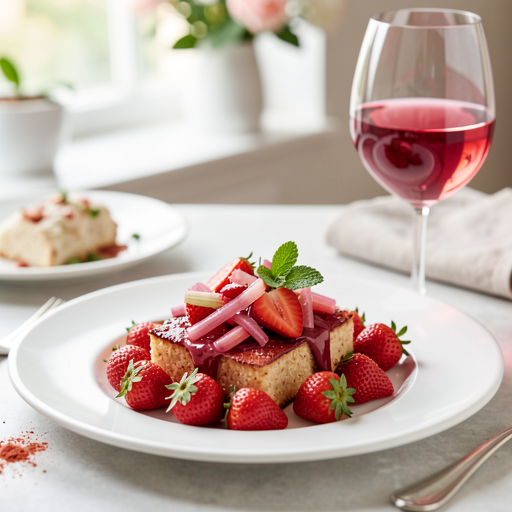
A delicate, spring rosé wine with a strawberry aroma and a tart rhubarb finish — perfect for the Easter table as an alternative to heavier drinks. This lightly fruity, pale pink homemade wine has a fresh, floral bouquet, moderate acidity, and pleasant sweetness depending on the added sugar. Serve chilled at 8–10°C as an aperitif, with light salads, white meats, or alongside Easter pastries. The process takes a few weeks (primary fermentation 5–7 days, secondary 4–8 weeks, clarification and bottling 1–2 weeks), but most of the work involves simple tasks that even a beginner can handle. The recipe includes tips for adjusting sweetness and clarification, as well as alternatives for missing tools.
Ingredients Used
Ingredients (8)
- Strawberry 1800 g
- Rhubarb 700 g
- Sugar 1000 g
- Water 2000 ml
- Wine yeast 5 g
- Lemon 0.8 szt. (~60 g)
- ✨ Opcjonalne
- Honey 200 ml
- Gelatin 5 g
💡 Kliknij na składnik aby oznaczyć jako użyty
Preparation steps
Preparing the fruits
Preparation of the must
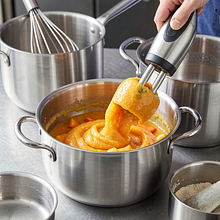
Blend the fruits into a pulpy mass with a hand blender or mash them with a potato masher in a pot. Add 1 liter of water and 300 g of sugar to the pulp, and stir with a wooden spoon until the sugar partially dissolves. Cover with a clean cloth and let it sit for 12 hours at room temperature to allow the fruits to release their juice.
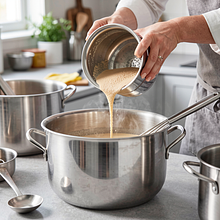
After 12 hours, strain the pulp through a fine sieve or linen cloth into a large pot, squeezing out as much juice as possible (do not squeeze too hard to avoid extracting bitter flavors). Measure the volume of the obtained juice. Add the remaining water to the juice so that the total volume is about 4.5–5 liters (if it is less, add water).
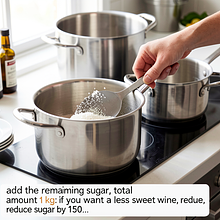
Add the remaining sugar (a total of 1 kg; if you want less sweet wine, reduce the sugar by 150–300 g) and the juice from the squeezed lemon. Gently heat the must to 35–40°C, stirring until the sugar completely dissolves. Do not bring to a boil. Cool the must to a temperature of 20–25°C before adding the yeast.
Activating the yeast
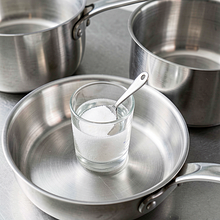
In a small glass, dissolve the yeast in 50 ml of lukewarm water (about 30–35°C) with 1 teaspoon (5 g) of sugar and set aside for 10–15 minutes. A foam or small bubbles should form on the surface — this is a sign of activity. If there is no foam after 15 minutes, the yeast may be inactive — use new ones.
Primary fermentation
Pour the activated yeast into the cooled must and mix well. Transfer everything to the fermenter (a pot with an airlock or a balloon with an airlock). Cover and place in a dark, stable location at a temperature of 18–24°C. The first 48–72 hours will be the most intense — foam and bubbling are normal phenomena. Primary fermentation usually lasts 5–7 days.
Secondary fermentation and clarification
After 5–7 days, when the intense bubbling subsides, siphon the wine (without sediment) into a clean carboy, leaving the sediment at the bottom (this is called racking). Seal the carboy with an airlock and continue secondary fermentation at a temperature of about 15–20°C for 4–8 weeks, until there is no visible activity and the wine becomes clear. If you are using gelatin, dissolve a small amount in hot water according to the instructions and add it to the carboy after the secondary fermentation is complete, then let it sit for 7–10 days for the sediment to settle.
Aging and Tasting
After the activity has ceased and clarity is achieved, leave the wine for another 2–4 weeks to allow the aromas to harmonize. Taste a small amount — if the wine is too dry, you can sweeten it before bottling (dissolve sugar in a small amount of wine and add slowly, stirring and waiting 48 hours for stabilization).
Bottling
When the wine is clear and stable, prepare the bottles (washed and sterilized). Pour the wine into the bottles using a siphon, leaving about 2 cm of space under the cork. Cork them and label with the date. Set the bottles aside for at least 2 weeks, preferably a few months, for the flavor to round out.
Serving
Chill the bottle to 8–10°C before serving. Serve in white wine glasses or small rosé wine glasses. On the Easter table, the wine pairs well with light salads, white ham, eggs in mayonnaise, and yeast pastries.
Fun Fact
Fruit wines were popular in rural Poland, where farmers used excess fruit for fermentation. Strawberry and rhubarb are traditional spring flavors that perfectly capture the freshness of the season.
Best for
Tips
Chill to 8–10°C. Serve in shallow glasses for rosé or white wine. For light appetizers, choose a less sweet wine, and for desserts, you can serve a slightly sweetened version. If sweetening is necessary, do it just before serving in small portions.
Store bottles upright in a cool (12–16°C), dark place. Keep opened bottles in the fridge and consume within 2–4 days. Homemade wine tastes best after 2–6 months of aging; longer storage may change fresh aromas to more developed notes.
📸 Ugotowane przez społeczność
Zaloguj się, aby dodać zdjęcieDodaj zdjęcie gotowej potrawy
Po zatwierdzeniu przez moderatora otrzymasz 10 punktów doświadczenia.
Nikt jeszcze nie dodał zdjęcia. Bądź pierwszy!
Comments (0)
Be the first to comment on this recipe!
Add a comment