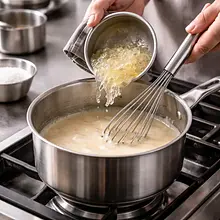
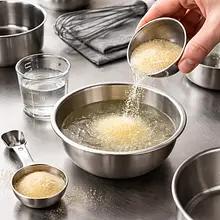
Prepare the gelatin: sprinkle 10 g of gelatin into a small bowl and pour in 60 ml of cold water. Set aside for 8–10 minutes until the gelatin swells and forms a jelly-like mass.
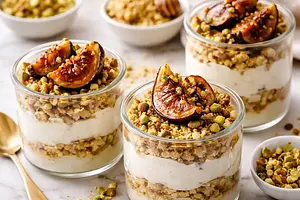
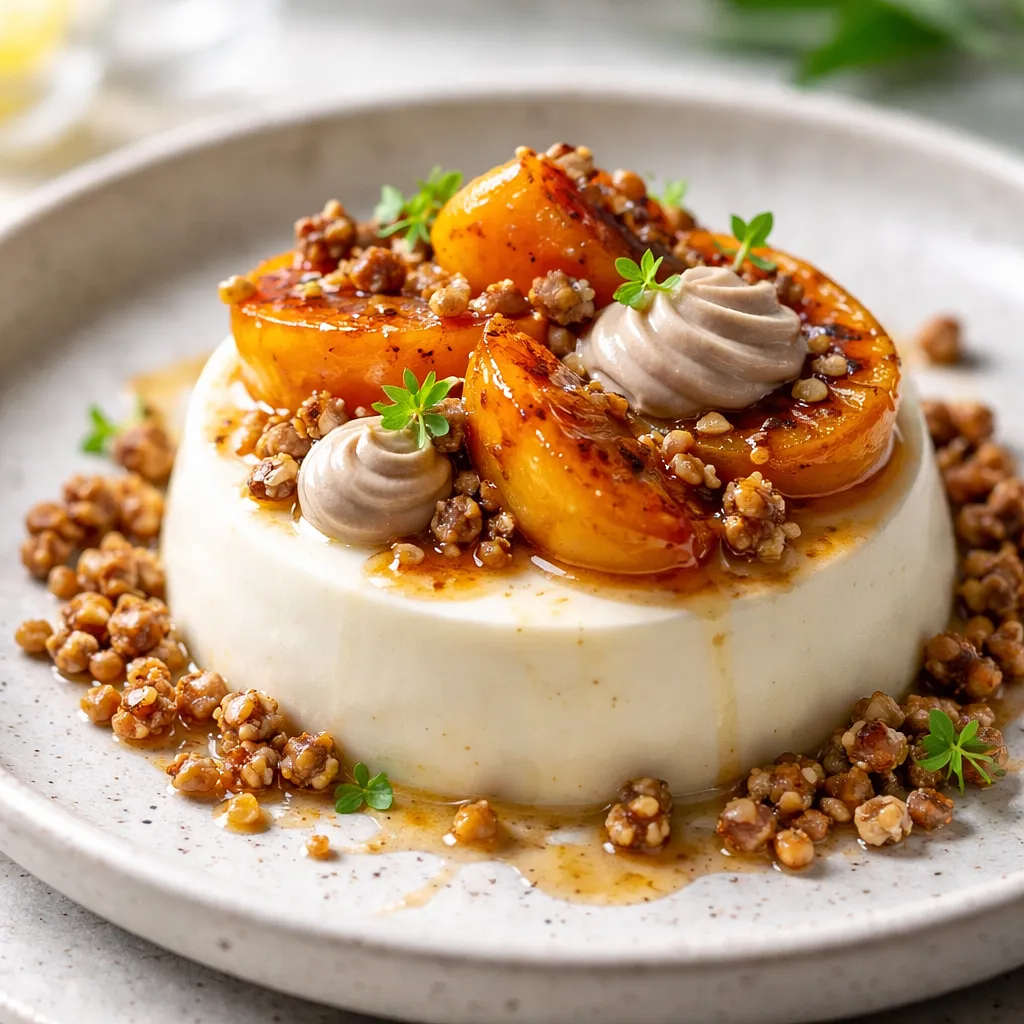
A seasonal fusion dessert combining the delicacy of Japanese yuzu panna cotta with caramelized, baked kaki (persimmon), a velvety chestnut cream, and a crunchy, toasted buckwheat crumble. The sweet and sour citrus notes of yuzu contrast with the gentle creaminess of the chestnuts and the umami of miso in the caramel; the toasted buckwheat adds a deep, nutty texture. The dessert is visually striking — layers of different colors (creamy panna cotta, orange slices of kaki, dark brown chestnut cream, and golden crumble) look fantastic on a white plate. Perfect for winter and early spring dinners, as a fancy conclusion to a meal or for parties when you want to surprise guests with a combination of flavors and textures.
💡 Kliknij na składnik aby oznaczyć jako użyty
Prepare the gelatin: sprinkle 10 g of gelatin into a small bowl and pour in 60 ml of cold water. Set aside for 8–10 minutes until the gelatin swells and forms a jelly-like mass.
In a pot with a capacity of about 1 liter, heat 500 g of cream and 200 ml of milk together with 60 g of sugar and 6 g of grated tangerine zest over medium heat. Stir with a wooden spoon until the sugar dissolves and the mixture starts to steam (do not let it boil). Heat for about 4–6 minutes.
Remove the pot from the heat. Add the soaked gelatin to the hot, but not boiling, mixture and stir vigorously until the gelatin is completely dissolved (about 1 minute). Then add 60 g of yuzu juice and stir. Pour the mixture through a fine sieve into a jug to remove any lumps and mandarin peel.
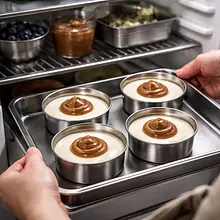
Pour the panna cotta into 6 small bowls or glasses evenly (about 116–120 g per serving). Let it sit at room temperature for 20 minutes, then place it in the refrigerator for at least 3 hours (preferably 4–6 hours) until the mixture sets and is slightly firm to the touch.
Preheat the oven to 200°C (top-bottom). Wash the persimmons, dry them, and cut them in half lengthwise. Place them cut side up on a baking sheet lined with parchment paper. Bake for 12–15 minutes, until the pieces are soft and slightly browned at the edges.
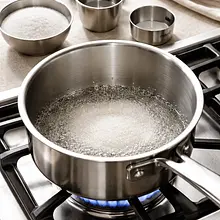
In a heavy-bottomed saucepan, heat 100 g of sugar with 30 ml of water over medium heat, without stirring initially — you can gently swirl the pan until the sugar starts to melt and turns a golden amber color (about 6–8 minutes). Be careful — caramel can easily burn. Once it reaches a golden amber color, quickly remove the saucepan from the heat and carefully pour in 40 g of butter, stirring with a wooden spoon.
After mixing the butter, add 40 g of miso paste and 60 g of cream (if you want a more liquid caramel consistency). Mix vigorously to achieve a smooth, glossy sauce. If the caramel thickens too much, briefly heat it over low heat while stirring. Drizzle it over pieces of baked persimmon just before serving.
In a bowl, place 300 g of chestnut puree, add 40 g of sugar and 5 g of vanilla extract. Whip with a mixer (flat attachment or professional blender) for 1–2 minutes until the mixture is creamy. Then add 30 g of soft butter and blend for another 1–2 minutes until the cream becomes silky smooth.
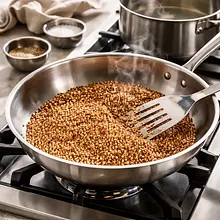
In a dry skillet, toast 120 g of buckwheat for 3–5 minutes over medium heat until it starts to smell nutty. Then add 40 g of sugar and 30 g of butter to the skillet and stir until the sugar dissolves and the buckwheat is coated with a glossy, slightly caramelized glaze (2–3 minutes). Transfer to a baking sheet and spread in a thin layer to cool quickly and become crispy.
Remove the set panna cotta from the refrigerator. In the center of each portion, place 2–3 tablespoons of chestnut cream (about 40–50 g per portion). On top of the cream, place half a roasted kaki or 2 slices (depending on size), and drizzle with a tablespoon of caramel miso (about 15–20 g per portion). Generously sprinkle with buckwheat crumble (about 15 g per portion). Optionally, decorate with candied kumquats and edible flowers.
Before serving, sprinkle each dessert with a pinch of sea salt (about 0.3 g per serving) — the salt will enhance the flavor of the caramel and chestnuts. Serve immediately after decoration to keep the crumble crunchy.
If you are preparing the dessert in advance: panna cotta can be made a day ahead, chestnut cream can be stored in an airtight container in the fridge for up to 2 days. Prepare the crumble no more than a few hours before serving and store it in a dry, closed container.
Yuzu is a citrus fruit originating from East Asia, valued for its intense aroma; in fusion cuisine, it is often used in desserts because it can add an exotic freshness to traditional creamy compositions.
Serve the panna cotta chilled, but not ice-cold — the best consistency is slightly springy. Use flat white plates or clear cups to showcase the layers. For effect, serve with a cup of sencha green tea or light sake.
Store panna cotta in the refrigerator for up to 48 hours. Chestnut cream in an airtight container for 2 days. The crumble loses its crunch — store it separately in a closed container at room temperature and add just before serving. Do not freeze the finished dessert (texture change).
Po zatwierdzeniu przez moderatora otrzymasz 10 punktów doświadczenia.
Nikt jeszcze nie dodał zdjęcia. Bądź pierwszy!
30 min
40 min
60 min
35 min
90 min
120 min
A sweet ending to the New Year's Eve dinner is a must-have that will put everyone in a joyful mood for the new year.
See all recipes in this categoryFusion cuisine is a bold combination of culinary traditions from different corners of the world. Asian-European pairings, Mexican-Japanese experiments, and Mediterranean-Asian fusions. Sushi burritos, ramen burgers, kimchi pierogi, and curry pizza - the boundaries of flavor do not exist. Our reci...
See all recipes in this categoryNote: proportions may vary. Adjust amount to taste.
This website uses cookies to ensure the best experience.
Comments (0)
Be the first to comment on this recipe!
Add a comment