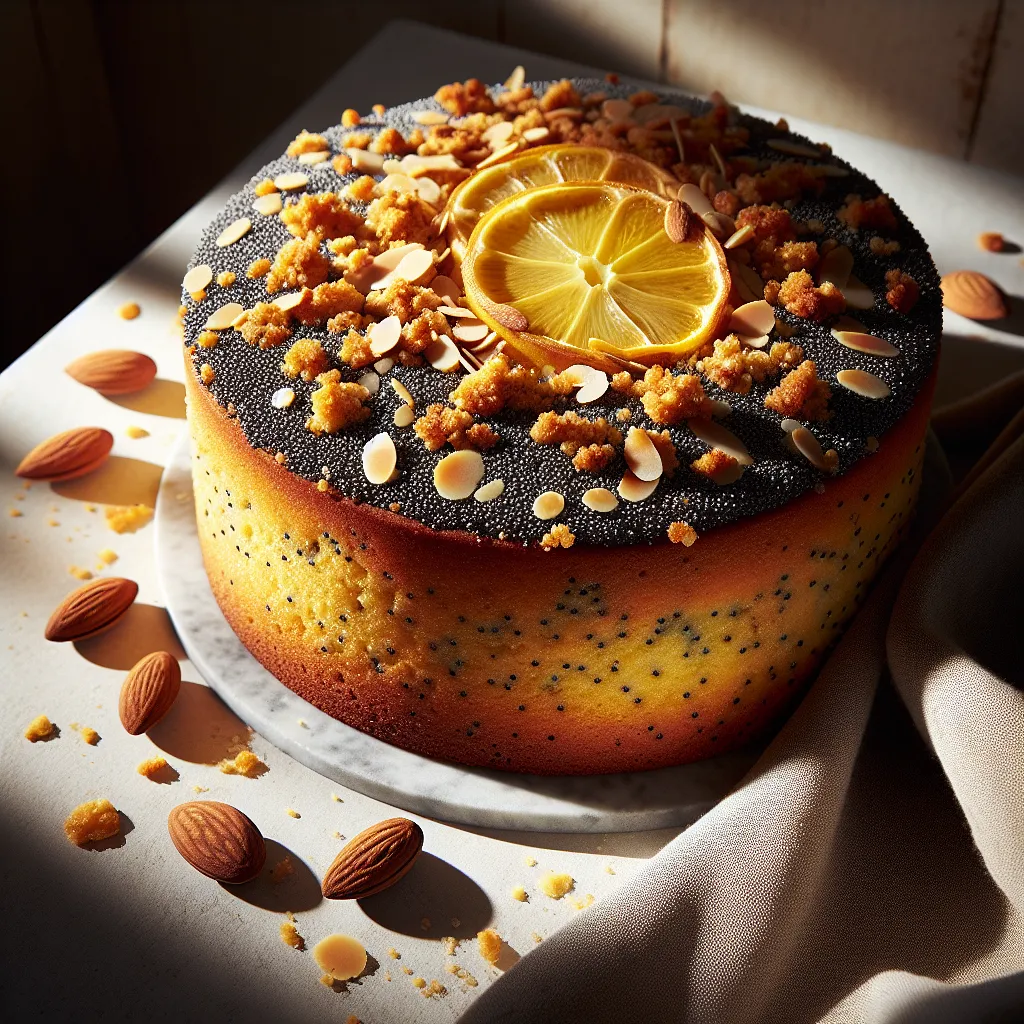
A delicate bundt cake inspired by the classic 'poppy seed cake', but reimagined as a moist, citrus-poppy cake with a delicate almond crumble and yogurt glaze. The cake combines the intense, slightly nutty flavor of poppy seeds with the freshness of citrus zest (lemon and orange) and the subtle sweetness of honey. The texture of the bundt is soft and moist thanks to the addition of butter and yogurt; the crumble adds a pleasant crunch, while the glaze provides visual contrast and a hint of tartness. It pairs well with afternoon coffee or tea and is perfect as a dessert for family gatherings and holidays. Served on a cake stand, it looks elegant — the golden crust, dark streaks of poppy seeds, and white glaze create an appetizing contrast.
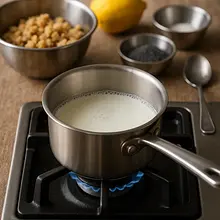
Prepare the poppy seed filling: in a small saucepan, heat 120 ml of milk almost to boiling (it should be gently steaming). Pour 220 g of ground poppy seeds into a large bowl. Pour the hot milk over it and cover with a plate — set aside for 15 minutes to allow the poppy seeds to absorb the liquid. After 15 minutes, the poppy seeds should be soft and sticky.
Ingredients:
Ground poppy seeds, Milk
Use a small saucepan and a large metal or ceramic bowl. If the poppy seeds are whole (not ground), grind them in a coffee grinder for 20–30 seconds before the process. Do not pour boiling water over the poppy seeds — too hot milk can alter the flavor.
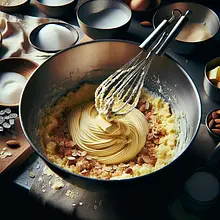
2
To the swollen poppy seeds, add 40 g of honey, the zest of a lemon and the zest of an orange (6 g each). If you want, add 10 g of rum. Mix thoroughly with a wooden spoon or spatula until smooth — if the mixture seems too dry, add 1–2 tablespoons (15–30 g) of hot milk and mix again.
Ingredients:
Ground poppy seeds, Honey, Lemon zest, Orange zest, Rum
Use a wooden spoon or spatula. The mixture should be moist and combined, not dry or runny. Additionally, you can add almond flakes to the mixture for texture (optional).
Cake
3
Preheat the oven to 170°C (top and bottom, without fan). Grease and flour a bundt pan (capacity about 1.5–2 liters) or use baking spray. Make sure the fat covers all the nooks and crannies of the pan.
The best is a bundt pan with a capacity of 1.5–2 L. If you don't have a bundt pan, use a loaf pan (but shorten the baking time). Use oven mitts when placing/removing the pan.
4
Prepare the sugar-butter mixture: in a large bowl, place 170 g of soft butter and 200 g of sugar. Beat with a mixer (whisk or flat attachment) on medium speed for 3–4 minutes until light and fluffy. The mixture should be noticeably lighter and fluffy.
Ingredients:
Butter, White sugar
Use a hand mixer or stand mixer with a whisk attachment. If you don't have a mixer, beat the butter with sugar vigorously using a whisk for about 8–10 minutes. Do not work at too high a speed to avoid warming the butter.
5
Add one egg at a time (a total of 3 pieces, 180 g) to the whipped mixture, mixing well after each addition — add 1–2 tablespoons of flour if the mixture starts to separate. Once the eggs are incorporated, the mixture should be smooth.
Ingredients:
Egg, Wheat flour
Use low speed, adding the eggs one at a time. If the mixture seems to weigh down (separate), add 1–2 tablespoons of flour and mix until combined. The eggs should be at room temperature.
6
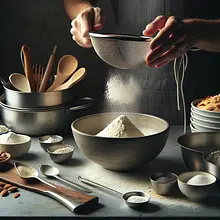
In a separate bowl, sift 320 g of wheat flour together with 10 g of baking powder and 2 g of salt. Gradually add the dry ingredients to the butter mixture in alternating batches with 120 ml of milk: start and end with the dry ingredients (3 parts flour, 2 parts milk), mixing briefly on the lowest speed after each addition, until the mixture is smooth and elastic, but not overmixed.
Use a sieve to sift the flour and a large bowl. Do not mix too long after adding the flour — just enough for the ingredients to combine. The dough should be thick but pourable from a spoon.
7
Prepare two bowls: transfer 2/3 of the dough (about 2 parts) to one, and 1/3 to the other. Add the prepared poppy seed filling to the smaller portion and gently mix with a spatula to create a dark, poppy seed dough.
Use a silicone spatula. Do not mix too vigorously — we want to maintain the differences in density that will help achieve a marbled effect. Additionally, you can add a few tablespoons of poppy seeds to the light part if you want a more balanced color.
8
Pour alternating layers into the prepared pan: first a layer of light batter (about half of the light mixture), then a layer of poppy seed mixture, followed by the rest of the light batter. Finish with a lightly swirled layer, dragging a knife in an eight shape 2–3 times to create a delicate marbled pattern. Do not mix too deeply.
Ingredients:
Wheat flour, Ground poppy seeds
Use a spoon to scoop and a knife to create waves/marbles. If you pour the batter too quickly, there may be too much separation of layers — apply it gently.
Crumble (optional)
9
Prepare the crumble: in a small bowl, combine 50 g of flour, 30 g of sugar, and 30 g of cold butter cut into cubes. Rub it with your fingers until pea-sized crumbs form. Evenly sprinkle it over the top of the cake. If you are using almond flakes (50 g), also scatter them on top.
Ingredients:
Wheat flour, White sugar, Butter, Almond flakes
Use cold butter and quickly rub it with your fingers to avoid warming the fat. If you don't want the crumble, skip this step. Additionally, you can lightly toast the almond flakes in a dry pan before sprinkling them — be careful, they brown quickly.
Baking and Finishing
10
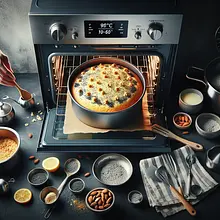
Place the pan in the preheated oven on the middle rack. Bake at 170°C for 50–60 minutes. After 45 minutes, check the cake with a wooden skewer: the skewer should come out of the cake with a few moist crumbs, but no raw batter. If the top is browning too much, loosely cover it with aluminum foil.
Use a thermometer if you have one — the cake batter should reach about 95°C. Do not open the oven in the first 30 minutes, as the cake may collapse. If you are using a loaf pan instead of a bundt pan, reduce the time by 5–10 minutes.
11
After baking, remove the pan from the oven and set it on a rack to cool for 15 minutes. After 15 minutes, gently turn the pan upside down and remove the cake — if it sticks, run a thin knife along the edges and try again. Leave the cake to cool completely (about 1 hour).
Use a cooling rack to prevent the bottom from getting soggy. Do not remove the cake from the pan immediately — cooling allows the structure to 'stabilize'. If the cake has cracked slightly, that's normal.
12
Prepare the glaze: in a small bowl, combine 120 g of natural yogurt with 80 g of sifted powdered sugar. Stir with a spoon until the glaze is smooth and slightly thick. Drizzle the cooled cake evenly with a spoon or teaspoon. Sprinkle the top with almond flakes (optional) and let the glaze set slightly (about 20–30 minutes) before serving.
If the glaze is too runny, add more powdered sugar by the tablespoon; if it's too thick, add a teaspoon of yogurt. You can use additional lemon zest for decoration.
Fun Fact
💡
In Poland, poppy seeds and baked goods with poppy seeds have a long tradition — poppy seeds have been present in holiday cakes for centuries. In homemade versions, they are often combined with citrus fruits and honey, which softens their intense, slightly nutty flavor.
Serve slightly chilled or at room temperature. When cutting, use a sharp, thin knife to avoid crumbling the cake. It pairs well with a cup of espresso or Earl Grey tea. For a more festive touch, serve with whipped cream or vanilla ice cream.
🥡Storage
Store at room temperature covered or in a cake box for up to 2 days; in the refrigerator for up to 5 days (the frosting may harden). To refresh, heat in the oven at 120°C for 5–7 minutes. You can also freeze sliced pieces wrapped in foil for up to 2 months — thaw slowly in the refrigerator.
Homemade cakes and pastries are the heart of Polish culinary tradition - sweet memories from childhood. In our collection, you will find recipes for classic yeast cakes, shortcrust, sponge, and cheesecake. Apple pie, poppy seed cake, gingerbread, Easter babka, chocolate cake, and New York cheesec...
Desserts are a sweet ending to a meal that brings joy to both children and adults. In this category, we present recipes for a variety of sweets - from simple creams and mousses, to elegant panna cottas, and exquisite fruit tarts. Our desserts include both classics of Polish cuisine - fruit jelly,...
Comments (0)
Be the first to comment on this recipe!
Add a comment