Menu

Spring Tulip Babka with a Hint of Lemon and Raspberry

Cakes and Bakes Dishes for Special Occasions Desserts 220 min Medium 4 wyświetleń ~35.55 PLN - (0)
Rate:
(0)

Description

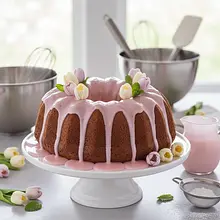
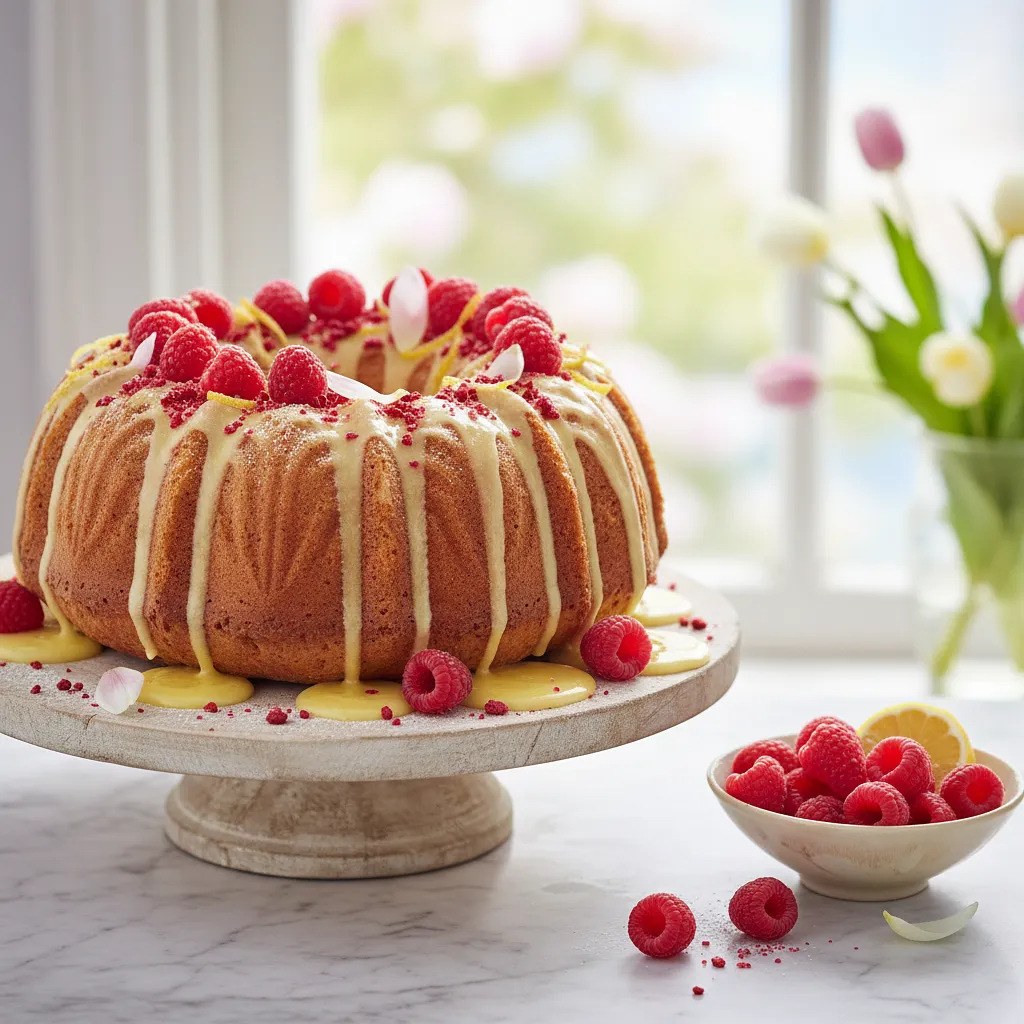
This unique yeast cake is a true decoration for the Easter table. Inspired by the shape of a blooming tulip, it combines two flavors and colors of the dough: classic, buttery with a refreshing hint of lemon zest and intensely raspberry, colored with natural, freeze-dried powder. Its texture is incredibly fluffy, moist, and delicate, with the characteristic layers of yeast dough. When sliced, it reveals a spectacular, marbled pattern reminiscent of rolled flower petals. Topped with a thick, lemon glaze, it perfectly balances the sweetness of the cake with its tartness. Served at a festive breakfast or as a dessert, it not only delights with its flavor but also serves as a beautiful, edible decoration. This is a variation on the traditional Polish Easter cake, drawing inspiration from nature and the awakening of spring.

Składniki (15)

Servings:
12
  • Wheat flour type 500 500 g
  • Fresh yeast 25 g
  • Milk 3.2% 250 ml
  • Cukier drobny 115 g
  • Egg 2 szt.
  • Egg yolk 2.2 szt.
  • Masło 82% 135 g
  • Freeze-dried raspberry powder 2 łyżki
  • Powdered sugar 200 g
  • Lemon juice 50 ml
  • Breadcrumbs 20 g
  • 🌿 Przyprawy
  • Salt 0.1 szczypt
  • Skórka otarta z cytryny 1 g
  • ✨ Opcjonalne
  • Vanilla extract 5 g
  • Edible flowers for decoration 5 g
💰 Szacowany koszt dania: ~35.55 PLN (2.96 PLN/porcję)

💡 Kliknij na składnik aby oznaczyć jako użyty

Preparation steps

Preparing the pan and the starter

1

Prepare the bundt pan. Use a kitchen brush to thoroughly grease the entire interior of the pan, including the chimney and all the nooks and crannies, with 15g of soft butter. Then, sprinkle breadcrumbs into the pan and, turning the pan, spread them so that they cover the entire greased surface. Shake out the excess breadcrumbs. This step is crucial for the cake to come out of the pan easily after baking.

Ingredients: Masło 82%, Breadcrumbs
The best choice is a bundt pan with a capacity of about 2 liters. Thoroughly greasing and dusting the pan is the secret to a successful bake - don't skip any crevices!
2

Prepare the yeast starter. Crumble 25g of fresh yeast into a small bowl. Add 1 tablespoon (15g) of sugar, 1 tablespoon of flour, and pour in 100 ml of warm milk. The milk should be around 37°C – it should feel pleasantly warm to the touch, like bath water for a baby, but not hot. Mix everything with a fork until the yeast dissolves and a smooth consistency is achieved. Cover the bowl with a clean cloth and set it in a warm place (e.g., near a radiator or in a slightly warmed oven) for 10-15 minutes.

Ingredients: Fresh yeast, Cukier drobny, Wheat flour type 500, Milk 3.2%
The starter is ready when a thick, fluffy foam, known as a 'cap', appears on its surface. This is a sign that the yeast is active. If nothing happens after 15 minutes, the yeast is likely old and you should start over.

Kneading the dough

3

In a large bowl, sift 500g of flour, add the remaining 100g of sugar and 3 pinches of salt. Mix the dry ingredients with a whisk to distribute them evenly. Make a well in the center. In a separate, smaller bowl, beat 2 whole eggs and 2 yolks with a fork, then add them to the flour. Pour in the risen yeast, the rest of the milk (150 ml), and the grated lemon zest. Optionally, add vanilla extract now.

Ingredients: Wheat flour type 500, Cukier drobny, Salt, Egg, Egg yolk, Milk 3.2%, Skórka otarta z cytryny, Vanilla extract
Use a large bowl, as the dough will double in size. All liquid ingredients (eggs, milk) should be at room temperature, which will help the yeast work.
4

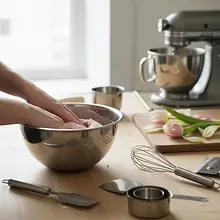
Start kneading the dough. You can do this by hand, gathering the ingredients from the center, or use a stand mixer with a dough hook. Knead for about 5 minutes until the ingredients come together into one sticky ball. Then, without stopping the kneading, start adding in batches (one tablespoon at a time) the melted and slightly cooled 120g of butter. Only add the next portion of butter once the previous one is completely absorbed into the dough.

Ingredients: Masło 82%
At first, the dough will be very sticky and it may seem like the butter doesn't want to combine - that's normal. Keep kneading patiently, and the dough will absorb all the fat.
5

Continue kneading the dough for another 10-15 minutes (by hand) or 7-10 minutes (with a mixer on medium speed). The finished dough should be smooth, shiny, very elastic, and pull away from the sides of the bowl and your hands. When pressed with a finger, it should slowly return to its shape. This is a key step for achieving a fluffy structure in the cake.

To check if the dough is well-kneaded, stretch a small piece between your fingers. It should form a thin, translucent membrane that doesn't tear immediately (the so-called gluten window test).

Rising and dividing the dough

6

Shape the dough into a ball, place it in a bowl, cover it tightly with plastic wrap or a damp cloth, and set it in a warm place to rise for about 1-1.5 hours. During this time, the dough should at least double in size.

A warm place is, for example, the interior of a turned-off oven with the light on or a bowl placed in the sink with warm water. Avoid drafts.
7

Place the risen dough on a lightly floured surface and knead briefly to release the gas. Use a kitchen scale to divide the dough into two equal parts. Set one part back in the bowl and cover it to prevent it from drying out. To the other part, add 20g of powdered freeze-dried raspberries and knead for 2-3 minutes until the color is evenly distributed and the dough absorbs the powder.

Ingredients: Freeze-dried raspberry powder
Raspberry powder can slightly dry out the dough. If it becomes too stiff, you can add half a teaspoon of milk. Work quickly to prevent the dough from drying out.

Shaping the 'Tulip' and second rising

8

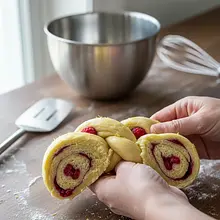
Roll out each portion of dough (light and pink) on the countertop into a rectangle measuring about 25x35 cm. Place the pink rectangle on top of the light one. Roll them together along the longer side into a tight log, like a roulade. Then, using a sharp knife, cut the log in half lengthwise, revealing the layers.

Try to roll the dough into rectangles of even thickness, which will ensure a nice pattern. When rolling it up, do it tightly to avoid any empty spaces inside the cake.
9

Take both halved pieces and braid them together like a braid, trying to keep the cut side facing up so that the layers are visible. Gently join the ends to form a wreath, and then carefully transfer the braided dough to the previously prepared pan.

This step requires delicacy. Do not squeeze the dough too hard to avoid destroying its structure. When transferring the dough to the pan, you can use a wide spatula to help you.
10

Cover the cake pan with a cloth and set it in a warm place for the second rising for about 45 minutes. The dough should rise almost to the edges of the pan.

Do not let the dough rise above the mold, as it may collapse during baking. Preheat the oven halfway through this time.

Baking

11

Preheat the oven to 180°C (fan) or 190°C (top-bottom). Place the risen cake on the middle rack of the oven and bake for 40-45 minutes. After about 25 minutes, if the top of the cake starts to brown too quickly, loosely cover it with a piece of aluminum foil.

Every oven bakes differently, so keep an eye on the cake. To check if it's done, insert a wooden skewer into the thickest part. If it comes out dry, the cake is baked.
12

Remove the cake from the oven and leave it in the pan for 10-15 minutes to cool slightly. After this time, carefully turn the pan upside down and remove the cake onto a wire rack. Allow it to cool completely.

Do not remove the cake from the pan immediately after baking, as it is very delicate when hot and may fall apart. Cooling on a rack ensures air circulation and prevents the bottom from steaming.

Icing and decoration

13

When the cake is completely cool, prepare the icing. Sift 200g of powdered sugar into a bowl. Gradually add freshly squeezed lemon juice (about 50 ml), one tablespoon at a time, while vigorously mixing with a whisk or fork until you achieve a smooth, thick, but still liquid icing. The consistency should resemble thick cream.

Ingredients: Powdered sugar, Lemon juice
Add the juice slowly! Too much liquid at once will make the icing runny and transparent. If it turns out too runny, add more powdered sugar; if it's too thick - a little more juice.
14

Place the cake on a platter or plate. Drizzle it with the prepared icing, allowing it to flow freely down the sides, creating appetizing icicles. Before the icing sets, decorate the top of the cake. Optionally, you can sprinkle it with crushed freeze-dried raspberries and gently arrange edible flowers on top.

Ingredients: Freeze-dried raspberry powder, Edible flowers for decoration
To avoid a mess, place parchment paper under the rack with the cake to catch any excess dripping glaze. Decorate immediately after pouring, as the glaze sets quickly.

Fun Fact

💡

The name 'babka' in Polish culinary tradition likely comes from the fluted shape of the mold, which resembled a wide, pleated skirt worn by older women, known as 'baby'. Yeast babkas are symbols of rebirth and life, which is why they have become an inseparable part of the Easter table.

Best for

Tips

🍽️ Serving

The cake is best sliced with a serrated knife to avoid crushing its fluffy structure. Serve at room temperature. It pairs wonderfully with a cup of Earl Grey tea, a latte, or a glass of milk. It can also be served with a dollop of raspberry jam or lemon curd.

🥡 Storage

Store the cake under a dome or in an airtight container at room temperature for 3-4 days. Thanks to the large amount of butter and eggs, it stays fresh for a long time. The cake (without icing and decorations) can be frozen, tightly wrapped in plastic wrap and aluminum foil, for up to 2 months.

📸 Ugotowane przez społeczność

Zaloguj się, aby dodać zdjęcie
Dodaj zdjęcie gotowej potrawy

Po zatwierdzeniu przez moderatora otrzymasz 10 punktów doświadczenia.

🍲

Nikt jeszcze nie dodał zdjęcia. Bądź pierwszy!

Comments (0)

Be the first to comment on this recipe!

Add a comment

You might also like

Recipe Categories

Homemade cakes and pastries are the heart of Polish culinary tradition - sweet memories from childhood. In our collection, you will find recipes for classic yeast cakes, shortcrust, sponge, and cheesecake. Apple pie, poppy seed cake, gingerbread, Easter babka, chocolate cake, and New York cheesec...

See all recipes in this category

Dishes for special occasions are culinary masterpieces for birthdays, anniversaries, and holidays. Grilled beef steak with herb butter - restaurant quality at home. Beef Wellington - beef in puff pastry with duxelles. Roast duck with apples - a holiday tradition in a new edition. Pink salmon with...

See all recipes in this category
Desserts
Desserts in: New Year's Eve

A sweet ending to the New Year's Eve dinner is a must-have that will put everyone in a joyful mood for the new year.

See all recipes in this category

Christmas Eve is the most important evening of the year - a time for tradition, family, and special dishes. Our collection of Christmas Eve recipes includes all 12 traditional dishes: from red borscht with dumplings to poppy seed cake and kutia. Recipes for carp in various versions: fried, baked,...

See all recipes in this category
Reklama