Menu

Lemon-Vanilla Cream 'Sweet Blog' (lemon curd inspired version)

Desserts Cakes and Bakes 60 min Medium 9 wyświetleń ~31.51 PLN - (0)
Rate:
(0)

Description

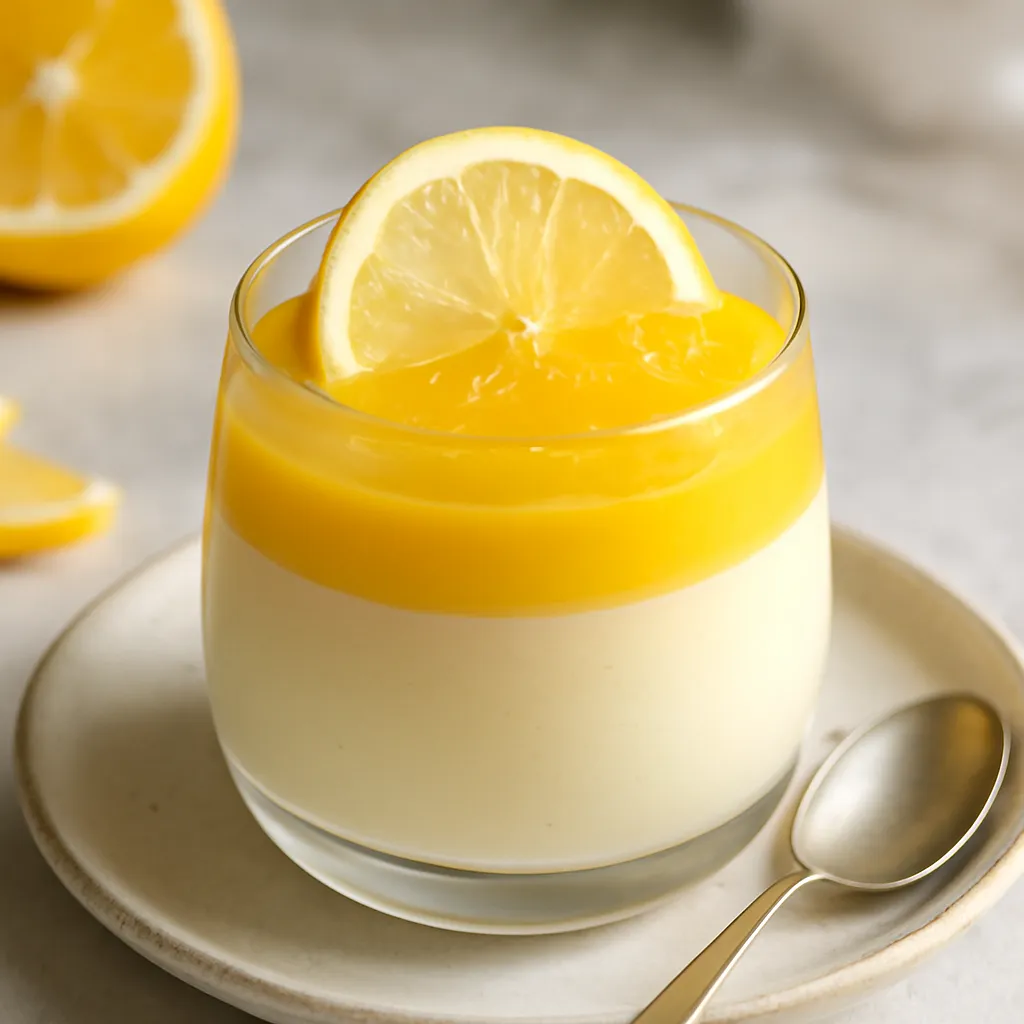
A delicate, velvety lemon cream with a hint of vanilla and honey – a modern, sweet interpretation of classic lemon curd. The cream combines the fresh acidity of lemon juice and zest with the gentle creaminess of mascarpone and the subtle sweetness of honey, resulting in a rich yet balanced flavor. Recommended as a filling for tarts, pancakes, layers in cakes, desserts in glasses, and as a delightful addition to toast with fresh fruits. Visually, the cream has a velvety, light yellow color with fine, natural fibers of lemon zest, looking elegant served in small jars with a mint leaf.

Składniki (11)

Servings:
8
  • Egg 4 szt.
  • sugar 150 g
  • Butter 100 g
  • Lemon juice 120 ml
  • Lemon zest (grated) 3 łyżeczki
  • Mascarpone 200 g
  • Honey 30 ml
  • Vanilla extract 5 g
  • 🌿 Przyprawy
  • Salt 0.0 szczypt
  • ✨ Opcjonalne
  • Limoncello liqueur 15 ml
  • Butter cookies (for the base, optional) 200 g
💰 Szacowany koszt dania: ~31.51 PLN (3.94 PLN/porcję)

💡 Kliknij na składnik aby oznaczyć jako użyty

Preparation steps

Cream

1

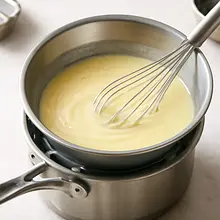
Prepare your workspace and tools: kitchen thermometer, metal bowl, saucepan for a water bath (a pot with a diameter that allows the bowl to sit securely on top), hand whisk, strainer, silicone spatula. Make sure all utensils are dry and free from grease.

Use a metal bowl (e.g. stainless steel) for the water bath - glass can retain heat longer and make it harder to control the temperature. Also, prepare a cold bowl with ice if you need to cool the cream quickly.
2

Grate the lemon zest on a fine grater - only the yellow part, without the white (bitter). Then cut the lemons in half and squeeze the juice: measure 120 ml of fresh juice and set aside. Measure 6 g of zest and leave it to add later.

Ingredients: Lemon juice, Lemon zest (grated)
Use a fine citrus grater or a coarse microplane. Squeeze the juice by hand or with a citrus juicer to avoid bitter seeds. If the juice does not reach the desired volume, add juice from an additional lemon.
3

In a metal bowl, place 240 g of eggs and 150 g of sugar. Whisk by hand for 1–2 minutes until the mixture becomes lighter and slightly fluffy. Add 30 g of honey, 5 g of vanilla extract, and 1 g of salt; gently mix until combined.

Ingredients: Egg, sugar, Honey, Vanilla extract, Salt
Whisk vigorously, but you don't need a foam like for a sponge cake — the goal is to dissolve the sugar and aerate the mixture. If the sugar is coarse, you can sift it first or use fine sugar.
4

Set a saucepan with a 3–4 cm layer of hot (not boiling) water. Place a bowl with the egg mixture on top, ensuring that the bottom of the bowl does not touch the water (double boiler). Continuously stir the mixture with a whisk or silicone spoon and slowly pour in 120 ml of lemon juice, mixing constantly until the ingredients are combined.

Ingredients: Lemon juice, Egg
Maintain a gentle simmer in the pot — too vigorous boiling will overheat the mixture. Keep the thermometer in the mixture; the temperature should not exceed 82°C, ideally 70–78°C, at which point the cream will thicken, but the eggs will not curdle.
5

While heating, watch the consistency: after about 8–12 minutes, the cream should thicken and reach the consistency of thick pudding – when the bowl is shaken, the mixture should slowly flow off the spoon, and the mark left by a finger on the back of the spoon should remain.

Ingredients: Egg
If small lumps appear (a sign of slight curdling), immediately remove the bowl from the heat and stir vigorously or strain through a sieve (described in step 8). Continue stirring every 30 seconds to evenly heat the mixture.
6

When the mixture reaches the desired thickness and temperature (70–78°C), remove the bowl from the water bath. Immediately add 100 g of diced butter and mix vigorously with a silicone spatula or whisk until the butter is completely melted and the cream becomes silky.

Ingredients: Butter
Add the butter in small pieces, one or two at a time, to emulsify it evenly. If you add it all at once at too low a temperature, the butter may not combine.
7

Pass the hot cream through a fine sieve into a clean bowl, pressing with a spatula to remove any lumps or large pieces of peel. To the strained cream, add 6 g of grated lemon zest and 200 g of mascarpone, mixing gently until the mixture is smooth and uniform.

Ingredients: Mascarpone, Lemon zest (grated)
Straining will ensure a smooth consistency of the cream. Gradually add the mascarpone and mix gently - this will prevent curdling and maintain the creaminess.
8

Add 15 g of limoncello liqueur, if using (optional). Taste the cream and adjust with an additional teaspoon of honey or a pinch of salt if you want to balance the flavor.

Ingredients: Limoncello liqueur, Honey, Salt
Add the liqueur only after cooling the cream to about 40°C, so that the evaporation of alcohol does not disturb the aroma. Remember that the liqueur is optional — omit when serving for children.

Assembly and cooling

9

Cover the surface of the cream with plastic wrap so that the wrap touches the cream (this will prevent a 'skin' from forming) and set aside to cool to room temperature, then place in the refrigerator for at least 3 hours (ideally 6-12 hours). The cream will thicken and develop a fuller flavor.

Ingredients: Mascarpone
Touching the surface of the cream with plastic wrap is crucial — if you skip this step, an unpleasant crust will form. Cooling at a low temperature will allow the cream to set properly.
11

On the prepared base (if using), spread the cream with a spoon or piping bag; in the cups, add a layer of cookies, a layer of cream, and repeat. Decorate the top with a bit of grated lemon zest or a mint leaf.

Ingredients: Lemon zest (grated), Butter cookies (for the base, optional)
Using a piping bag gives an aesthetic look. If the cream is too thick after taking it out of the fridge, remove it 10 minutes before use and gently stir with a spatula.
12

Serve the cream chilled; it tastes best on the same day or up to 3 days after preparation. Before serving, you can add fresh fruits (raspberries, blueberries) for a sweet-tart contrast.

Serve in small portions (the cream is intense). If you prepare it in advance, store it in the refrigerator in an airtight container.

Base (optional)

10

If you want to serve the cream in a layered dessert style: crush 200 g of butter cookies (to a fine sand consistency), mix with 40 g of melted butter (not listed in the ingredients - a few tablespoons of butter from step 6 will be enough) and press firmly into the bottom of glasses or a small mold.

Ingredients: Butter cookies (for the base, optional)
To crush the cookies, use a bag and a rolling pin or a blender on pulse. If you don't have extra butter, use a thin layer of cream as 'glue' for the cookies.

Fun Fact

💡

Citrus creams have a long history in European kitchens; lemon curd appeared in 19th-century England as a way to use lemons and eggs. This version combines the classic idea with the Italian softness of mascarpone.

Best for

Tips

🍽️ Serving

Serve chilled, preferably in small jars or as a layer in a cake. It pairs wonderfully with meringues, thin pancakes, fresh fruits (raspberries, blueberries), and shortcrust pastry. For an elegant touch, arrange a strip of lemon zest and mint leaves.

🥡 Storage

Store the cream in an airtight container in the refrigerator for up to 3 days. Do not freeze the mascarpone cream - the texture may be ruined. If the cream thickens too much after cooling, take it out 10–15 minutes before serving and gently mix.

📸 Ugotowane przez społeczność

Zaloguj się, aby dodać zdjęcie
Dodaj zdjęcie gotowej potrawy

Po zatwierdzeniu przez moderatora otrzymasz 10 punktów doświadczenia.

🍲

Nikt jeszcze nie dodał zdjęcia. Bądź pierwszy!

Comments (0)

Be the first to comment on this recipe!

Add a comment

You might also like

Recipe Categories

Desserts
Desserts in: Christmas Eve Dinner

Desserts are a sweet ending to a meal that brings joy to both children and adults. In this category, we present recipes for a variety of sweets - from simple creams and mousses, to elegant panna cottas, and exquisite fruit tarts. Our desserts include both classics of Polish cuisine - fruit jelly,...

See all recipes in this category

Homemade cakes and pastries are the heart of Polish culinary tradition - sweet memories from childhood. In our collection, you will find recipes for classic yeast cakes, shortcrust, sponge, and cheesecake. Apple pie, poppy seed cake, gingerbread, Easter babka, chocolate cake, and New York cheesec...

See all recipes in this category
Reklama