Menu

Czech Dumplings with Plums and Poppy Seeds (Švestkové knedlíky s mákem)

Czech Cuisine Main dishes Desserts 120 min Medium 4 wyświetleń ~25.19 PLN - (0)
Rate:
(0)

Description

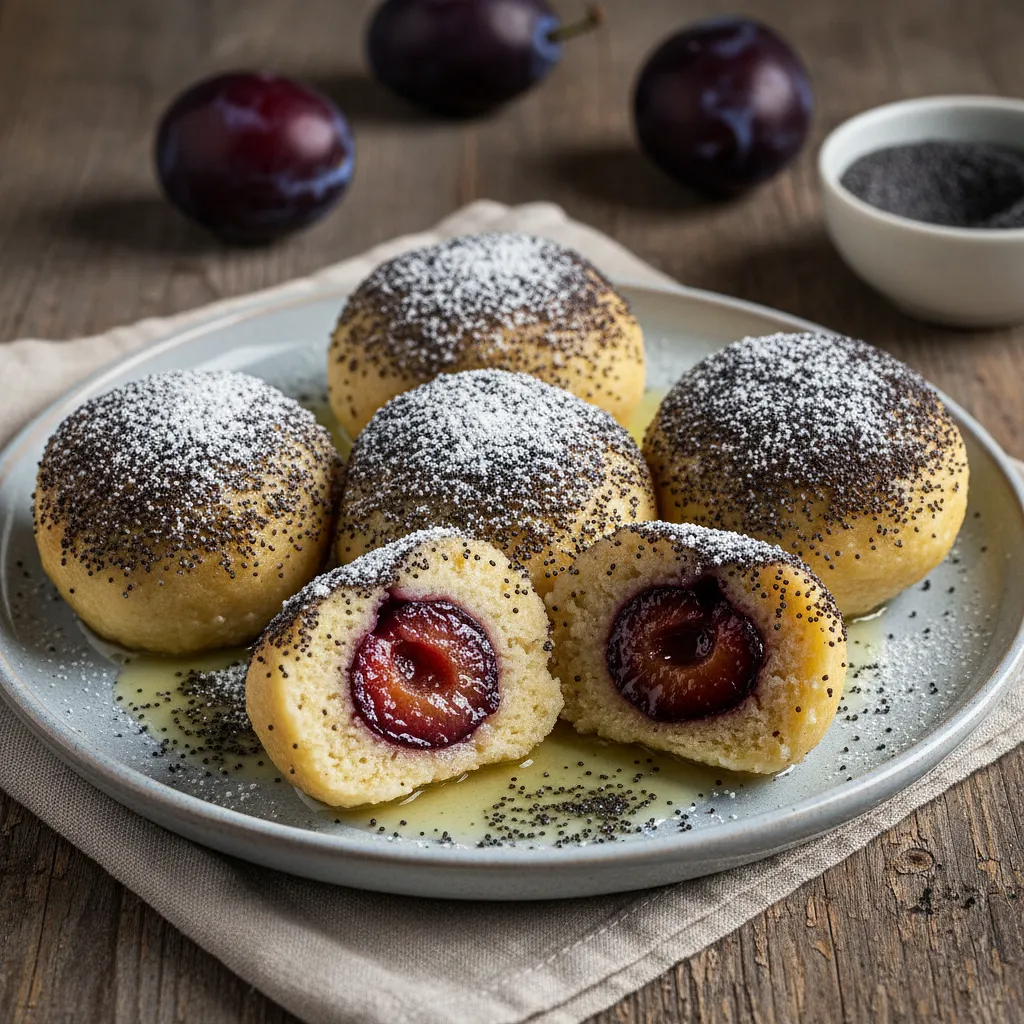
Here is the essence of Czech home cooking – fluffy, yeast dumplings that hide a juicy, ripe plum at their core. This dish is often served in the Czech Republic as a full-fledged sweet lunch, especially during the late summer and autumn season when plums are at their best. The dumplings, steamed or boiled, become incredibly tender and light after cooking. They are traditionally served with a generous portion of melted butter that soaks into the dough, and abundantly sprinkled with a mixture of ground poppy seeds and powdered sugar. The contrast of the sweet, fluffy dough, the slightly tart fruit, and the nutty flavor of the poppy seeds creates an unforgettable culinary experience. Visually, the dish is simple and rustic, evoking the warmth of a home hearth and grandmother's kitchen. It is the perfect suggestion for a lazy weekend lunch or a hearty dessert.

Składniki (11)

Servings:
4
  • Wheat flour type 500 500 g
  • Milk 3.2% 250 ml
  • Fresh yeast 25 g
  • Egg 1 szt.
  • White sugar 15 g
  • Butter 120 g
  • Hungarian plums 800 g
  • Ground poppy seeds 100 g
  • Powdered sugar 100 g
  • 🌿 Przyprawy
  • Salt 0.1 szczypt
  • ✨ Opcjonalne
  • Semi-fat cottage cheese 200 g
💰 Szacowany koszt dania: ~25.19 PLN (6.30 PLN/porcję)

💡 Kliknij na składnik aby oznaczyć jako użyty

Preparation steps

Preparing the yeast dough

1

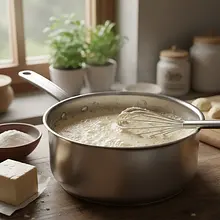
Start by preparing the yeast starter. In a small saucepan, heat 250 ml of milk. It should be lukewarm, at a temperature of about 37°C – when you put your finger in it, it should feel pleasantly warm but not hot. Crumble 25 g of fresh yeast into a large bowl, add one tablespoon of sugar, and pour the warm milk over it. Gently mix with a fork until the yeast dissolves. Cover the bowl with a clean cloth and set it in a warm, draft-free place for about 10-15 minutes. After this time, a thick, bubbly foam should appear on the surface, which is a sign that the yeast is active and ready to work.

Ingredients: Milk 3.2%, Fresh yeast, White sugar
The most common mistake is using milk that is too hot, which kills the yeast. If no foam appears after 15 minutes, it means the yeast is inactive and you need to start over. Use a large bowl, as the starter will increase in volume.
2

In a separate, very large bowl, sift 500 g of wheat flour. Sifting will aerate the flour and make the dough lighter. Add two pinches of salt and mix. Make a well in the center of the flour, resembling a crater. Crack one room temperature egg into it. In a small saucepan, melt 20 g of butter and let it cool slightly, then add it to the well as well. Finally, pour in the entire active yeast starter.

Ingredients: Wheat flour type 500, Salt, Egg, Butter
Use a really large bowl, as the dough will double in size. Remember to add the salt to the flour, not directly to the starter – salt inhibits the action of the yeast.
3

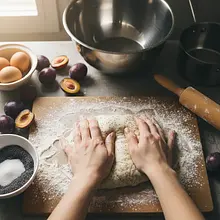
Now it's time to knead the dough. You can do this by hand or with a mixer using dough hooks. Start by gently mixing the ingredients in a bowl with a wooden spoon, and when they begin to combine, transfer the dough to a floured work surface. Knead the dough vigorously for about 10-12 minutes, folding and stretching it. If you are using a mixer, knead on medium speed for 7-8 minutes. The finished dough should be smooth, elastic, and come away from your hands and the sides of the bowl. Shape it into a ball.

Don't be discouraged if the dough is sticky at first – as you knead, the gluten will develop and the dough will become more cohesive. Avoid adding too much flour so that the dough doesn't turn out tough. Properly kneaded dough should slowly return to its shape when pressed with a finger.
4

Dust the bowl in which you kneaded the dough lightly with flour. Place the ball of dough in it, cover tightly with plastic wrap or a damp kitchen towel, and set aside in a warm place for about 60-90 minutes. The dough must double in size. An ideal place is a slightly warmed (to about 30°C) and turned-off oven.

To check if the dough is ready, press two fingers into it to a depth of about 2 cm. If the indentations remain, the dough is ready for further processing. If they disappear, it needs a little more time.

Shaping the dumplings

5

While the dough is rising, prepare the filling. Wash 800 g of plums thoroughly and dry them with a paper towel. Cut each plum in half lengthwise, but not all the way through, and gently remove the pit. If the plums are very sour, you can sprinkle a little sugar inside each one.

Ingredients: Hungarian plums
Choose firm plums, not overripe ones. Too soft fruits will release too much juice and may make the dough soggy from the inside, making it difficult to seal the dumplings.
6

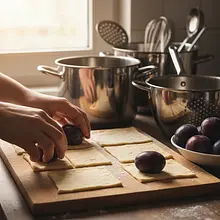
Remove the risen dough onto a lightly floured work surface. Punch it down to release the gas, then briefly knead it. Roll out the dough into a flat disc about 1 cm thick. Using a knife or pastry cutter, cut the disc into equal squares with sides of about 7-8 cm.

Try not to use too much flour for dusting, as excess flour can make it difficult to seal the edges of the dumplings.
7

In the center of each square of dough, place one whole plum (or two halves). Now comes the most important moment: sealing. Grab two opposite corners of the square and press them tightly together. Then, grab the remaining two corners and press them towards the center as well. Finally, thoroughly seal all the edges formed, shaping a neat, round ball in your hands. Make sure there are no holes.

This is a crucial step! If the dumplings are not sealed properly, they will open during cooking, and the filling will spill out. After shaping, roll the dumpling in your hands to give it a smooth, round shape.
8

Place the shaped dumplings on a floured board or countertop, leaving small gaps between them. Cover them with a clean kitchen towel and let them rest for about 15-20 minutes to rise again. During this time, the dumplings will puff up slightly.

Do not skip this step. The second short rising will make the dumplings even fluffier and more delicate after cooking.

Cooking dumplings

9

In a large, wide pot, bring a substantial amount of water to a boil (at least 3-4 liters). Salt the water by adding about 1 teaspoon of salt per liter of water. Reduce the heat so that the water is just gently simmering, not boiling vigorously.

Use the largest pot possible so that the dumplings have room to float freely and do not stick together. Too vigorous boiling can cause the dumplings to fall apart.
10

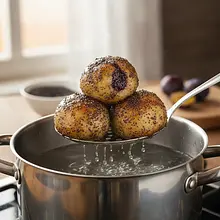
Gently place the dumplings into boiling water, in batches of 4-5 pieces, to avoid lowering the water temperature too much. After adding them, gently stir the water with a wooden spoon to prevent the dumplings from sticking to the bottom. Cook for about 8-10 minutes from the moment they float to the surface. Halfway through cooking, you can gently turn them over to the other side.

Do not overcrowd the pot. The dumplings will expand while cooking. The finished dumplings are clearly swollen and fluffy.
11

Remove the cooked dumplings from the water using a slotted spoon, allowing the excess water to drain. Immediately after removing, poke each dumpling in several places with a fork or a wooden skewer. This is a very important step that allows steam to escape from the inside and prevents the dough from collapsing and becoming dense.

This is a traditional Czech trick that must not be skipped! Thanks to it, the dumplings will remain light and fluffy. Place the cooked dumplings on a plate or platter.

Serving

12

In a small saucepan over low heat, melt 100 g of butter. In a bowl, mix 100 g of ground poppy seeds with 100 g of powdered sugar. If you are using cottage cheese, crumble it with your fingers into smaller pieces.

Ingredients: Butter, Ground poppy seeds, Powdered sugar, Semi-fat cottage cheese
Be careful not to burn the butter. It should be liquid and have a nutty aroma. You can adjust the amount of sugar in the topping to your own preferences.
13

Serve the dumplings immediately after cooking, while they are hot. On a plate, arrange 3-4 dumplings, generously drizzle them with melted butter, and then sprinkle them generously with a mixture of poppy seeds and powdered sugar. You can also top them with crumbled cottage cheese. Enjoy your meal, or 'Dobrou chuť'!

Dumplings taste best when fresh. Don't wait to serve them, as they lose their fluffiness when they cool down.

Fun Fact

💡

In the Czech Republic, fruit dumplings (ovocné knedlíky) are not only considered a dessert. They are often served as a main dish for lunch, especially in the summer. This is part of the culinary tradition of so-called 'sweet lunches', which is also popular in Austria and parts of Germany.

Best for

Tips

🍽️ Serving

Serve the dumplings on deep plates so the melted butter doesn't escape. In addition to poppy seeds and cottage cheese, a dollop of thick sour cream or Greek yogurt pairs wonderfully, balancing the sweetness. They can also be drizzled with vanilla sauce.

🥡 Storage

Dumplings taste best fresh after cooking. If there are any leftovers, store them in the refrigerator in a closed container for up to 2 days. It's best to reheat them by steaming for a few minutes (e.g., in a strainer placed over a pot of boiling water) – this way they will regain their fluffiness. Reheating in the microwave may make them rubbery.

📸 Ugotowane przez społeczność

Zaloguj się, aby dodać zdjęcie
Dodaj zdjęcie gotowej potrawy

Po zatwierdzeniu przez moderatora otrzymasz 10 punktów doświadczenia.

🍲

Nikt jeszcze nie dodał zdjęcia. Bądź pierwszy!

Comments (0)

Be the first to comment on this recipe!

Add a comment

You might also like

Recipe Categories

Czech cuisine is a treasure trove of Central European flavors - hearty, aromatic, and full of tradition. Discover classic Czech dumplings - steamed, bread, or potato, served with sauces and braised meat. Svíčková na smetaně, vepřo-knedlo-zelo, smažený sýr, or trdelník are just some of the iconic ...

See all recipes in this category
Main dishes
Main dishes in: New Year's Eve

Main dishes for New Year's Eve should be hearty and impressive to satisfy the palates of all guests.

See all recipes in this category
Desserts
Desserts in: New Year's Eve

A sweet ending to the New Year's Eve dinner is a must-have that will put everyone in a joyful mood for the new year.

See all recipes in this category

Vegetarian cuisine is a wealth of flavors without meat - healthy, colorful, and filling. Plant-based proteins: lentils, chickpeas, beans, peas, and soy take center stage. Cheeses and dairy: feta, halloumi, ricotta, and mascarpone in main dishes. Eggs in various forms: omelets, frittata, shakshuka...

See all recipes in this category
Kids' Lunches
Kids' Lunches in: For Kids

Meals for children are tasty dishes in appropriate portions - healthy and visually appealing. Meatballs in tomato sauce with pasta - a classic loved by kids. Chicken patties in a breading with carrots and potatoes. Pasta with cheese - simple and always effective. Tomato soup with letters or stars...

See all recipes in this category
Reklama