Menu

Homemade egg pasta with a hint of lemon and dill for broth (in the style of Olga Smile)

Main Dishes Additions European cuisine 90 min Medium 15 wyświetleń ~7.23 PLN - (0)
Rate:
(0)

Description

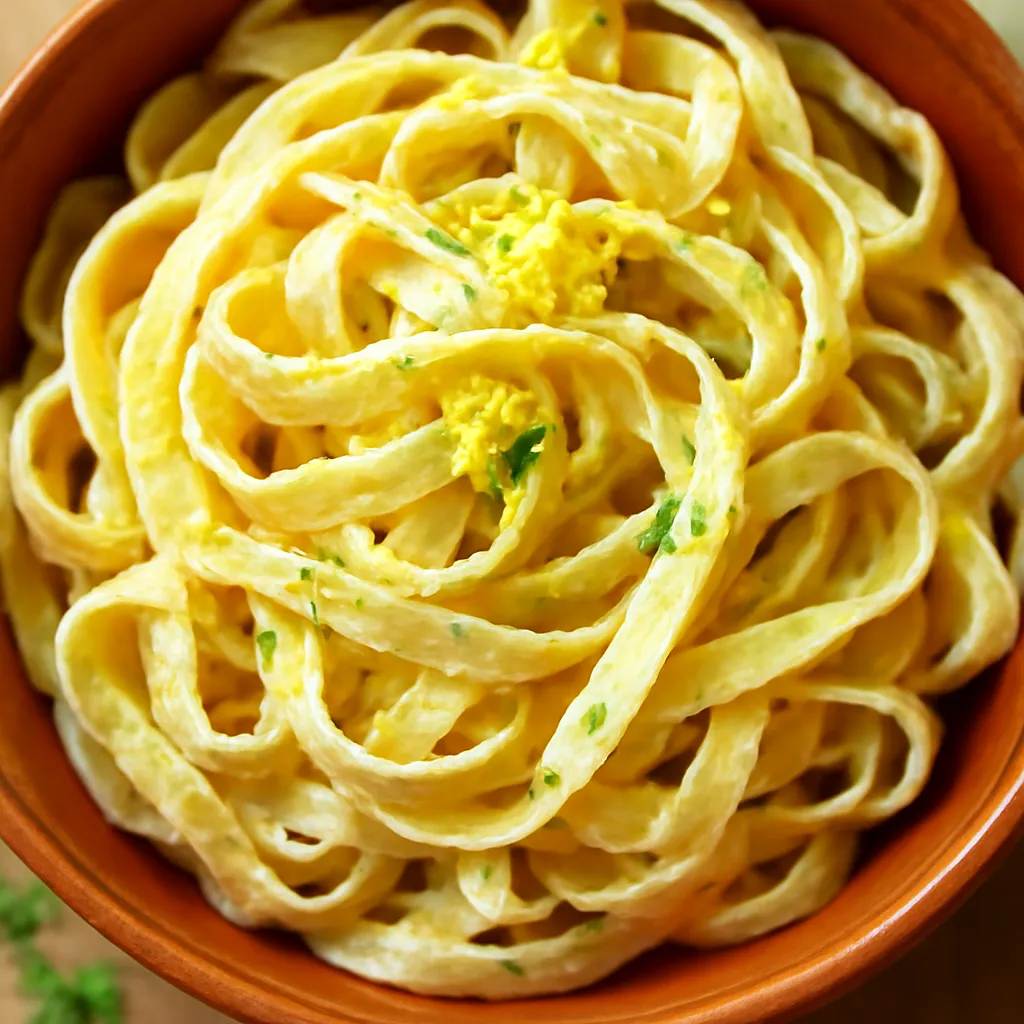
Delicate, wide egg noodles made from scratch, designed for classic broth, but with a distinctive, fresh lemon-dill twist inspired by Olga Smile's style. This soft, yellow pasta has a delicate texture that perfectly absorbs the aromas of the broth while maintaining its elasticity. Served in a clear chicken or vegetable broth, it creates a harmonious composition — visually appetizing ribbons (about 6–8 mm wide) with tiny green "dots" of dill and a subtle lemon zest that brightens the flavor. Perfect for a family dinner, Sunday broth, or when you want to elevate a classic soup with homemade, aromatic noodles.

Składniki (7)

Servings:
4
  • Wheat flour 400 g
  • Egg 4 szt.
  • Olive oil 30 ml
  • 🌿 Przyprawy
  • Salt 0.2 szczypt
  • ✨ Opcjonalne
  • Fresh dill 1 pęczek
  • Lemon zest (grated) 1 łyżeczka
  • Clarified butter (ghee) 30 g
💰 Szacowany koszt dania: ~7.23 PLN (1.81 PLN/porcję)

💡 Kliknij na składnik aby oznaczyć jako użyty

Preparation steps

Preparation of ingredients

1

Prepare your workspace: a clean, dry countertop or pastry board, a large bowl, a rolling pin, a knife, a lemon zester, kitchen tongs, and a sieve. Weigh all ingredients accurately in grams. Take the eggs out of the fridge for 15–20 minutes to reach room temperature — this makes it easier to combine with the flour.

Ingredients: Wheat flour, Egg, Salt, Olive oil, Lemon zest (grated)
Use a kitchen scale for accurate measuring. If you don't have a scale, remember that 1 egg = ~60 g. Tools: scale, cutting board, sharp knife, lemon zester.
Cake

2

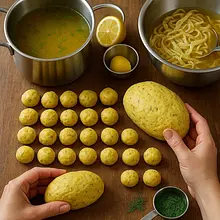
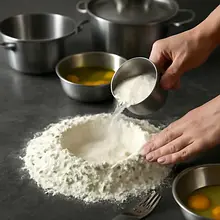
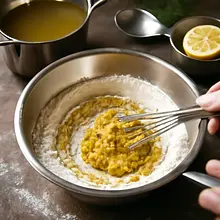
On a wide countertop, pile the flour into a mound, level the surface, and then make a deep well in the center (about 8–10 cm in diameter). Gradually crack the eggs into the well (first three, then check the consistency, you can add the last one if needed), add salt and oil. Focus on mixing the inner part first with a fork — mix the eggs with the flour only in the central part until a thick, sticky mass forms. This is the classic "well" method.

Ingredients: Wheat flour, Egg, Salt, Olive oil
Use a large bowl if you don't want to do this on the countertop. If the dough is too dry and doesn't come together, add a little lukewarm water (5–10 ml at a time). If it's too wet, add a little flour. Tool: fork, bowl, or wooden spoon.
3

When the mixture in the center starts to thicken and holds onto the remaining flour, begin to pull the flour from the sides of the mound and knead it with the central mixture using your hand or a spatula. Knead the dough for 8–10 minutes — press, scrape, and fold the dough over itself. The dough is ready when it is smooth, elastic, slightly springy, and stops sticking heavily to your hands (if it sticks slightly, dust the countertop with a little flour).

Ingredients: Wheat flour, Egg, Salt, Olive oil
If you have a mixer with a dough hook, you can use it on low speed for 4–6 minutes. Do not knead for too long (more than 12 minutes), as the dough will become too elastic. Tool: hands, mixer with a hook (optional).
4

Form a ball from the dough with a diameter of about 10–12 cm, wrap it tightly in plastic wrap or place it in a bowl and cover it with a damp cloth. Set aside at room temperature for 30 minutes — this resting period will allow the gluten to relax and make rolling easier.

Ingredients: Wheat flour, Egg
Do not skip the resting time — it can make rolling out difficult (the dough will shrink). Tool: plastic wrap or a clean cloth.

Rolling and cutting

5

Divide the dough into 2–3 equal parts (smaller parts are easier to roll out). Take one part and cover the rest. Sprinkle the countertop with a thin layer of flour, place a piece of dough on it, and roll it out with a rolling pin into a rectangle about 1–2 mm thick (for wide ribbon pasta). If you have a pasta machine, pass the dough through the thickest setting several times, then gradually decrease the thickness to 1–2 mm.

Ingredients: Wheat flour, Egg
If the dough shrinks after rolling, wait 2–3 minutes and try again. Use your fingers or a brush to remove excess flour. Tool: rolling pin or pasta machine, dough knife or pasta cutter.
6

Sprinkle the rolled-out sheet lightly with flour, gently fold it lengthwise (not tightly) into three or four layers to make cutting easier. Using a sharp knife, cut into strips 6–8 mm wide (for broth noodles, I prefer wider strips that hold the broth well). Unroll the strips and lay them out on a clean cloth or pasta dryer to dry slightly (10–15 minutes).

Ingredients: Wheat flour, Egg
Don't cut too thin — they will fall apart in the hot broth. Use a sharp pastry knife or a pizza cutter. Tool: sharp knife, cloth, or pasta hanger.

Cooking

7

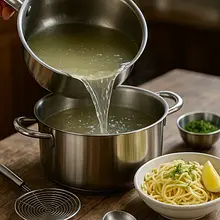
Prepare a broth (clear, hot) or a large amount of salted boiling water — for 4 servings, use at least 2–3 liters of broth/water. When the broth is gently boiling (not vigorously), add portions of fresh pasta (not all at once, to maintain the temperature). Cook the pasta for 2–4 minutes, depending on the thickness — start checking after 2 minutes. The pasta should be al dente: soft, but with a slight resistance in the center.

Ingredients: Salt, Wheat flour, Egg
Cook briefly — fresh pasta cooks much faster than dried. Use a colander or tongs to conveniently add and remove portions. If cooking in water, remember to heat the broth before serving.

Finishing and serving

8

After removing the pasta from the broth (if the pasta is served in the broth — remove it directly into bowls with hot broth), add 1/2 tablespoon of clarified butter (optional) on top and gently mix to give it a shine. Sprinkle with finely chopped fresh dill and a bit of grated lemon zest (optional) — these additions should be added just before serving to keep them fresh and aromatic.

Ingredients: Clarified butter (ghee), Fresh dill, Lemon zest (grated), Wheat flour, Egg
Additionally, you can add dill to enhance the flavor. Use a small teaspoon to spread the butter over the pasta to avoid washing out the taste of the broth. Tool: teaspoon, small knife for chopping dill.

Serving and Portioning

9

Pour hot broth into each bowl first, add a portion of pasta (about 120–150 g of cooked pasta per serving), and make sure the pasta is evenly distributed. Finally, add a few sprigs of dill for decoration and serve immediately. The pasta tastes best right after preparation — it is then the most delicate.

Ingredients: Fresh dill, Lemon zest (grated), Clarified butter (ghee)
If you are serving broth at a party, keep the pasta separate and add it to the bowls just before serving to avoid it becoming soggy. Tool: ladle with broth, soup bowls.

Fun Fact

💡

Egg noodles have a long history in Central European and Italian cuisines — homemade ribbons served with broth were a symbol of Sunday dinner. Adding lemon and dill is a modern touch that Olga Smile often uses to bring freshness and lightness to tradition.

Best for

Tips

🍽️ Serving

Serve the pasta directly in hot broth to prevent it from soaking up too much liquid. If the pasta is to be served as a side (on a plate next to the broth), lightly sauté it in clarified butter until shiny and add a bit of dill. For children, blend some of the broth with the pasta if they prefer a smooth consistency.

🥡 Storage

Raw, freshly cut pasta can be lightly dried (on a cloth) for 1–2 hours, then transferred to a bag and stored in the refrigerator for up to 24 hours. Cooked pasta for broth should not be stored in the broth for longer than 2 hours — it will become soggy. Frozen raw pasta: arrange portions on a tray, freeze, and then transfer to bags; it can be stored for up to 2 months. Cooked frozen pasta should be boiled directly from frozen for 1–2 minutes longer.

📸 Ugotowane przez społeczność

Zaloguj się, aby dodać zdjęcie
Dodaj zdjęcie gotowej potrawy

Po zatwierdzeniu przez moderatora otrzymasz 10 punktów doświadczenia.

🍲

Nikt jeszcze nie dodał zdjęcia. Bądź pierwszy!

Comments (0)

Be the first to comment on this recipe!

Add a comment

You might also like

Recipe Categories

Main Dishes
Main Dishes in: Christmas Eve Dinner

Main courses are the heart of every meal - hearty, delicious, and full of nutrients. Meats: beef, pork, poultry, and lamb in various versions. Fish and seafood: baked, fried, grilled, and stewed. Vegetarian dishes: tofu, tempeh, legumes as the main protein. Casseroles: pasta, potato, vegetable wi...

See all recipes in this category
Additions
Additions in: Christmas Eve Dinner

Side dishes complement main courses and influence the overall meal experience. In this category, we present recipes for potatoes, grains, rice, dumplings, and salads. Our dishes include classic Polish sides - kopytka, Silesian dumplings, mashed potatoes. You will also find modern alternatives - q...

See all recipes in this category

European cuisine is a mosaic of culinary traditions from the Old Continent - from Spain to Scandinavia. Valencian paella and tapas from Spain - sunshine on a plate. Boeuf bourguignon and ratatouille from France - elegance and finesse. Wiener schnitzel and strudel from Austria - Central European c...

See all recipes in this category
Reklama