Menu

Autumn potato dumplings with red cabbage and apple stew

Czech Cuisine Main dishes Vegetarian Dishes 120 min Medium 5 wyświetleń ~26.86 PLN - (0)
Rate:
(0)

Description

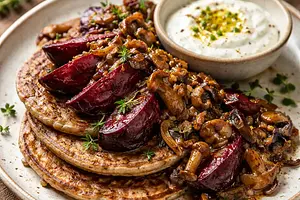
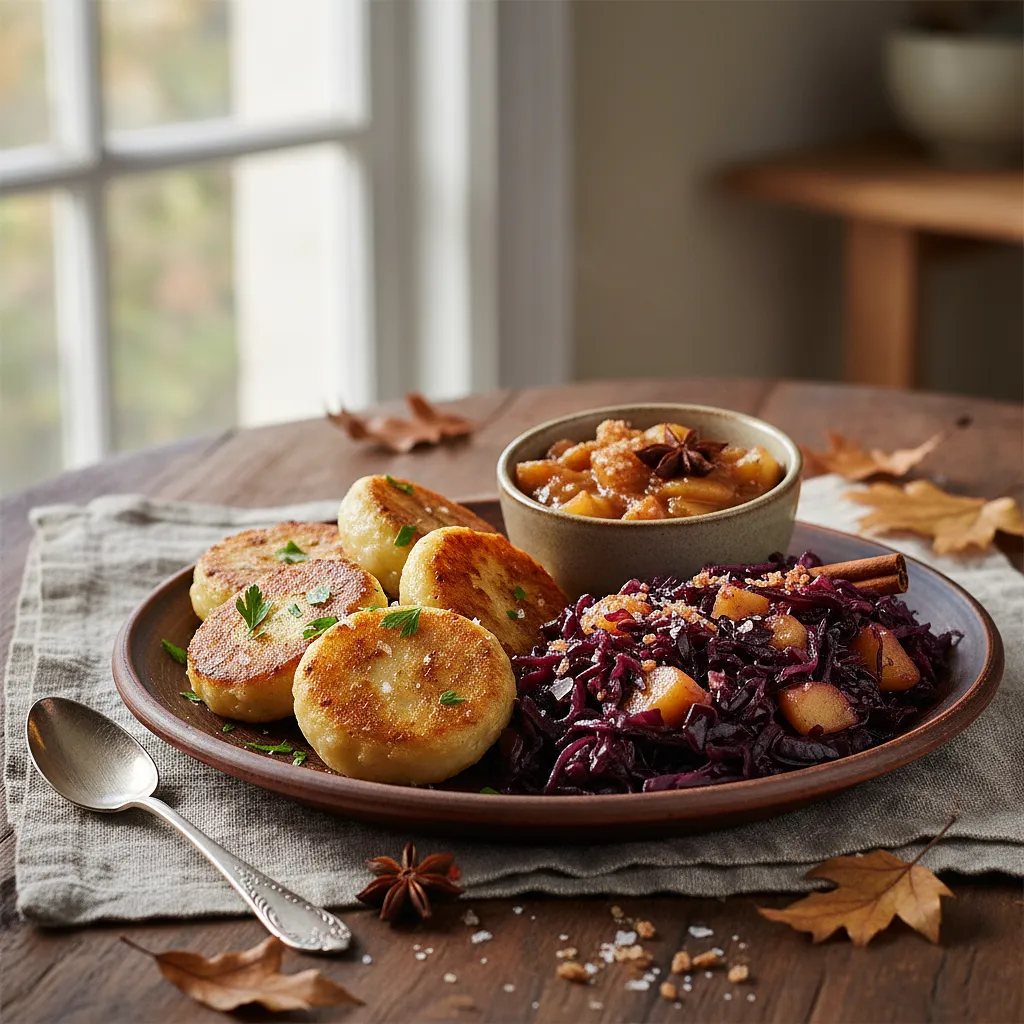
This dish is a tribute to Czech culinary tradition, presented in a modern, autumnal version. The heart of the dish is delicate, fluffy potato dumplings (bramborové knedlíky) that melt in your mouth. Instead of traditional white cabbage, it is accompanied by a thick, aromatic red cabbage stew, slowly simmered with sweet and sour apples, onions, and spices such as cloves and allspice. The whole creates an incredibly harmonious composition of flavors – the sweetness of the apples and sugar perfectly balances the acidity of the wine vinegar and the deep taste of the cabbage. The dish is topped with crispy, golden fried onions in butter, which add texture and rich aroma. It is a hearty, warming, and extremely comforting dish, perfect for chilly autumn and winter days. Visually, the dish delights with the contrast of purple cabbage and light dumplings, making it not only delicious but also a beautiful option for a family dinner.

Składniki (17)

Servings:
4
  • Potatoes 6.7 szt.
  • Potato starch 200 g
  • Egg 1 szt.
  • Red cabbage 800 g
  • Onion 3.3 szt.
  • Apple 1.7 szt.
  • Rapeseed oil 30 g
  • Butter 30 g
  • Red wine vinegar 45 ml
  • Brown sugar 25 g
  • Vegetable broth 200 ml
  • 🌿 Przyprawy
  • Salt 10 g
  • Pieprz czarny świeżo mielony 2 szczypty
  • Allspice 3 g
  • Bay leaf 6.7 szt.
  • Cloves 2 g
  • ✨ Opcjonalne
  • Fresh marjoram 10 g
💰 Szacowany koszt dania: ~26.86 PLN (6.72 PLN/porcję)

💡 Kliknij na składnik aby oznaczyć jako użyty

Preparation steps

Potato dumplings

1

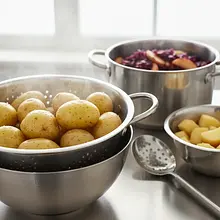
Start by preparing the potatoes. Wash the potatoes thoroughly under running water, but do not peel them. Place them in a large pot and cover with cold water so that they are completely submerged. Add a teaspoon of salt to the water. Cook over medium heat for about 20-30 minutes from the moment it starts boiling. The cooking time depends on the size of the potatoes. To check if they are done, pierce the largest potato with a fork or a sharp knife – it should go in smoothly, without resistance.

Ingredients: Potatoes, Salt
Use a large pot (about 5 liters) so that the potatoes have enough space. Cooking them in their skins prevents excessive water absorption, which is key for the consistency of the dumplings.
2

When the potatoes are cooked, drain them immediately. While they are still very hot, but cool enough to handle (use an oven mitt or a clean cloth), peel them. Pass the hot potatoes through a potato ricer directly onto a work surface or into a large bowl. If you don't have a ricer, you can use a meat grinder or mash them very thoroughly with a masher. Spread the potato mixture in a thin layer and leave it to cool completely (about 30-40 minutes).

Ingredients: Potatoes
This is the most important step! Pressing the potatoes while hot and cooling them in a spread-out form allows excess moisture to evaporate. This way, the dough for the dumplings will be firm and will require less flour. Do not use a blender or food processor, as the mixture will become sticky.
3

To the completely cooled potato mixture, add the sifted potato starch, crack in one egg, and add a flat teaspoon of salt. Now, vigorously but briefly knead all the ingredients by hand, just until they come together into a smooth, uniform dough. The finished dough should be elastic and not stick too much to your hands.

Ingredients: Potato starch, Egg, Salt
Do not knead the dough for too long! The longer you knead it, the more it becomes thin and sticky, resulting in tough dumplings. Just 1-2 minutes of vigorous kneading is enough.
4

On a lightly dusted potato starch surface, shape the dough into two or three rolls with a diameter of about 5-6 cm. Using a sharp knife, cut the rolls into slices about 2 cm thick. From each slice, form a neat, round or slightly oval dumpling in your hands. Try to ensure that all the dumplings are of similar size so they cook evenly.

Ingredients: Potato starch
If the dough is slightly sticky, dust your hands with a little potato starch. Do not use too much flour, as the dumplings will be tough. Place the shaped dumplings on a board or countertop dusted with starch to prevent sticking.
5

In a large, wide pot, bring about 4 liters of water to a boil with a tablespoon of salt. When the water starts to boil vigorously, reduce the heat to medium so that the water is just gently 'bubbling'. Carefully, in batches, place the dumplings into the water. Gently stir with a wooden spoon to prevent them from sticking to the bottom. Cook for about 3-5 minutes from the moment they float to the surface. Remove them with a slotted spoon onto a plate.

Ingredients: Salt
Do not drop all the dumplings in at once, as they will lower the water temperature and may stick together. Cook them in 2-3 batches. The water should not be boiling vigorously, as this may damage the delicate dumplings.

Red Cabbage Goulash

6

While the potatoes are cooking, prepare the stew. Remove the outer damaged leaves of the cabbage. Cut the head into quarters, remove the tough core, and then shred the cabbage into thin strips. Peel the onions (2 pieces) and chop them into small cubes. Peel the apples, remove the cores, and cut them into cubes about 1.5 cm on each side.

Ingredients: Red cabbage, Onion, Apple
Use a sharp, large chef's knife or a mandoline to shred the cabbage. The thinner the strips, the faster the cabbage will cook and the more tender it will be.
7

In a large pot or deep skillet with a thick bottom, heat 2 tablespoons of canola oil over medium heat. Add the diced onion and sauté, stirring occasionally, for about 5-7 minutes, until it becomes soft and translucent. Do not let it brown.

Ingredients: Rapeseed oil, Onion
Use a pot with a capacity of at least 4 liters, as raw cabbage has a large volume. Sautéing the onion until translucent, rather than burning it, will bring out its natural sweetness.
8

Add the chopped cabbage, diced apples, brown sugar, wine vinegar, allspice, bay leaves, and cloves to the sautéed onion. Mix everything well to combine the ingredients. Sauté together for about 5 minutes, stirring constantly, until the cabbage slightly softens and reduces in volume.

Ingredients: Red cabbage, Apple, Brown sugar, Red wine vinegar, Allspice, Bay leaf, Cloves
Adding vinegar at this stage will help the cabbage retain its beautiful, vibrant color. Stir regularly to dissolve the sugar and prevent it from burning.
9

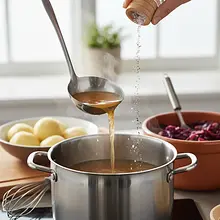
Pour hot vegetable broth into a pot, season with salt and freshly ground pepper. Bring to a boil, then reduce the heat to low, cover the pot with a lid, and simmer for about 30-40 minutes. Stir occasionally. The cabbage is ready when it is completely soft but still slightly crunchy. Finally, taste and adjust the seasoning with more salt, pepper, sugar, or vinegar if needed to achieve the perfect sweet-sour balance.

Ingredients: Vegetable broth, Salt, Pieprz czarny świeżo mielony
The stewing time depends on how finely you chop the cabbage. Check its tenderness after 30 minutes. Before serving, remove the bay leaves, allspice, and cloves from the stew.

Finishing and serving

10

In a small skillet, melt the butter over medium heat. Slice the last onion into very thin feathers. Add it to the heated butter and sauté slowly over low heat for about 8-10 minutes, stirring frequently, until it becomes deeply golden and crispy. Be careful not to burn it. Transfer the cooked onion to a paper towel to drain excess fat.

Ingredients: Butter, Onion
The key to crispy onions is slow frying over low heat. Too high a temperature will cause them to burn on the outside while remaining raw on the inside. Patience is crucial here!
11

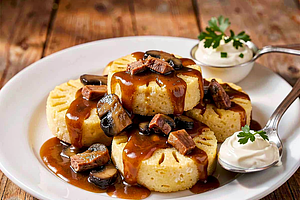
On deep plates, place a generous portion of hot red cabbage stew. On top, arrange 4-5 warm potato dumplings. Generously sprinkle with crispy, golden onions. If using, garnish the dish with fresh marjoram leaves for added aroma and color. Serve immediately.

Ingredients: Fresh marjoram
The dish tastes best when hot. A deep plate or bowl will help maintain the temperature and combine all the flavors in one bite.

Fun Fact

💡

Dumplings (knedlíky) are a true national treasure of the Czech Republic and the basis of many traditional dishes. They come in dozens of variations – from the most popular, which are bread (houskové) and potato (bramborové) dumplings, to sweet versions stuffed with fruit (ovocné knedlíky) and served with cream or cottage cheese.

Best for

Tips

🍽️ Serving

Serve the dish hot, preferably in deep bowls or on plates that will retain heat. A dollop of thick sour cream added on top will be the perfect complement. The dish pairs wonderfully with dark Czech lager (tmavé pivo) or semi-dry red wine.

🥡 Storage

Store dumplings and goulash separately in tightly sealed containers in the refrigerator for up to 3 days. Goulash can be reheated in a pot or microwave. Dumplings are best reheated in a steamer for a few minutes, which helps them regain their fluffiness. They can also be sautéed in butter in a pan. Crispy onions are best prepared just before serving.

📸 Ugotowane przez społeczność

Zaloguj się, aby dodać zdjęcie
Dodaj zdjęcie gotowej potrawy

Po zatwierdzeniu przez moderatora otrzymasz 10 punktów doświadczenia.

🍲

Nikt jeszcze nie dodał zdjęcia. Bądź pierwszy!

Comments (0)

Be the first to comment on this recipe!

Add a comment

You might also like

Recipe Categories

Czech cuisine is a treasure trove of Central European flavors - hearty, aromatic, and full of tradition. Discover classic Czech dumplings - steamed, bread, or potato, served with sauces and braised meat. Svíčková na smetaně, vepřo-knedlo-zelo, smažený sýr, or trdelník are just some of the iconic ...

See all recipes in this category
Main dishes
Main dishes in: New Year's Eve

Main dishes for New Year's Eve should be hearty and impressive to satisfy the palates of all guests.

See all recipes in this category

Vegetarian cuisine is a wealth of flavors without meat - healthy, colorful, and filling. Plant-based proteins: lentils, chickpeas, beans, peas, and soy take center stage. Cheeses and dairy: feta, halloumi, ricotta, and mascarpone in main dishes. Eggs in various forms: omelets, frittata, shakshuka...

See all recipes in this category

Lunches are the main meal of the day - filling, balanced, and full of flavor. Traditional two-course lunches: soup and a main dish in Polish tradition. Pork chop with potatoes and cabbage - a classic of Polish lunches. Dumplings with meat, cheese, and fruit - hand-formed delicacies. Beef goulash,...

See all recipes in this category
Reklama