Silesian dumplings (4 servings)

Main dishes Regional Cuisine of Poland 60 min Medium 28 wyświetleń ~14.98 PLN - (0)
Rate:
(0)
Start Cooking

Description

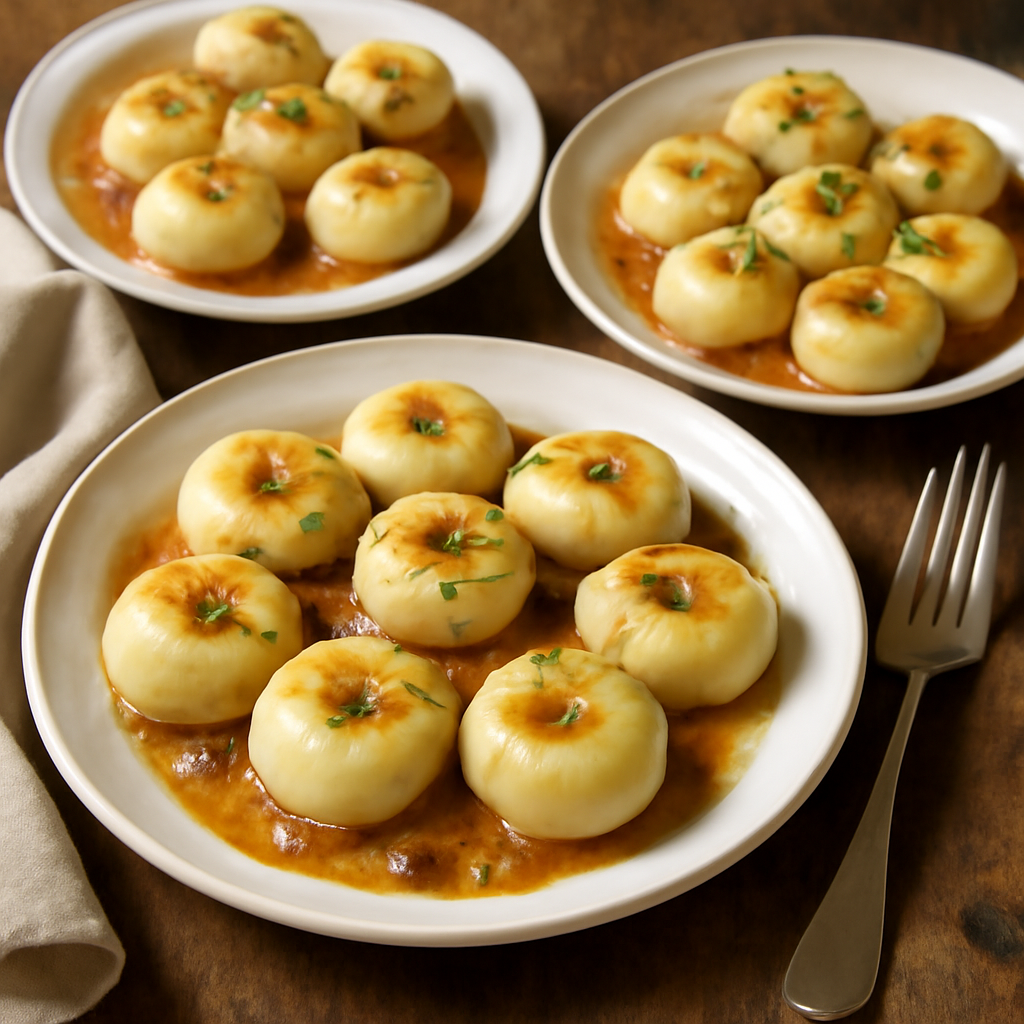
Silesian dumplings are a classic, straightforward dish from Silesian cuisine — soft, round dumplings made from boiled potatoes and potato flour, with a characteristic indentation in the middle, perfect for collecting sauce. In this version, I stick to the traditional recipe, adding detailed tips for someone making dumplings for the first time: how to cook and steam the potatoes, how to achieve the right consistency of the dough, how to shape the dumplings, and how to assess their readiness in the pot. I also provide a simple, very tasty addition of caramelized onions and crispy bacon (optional), as well as alternative serving ideas. The dish has a delicate, slightly sticky texture, a neutral potato flavor, and pairs wonderfully with thick meat sauce, sautéed cabbage, or cracklings with onions.

Ingredients Used

Ingredients (6)

Servings:
4
  • Chicken egg 1 szt. (~60 g)
  • Potatoes 6.7 szt. (~1000 g)
  • Potato flour 200 g
  • 🌿 Przyprawy
  • Salt 10 g
  • ✨ Opcjonalne
  • Smoked bacon 150 g
  • Onion 1 szt. (~150 g)
💰 Szacowany koszt dania: ~14.98 PLN (3.75 PLN/porcję)

💡 Kliknij na składnik aby oznaczyć jako użyty

Preparation steps

Preparing the potatoes

1

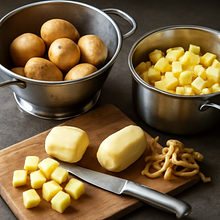
Choose and wash 1000 g of potatoes. Peel them with a vegetable peeler and cut into even pieces (cubes of 3-4 cm) so they cook evenly. Place the potatoes in a large pot and cover with cold water, ensuring they are submerged at least 2 cm above the surface of the potatoes. Add 6 g of salt (from a total of 10 g) to the water. Place the pot on a large burner with a lid, bring to a boil over high heat, then reduce the heat to medium-low and cook for 15–20 minutes depending on the size of the pieces — the potatoes are ready when a fork easily pierces them and the softness is uniform.

Use a large, heavy pot (at least 4–5 l) and a wooden spoon. Cooking with cold water allows the potatoes to cook evenly. Do not salt the water at the end — add salt at the beginning so the potatoes absorb the flavor.
2

After cooking, drain the potatoes in a colander. Important: after draining, leave the potatoes in the colander for 2–3 minutes to allow some water to evaporate; then transfer the hot potatoes back to the warm pot and keep on very low heat for 1–2 minutes, stirring with a wooden spoon to remove any remaining moisture. This process ensures that the mixture will not be watery.

Use a sturdy colander and oven mitt when transferring hot potatoes. Do not leave the potatoes wet, as the mixture will be sticky and difficult to dust with potato flour.

Dough for dumplings

3

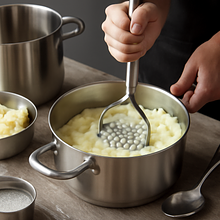
Mash the potatoes into a smooth puree. It's best to use a potato masher or a ricer — start mashing immediately when the potatoes are hot. If you have a potato ricer, use it — you'll get a very fine, smooth texture. Do not use an electric mixer (it incorporates air and makes it gluey).

Use a masher or a ricer. The mixture should be smooth, without lumps; if there are lumps, pass it through again while hot. The temperature of the mixture matters: it's best to make the dumplings when the mixture is warm, but not hot.
4

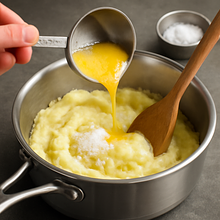
Add 60 g of beaten egg and the remaining 4 g of salt to the hot puree. Mix with a wooden spoon or silicone spatula to evenly distribute the egg. Then gradually sift in 200 g of potato starch — add it in portions and mix until the mixture starts to pull away from the sides of the bowl and can be formed into a ball. The amount of starch may vary depending on the dryness of the potatoes — you can add a little less or more (±10–20 g), but start with 200 g.

Use a large bowl and a wooden spoon. If the mixture seems too loose, add potato flour in increments of 10–20 g until you achieve a firm, non-sticky consistency. If you add too much flour, the dumplings will be rubbery.
5

Check the consistency: the dough should be soft, elastic, and slightly moist, but not sticky to the hands. Take a small portion and form a ball the size of a walnut; if the ball crumbles, add another 10–20 g of potato starch. If it is too hard and dry, add 1–2 teaspoons of hot water and quickly knead.

Use hands dusted with potato flour for shaping. If you're unsure, it's better to form smaller dumplings — they will cook better and are less likely to burst.

Shaping and cooking

6

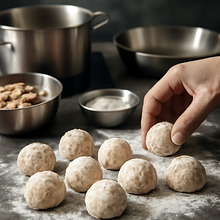
Shape the dumplings: on a lightly floured countertop or board, form balls with a diameter of about 3–4 cm (with one hand shape the ball, while the other uses a spoon or thumb to create a characteristic indentation). Make the indentation with your thumb so that a thin 'rim' of dough remains — this is the place for the sauce. Place the finished dumplings on a floured tray, keeping space between them so they don't stick together.

Use a wooden spoon or your thumb to make indentations. If the mixture sticks to your hands, wet your hands with cold water or dust them with potato flour.
7

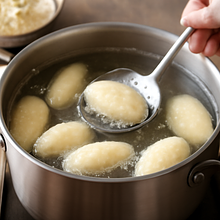
Prepare a large pot of salted water (pour in water and add 4 g of salt from the pool). Bring to a gentle boil (important: not a vigorous, strong boil) so that the dumplings do not burst. Place the dumplings in batches into the boiling, but not raging, water — it's best to use a slotted spoon or a spoon with holes. After adding all the dumplings to the pot, gently stir with the slotted spoon for the first minute to prevent them from sticking to the bottom.

The best pot is a wide pot with a diameter of at least 24–26 cm, with a large volume of water. Cook the dumplings in batches, do not overload them at once.
8

Cook the dumplings for another 2–3 minutes after they float to the surface. The dumplings are ready when they rise to the surface and slightly puff up, and when cut in the middle, they do not taste raw. Use a slotted spoon to remove them and place them on a plate or in a wide dish. If you are not serving them immediately, drizzle a little melted butter or oil over them to prevent sticking.

Remember: vigorous boiling can cause the dumplings to break. Watch them: floating and an additional 2–3 minutes is a sure test.

Additions (optional)

9

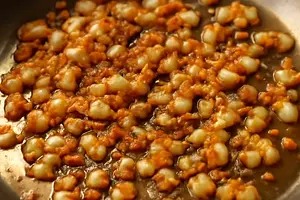
If you are using bacon and onion: cut 150 g of bacon into cubes (about 1 cm) and 150 g of onion into thin half-rings. In a large skillet, heat a small teaspoon of fat (optionally use fat from the bacon), add the bacon and fry over medium heat for 4–5 minutes until golden and crispy. Add the onion and fry for another 6–8 minutes, stirring frequently, until the onion caramelizes — it should become soft and golden-brown. At the end, you can add half a teaspoon of sugar to speed up the caramelization. Mix everything and set aside for a moment to let the fat soak in.

Use a pan with a diameter of 24–28 cm; a wooden spatula makes stirring easier. You can also add bacon and onion to enhance the flavor. If you want a vegetarian version, use butter instead of bacon and top the dumplings with sautéed onion.

Serving

10

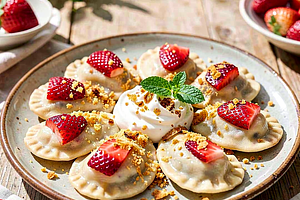
Serve the dumplings hot — place them on plates individually, with the indentation facing up. Top each serving with a spoonful of caramelized onions with bacon (if using) or drizzle with melted butter. Great accompaniments include sautéed cabbage, gravy, sour cream, or toasted breadcrumbs in butter. Serve immediately to keep the dumplings soft.

Use wide, shallow plates to arrange the individual dumplings and pour the sauce into the hollows. Additionally, you can add chopped fresh herbs (e.g. parsley) for decoration.

Final Tips

11

If you notice that the dumplings have slightly stuck together after resting, gently separate them with dry fingers and optionally sauté briefly in a pan with butter until they are lightly browned. If you make the dumplings in advance: store the cooled ones in the refrigerator (see storage section for details).

For sautéing, use a non-stick pan and a small amount of butter. Try not to press the dumplings while separating them.

Fun Fact

💡

Silesian dumplings come from the Silesia region — they were a simple, hearty side dish for meats and sauces. The characteristic "dimples" not only look nice but also serve to collect the sauce, making them practical and popular in home cooking.

Best for

Tips

🍽️ Serving

Serve the dumplings immediately after cooking with hot caramelized onions and cracklings or a thick meat sauce. Pair them with sautéed sauerkraut for a flavor contrast, and pour some sauce into the indentations of the dumplings so that every bite is juicy. For a lighter version, use toasted walnuts and lemon juice instead of bacon for an unexpected twist.

🥡 Storage

Storage: placed in an airtight container, Silesian dumplings can be stored in the refrigerator for 2–3 days. Best reheating: drop them into boiling salted water for 1–2 minutes (do not cook for long) or briefly sauté in butter in a pan — avoid the microwave, which can make them rubbery.

📸 Ugotowane przez społeczność

Zaloguj się, aby dodać zdjęcie
Dodaj zdjęcie gotowej potrawy

Po zatwierdzeniu przez moderatora otrzymasz 10 punktów doświadczenia.

🍲

Nikt jeszcze nie dodał zdjęcia. Bądź pierwszy!

Comments (0)

Be the first to comment on this recipe!

Add a comment

You might also like

Recipe Categories

Main courses are the heart of every meal - hearty, nutritious, and full of flavor. In this category, we present a rich selection of recipes for lunches and dinners that will satisfy even the most discerning palates. From classic Polish pork chops to aromatic chicken dishes, to exquisite steaks an...

See all recipes in this category

Traditional recipes from various regions of Poland that showcase the richness of local flavors and ingredients.

See all recipes in this category
Reklama