Menu

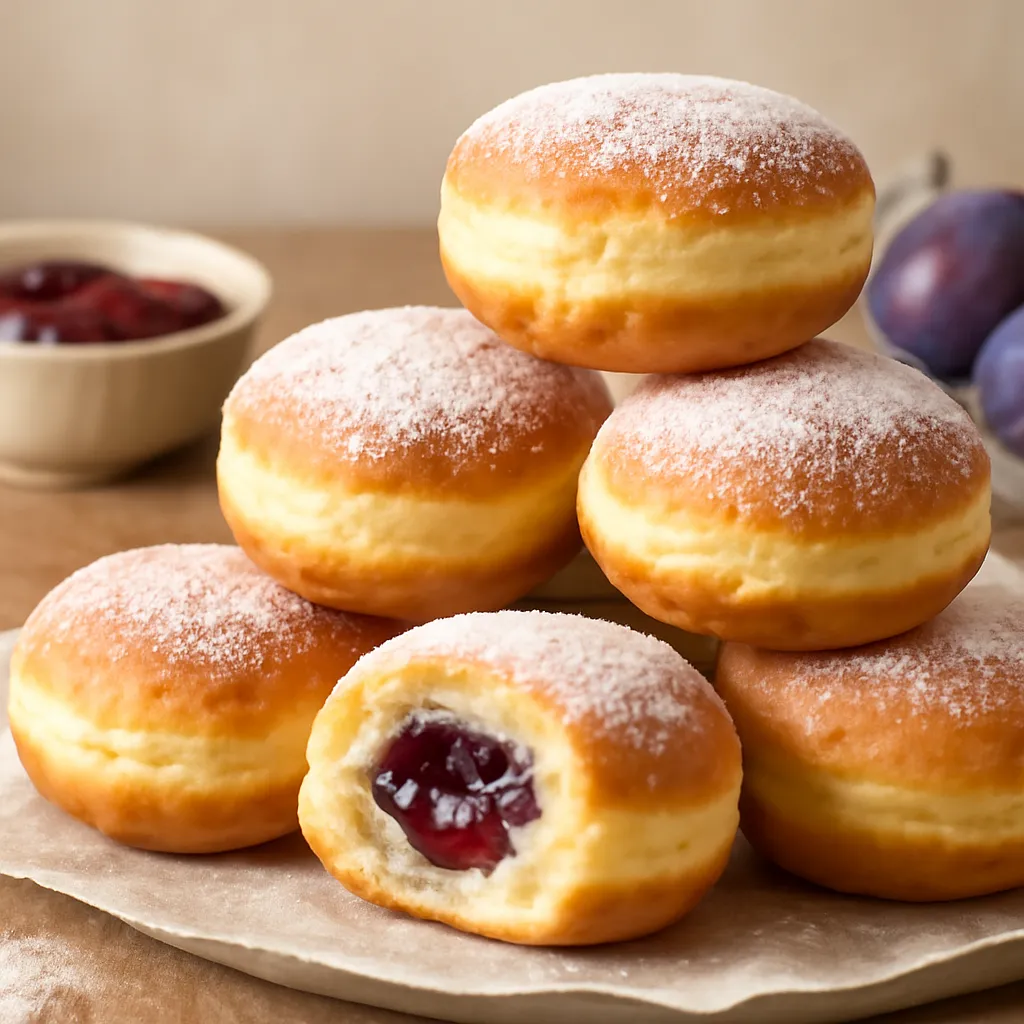
Grandma's Paczki in "Sweet Blog" Style — delicate, golden with plum filling

Cakes and Bakes Desserts 210 min Medium 10 wyświetleń ~25.56 PLN - (0)
Rate:
(0)

Description

Delicate, fluffy yeast doughnuts inspired by an old family recipe — with my own twist: added lemon zest and homemade plum jam. The dough is soft, slightly moist inside, with a thin, golden crust and a subtle hint of lemon; the filling is tart-sweet, and the glaze gives them a shiny, appetizing finish. These doughnuts are perfect for the holidays, Fat Thursday, or a Sunday afternoon with coffee. Preparation requires several rising stages, but the result is traditional, homemade doughnuts with an intense aroma and soft texture.

Składniki (12)

Servings:
12
  • Wheat flour 500 g
  • Fresh yeast 20 g
  • Milk 275 ml
  • White sugar 100 g
  • Egg 3 szt.
  • Butter 70 g
  • Grated lemon zest 8 g
  • Rapeseed oil for frying 1500 g
  • Plum jam (thick) 300 g
  • 🌿 Przyprawy
  • Salt 0.2 szczypt
  • ✨ Opcjonalne
  • Powdered sugar 50 g
  • Lemon icing (optional) 100 g
💰 Szacowany koszt dania: ~25.56 PLN (2.13 PLN/porcję)

💡 Kliknij na składnik aby oznaczyć jako użyty

Preparation steps

Yeast dough

1

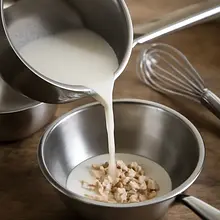
Prepare the starter: in a small bowl, crumble 20 g of fresh yeast. Heat 75 ml of milk to a temperature of about 35°C (it should be noticeably warm but not hot — check with the inside of your wrist). Pour the warm milk into the bowl with the yeast, add 15 g (about 1 tablespoon) of sugar from the recipe, and gently mix with a fork to create a uniform, slightly liquid mixture. Set aside in a warm place for 8–10 minutes — after this time, a frothy 'cap' should appear on the surface, indicating active yeast.

Ingredients: Fresh yeast, Milk, White sugar
Use a small glass or plastic bowl. If no foam appears after 10 minutes, the yeast may be inactive — discard and start over with fresh yeast.
2

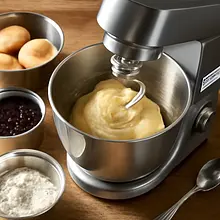
In a large bowl (or mixing bowl), sift 500 g of wheat flour and mix with 5 g of salt. Make a well in the flour the size of a crater (about 6–8 cm). Pour the active starter into the well, add the remaining milk (200 ml), beaten (or lightly whipped) 180 g of eggs, 85 g of sugar (the remaining amount), grated lemon zest, and 70 g of soft butter cut into cubes. If you are using a mixer, attach the dough hook.

Ingredients: Wheat flour, Salt, White sugar, Egg, Grated lemon zest, Butter, Milk, Fresh yeast
If you don't have a mixer, use a wooden spoon to combine the ingredients, and then knead by hand on a lightly floured countertop.
3

Kneading the dough: start kneading the dough (mixer 5–7 minutes on medium speed with a hook; by hand 10–12 minutes). At first, the ingredients will combine and be sticky; after a few minutes, add the butter piece by piece, continuing to knead. The dough is ready when it is smooth, elastic, springy, and stops sticking heavily to your hands (you can do a test: pull a piece of dough — it should stretch, forming a thin, almost transparent structure without tearing).

Ingredients: Wheat flour, Butter, Egg, Milk
Use a stand mixer with a dough hook or your hands. Do not add more flour than in the recipe — the dough should be soft and slightly moist. If it is too sticky, wait 5 minutes; then the gluten will rest and it will be easier to knead.

Shaping and Rising

4

First rise: Transfer the dough to a lightly oiled large bowl (grease the inside of the bowl with a bit of oil or butter). Cover the bowl with plastic wrap or a clean kitchen towel and set it in a warm, draft-free place for 60–90 minutes, until the dough doubles in size. Test: press your finger into the surface of the dough — the indentation should slowly spring back but not disappear completely.

Ingredients: Wheat flour, Butter, Egg
The best place is a kitchen with a closed window or an oven with the light on (without heating). Avoid drafts that will cool the dough.
5

Second kneading and portioning: After rising, place the dough on a lightly floured work surface. Gently deflate it with a few flat punches of your fist. Shape it into a log and divide it into 12 equal portions (use a kitchen scale or estimate about 90–100 g of raw dough per piece). Form a smooth ball from each portion: tuck the edges of the dough underneath, press down, and turn it over to create a taut surface.

Ingredients: Wheat flour
When shaping, use hands lightly dusted with flour. The balls should be smooth on the surface, which will ensure even rising and a nice shape after frying.
6

Second rising of the balls: place the balls on a floured countertop or on a baking paper sheet, spaced 3–4 cm apart. Loosely cover with a clean cloth and set aside for 30–45 minutes, until the balls have noticeably risen (they should be fluffy and springy).

Do not squeeze the balls while transferring — use a spatula or cake lifter to avoid losing air in the dough.

Filling and frying

7

Prepare the jam: if it is very thick, gently heat it in a saucepan to make it more pliable for filling (but it should not be too runny). Transfer the jam to a piping bag or to a small bowl with a spoon.

Ingredients: Plum jam (thick)
Use thick jam — if it is runny, thicken it by cooking for a moment with a bit of gelatin or potato starch (quick thickening).
8

Heating the oil: in a wide, heavy saucepan or large pot (e.g., with a thick bottom, 24–28 cm in diameter), pour in 1–1.2 liters of oil (about 1000–1200 ml at the bottom, with the rest to top up if needed). Heat the oil to a temperature of 170–175°C (use a frying thermometer). If you don't have a thermometer, check with a piece of dough: place a small piece in — it should float and bubble vigorously, and the surface should quickly turn golden after about 30–40 seconds.

Ingredients: Rapeseed oil for frying
The best option is a deep pan or a pot with low sides. Maintain a temperature of 165–175°C; too high a temperature will burn the doughnuts on the outside while leaving the inside raw. Too low a temperature will cause excessive fat absorption.
9

Frying the doughnuts: gently drop the doughnuts into the hot oil (3–4 at a time, do not overcrowd the pot). Fry on medium heat for 2–3 minutes on one side, until they turn a light golden color, then flip them using a slotted spoon and fry for another 2–3 minutes on the other side. The doughnuts should be evenly golden. After frying, place them on a rack or paper towel to drain excess fat.

Ingredients: Rapeseed oil for frying
Use a slotted spoon or a metal spoon with a long handle for turning. Do not flip the donuts too often — let them fry until golden before turning.
10

Filling the doughnuts: place the fried and cooled (slightly warm, not hot) doughnuts in a bowl. Use a piping bag with a filling tip (round tip) or a small toothpick: make a vertical incision on the side of the doughnut and fill each doughnut with about 20–25 g of jam inside. If using a piping bag, insert the tip into the doughnut and gently squeeze the jam — the doughnut should puff up.

Ingredients: Plum jam (thick)
Fill the donuts one at a time to control the amount of filling. If some of the jam spills out after inserting it, gently press the dough to absorb the visible excess.

Glaze and decoration

11

Preparing the icing (optional): In a bowl, mix 100 g of powdered sugar with 15–20 ml of lemon juice (add gradually until you achieve a smooth, slightly runny consistency). If you are using icing, dip the top of each doughnut into the icing and set aside on a rack to let the icing harden. Alternatively, sprinkle the doughnuts with powdered sugar (50 g) using a sieve.

Ingredients: Powdered sugar, Lemon icing (optional)
You can add 1–2 teaspoons of water to the icing if the lemon juice is too thick. Additionally, you can add sprinkles or grated lemon zest for decoration.

Serving

12

Serving: doughnuts taste best slightly warm or at room temperature, within a few hours of preparation. Arrange them on a tray lined with baking paper or on a cake stand; dust with powdered sugar or drizzle with icing just before serving. You can serve with a cup of coffee, tea, or a glass of milk.

If you are preparing donuts for a party, fill them just before serving so that the jam does not overly soften the dough.

Fun Fact

💡

Doughnuts have been known since the Middle Ages in various forms across Europe; in Poland, the tradition of eating doughnuts is closely linked to Fat Thursday. The addition of lemon zest is a modern touch that enhances the aroma of butter and eggs.

Best for

Tips

🍽️ Serving

Serve the doughnuts slightly warm. If you are using icing, prepare it just before the final step — it will retain its fresh shine. For variety, serve with jams of different flavors (raspberry, apricot) or Nutella as an alternative.

🥡 Storage

Best consumed within 24 hours — store in a container at room temperature to maintain softness. Do not store donuts in the fridge (they will harden). To refresh donuts the next day, heat in the oven for 3–5 minutes at 150°C covered with aluminum foil or for 10–15 seconds in the microwave (be careful not to dry them out).

📸 Ugotowane przez społeczność

Zaloguj się, aby dodać zdjęcie
Dodaj zdjęcie gotowej potrawy

Po zatwierdzeniu przez moderatora otrzymasz 10 punktów doświadczenia.

🍲

Nikt jeszcze nie dodał zdjęcia. Bądź pierwszy!

Comments (0)

Be the first to comment on this recipe!

Add a comment

You might also like

Recipe Categories

Homemade cakes and pastries are the heart of Polish culinary tradition - sweet memories from childhood. In our collection, you will find recipes for classic yeast cakes, shortcrust, sponge, and cheesecake. Apple pie, poppy seed cake, gingerbread, Easter babka, chocolate cake, and New York cheesec...

See all recipes in this category
Desserts
Desserts in: Christmas Eve Dinner

Desserts are a sweet ending to a meal that brings joy to both children and adults. In this category, we present recipes for a variety of sweets - from simple creams and mousses, to elegant panna cottas, and exquisite fruit tarts. Our desserts include both classics of Polish cuisine - fruit jelly,...

See all recipes in this category
Reklama