Start by preparing the starter that will 'wake up' the yeast. In a small saucepan, heat 100 ml of milk. It should be slightly warm, at a temperature of about 37°C – when you put your finger in, it should feel pleasantly warm but not hot. Milk that is too hot will kill the yeast! Crumble fresh yeast into a large bowl or cup, add one tablespoon of sugar (about 15g) and one tablespoon of flour (about 15g). Pour the warm milk over everything and gently mix with a fork, just to combine the ingredients and dissolve the yeast.
Description
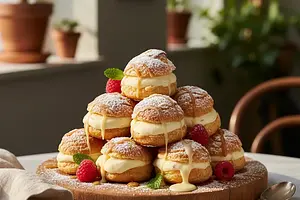
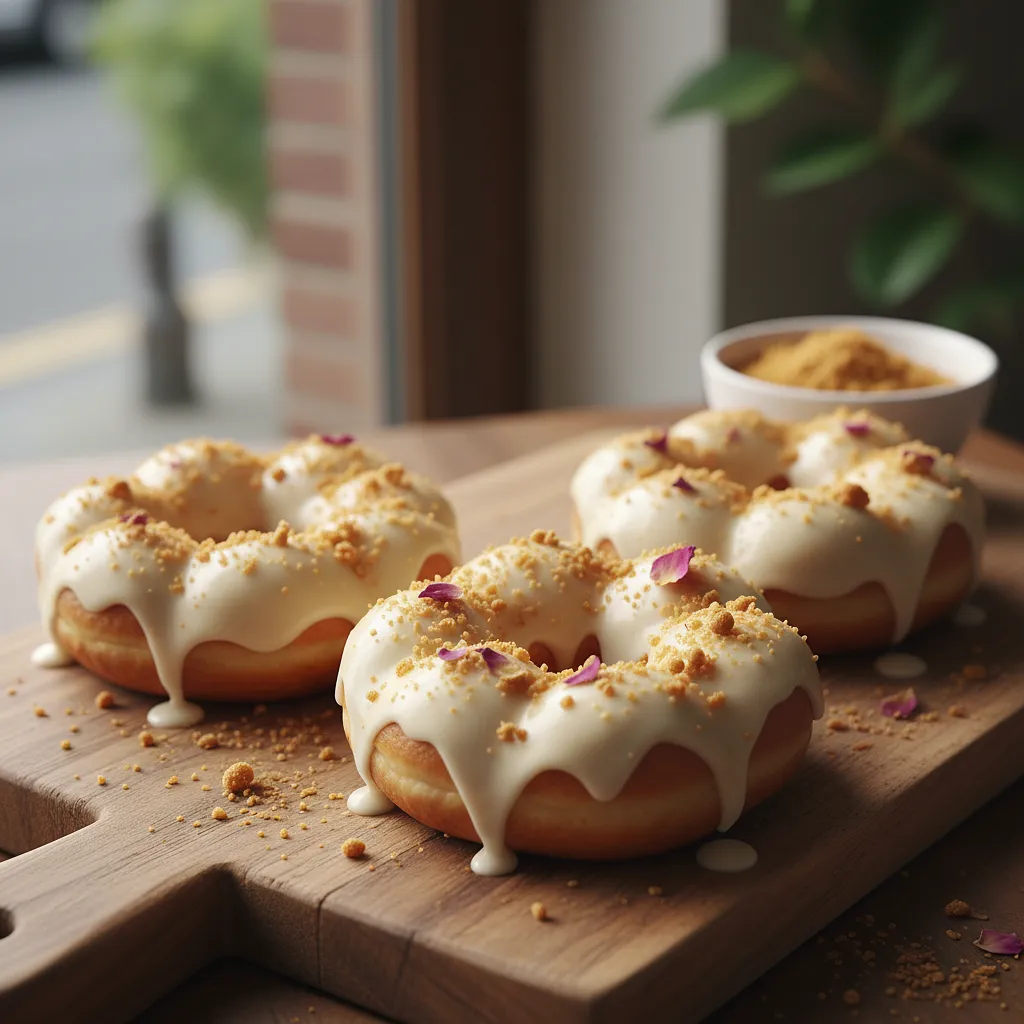
Here’s a recipe that will transport you back in time to a kitchen filled with warmth and the aroma of homemade pastries. These are not ordinary donuts. They are a tribute to tradition, enriched with a touch of modern elegance. Based on my grandmother's old, tried-and-true recipe, we have created the perfect donuts: incredibly fluffy, light as a cloud, with a beautifully yellow dough thanks to a large number of egg yolks. At the heart of each donut lies a noble rose petal jam, whose floral aroma perfectly balances the sweetness of the dough. Instead of classic icing, they are topped with a crunchy, buttery crumble made with real vanilla, which adds not only flavor but also a wonderful texture. Served warm, they melt in your mouth, embodying the essence of homemade confectionery. Perfect for Fat Thursday, Carnival, but also as a luxurious dessert for special occasions that will delight any gourmet.
Składniki (13)
- Luxury wheat flour type 500 600 g
- Fresh yeast 40 g
- Milk 3.2% 250 ml
- Żółtko jaja kurzego 5 szt.
- Masło 82% 130 g
- Cukier drobny 80 g
- 95% Spirit 1 łyżka
- Vanilla extract 5 g
- Rose petal jam 250 g
- Smalec wieprzowy 1000 g
- Powdered sugar 50 g
- 🌿 Przyprawy
- Salt 0.1 szczypt
- ✨ Opcjonalne
- Vanilla bean 1 szt.
💡 Kliknij na składnik aby oznaczyć jako użyty
Preparation steps
Yeast starter
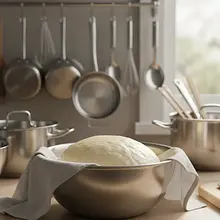
Cover the bowl with the starter with a clean kitchen towel and set it in a warm, draft-free place for about 15-20 minutes. A spot near the radiator or in a slightly warmed (and turned off!) oven will be ideal. After this time, the starter should have significantly increased in volume and be covered with a thick, bubbly foam. This is a sign that the yeast is active and ready to work.
The actual cake
While the starter is rising, prepare the remaining ingredients. In a small saucepan, melt 80g of butter and set aside to cool. In a large bowl (where you will knead the dough), place the egg yolks and the remaining sugar. Using a mixer with whisk attachments, beat them on high speed for about 5-7 minutes. The mixture should become very light, almost white, fluffy, and triple in volume. This is called kogel-mogel, which will aerate the dough.
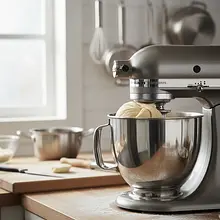
In a bowl with the grated egg yolks, add the remaining flour (sifted), the risen starter, the rest of the milk (also slightly warmed), a pinch of salt, vanilla extract, and spirit. Start mixing the ingredients on low speed with a dough hook mixer or a wooden spoon, just until they form a uniform, sticky mass.
Now the key moment – kneading the dough. Increase the mixer speed to medium and knead the dough for about 10 minutes. If you are kneading by hand, transfer the dough to a lightly floured surface and knead vigorously for about 15-20 minutes. The dough will initially be very sticky, but as you knead it, it will become smooth, elastic, and start to pull away from the sides of the bowl or your hands. The finished dough should spring back to its shape when pressed with a finger.
When the dough is well kneaded, slowly pour in the cooled, melted butter in a thin stream, while mixing or kneading continuously. Knead for another 5 minutes, until all the fat is perfectly combined with the dough, and it becomes smooth and shiny again. Shape the dough into a ball, place it back in the bowl, cover with a cloth, and set aside in a warm place for about 1.5 hours to double in volume.
Vanilla Crumble
While the dough is rising, prepare the crumble. In a bowl, combine 100g of flour and 50g of powdered sugar. If you are using a vanilla bean, split it lengthwise and scrape the seeds with the tip of a knife, adding them to the dry ingredients. Add 50g of cold butter, cut into small cubes. Rub all the ingredients together with your fingertips until clumps resembling wet sand form. Do not knead for too long to prevent the butter from melting. Place the finished crumble in the refrigerator.
Shaping and rising of the doughnuts
Remove the risen dough onto a lightly floured work surface. Punch it down to release the gas, then briefly knead it. Roll out the dough into a disc about 1.5 cm thick. Use a glass or a cutter with a diameter of about 7 cm to cut out circles.
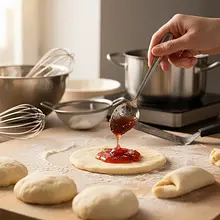
Place a full teaspoon (about 10-12g) of thick rose jam in the center of each circle. Then, carefully seal the edges of the dough, forming a pouch. Make sure the seal is tight so that the filling does not leak out during frying. Gently roll each pouch in your hands, shaping it into a perfect ball.
Place the shaped doughnuts on a countertop or board generously sprinkled with flour, leaving space between them. Arrange them seam side down. Cover them with a clean cloth and set aside in a warm place for the second rise, for about 30-40 minutes. The doughnuts should puff up and become very light during this time.
Frying and decoration
In a wide, flat pot, heat the lard or oil. There should be enough fat for the doughnuts to float freely in it (about 1 liter). The ideal temperature is 175-180°C. If you don't have a thermometer, drop in a piece of dough – if it rises and browns within a minute, the fat is ready. Reduce the heat to medium to maintain the temperature.
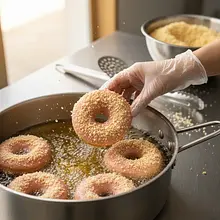
Gently place the doughnuts into the hot fat, top side down. Do not add too many at once to avoid lowering the temperature of the fat. Fry covered for about 2-3 minutes on each side, until they achieve a beautiful golden-brown color. After flipping to the other side, fry without a cover. Properly fried doughnuts will have a characteristic light ring around them.
Remove the finished donuts with a slotted spoon and place them on a large plate or a rack lined with several layers of paper towels to drain excess fat. Leave them for a moment to cool slightly; they should still be warm but not hot.
Finally, for decoration. While the doughnuts are still warm, brush the tops with a bit of melted butter (the remaining 50g) using a kitchen brush. Then, generously coat them in the previously prepared vanilla crumble, pressing lightly to ensure it sticks well. Serve immediately while they are at their tastiest.
Fun Fact
The tradition of eating doughnuts on Fat Thursday dates back to the 17th century in Poland. Initially, however, doughnuts were filled with lard and fried in fat, and their sweet version only became popular in the 18th century. According to one superstition, anyone who does not eat a single doughnut on Fat Thursday will not have good fortune in life until the next year!
Best for
Tips
Rose Donuts with Vanilla Crumble taste best when still warm, within a few hours of frying. The crunchy crumble and liquid filling create the perfect contrast. Serve them on an elegant platter, lightly dusted with powdered sugar. They pair wonderfully with a cup of aromatic coffee, black tea, or a glass of cold milk.
If you have leftover doughnuts, store them at room temperature in an airtight container or covered with plastic wrap to prevent them from drying out (for up to 2 days). To regain some of their freshness, you can heat them briefly (30-60 seconds) in the microwave or in an oven preheated to 150°C for 3-4 minutes. The crumble may lose some of its crunchiness, but the taste will still be excellent.
📸 Ugotowane przez społeczność
Zaloguj się, aby dodać zdjęcieDodaj zdjęcie gotowej potrawy
Po zatwierdzeniu przez moderatora otrzymasz 10 punktów doświadczenia.
Nikt jeszcze nie dodał zdjęcia. Bądź pierwszy!
Comments (0)
Be the first to comment on this recipe!
Add a comment