Panna cotta with forest fruits

Desserts Easter 300 min Medium 18 wyświetleń ~14.71 PLN * - (0)
Rate:
(0)
Start Cooking

Description

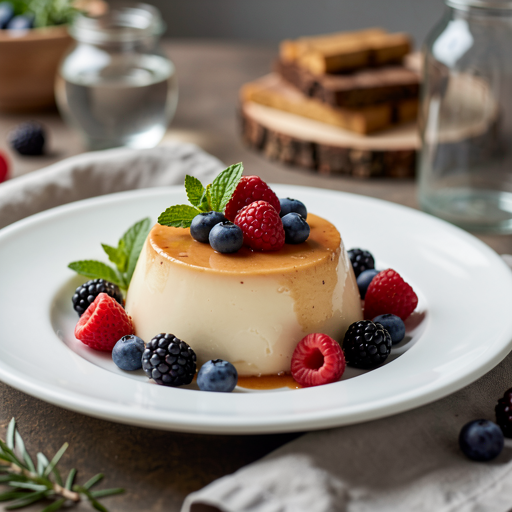
Delicate panna cotta is an Italian dessert with a silky texture, served here with a warming, slightly tangy sauce made from forest fruits — an ideal light option for Easter. The recipe combines creamy cream with the aroma of vanilla and fresh lemon zest, while the sauce made from mixed fruits (raspberries, blueberries, blackberries, possibly strawberries) adds a contrasting acidity and beautiful color. The dish looks elegant on the plate: white panna cotta with a violet-red sauce, garnished with fruits and a mint leaf. It works great as a dessert after the holiday meal — it can be prepared in advance and served chilled.

Ingredients Used

Ingredients (10)

Servings:
4
  • 30% heavy cream 500 g
  • Milk 100 ml
  • Sugar 60 g
  • Gelatin 12 g
  • Vanilla bean 1 szt. (~5 g)
  • Lemon 0.8 szt. (~60 g)
  • Forest fruits 400 g
  • 🌿 Przyprawy
  • Salt 1 g
  • ✨ Opcjonalne
  • Mint 30 g
  • Agar-agar 6 g
💰 Szacowany koszt dania: ~14.71 PLN (3.68 PLN/porcję)
* Brak cen dla niektórych składników

💡 Kliknij na składnik aby oznaczyć jako użyty

Preparation steps

Preparing the panna cotta

1

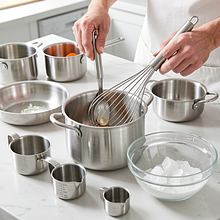
Prepare the ingredients and tools: a small saucepan (about 1–1.5 l), measuring cups, a bowl for the gelatin, a whisk or spoon, molds or ramekins (about 4 pieces of 120–150 ml each). Measure the milk (100 ml) into a small bowl. Sprinkle the gelatin (12 g) evenly over the surface of the cold milk — let the gelatin 'bloom' for 5–7 minutes; do not stir. After this time, the gelatin will absorb the liquid and swell.

Ingredients: Milk, Gelatin
Use a small bowl to bloom the gelatin. If you are using agar-agar (optional), do not soak it in cold milk — add it directly to the hot liquid (see step 3).
2

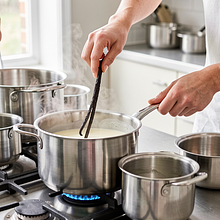
Pour the heavy cream (500 ml) into a saucepan. Split the vanilla pod lengthwise, scrape out the seeds with a knife, and add both the seeds and the empty pod to the cream. Add the sugar (60 g) and a pinch of salt. Heat over medium heat, whisking, until the sugar dissolves and the mixture is hot and just before boiling (small bubbles will appear at the edges). Do not bring to a full boil — cook for 1–2 minutes from the time the bubbles appear.

Ingredients: Vanilla bean, Sugar, Salt
Use a heavy-bottomed saucepan to avoid burning. The finished cream has a vanilla aroma and is hot, but not boiling. If you don't have a vanilla bean, add 1 teaspoon of vanilla extract at the end.
3

Remove the vanilla pod from the cream. To the hot, but not boiling, cream add the bloomed gelatin (everything from the bowl in step 1). Whisk vigorously for 1–2 minutes until the gelatin is completely dissolved and the mixture is smooth. Add the grated zest of half a lemon (grate finely) and mix. If you are using agar-agar (optional instead of gelatin): mix 6 g of agar-agar with sugar and add to the cold cream before heating, bring to a boil and cook for 1–2 minutes to activate the agar.

Ingredients: Gelatin, Lemon, Agar-agar
Use a whisk or a silicone spoon. Important: gelatin dissolves in hot liquid — do not allow it to boil after adding the gelatin. For agar-agar, a light boil is necessary; otherwise, it will not set the dessert.
4

Remove the saucepan from the heat and let it sit for 5 minutes to allow the temperature to drop slightly. In the meantime, prepare the molds — you can use individual ramekins or small glass cups. If you want a very smooth surface, strain the cream through a fine sieve into a jug. Then, slowly pour the cream into the molds, leaving about 5 mm of space at the top.

A strainer and a jug will help remove any pieces of vanilla bean or air bubbles. Fill the molds just before the cream sets — when the cream starts to thicken, it becomes difficult to pour.

Cooling

5

Place the molds in the refrigerator for at least 4 hours, preferably overnight. The panna cotta is ready when the edges are firm and the center gently moves when the mold is shaken — it should have a silky, firm 'jelly' effect, but not be liquid.

Place the molds on a tray — it's easier to move them to and from the fridge. Do not freeze the panna cotta (it will change the texture).

Fruit sauce

6

In a medium-sized saucepan, place about 300 g of berries (set aside the remaining fruit for decoration), add 30 g of sugar (from the portion of sugar used), and the juice squeezed from half a lemon (about 15–20 ml). Cook over medium heat for 6–8 minutes, stirring — the fruit will release juice and the sauce will start to reduce. If you want a smooth sauce, blend it until smooth and strain through a sieve to remove the seeds; if you want a rustic sauce, leave the fruit pieces.

Ingredients: forest fruits, Lemon, Sugar
Use a wooden spoon or silicone spatula. Be careful when blending — hot liquid can splatter; cover the blender with a towel and blend briefly.

Assembly and decoration

7

Remove the molds from the refrigerator. To easily release the panna cotta: briefly immerse the bottom of each mold (only to the height of the cream) in a bowl of hot (not boiling) water for 5–8 seconds — the edge will loosen slightly. Wipe the bottom of the mold, turn it onto a plate, and gently lift the edge with a knife if necessary to let the dessert come out smoothly. Top with 2–3 tablespoons of fruit sauce and a few fresh fruits. Finally, add mint leaves (optional).

Ingredients: forest fruits, mint, Lemon
To remove, use a wide plate and a small knife to loosen the edges. Do not soak the mold in hot water for too long — excessive heating will melt the dessert.

Serving

8

Serve the panna cotta chilled, preferably right after decoration. If you prepared the dessert earlier, take it out of the fridge 5–10 minutes before serving — it will have the perfect consistency, not too firm and not too soft.

Ingredients: Lemon, forest fruits
Use flat dessert plates to showcase the color contrast. Additionally, you can add a bit of grated lemon zest on top for aroma.

Fun Fact

💡

Panna cotta comes from northern Italy (Piedmont) and literally means 'cooked cream'. In the Easter version, it is often served with fruits that are fresh and juicy in spring — we use seasonal berries and citrus for contrast.

Best for

Tips

🍽️ Serving

Prepare the panna cotta the day before, keep it in the fridge, and decorate just before serving. Serve chilled with the sauce at refrigerator temperature (about 6–8°C). For effect, serve on a flat plate with a dessert spoon and a small portion of sauce on the side.

🥡 Storage

Store in the refrigerator covered with plastic wrap for up to 48 hours. Store the fruit sauce separately in a jar in the refrigerator for up to 3 days. Do not freeze panna cotta — the structure will break down. To "unmold" the dessert after longer storage, briefly dip the bottom in warm water (5–8 s).

📸 Ugotowane przez społeczność

Zaloguj się, aby dodać zdjęcie
Dodaj zdjęcie gotowej potrawy

Po zatwierdzeniu przez moderatora otrzymasz 10 punktów doświadczenia.

🍲

Nikt jeszcze nie dodał zdjęcia. Bądź pierwszy!

Comments (0)

Be the first to comment on this recipe!

Add a comment

You might also like

Recipe Categories

Desserts are a sweet ending to every meal - from simple puddings to exquisite creamy cakes. Our collection includes recipes for homemade ice cream, chocolate mousses, panna cotta, tiramisu, crème brûlée, and lemon tart. Summer fruit desserts: jellies, sorbets, parfaits, and fruit salads with whip...

See all recipes in this category

Easter is one of the most important holidays in the Christian calendar, celebrated in spring, commemorating the resurrection of Jesus. It is a time of joy, hope, and communal celebration with family around a bountiful table. The culinary traditions associated with Easter are incredibly rich and d...

See all recipes in this category
Reklama