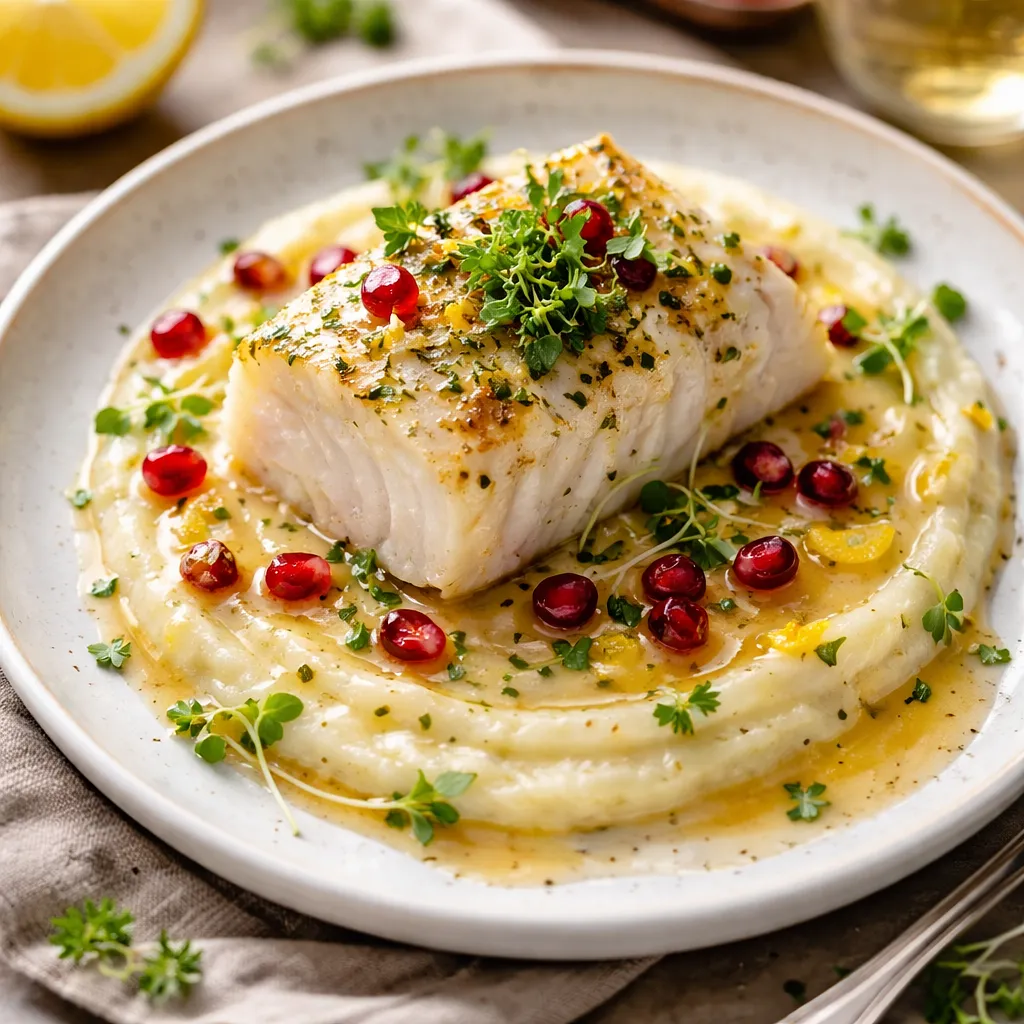
Baked cod fillet on velvety celery and horseradish puree, beurre blanc with lemon and pomegranate

Fish dishes Main dishes Dishes for Special Occasions 90 min Medium 36 wyświetleń ~54.77 PLN - (0)
Rate:
(0)
Start Cooking

Description

An elegant fish dish that combines the tenderness of baked cod with creamy, aromatic celery and horseradish puree, and a silky beurre blanc sauce with a hint of lemon. The dish is finished with crispy-salty slices of fennel sautéed in olive oil and juicy pomegranate seeds, creating a contrast of textures and colors. This seasonal proposal is perfect for a winter gathering or a special dinner — the spicy celery and fresh horseradish enhance the flavor of the fish, while the clear, buttery wine sauce adds finesse. Serve immediately after preparation on a warmed plate, garnished with chives; it pairs wonderfully with a light white or sparkling wine. The dish impresses with its simplicity of form, sophistication of flavors, and elegant presentation.

Ingredients Used

Ingredients (15)

Servings:
4
  • Dry white wine 100 ml
  • Cod fillet 600 g
  • Celeriac 400 g
  • Butter 80 g
  • 30% cream 50 ml
  • Vegetable broth 200 ml
  • Lemon 1.3 szt. (~100 g)
  • Fennel (bulb of florence fennel) 200 g
  • Olive oil 30 ml
  • Sea salt 4 g
  • Potatoes 1.3 szt. (~200 g)
  • 🌿 Przyprawy
  • Ground black pepper 2 szczypty (~2 g)
  • ✨ Opcjonalne
  • Pomegranate seeds 80 g
  • Chives 0.3 pęczków (~30 g)
  • Fresh horseradish 1.3 łyżka (~20 g)
💰 Szacowany koszt dania: ~54.77 PLN (13.69 PLN/porcję)

💡 Kliknij na składnik aby oznaczyć jako użyty

Preparation steps

Vegetables

1

Prepare the vegetables: peel the celery and potatoes. Use a sharp knife to peel, cutting off a thin layer of skin and removing the tough ends. Cut the celery and potatoes into even pieces about 2–3 cm on each side, so they cook evenly.

Ingredients: Celeriac, Potatoes
Use a large cutting board and a sharp chef's knife. For safety, hold the vegetable with a flat hand, fingers curled inward ('claw').
4

Wash the fennel, remove the outer tough leaves, and slice it thinly (about 3–4 mm). Heat 1 tablespoon of olive oil (about 15 g) in a pan over medium heat, arrange the fennel slices in a single layer, and fry for 3–4 minutes on each side until golden brown and soft at the edges. Season lightly with salt and pepper.

Ingredients: Fennel (bulb of Florence fennel), Olive oil, Sea salt, Ground black pepper
The best is a 26 cm non-stick frying pan. Do not overcrowd the pan — fry in batches if necessary, so the fennel browns instead of steaming.

Celery puree

2

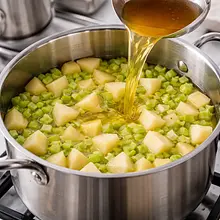
Place the chopped celery and potatoes in a pot, cover with vegetable broth so that the vegetables are almost submerged (the broth can reach up to 80% of the height of the vegetables). Add 1/2 teaspoon of salt (about 2 g). Bring to a boil over medium heat, then reduce the heat and cook for 18–22 minutes, until the vegetables are tender (check with a sharp knife — the knife should slide in smoothly).

Ingredients: Celeriac, Potatoes, Vegetable broth, Sea salt
Use a pot with a diameter of 20–24 cm with a lid. Cooking on low, even heat prevents overcooking on the outside and rawness on the inside.
3

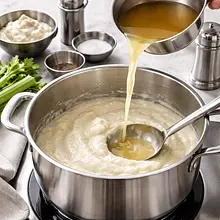
Drain the vegetables, reserving 50–80 ml of the broth. Transfer the vegetables to a wide bowl or a food processor. Add 50 g of butter and 25–30 ml of cream, and mash thoroughly with a potato masher or blend on low speed in the food processor until smooth. If the puree is too thick, gradually add the reserved broth. Finally, grate fresh horseradish to taste (optional 10–15 g) and season with salt and pepper to taste.

Ingredients: Butter, 30% cream, Sea salt, Ground black pepper, Fresh horseradish
Use a potato masher to avoid a gummy effect; if you are using an immersion blender, blend briefly and at low speed. The puree should be smooth, creamy, and slightly shiny from the butter.

Beurre blanc sauce

5

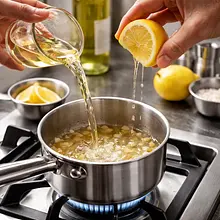
Prepare the sauce: in a small saucepan over medium heat, combine white wine (100 ml) and the juice of half a lemon (about 25 ml). Cook over moderate heat until the volume reduces to about 2–3 tablespoons (reducing to a thick, aromatic base) — this will take 6–8 minutes. The reduction should have a slightly syrupy consistency and a distinct aroma of wine and lemon.

Ingredients: Dry white wine, Lemon
Use a small, wide saucepan to increase the evaporation surface area. If the reduction isn't bubbling, temporarily increase the heat, but be careful not to burn the flavors.
6

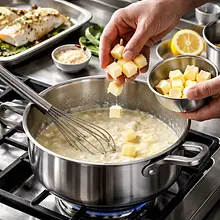
Reduce the heat to low. Gradually add the diced cold butter (remaining 30 g), in portions of 5–10 g, whisking after each addition until the butter is fully incorporated and a smooth, creamy sauce forms. Finally, season with salt and freshly ground pepper, and add 1/2 teaspoon of lemon zest (only the yellow part). The sauce should not boil after adding the butter — if it starts to separate, remove from heat and gently stir.

Ingredients: Butter, Lemon, Ground black pepper, Sea salt
Use a whisk for emulsification. The butter MUST be cold — this ensures emulsification. If the sauce separates, remove the saucepan for a moment and whisk vigorously/return to low heat.

Fish

7

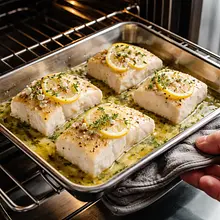
Preheat the oven to 200°C (top-bottom) or 180°C with fan. Prepare the cod fillets: pat them dry with paper towels, gently rub with olive oil (about 15 g in total), season both sides with salt and pepper. Place the fillets on a baking sheet lined with parchment paper, skin side down, leaving space between them.

Ingredients: Cod fillet, Olive oil, Sea salt, Ground black pepper
Use a baking paper sleeve or a 30x20 cm baking tray. Drying the fillet is key — moisture on the surface prevents nice browning.
8

Bake the fillets for 10–12 minutes in a preheated oven or until the meat is opaque and easily flakes apart with a gentle fork press (the center should be slightly translucent). The exact time depends on the thickness of the fillet; do not overcook — cod is ready when it easily separates and has a firm, moist texture.

Ingredients: Cod fillet
Use a kitchen thermometer — the cooked fillets should reach an internal temperature of about 54–56°C. If you don't have a thermometer, check with a fork: the fish should easily flake apart.

Assembly and decoration

9

Heat the puree if necessary over low heat, adding 1–2 tablespoons of broth to achieve a creamy consistency. On a warmed plate, place 3 tablespoons of puree as a "base" in the center. Lay the roasted fillet on the puree, then spoon a portion of beurre blanc sauce (about 30–40 ml per serving) on one side of the fillet. Arrange 2–3 slices of sautéed fennel next to it. Gently sprinkle with pomegranate seeds and finely chopped chives. Finally, drizzle lightly with a few drops of olive oil.

Ingredients: Cod fillet, Fennel (bulb of Florence fennel), Pomegranate seeds, Chives, Olive oil
Use a spoon to spread the puree and a small ladle for precise sauce application. Serve immediately, as the sauce and fish taste best when hot.
10

Taste check and serving: before serving, taste a small piece of the puree and adjust the seasoning. Serve with a slice of lemon on the side, so the guest can add fresh acidity. Make sure the plates are clean around the edges — use a cloth to wipe away any sauce stains.

Ingredients: Lemon, Sea salt, Ground black pepper
Use warm plates (you can heat them briefly in the oven at 70°C) — this will keep the dish warm longer.

Fun Fact

💡

Beurre blanc is a classic French sauce from the Rhine region — it was created by accident in the 19th century when a chef used butter instead of cream to thicken a wine-based sauce. It pairs perfectly with delicate fish.

Best for

Tips

🍽️ Serving

Serve immediately after preparation: warm the plates, use a small spoon for precise placement of the puree and a spoon for drizzling the sauce. A chilled, dry white wine (Sauvignon Blanc, Chablis) or a lightly sparkling wine will be perfect for this dish.

🥡 Storage

Puree can be stored in the refrigerator for up to 48 hours in a sealed container; before reheating, add a few tablespoons of broth. Beurre blanc sauce is best prepared fresh — it is not recommended to store the emulsion; if there are leftovers, keep them in the refrigerator for up to 24 hours and gently reheat without boiling. Baked fillets are best consumed immediately; they can be stored for 1 day and briefly reheated in the oven at 140°C (5–7 minutes).

📸 Ugotowane przez społeczność

Zaloguj się, aby dodać zdjęcie
Dodaj zdjęcie gotowej potrawy

Po zatwierdzeniu przez moderatora otrzymasz 10 punktów doświadczenia.

🍲

Nikt jeszcze nie dodał zdjęcia. Bądź pierwszy!

Comments (0)

Be the first to comment on this recipe!

Add a comment

You might also like

Recipe Categories

Fish dishes are healthy and easily digestible meals rich in omega-3 fatty acids and high-quality protein. Recipes for salmon: baked, grilled, smoked, and in cream sauce. Cod, pollock, zander, and trout - freshwater and saltwater fish in various versions. Seafood: shrimp, mussels, squid, and scall...

See all recipes in this category

Main courses are the heart of every meal - hearty, nutritious, and full of flavor. In this category, we present a rich selection of recipes for lunches and dinners that will satisfy even the most discerning palates. From classic Polish pork chops to aromatic chicken dishes, to exquisite steaks an...

See all recipes in this category

Dishes for special occasions are culinary masterpieces for birthdays, anniversaries, and holidays. Grilled beef steak with herb butter - restaurant quality at home. Beef Wellington - beef in puff pastry with duxelles. Roast duck with apples - a holiday tradition in a new edition. Pink salmon with...

See all recipes in this category
Reklama