Start with the potatoes. Scrub them thoroughly under running water to remove any dirt - do not peel them, as the skin of young potatoes is thin and edible. Place the potatoes in a large pot, cover them completely with cold water. Add a generous pinch of salt (about 1/2 teaspoon). Bring the water to a boil over high heat, then reduce the heat to medium and cook for about 15-20 minutes. The cooking time depends on the size of the potatoes. Check their tenderness by inserting a fork or sharp knife into the largest potato - it should go in easily. Once cooked, drain them in a colander.
Description
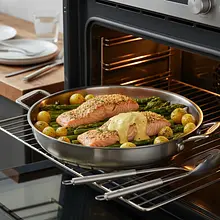
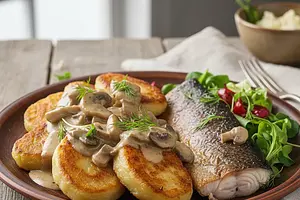
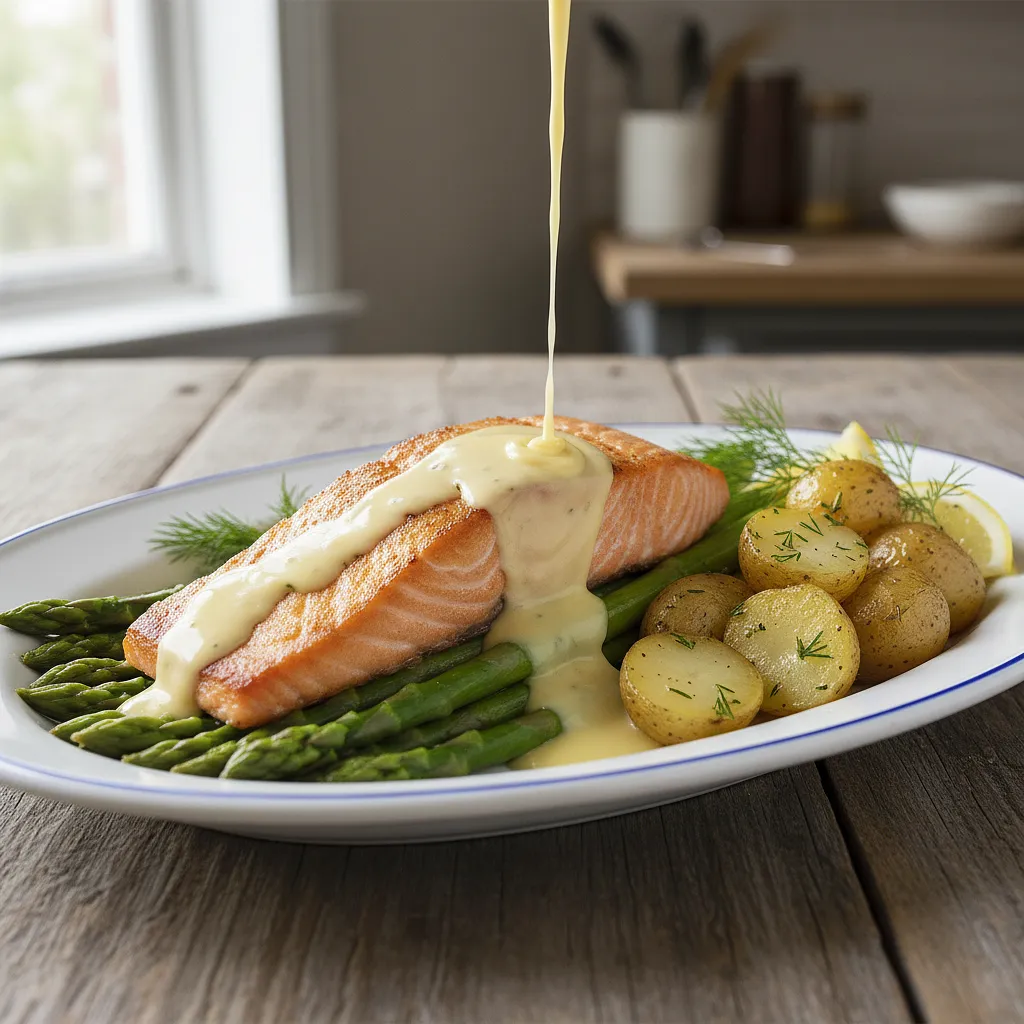
This is an exquisite yet simple dish that fully captures the taste of spring and early summer. Juicy, tender salmon fillet, baked to perfection, rests on a crispy 'carpet' of fresh green asparagus. The dish is complemented by young potatoes boiled in their skins with a buttery flavor and a velvety, creamy hollandaise sauce – a classic of French cuisine. The sauce, with its rich, buttery taste and subtle hint of lemon acidity, pairs perfectly with both the fish and the vegetables. The dish is not only a feast for the palate but also for the eyes – the contrasting colors of pink salmon, vibrant green asparagus, and bright yellow sauce create an appetizing composition on the plate. Perfect for an elegant lunch, a romantic dinner, or a special occasion when you want to impress your guests without spending the whole day in the kitchen.
Składniki (12)
- Salmon fillet 600 g
- Green asparagus 1 pęczek
- Młode ziemniaki 800 g
- Egg yolk 3.3 szt.
- Masło klarowane 10 łyżek
- Lemon juice 30 ml
- Olive oil 30 ml
- Sea salt 5 g
- Water 15 ml
- 🌿 Przyprawy
- Pieprz czarny świeżo mielony 3 szczypty
- ✨ Opcjonalne
- Fresh dill 1 pęczek
- Cayenne pepper 2 szczypty
💡 Kliknij na składnik aby oznaczyć jako użyty
Preparation steps
Preparation of toppings
Preparation of salmon and asparagus
Meanwhile, while the potatoes are boiling, prepare the salmon and asparagus. Preheat the oven to 200°C (conventional mode). Wash the asparagus under cold water. To prepare them for baking, you need to snap off the woody ends. Hold each stalk with both hands - one hand at the base, the other in the middle - and gently bend it. The asparagus will naturally break where the tough, fibrous part ends. Discard the ends. Rinse the salmon fillets and pat them dry with paper towels - this is crucial for achieving a crispy skin.
Baking
On a large baking sheet lined with parchment paper, spread the prepared asparagus evenly to create a 'carpet'. Drizzle with half of the olive oil (about 15 ml), sprinkle with salt and pepper, and then gently toss with your hands to coat with the seasonings. Place the salmon fillets on top of the asparagus, skin side down. Drizzle the fish with the remaining oil, and then generously sprinkle with salt and freshly ground black pepper. Place the baking sheet in the preheated oven.
Bake the whole for 12-18 minutes. The baking time depends on the thickness of the fillets. The salmon is ready when its flesh easily flakes with a fork and has a pale pink color inside, but is not dry. The asparagus should be lightly browned and tender, yet still slightly crisp. Avoid overcooking the fish, as it will become dry and fibrous.
Hollandaise sauce
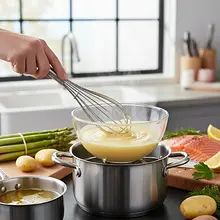
While the fish is baking, prepare the sauce. In a small saucepan over the lowest heat, melt the clarified butter. It’s important that it is warm but not hot. In the meantime, prepare a water bath: pour a few centimeters of water into a larger pot and bring it to a barely visible simmer (the surface should only quiver slightly). Place a metal or glass bowl on top of the pot that fits the pot but does not touch the surface of the water.
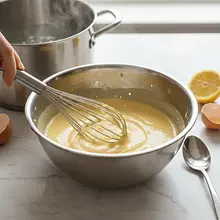
In a bowl placed over steaming water, add the egg yolks, lemon juice, and a tablespoon of water. Immediately start whisking vigorously with a whisk. Whisk continuously for about 3-4 minutes. The mixture should become pale, fluffy, and double in volume, with traces left by the whisk on its surface. This is a crucial moment - the yolks must be properly aerated and heated to create a stable emulsion.
Remove the bowl from the water bath. Now, while whisking vigorously, start adding the warm clarified butter. Pour it VERY SLOWLY, in a thin stream, almost drop by drop at first. Allow each portion of butter to fully combine with the yolk mixture before adding the next. When the sauce begins to thicken, you can pour the butter a bit faster. Continue until all the butter is used, and the sauce reaches the consistency of thin mayonnaise. Finally, season with salt to taste. Additionally, you can add a pinch of cayenne pepper for a gentle heat.
Serving
On four plates, arrange portions of roasted asparagus. On each asparagus 'carpet', place a fillet of salmon. Next to the fish and vegetables, add a portion of boiled young potatoes. Generously drizzle everything with freshly prepared hollandaise sauce. If using, sprinkle the dish with chopped fresh dill. Serve immediately while all elements are warm.
Fun Fact
Hollandaise sauce is one of the five 'mother sauces' of French cuisine, codified by Auguste Escoffier in the early 20th century. Despite its name, this sauce is believed to have originated in France, and it received the name 'hollandaise' as a nod to the high quality of Dutch butter.
Best for
Tips
Serve the dish on warmed plates to keep the temperature as long as possible. Place a wedge of lemon next to the plate for individual seasoning of the fish. It pairs perfectly with a glass of chilled, dry white wine, such as Sauvignon Blanc or Pinot Grigio.
This dish tastes best when freshly prepared. Leftover salmon, asparagus, and potatoes can be stored in an airtight container in the refrigerator for up to 2 days. They can be reheated in the oven. NOTE: Hollandaise sauce is not suitable for storage or reheating, as the emulsion will separate. It should be prepared just before serving.
📸 Ugotowane przez społeczność
Zaloguj się, aby dodać zdjęcieDodaj zdjęcie gotowej potrawy
Po zatwierdzeniu przez moderatora otrzymasz 10 punktów doświadczenia.
Nikt jeszcze nie dodał zdjęcia. Bądź pierwszy!
Comments (0)
Be the first to comment on this recipe!
Add a comment