Menu

Dumplings with cabbage and mushrooms

Pikantne Main Dishes European cuisine Christmas Eve Dinner 90 min Medium 30 wyświetleń ~15.88 PLN - (0)
Rate:
(0)

Description

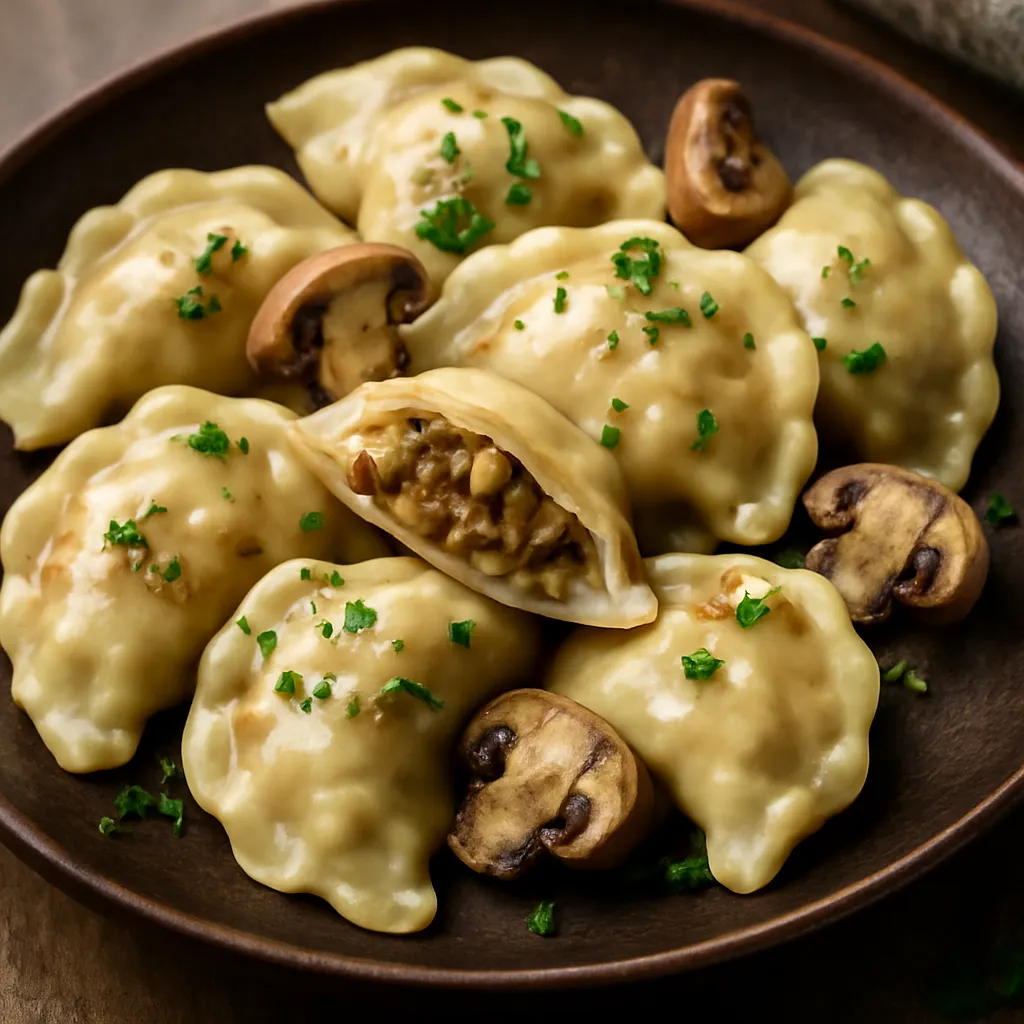
Classic Polish pierogi with sauerkraut and dried mushrooms are aromatic, hearty dishes with a deep, slightly tangy flavor of cabbage and an intense, forest aroma of mushrooms. They originate from Polish cuisine and often appear at Christmas Eve dinner and family gatherings. They are served hot, often with sautéed onions and butter or with sour cream. Visually, they are soft pierogi with a shiny, slightly glossy skin, featuring evenly shaped edges — when cut, you can see the moist, creamy-brown filling inside. They are perfect as a main dish or a hearty side to other dishes.

Składniki (13)

Servings:
4
  • Wheat flour 500 g
  • Egg 1 szt.
  • Water 300 ml
  • Rapeseed oil 30 g
  • Sauerkraut 600 g
  • Dried mushrooms (e.g. porcini) 25 g
  • Onion 1 szt.
  • Butter 50 g
  • Garlic 2 ząbki
  • 🌿 Przyprawy
  • Salt 10 g
  • Black pepper 4 szczypty
  • ✨ Opcjonalne
  • 18% cream (optional) 200 g
  • Chives (optional) 1 pęczek
💰 Szacowany koszt dania: ~15.88 PLN (3.97 PLN/porcję)

💡 Kliknij na składnik aby oznaczyć jako użyty

Preparation steps

Filling

1

Prepare the dried mushrooms: place 25 g of dried mushrooms in a wide bowl and pour 200 ml of boiling water over them (the water should completely cover them). Cover the bowl with a plate and set aside for 30–40 minutes, until the mushrooms are soft and pliable. After soaking, drain the mushrooms through a sieve, reserving the soaking water (leave the sediment in the sieve). Squeeze or press the mushrooms, and set the water aside for later use (it can be added to the filling during stewing, carefully — it has a strong flavor). Chop the mushrooms into small pieces with a knife.

Ingredients: Water, Dried mushrooms (e.g. porcini)
Użyj żaroodpornej miski lub kubka. Jeśli grzyby po 40 minutach są twarde, podgrzej krótko wodę i zalej ponownie. Zachowaj wodę z moczenia - to aromatyczny dodatek; przecedź ją przez gazę, by usunąć piasek.
2

Prepare the cabbage: if the cabbage is very sour, rinse it under cold running water and squeeze it tightly in your hands or in a colander. If it is coarse, chop it finely with a sharp knife. Place the cabbage in a medium saucepan, add 50–100 ml of water (you can use some of the water from soaking mushrooms, after straining it through a sieve) and cook over low heat covered for 20–25 minutes, until the cabbage becomes soft. Stir occasionally to prevent it from sticking.

Ingredients: Water, Sauerkraut
Użyj garnka o średnicy 18–20 cm. Jeśli kapusta szybko wysycha, dolej trochę wody. Kapusta powinna być miękka, ale nie papkowata — ma zachować nieco struktury.
3

Sauté the onion and garlic: peel 150 g of onion and chop it into small cubes. In a large skillet, heat 25 g of butter over medium heat. Add the onion and sauté for 5–7 minutes until the onion is translucent and softened, stirring every minute. Add the minced or finely chopped garlic (10 g) and sauté for 30–45 seconds until fragrant, being careful not to burn it.

Ingredients: Onion, Butter, Garlic
Najlepsza będzie patelnia 24–26 cm. Użyj drewnianej łyżki. Cebula jest gotowa, gdy ma jasny kolor i lekko mięknie; przypalenie czosnku daje gorzki posmak.
4

Combine the mushrooms with the cabbage: add the chopped, previously soaked mushrooms to the pan with sautéed onion and garlic. Mix, add the cooked cabbage, and fry everything together over low heat for 8–12 minutes to allow the flavors to meld. Season the filling with salt (generously — total salt in the recipe included) and freshly ground black pepper (2 g). Taste the filling — it should be pronounced, slightly tangy with a mushroom note. Set aside to cool to room temperature.

Ingredients: Water, Sauerkraut, Dried mushrooms (e.g. porcini), Onion, Butter, Garlic, Black pepper
Użyj szerokiej patelni, aby farsz mógł odparować. Jeśli farsz jest zbyt suchy, dodaj 1–2 łyżki (15–30 ml) wody z moczenia grzybów; jeśli zbyt mokry, smaż dłużej, by odparować nadmiar płynu.

Dough

5

Prepare the dough: sift 500 g of wheat flour into a large bowl. Make a deep well in the flour. In a separate container, whisk 60 g of egg with 30 g of rapeseed oil and 150–160 ml of warm water (about 40°C). Pour the mixture into the well and add 5 g of salt (which corresponds to 1/2 teaspoon of the specified amount of salt). Using a fork, start mixing the center part, gradually incorporating the flour from the sides until a thick, uneven dough forms.

Ingredients: Wheat flour, Egg, Water, Salt, Rapeseed oil
Użyj dużej miski (min. 3 l). Temperatura wody nie powinna przekraczać 40°C — zbyt gorąca uszkodzi strukturę ciasta. Jeśli nie masz termometru, sprawdź temperaturę wewnętrzną nadgarstka (powinna być przyjemnie ciepła).
6

Kneading the dough: lightly sprinkle the slightly sticky dough onto a floured surface. Knead by hand for 8–10 minutes until it becomes smooth and elastic (the dough should no longer stick to your hands — if it does, add a few grams of flour). Alternatively, use a mixer with a dough hook and knead for 5–6 minutes on low speed. Form the dough into a ball, brush lightly with 5 g of oil, and cover with a bowl or plastic wrap. Let it rest for 30 minutes at room temperature — the dough will relax and be easier to roll out.

Ingredients: Wheat flour, Egg, Rapeseed oil
Jeśli wyrabiasz ręcznie, użyj ruchów z pięścią i dźwigania ciasta, obracając je stale. Nie wyrabiaj zbyt długo (nie więcej niż 10 minut), bo gluten może stać się zbyt napięty — ciasto trudniej będzie rozwałkować.

Assembling and Shaping

7

Forming the dumplings: divide the rested dough into 4 equal parts. Roll out one part on a floured surface to a thickness of about 2 mm. Use a round cutter or a glass with a diameter of 7–8 cm to cut out circles. Place a tablespoon (about 12–15 g) of chilled filling in the center of each circle — do not overfill, otherwise the dumplings will burst. Moisten the edges of the circle with water using your finger, fold it in half and carefully pinch the edges together with your fingers, then press firmly and if you like, create a decorative wave or use a fork to press down.

Ingredients: Wheat flour, Water
Użyj radełka lub widelca do estetycznego zaciśnięcia brzegów. Zawsze trzymaj resztę ciasta pod przykryciem, aby nie wyschło. Jeśli pierogi się rozklejają, możesz oblać brzegi białkiem roztrzepanym i dopiero sklejać.
8

Prepare for cooking: arrange the ready dumplings on a floured board or cloth in a single layer, avoiding them sticking together. Continue rolling out and cutting until the dough and filling are used up. If you want, you can freeze some of the dumplings on a tray, and after freezing, transfer them to bags.

Jeżeli planujesz mrozić pierogi, układaj je pojedynczo na tacy, aby się nie sklejały. Przed mrożeniem nie gotuj pierogów — zamrażaj surowe.

Cooking

9

Cooking the dumplings: in a large pot, bring about 2.5 liters of water to a boil with 5 g of salt (about 1/2 teaspoon). Add the dumplings in batches (no more than 12–15 at a time, depending on the pot), gently stirring with a slotted spoon to prevent them from sticking to the bottom. When the dumplings float to the surface (after 2–3 minutes of being added), cook them for another 2–3 minutes at a gentle simmer — the total time from adding to removing from the water is usually 5–6 minutes. Remove with a slotted spoon.

Ingredients: Water, Salt
Użyj dużego, szerokiego garnka (min. 4 l), aby pierogi miały miejsce do swobodnego pływania. Nie gotuj na zbyt silnym ogniu po wypłynięciu, bo ciasto może się rozciągnąć i pękać.

Serving

10

Finishing and serving: you can serve the dumplings immediately after cooking — transfer them to a plate, add 25 g of melted butter on top, and gently mix to ensure they are all lightly coated. Alternatively: heat 25 g of butter in a pan and sauté the cooked dumplings in batches for 2–3 minutes on each side until they turn golden. Serve with optional 18% sour cream (200 g to divide onto plates) and sprinkled with fresh chives (30 g) if using.

Ingredients: Butter, 18% cream (optional), Chives (optional)
Najlepsza jest patelnia 24 cm do podsmażenia. Jeśli podgrzewasz większą ilość na raz, rób to w partiach, żeby pierogi miały przestrzeń i zarumieniły się równomiernie.

Fun Fact

💡

Pierogi with cabbage and mushrooms are a traditional Christmas Eve dish in Poland — they are usually served as part of the twelve Christmas dishes. In some regions, the filling is also prepared with the addition of dried fruits.

Best for

Tips

🍽️ Serving

Serve hot, right after cooking or after a brief sauté in butter for a crispy crust. They pair wonderfully with sour cream, sautéed onions, bacon bits (if not serving the vegetarian version), or fresh chives. Tea or dried fruit compote is a good drink to accompany them.

🥡 Storage

Storage: cooked dumplings can be stored in the refrigerator for up to 2 days in an airtight container. To reheat: drop them into boiling water for 1–2 minutes or sauté in butter. Raw dumplings can be frozen laid out individually on a tray, and after freezing, transfer them to bags — store for up to 3 months. Do not thaw before cooking — place frozen dumplings directly into boiling water, cooking time will increase by about 2 minutes.

📸 Ugotowane przez społeczność

Zaloguj się, aby dodać zdjęcie
Dodaj zdjęcie gotowej potrawy

Po zatwierdzeniu przez moderatora otrzymasz 10 punktów doświadczenia.

🍲

Nikt jeszcze nie dodał zdjęcia. Bądź pierwszy!

Comments (0)

Be the first to comment on this recipe!

Add a comment

You might also like

Recipe Categories

Main Dishes
Main Dishes in: Christmas Eve Dinner

Main courses are the heart of every meal - hearty, delicious, and full of nutrients. Meats: beef, pork, poultry, and lamb in various versions. Fish and seafood: baked, fried, grilled, and stewed. Vegetarian dishes: tofu, tempeh, legumes as the main protein. Casseroles: pasta, potato, vegetable wi...

See all recipes in this category

European cuisine is a mosaic of culinary traditions from the Old Continent - from Spain to Scandinavia. Valencian paella and tapas from Spain - sunshine on a plate. Boeuf bourguignon and ratatouille from France - elegance and finesse. Wiener schnitzel and strudel from Austria - Central European c...

See all recipes in this category

Christmas Eve is the most important evening of the year - a time for tradition, family, and special dishes. Our collection of Christmas Eve recipes includes all 12 traditional dishes: from red borscht with dumplings to poppy seed cake and kutia. Recipes for carp in various versions: fried, baked,...

See all recipes in this category

Christmas Eve dishes are the heart of Polish holiday tradition - 12 meatless dishes on the table. Fried, baked, jellied, and Jewish-style carp - the main star of Christmas Eve. Dumplings with cabbage and mushrooms - handmade according to grandma's recipes. Small mushroom-filled pockets for borsch...

See all recipes in this category
Reklama