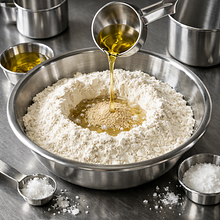
Prepare the ingredients and utensils: measure 500 g of flour and sift it into a large bowl (metal or glass). Make a well in the center of the bowl the size of your hand. In a separate container, heat 300 ml of water to a temperature of 35–37°C (it should be noticeably warm, but not hot — check with the inside of your wrist).
Description
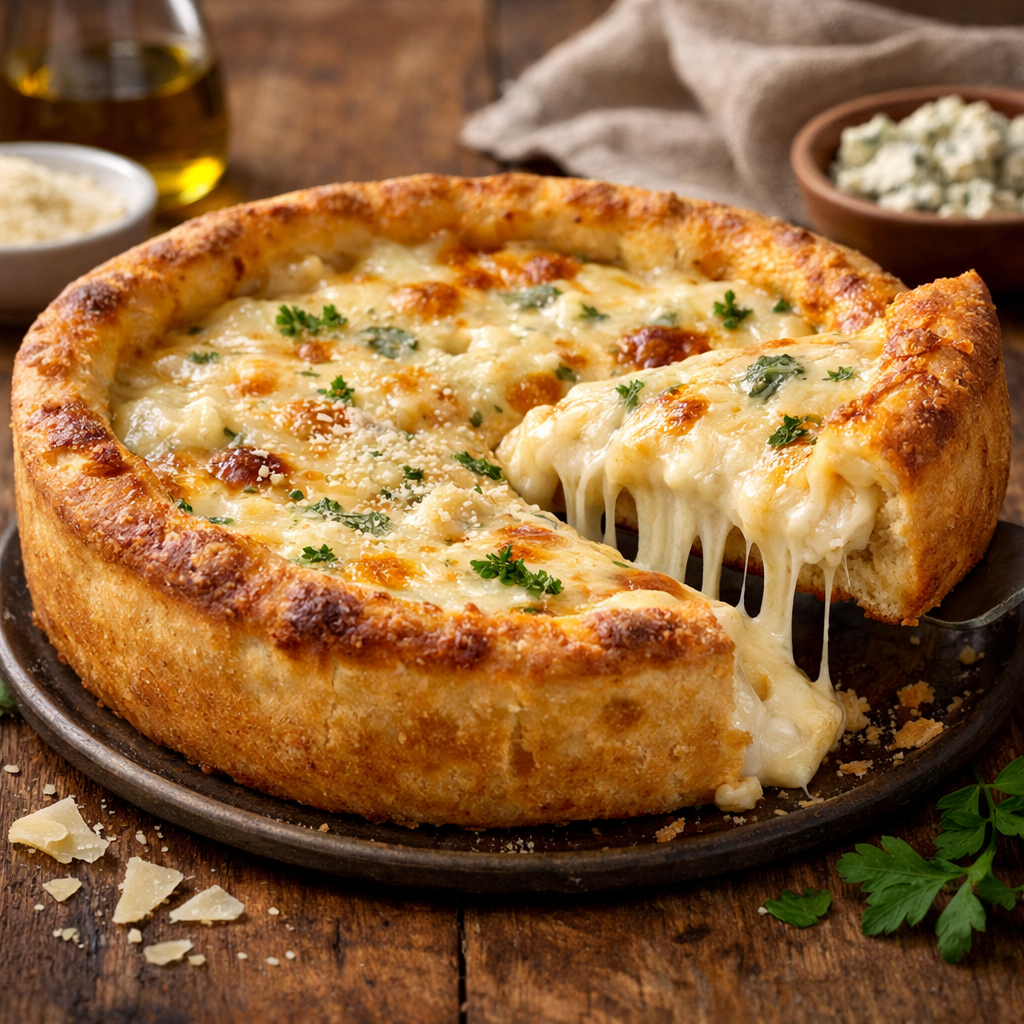
Thick, deep "deep dish" pizza with four cheeses — mozzarella, yellow cheese, blue cheese, and parmesan — crafted to have a soft and buttery base, crispy edges, and a rich topping of creamy and slightly spicy cheese flavors along with aromatic tomato sauce. This recipe is inspired by the classic deep-dish pizza style (Chicago), adapted to Polish winter seasonal ingredients: we use tomato passata and simple spices. The dish is perfect for a family dinner or a party — serve it warm, cut into 4 large pieces, with a simple arugula salad or pickled cabbage on the side. The bold aroma of the cheeses and the thick sauce create a contrast of textures: gooey cheese inside and a golden, slightly crispy crust outside.
Ingredients Used
Ingredients (19)
- Wheat flour 500 g
- Fresh yeast 20 g
- Water 300 ml
- Sugar 10 g
- Rapeseed oil 30 g
- Tomato passata 400 g
- Garlic 2 ząbki (~10 g)
- Onion 1 szt. (~150 g)
- Olive oil 30 ml
- Mozzarella 250 g
- Cheese 150 g
- Blue cheese 100 g
- Parmesan 80 g
- 🌿 Przyprawy
- Salt 10 g
- Oregano 2 g
- Black pepper 2 szczypty (~1 g)
- ✨ Opcjonalne
- Butter 20 g
- Arugula 30 g
- Chili flakes 2 szczypty (~2 g)
💡 Kliknij na składnik aby oznaczyć jako użyty
Preparation steps
Cake
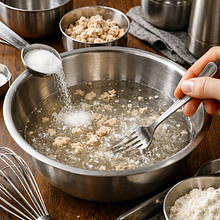
To 35–37°C water, add 10 g of sugar and 20 g of crumbled fresh yeast. Mix vigorously with a fork until the yeast dissolves and set aside in a warm place for 8–10 minutes. After this time, bubbles or a light foam should appear on the surface — this is a sign that the yeast is active.
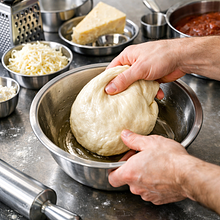
Pour the active yeast into the well in the flour, add 30 g of rapeseed oil and 10 g of salt (sprinkled around the edge of the flour, away from direct contact with the yeast). Start kneading the dough with a spoon or a mixer with a hook on the lowest speed until the ingredients are combined, then knead for 8–10 minutes (mixer) or 10–12 minutes by hand, until the dough is smooth, elastic, and slightly sticky, but not sticking to your hands. If the dough is too dry, add 5–10 ml of water; if too sticky — a little flour.
Transfer the dough to a lightly oiled bowl, turning it once so that the entire surface is greased. Cover the bowl with plastic wrap or a damp cloth and set it in a warm place without drafts for 60–90 minutes until it doubles in volume. The ideal rising temperature is 24–27°C.
Tomato sauce
Meanwhile, prepare the sauce: heat 30 g of olive oil in a small pan (preferably 20–24 cm) over medium heat. Add 150 g of finely chopped onion and sauté for 4–5 minutes until it becomes translucent and soft. Add 10 g of finely chopped garlic and sauté for another 30–40 seconds until it releases its aroma (be careful not to burn it).
Add 400 g of tomato passata to the pan, mix, and season with 2 g of oregano, 1 g of black pepper, and 3 g of salt (if you prefer a stronger flavor, you can add another 1 g of sugar). Cook on low heat for 12–15 minutes, stirring every few minutes, until the sauce thickens and some of the water evaporates. After cooking, remove from heat and set aside to cool slightly.
Preparing the cheeses
Prepare the cheeses: grate 150 g of yellow cheese on a coarse grater, grate 80 g of Parmesan on a fine grater. Cut or tear 250 g of mozzarella into thick pieces (about 2 cm). Crumble 100 g of blue cheese into small pieces with your fingers.
Assembling and Shaping
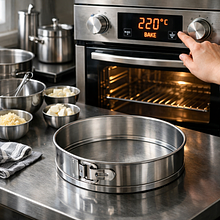
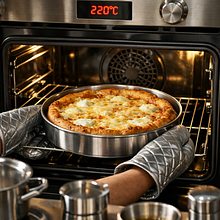
Preheat the oven to 220°C (top and bottom heat). Prepare a tart pan or springform pan with a diameter of 24–26 cm and high edges (about 4–6 cm). Grease the pan with 10–15 g of oil or lightly brush with butter (optional). After the dough has risen, deflate it — hit it with your hand and press until most of the air escapes. Place the dough on a lightly floured surface and shape it into a ball, then stretch it with your fingers to form a disk slightly larger than the pan. Transfer the dough to the pan and press it down to the bottom, forming a thicker edge (about 2–3 cm higher), leaving the bottom about 1–1.5 cm thick.
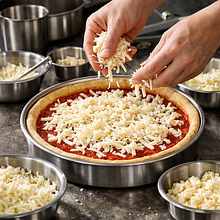
Layering (classic deep dish): first evenly spread half of the mozzarella and half of the yellow cheese on the bottom (this creates a barrier against moisture), then place pieces of blue cheese and sprinkle with half of the parmesan. On this prepared layer of cheeses, pour and evenly spread the entire tomato sauce. On top of the sauce, distribute the remaining mozzarella and yellow cheese, as well as the rest of the parmesan. You can sprinkle 1 g of pepper and an additional 1 g of oregano on top.
Baking
Place the dish in the preheated oven on the middle rack. Bake at 220°C for 25–30 minutes. After 15 minutes, check the color of the edges: they should be golden. The entire dish is ready when the edges are deep golden and the sauce on top starts to bubble (bubbles visible). If the top is browning too quickly, loosely cover it with aluminum foil for the last 5–10 minutes.
Finishing
After baking, remove the pizza and let it rest in the pan for 8–12 minutes. After this time, gently detach the edges with a knife and transfer the pizza to a board. If you used butter, melt 20 g and brush the edges for shine and extra flavor. Sprinkle the top with 30 g of fresh arugula and optionally 2 g of chili flakes just before serving.
Serving
Cut the pizza into 4 large pieces and serve immediately. A light arugula salad with olive oil and lemon juice or sauerkraut for a flavor contrast makes a good addition. Dark beer or dry wine pairs well with the drinks.
Fun Fact
The deep dish style originated in Chicago in the 1940s and is characterized by placing the cheese directly on the bottom of the crust, with the tomato sauce on top — the opposite of traditional Italian pizza.
Best for
Tips
Serve the pizza hot, 8–12 minutes after taking it out of the oven, so the filling doesn't ooze when cutting. Cut into 4 thick slices; serve with a simple arugula salad dressed with olive oil and lemon or with sauerkraut for contrast. You can drizzle the edges with a bit of olive oil before serving instead of butter.
Store leftovers in the fridge for up to 2 days in an airtight container. The best way to reheat is in the oven: 180°C for 8–12 minutes (on a metal baking sheet) to restore the crispness of the edges. The microwave softens the bottom and makes the cheese rubbery.
📸 Ugotowane przez społeczność
Zaloguj się, aby dodać zdjęcieDodaj zdjęcie gotowej potrawy
Po zatwierdzeniu przez moderatora otrzymasz 10 punktów doświadczenia.
Nikt jeszcze nie dodał zdjęcia. Bądź pierwszy!
Comments (0)
Be the first to comment on this recipe!
Add a comment