Prepare the bundt pan. Using a pastry brush, thoroughly coat the entire interior of the pan, including the chimney and all the nooks and crannies, with a thin layer of softened butter. Then, add a tablespoon of all-purpose flour to the pan and, rotating the pan, spread the flour so that it sticks to the butter, creating a white coating. Shake out the excess flour by turning the pan upside down and tapping its bottom.
Description
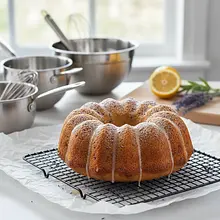
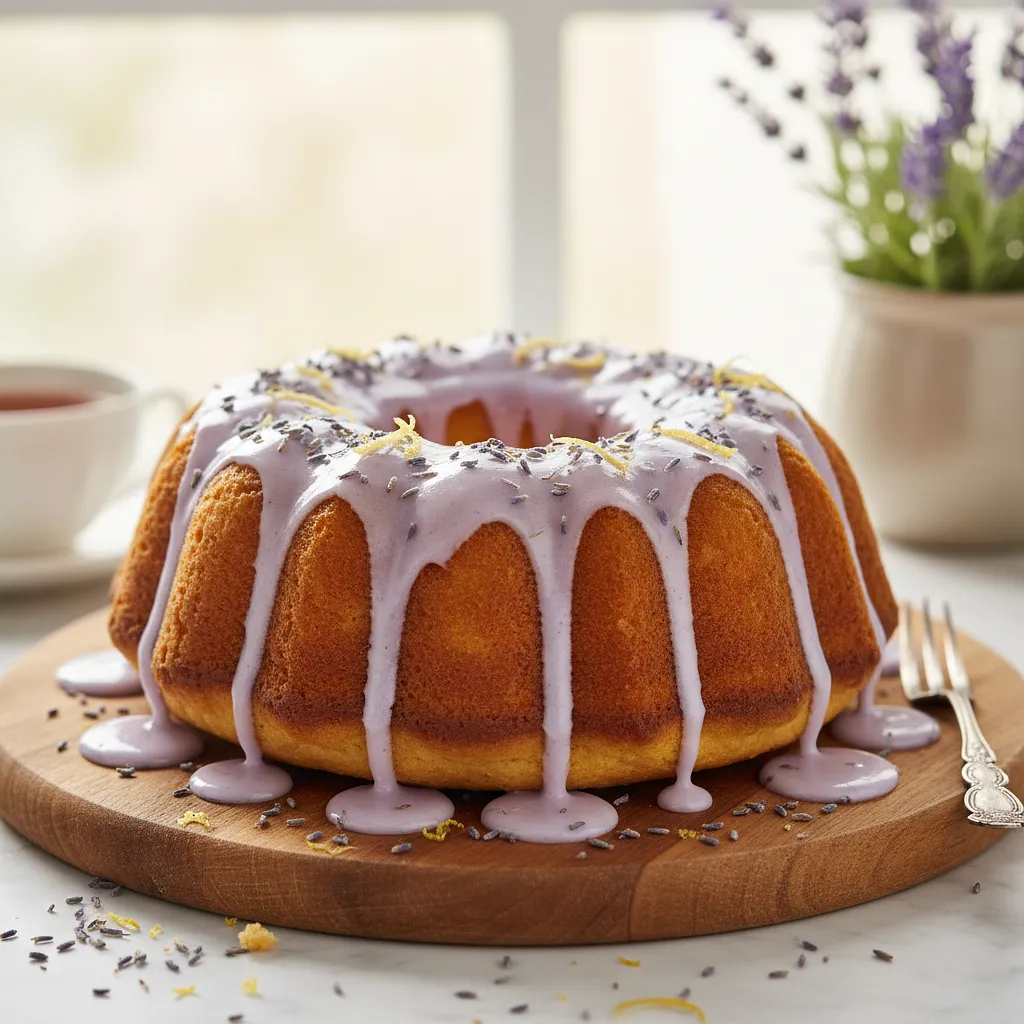
Here is a recipe for a cake that is the essence of lightness and freshness. Its fluffy, almost cloud-like texture, thanks to the careful aeration of the batter and the addition of potato flour, literally melts in your mouth. The intense, natural aroma of freshly grated lemon zest and juice permeates every bite, creating a refreshing taste experience. An extraordinary touch here is the lavender glaze – the subtle, floral note of lavender perfectly balances the citrus acidity, giving the whole a sophisticated and unique character. The cake looks stunning on the table – its classic, ridged shape, covered with thick, dripping glaze and adorned with golden lemon zest, makes it the perfect bake for special occasions such as Easter, family celebrations, or a Sunday afternoon with coffee.
Składniki (13)
- Mąka pszenna tortowa typ 450 250 g
- Potato flour 50 g
- Baking powder 10 g
- Eggs 5 szt.
- Cukier drobny do wypieków 13.3 łyżek
- Butter 200 g
- Sour cream 18% 120 g
- Lemon 3.8 szt.
- Vanilla extract 5 g
- Powdered sugar 200 g
- 🌿 Przyprawy
- Salt 0.1 szczypt
- Dried edible lavender flowers 1 łyżeczka
- ✨ Opcjonalne
- Fresh lavender flowers for decoration 2 szczypty
💡 Kliknij na składnik aby oznaczyć jako użyty
Preparation steps
Preparing the pan and oven
Preheat the oven to 175°C, setting the heat to 'top-bottom'. Place the rack in the middle position. The oven must reach the required temperature before you put the cake in, which will ensure even baking.
Preparing the dough
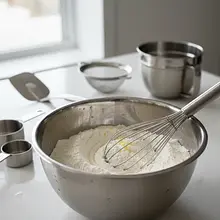
In a large bowl, combine the dry ingredients. Add the all-purpose flour, potato flour, baking powder, and salt. Using a sieve or sifter, sift all the ingredients together at least twice. This will ensure they are thoroughly mixed and aerated, which is the secret to the fluffiness of the cake.
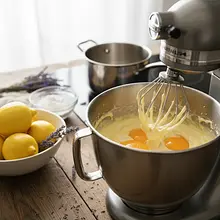
In the bowl of a mixer, place very soft butter and fine sugar. Using the paddle attachment, beat the ingredients on medium-high speed for about 7-8 minutes. The mixture should become very light, almost white, and noticeably increase in volume, resembling fluffy cream. Occasionally stop the mixer and scrape down the sides of the bowl with a silicone spatula.
Reduce the mixer speed to medium. Add the eggs one by one, waiting for the previous one to fully combine with the mixture before adding the next. Mix each egg for about 1 minute. Adding the eggs too quickly can cause the mixture to curdle (it will look like sour milk). If this happens, don't worry – adding flour in the next step should save the situation.
Wash and blanch the lemons thoroughly. Grate the yellow part of the peel using a fine grater. Squeeze out the juice. Add the grated lemon peel and vanilla extract to the egg-butter mixture. Mix briefly, just until the ingredients are combined, on low speed of the mixer.
Now you will add the dry and wet ingredients alternately. Reduce the mixer speed to the minimum. Add 1/3 of the sifted flour and mix only until combined. Then pour in half of the cream mixed with lemon juice and blend briefly again. Repeat: add the second 1/3 of the flour, the remaining cream with lemon juice, and finally the last portion of flour. Mix each portion very briefly, just until the ingredients are combined.
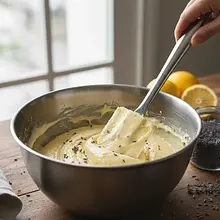
Turn off the mixer. Using a large silicone spatula, gently fold the batter, making a few motions from the bottom of the bowl upwards. Make sure there are no dry ingredients left at the bottom. The finished batter should be thick, smooth, and fluffy.
Baking
Transfer the prepared dough to the previously prepared pan. Smooth the top with a spatula. Gently tap the pan on the countertop 2-3 times to remove any air bubbles and ensure the dough reaches all corners of the pan.
Place the pan in the preheated oven and bake for 45-50 minutes. After about 40 minutes, perform the toothpick test: insert a wooden skewer into the thickest part of the cake. If the skewer comes out dry and without traces of raw batter, the cake is ready. If there is batter on it, continue baking and check every 5 minutes.
Remove the baked cake from the oven and place the pan on a metal rack. Leave it in the pan to cool for exactly 15 minutes. After this time, carefully turn the pan upside down – the cake should come out smoothly. Leave the cake on the rack to cool completely (this will take about 1-2 hours).
Preparation of the icing and decoration
In a mortar or a clean coffee grinder, place the dried lavender flowers and a tablespoon of powdered sugar. Grind them together into a fine powder. The sugar will help break down the flowers and absorb the essential oils, releasing the full aroma.
Sift the remaining powdered sugar and grated lavender with sugar into a bowl. Gradually, adding one teaspoon at a time, pour in the lemon juice while continuously whisking vigorously with a whisk or fork. Mix until you achieve a smooth, thick, yet still pourable icing. The consistency should resemble thick cream.
Make sure the cake is completely cool. Place the cake on parchment paper or a large tray (which will make cleaning easier). Slowly drizzle the prepared icing over the cake, allowing it to flow freely down the sides, creating appetizing icicles.
Before the icing sets, decorate the top of the cake. Optionally, sprinkle with freshly grated lemon zest and a few fresh or dried lavender flowers. Leave the cake for about 30 minutes to allow the icing to harden completely before cutting it.
Fun Fact
The cake mold, known as 'Bundt pan', was popularized in America in the 1950s and 1960s by the company Nordic Ware. Its distinctive shape with a chimney in the center is not just a decoration – it ensures even baking of the cake from the inside, which is crucial for dense pound cakes.
Best for
Tips
The cake is best served at room temperature, cut into thick slices. It tastes delicious on its own, but it can also be served with a dollop of whipped cream or a scoop of vanilla ice cream. It pairs perfectly with a cup of Earl Grey tea, whose bergamot aroma beautifully complements the notes of lemon and lavender.
Store the cake under a dome or in an airtight container at room temperature for 3-4 days. The icing helps maintain its moisture. The cake can be frozen (without icing and decorations), tightly wrapped in plastic wrap, for up to 3 months.
📸 Ugotowane przez społeczność
Zaloguj się, aby dodać zdjęcieDodaj zdjęcie gotowej potrawy
Po zatwierdzeniu przez moderatora otrzymasz 10 punktów doświadczenia.
Nikt jeszcze nie dodał zdjęcia. Bądź pierwszy!
Comments (0)
Be the first to comment on this recipe!
Add a comment