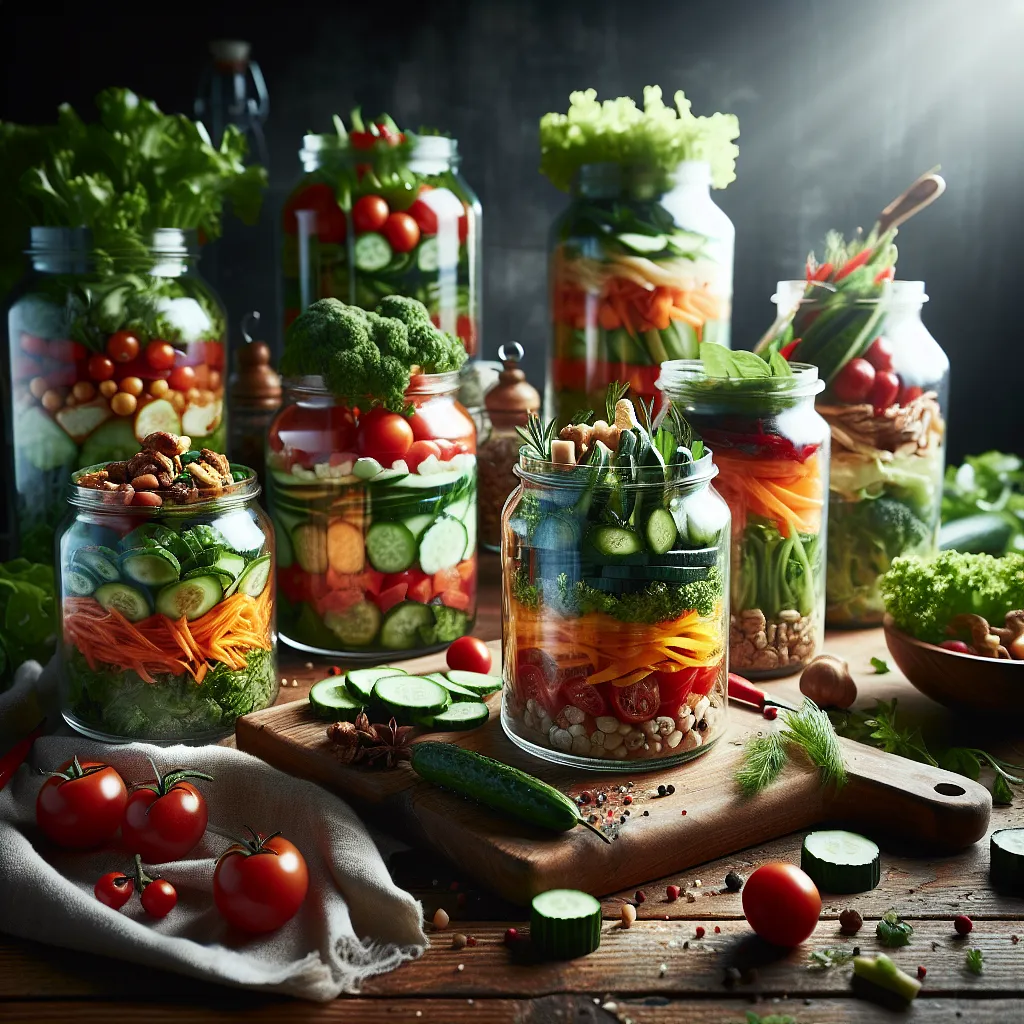
Prepare 6 jars with a capacity of about 350–400 ml (Weck jars or jars with lids), wash them thoroughly in hot water with detergent, and rinse. Then you can sterilize them: a) oven — set to 120°C, place the clean jars upside down on a baking sheet and sterilize for 10 minutes; keep the lids in a pot of boiling water for 5 minutes; or b) water bath — place the jars in a large pot, cover with water, and boil for 5 minutes. After sterilization, remove the jars onto a clean towel.
Description
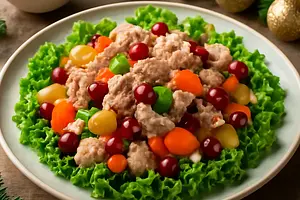
Vegetable salad in jars is a colorful, crunchy mix of seasonal vegetables — carrots, beets, red cabbage, pickled cucumber, onion, apple, and peas — dressed with a delicate mixture of oil, apple cider vinegar, and honey. This dish is perfect for Christmas Eve as a cold appetizer or a side dish for the holiday table: it is visually appealing due to its vibrant colors and has a distinct, balanced sweet-sour-salty flavor. Prepared in jars, it looks great, is easy to transport and store, and after a few hours of resting, the flavors blend nicely. Excellent as a vegetarian snack for Christmas Eve — it can be served on its own or alongside dumplings, grains, or bread. Texture: crunchy cucumbers and apple, soft beets, slightly aromatic cabbage, and sweet peas.
Składniki (14)
- Carrot 3.8 szt.
- Cooked red beet 3 szt.
- Red cabbage 400 g
- Pickled cucumber 3.2 szt.
- Red onion 300 g
- Apple 1.7 szt.
- Canned peas 200 g
- Rapeseed oil 60 g
- Apple cider vinegar 30 ml
- Honey 30 ml
- 🌿 Przyprawy
- Salt 6 g
- Black pepper 4 szczypty
- ✨ Opcjonalne
- Dill 1.5 pęczki
- Mayonnaise 120 g
💡 Kliknij na składnik aby oznaczyć jako użyty
Preparation steps
Preparation
Preparing the vegetables
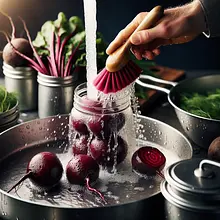
Wash the beets under running water with a vegetable brush, do not peel them before cooking (the skin will prevent the flavor from washing out). Place the beets in a pot, cover them completely with cold water, add 1 teaspoon of salt, bring to a boil, reduce the heat, and cook for 40–60 minutes depending on their size (check with a fork — it should go in smoothly, without resistance). After cooking, drain the hot water, cover the beets with cold water, and when they cool down, peel the skin using a knife or gloves and cut into 1 cm cubes.
Peel the carrots with a peeler, wash them, and grate them on a coarse grater directly into a large bowl. Try to grate evenly to avoid fibrous, very long strips. If you don't have a grater, use a food processor with a grating disc.
Cut the red cabbage in half, remove the tough core, and slice it very thinly into strips (hold the knife steady and cut at an angle to achieve thin ribbons). Transfer the sliced cabbage to a bowl, add 2 g of salt (2 pinches), and massage it vigorously with your hands for about 3–5 minutes — the cabbage will soften and release juice, becoming more tender and flavorful.
Cut the pickled cucumbers into 5–7 mm cubes. Peel the red onion and slice it into thin half-rings; if you want to soften the sharp taste of the onion, place it in a bowl of cold water for 5 minutes, then drain and dry. Arrange both ingredients in a bowl with the carrot and cabbage.
Wash the apples, remove the cores, and cut them into small cubes of 5–7 mm. Immediately drizzle them with 1 teaspoon (5 ml) of apple cider vinegar or a bit of dressing to prevent browning. Drain the canned peas in a sieve and dry them with a paper towel, then add them to the bowl with the vegetables.
Dressing
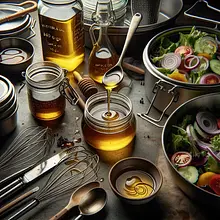
Prepare the dressing: in a small bowl, combine 60 g of rapeseed oil, 30 g of apple cider vinegar, 30 g of honey, 6 g of salt, and 2 g of freshly ground pepper. Use a whisk or fork and vigorously whisk for 30–45 seconds until the ingredients are combined and a slightly emulsified consistency is achieved. Taste and add a bit more salt or vinegar if needed (1 teaspoon at a time).
If you prefer a creamier version, add 120 g of mayonnaise (optional) to the prepared dressing and mix until you achieve a smooth consistency. Alternatively, you can add just 1–2 tablespoons of mayonnaise to keep it light — add gradually and taste.
Mixing
In a large bowl, combine the grated carrots, chopped beets, massaged cabbage, cucumbers, onion, apples, and drained peas. Pour in the prepared dressing and gently but thoroughly mix with two large spoons or your hands in gloves for about 1–2 minutes, ensuring all ingredients are evenly coated with the dressing. Taste and season with salt or pepper if needed.
Arranging the jars
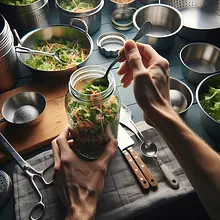
Pack the salad tightly into sterilized jars. Use a spoon or a small spatula, pressing gently to avoid large air pockets, but do not press too hard (leave about 1–2 cm of headspace at the top). After filling, wipe the rim of the jar with a clean damp cloth to ensure a good seal with the lid.
Pasteurization / sealing
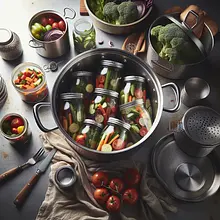
If you want to extend shelf life: loosely screw the jars, place them in a large pot lined with a cloth (to prevent clinking), and fill with hot water so that it reaches 3/4 of the height of the jars. Heat to a gentle boil (not a vigorous bubbling) and maintain a gentle simmer for 10 minutes. After turning off the heat, carefully remove the jars, tighten the lids securely, and turn them upside down for 10 minutes. Once cooled, check if the lids are concave (smooth, not popping) — this is a sign of vacuum sealing.
Serving and storing
Leave the jars for at least 12–24 hours before consumption to allow the flavors to meld. Serve the salad chilled, straight from the jar or transferred to a platter. If you used dill (optional), sprinkle it over the salad just before serving for freshness and decoration.
Fun Fact
Storing vegetable salads in jars dates back to home canning practices of the 19th and 20th centuries — jars not only protected food from spoilage but also allowed for transport and an attractive presentation of dishes.
Best for
Tips
Serve chilled. For guests, you can prepare a few variations: the basic version (without mayonnaise) and the creamy version with mayonnaise. On the plate, it's worth serving the salad with crispy bread, vegetable pâté, or as a side dish to dumplings. Sprinkle with fresh dill just before serving.
Store sterilized and properly pasteurized jars in a cool, dark place for up to 4–6 weeks. Once opened, keep the jar in the refrigerator and consume within 5–7 days. Do not store an opened jar at room temperature.
📸 Ugotowane przez społeczność
Zaloguj się, aby dodać zdjęcieDodaj zdjęcie gotowej potrawy
Po zatwierdzeniu przez moderatora otrzymasz 10 punktów doświadczenia.
Nikt jeszcze nie dodał zdjęcia. Bądź pierwszy!
Comments (0)
Be the first to comment on this recipe!
Add a comment