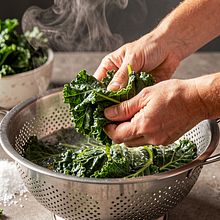
Prepare the kale: wash the leaves under running cold water, spread them on a paper towel, and dry for a few minutes. Remove the thick stems: hold the stem with one hand and the leaf with the other and pull to separate the soft parts of the leaf from the tougher vein. You can also cut the thin vein with a knife if you prefer.
Description
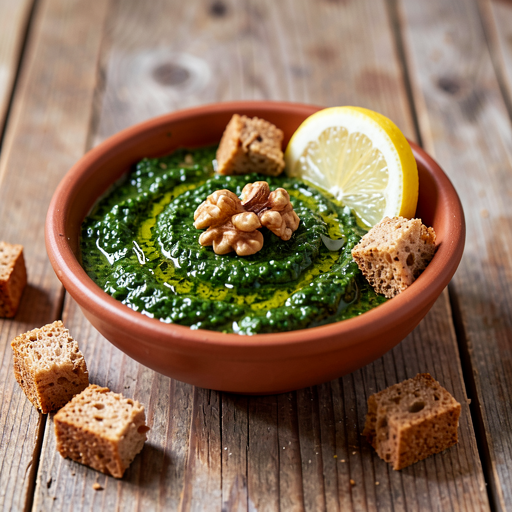
Kale pesto is a green, creamy sauce with an intense, slightly nutty flavor, offering a spring twist on classic Genoese pesto. Instead of basil, we use young kale leaves, which lose their raw bitterness and gain a deep, intense color after a brief blanching. The sauce is perfect as a dip for bread, an accompaniment to grilled vegetables, a spread for sandwiches with cottage cheese, or a dressing for salads with pearl barley. Visually, it is a vibrant green with visible pieces of nuts and seeds, served in a small bowl with a few drops of olive oil/oil and a slice of lemon. The pesto is nutritious, rich in plant fats and protein from nuts and cheese, while also being simple and quick to prepare.
Ingredients Used
Ingredients (11)
- Kale 100 g
- Rapeseed oil 60 g
- Walnuts 60 g
- Garlic 2 ząbki (~10 g)
- Cheese 60 g
- Lemon 0.8 szt. (~60 g)
- Water 30 ml
- 🌿 Przyprawy
- Salt 0.1 szczypt (~3 g)
- Black pepper 2 szczypty (~1 g)
- ✨ Opcjonalne
- Nutritional yeast 20 g
- Sunflower seeds 20 g
💡 Kliknij na składnik aby oznaczyć jako użyty
Preparation steps
Pesto
Blanching kale: bring 1 liter of water to a boil in a pot with a small amount of salt. Add the kale leaves in batches to the boiling water for 60-90 seconds — the leaves should change to a vibrant green and become flexible, but not overcooked. Remove with a slotted spoon and immediately transfer to a bowl of very cold water (ice cubes are not necessary, but will speed up the cooling). Let sit for 2 minutes, then drain and squeeze out excess water with your hands.
Prepare the nuts and garlic: in a dry skillet, toast the walnut for 3-5 minutes over medium heat, shaking the skillet every few seconds — they should start to smell nutty and lightly brown. Set aside to cool. Peel the garlic cloves and lightly crush them with a knife to release the aroma.
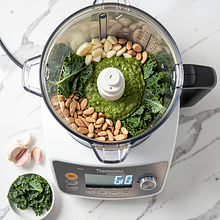
Preliminary blending: place the nuts and garlic in the bowl of a blender/Thermomix or food processor first. Pulse 6–8 times until the nuts are coarsely chopped — we want texture, not a fine powder. Add half of the blanched kale and pulse a few more times, then add the rest of the kale.
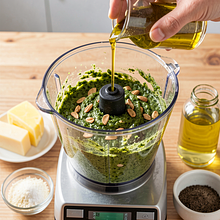
Combining and emulsifying: while mixing, switch to continuous mode and slowly pour in the rapeseed oil in a thin stream. Blend for 20–30 seconds until the mixture becomes creamy but with a fine texture. Add grated yellow cheese, juice from half a lemon (start with a little, then season), 2–3 pinches of salt, and a bit of pepper. If the pesto is too thick, gradually add water 1 tablespoon (15 ml) at a time until the desired consistency is reached.
Seasoning and consistency: taste the pesto and adjust the flavor. If you need acidity, add a few more drops of lemon juice. If the mixture is too bitter, add a bit more cheese or 1/2 teaspoon of sugar (optional). If you want a more "chunky" texture, add 1 tablespoon of sunflower seeds and pulse briefly.
Serving: transfer the pesto to a small bowl and drizzle a little canola oil on top to protect the surface from darkening. Serve with crispy rye bread, toasted croutons, or as a side with young potatoes and barley salads.
Fun Fact
Pesto has its roots in Liguria (Italy), but the use of kale is a modern, Northern European variant — kale was popular in traditional Polish kitchens and pairs wonderfully with local nuts and fats.
Best for
Tips
Serve at room temperature, drizzled with a little oil for shine. Excellent with roasted young potatoes, on a slice of rye bread with cottage cheese, as a dressing for salads with pearl barley, or as a side for grilled chicken breast (for non-vegetarians). Sprinkle with sunflower seeds or finely chopped nuts for a contrast in textures.
Store in the refrigerator in an airtight jar for 4–5 days. Before storing, level the surface and cover with a thin layer of oil to prevent darkening. You can also portion the pesto into an ice cube tray and freeze it — for 2–3 months. Add a little fresh water or oil to the thawed pesto and mix before serving.
📸 Ugotowane przez społeczność
Zaloguj się, aby dodać zdjęcieDodaj zdjęcie gotowej potrawy
Po zatwierdzeniu przez moderatora otrzymasz 10 punktów doświadczenia.
Nikt jeszcze nie dodał zdjęcia. Bądź pierwszy!
Comments (0)
Be the first to comment on this recipe!
Add a comment