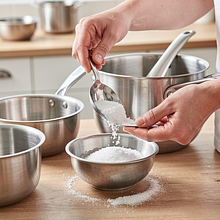
Prepare the base: place 200 g of biscuits in a blender and grind to a fine sand (if you don't have a blender: put the biscuits in a resealable bag and crush them with a rolling pin, hitting a few times). In a small saucepan, melt 100 g of butter over low heat, stirring until it is liquid and smooth (do not let it boil). Pour the melted butter into the crushed biscuits and mix with a wooden spoon until the mixture is uniform and starts to stick together slightly (it should resemble wet sand).
Description
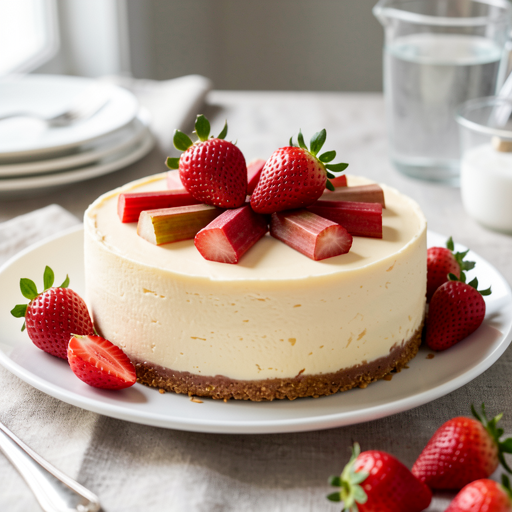
A light no-bake cheesecake combining a delicate mixture of cottage cheese and cream with tart, spring rhubarb and fresh strawberries. The base made of crunchy biscuits and butter provides a pleasant foundation, while the cheese filling is fluffy thanks to whipped cream and stable due to gelatin. This dish is perfect for Easter — it looks impressive (the contrast of white and pink), tastes fresh, and is simpler than a baked cheesecake. Serve chilled, and you can garnish with mint leaves and lemon slices.
Ingredients Used
Ingredients (12)
- Biscuits 200 g
- Butter 100 g
- Cottage cheese 1000 g
- 30% heavy cream 300 g
- Sugar 170 g
- Gelatin 18 g
- Lemon 0.6 szt. (~50 g)
- Strawberry 400 g
- Rhubarb 300 g
- Vanilla 1 łyżeczka (~5 g)
- ✨ Opcjonalne
- Mint 10 g
- Natural yogurt 150 g
💡 Kliknij na składnik aby oznaczyć jako użyty
Preparation steps
Base
Line the springform pan with baking paper (bottom and sides), pour in the cookie mixture and spread it evenly. Use a spoon or the bottom of a glass to press down firmly and create an even, compact layer. Place the base in the refrigerator for at least 20 minutes to allow the butter to firm up and stabilize the base.
Cheese dough
Prepare the gelatin for the mixture: weigh 12 g of gelatin (part of the total amount) and transfer it to a small bowl. Pour cold water (about 120 ml) over it — so that the gelatin absorbs the water and swells. Set aside for 5-10 minutes; after this time, the granules should have swollen and become gelatinous. Then dissolve the gelatin in a water bath or in the microwave for 10-15 seconds until completely dissolved (stir every few seconds) — the gelatin mixture should be clear and lump-free; do not allow it to boil.
Whip the cream: place 300 ml of chilled cream in a metal or glass bowl and whip with a mixer on medium speed until soft peaks form (about 2-3 minutes). Add 120 g of sugar (sift it into the bowl if you don't have powdered sugar) and a teaspoon (about 5 g) of vanilla at the end of whipping, whipping for a moment longer until the mixture is thick, but do not overwhip (do not whip to butter).
Prepare the cheese mixture: place 1000 g of cottage cheese in a large bowl. Add the juice of half a lemon (about 25 g of juice) and lemon zest (if you want to add more aroma, grate a thin layer of zest before squeezing the juice). Add sifted 120 g of sugar (if you haven't sifted it before) and mix by hand with a wooden spoon, then briefly blend with an immersion blender or pass through a fine sieve to make the mixture smooth and lump-free (about 1–2 minutes of blending).
Combine the mixture with the whipped cream and gelatin: gradually add the whipped cream to the smooth cheese mixture, gently folding with a spatula from the bottom of the bowl upwards to maintain fluffiness. Then, in a thin stream, while continuously mixing, pour in the dissolved (warm but not hot) gelatin prepared earlier. Mix evenly for about 1 minute until the mixture becomes homogeneous. Check the temperature of the mixture — it should be lukewarm, not hot; if it is too warm, place the bowl in the refrigerator for 5–10 minutes to cool slightly.
Rhubarb jelly
Prepare the rhubarb glaze: cut 300 g of rhubarb into 1–2 cm pieces. In a saucepan, combine the rhubarb with 50 g of sugar and 30 ml of water. Cook over medium heat for 8–10 minutes, until the rhubarb softens and starts to break down — stir every few minutes. Once softened, set aside to cool slightly and blend into a smooth puree. If you want a very smooth sauce, strain the puree through a sieve to remove the fibers.
Secure the glaze with gelatin: weigh out the remaining 6 g of gelatin and soak it in 30 ml of cold water, set aside for 5 minutes to swell. Gently heat (10–15 seconds in the microwave or in a water bath) until the gelatin becomes clear. Add the dissolved gelatin to the warm (but not hot) rhubarb puree and mix thoroughly. Set aside for 10–15 minutes until the mixture cools slightly but does not begin to set.
Assembly and decoration
Pour the cheese mixture onto the chilled base of the springform pan: gently pour the mixture into the springform pan, evenly spreading it with a spatula. Smooth the surface and place it in the refrigerator for 20–30 minutes to allow the mixture to set slightly (it should feel more stable to the touch).
Pour the prepared, slightly cooled rhubarb glaze over the gently set mass. Spread it evenly, but work quickly, as the glaze begins to harden. Arrange the strawberries, cut in halves or thin slices, decoratively (save a few whole fruits for garnishing the servings) — their natural shape will beautifully decorate the top. Place the cheesecake in the refrigerator for at least 4 hours, preferably overnight, to allow it to set completely.
Before serving, remove the springform ring: carefully run a knife along the edge of the cheesecake to cut any sticking points, then unfasten the ring. Cut into portions with a sharp, wet knife (wipe the knife in warm water before each cut), and decorate with mint leaves and a bit of natural yogurt in the form of delicate swirls, if using.
Fun Fact
Cold cheesecake is a variation known in Polish homes since the 20th century — easier to make than baked cheesecake and popular during spring holidays due to its lightness and the possibility of using seasonal fruits like rhubarb and strawberries.
Best for
Tips
Serve chilled, preferably after 4–12 hours of cooling. When cutting portions, wash the knife in warm water between cuts to cleanly separate the layers. Pair with coffee or prosecco. Add a few fresh strawberries and mint leaves to each portion.
Store in an airtight container in the refrigerator for up to 3 days. Do not freeze — gelatin loses its structure after thawing. If you want to prepare a day in advance, do everything up to the decoration and decorate just before serving.
📸 Ugotowane przez społeczność
Zaloguj się, aby dodać zdjęcieDodaj zdjęcie gotowej potrawy
Po zatwierdzeniu przez moderatora otrzymasz 10 punktów doświadczenia.
Nikt jeszcze nie dodał zdjęcia. Bądź pierwszy!
Comments (0)
Be the first to comment on this recipe!
Add a comment