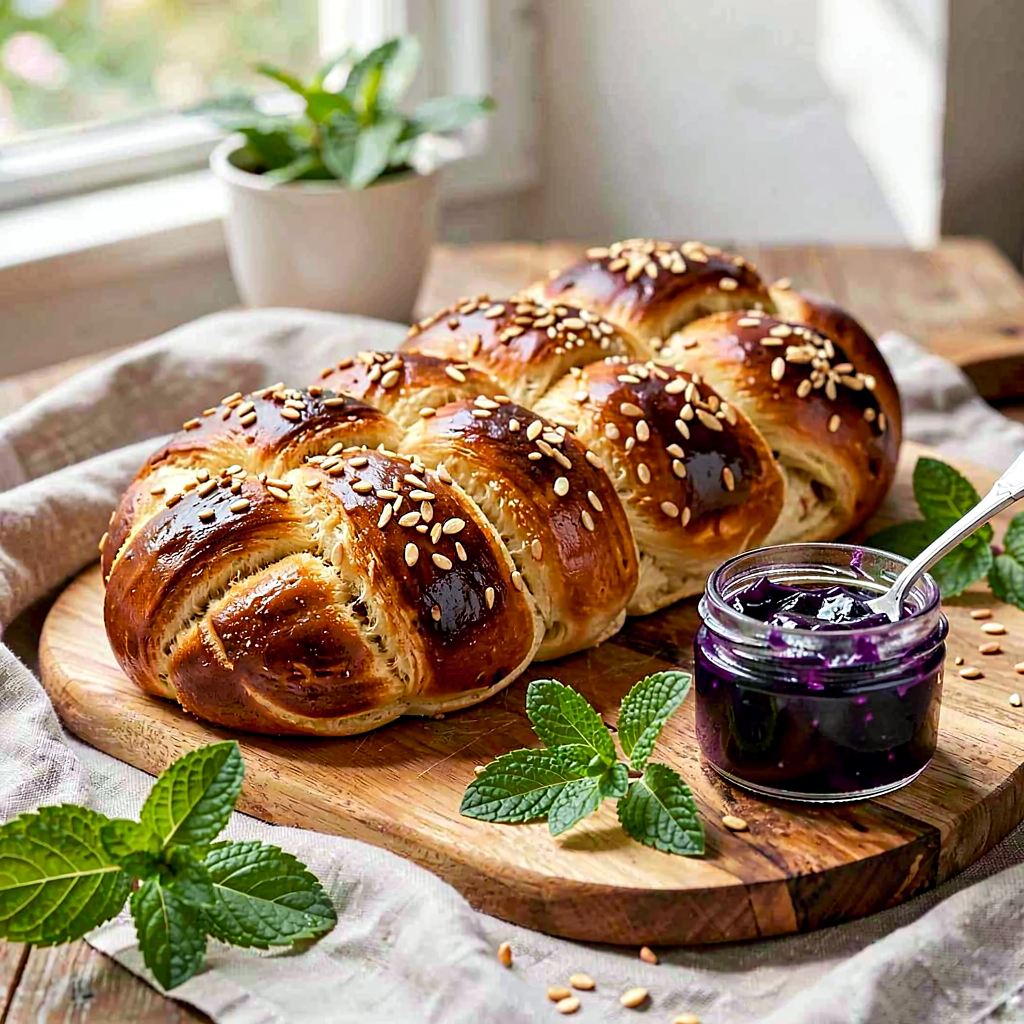
Recipe for: Challah with toasted sesame and chokeberry jam

Cakes and Bakes Desserts 240 min Medium 0 views ~35.53 PLN * - (0)
Rate:
(0)
Start Cooking

Description

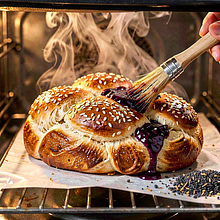
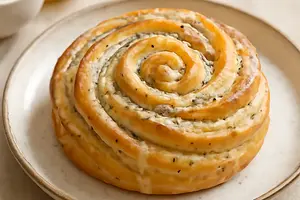
Challah with toasted sesame and aronia jam is a rustic, Masurian interpretation of the classic challah: a soft, slightly sweet yeast dough with rich, slightly tart aronia jam and a crunchy, toasted sesame topping. The challah is perfect for a summer breakfast or picnic, served with butter, cottage cheese, or directly with aronia jam — the contrast between the sweetness of the dough and the tartness of the aronia creates a striking flavor effect. The finishing touch of toasted sesame adds a nutty note and a beautiful golden sheen. The dish combines local Polish fruits with a traditional baked good, giving it a regional Masurian character through simplicity and the use of seasonal ingredients.

Ingredients Used

Ingredients (14)

Servings:
8
  • Wheat flour 600 g
  • Fresh yeast 25 g
  • Milk 200 ml
  • Chicken egg 4 pcs (~240 g)
  • Butter 100 g
  • Sugar 480 g
  • Honey 40 ml
  • Rapeseed oil 15 g
  • Aronia 600 g
  • Lemon juice 30 ml
  • 🌿 Spices
  • Salt 12 g
  • Sesame 80 g
  • ✨ Optional
  • Pectin 10 g
  • Poppy seeds 30 g
💰 Estimated dish cost: ~35.53 PLN (4.44 PLN/serving)
* Prices missing for some ingredients

💡 Click an ingredient to mark it as used

Preparation steps

Jam

1

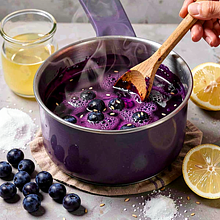
Prepare the chokeberries: wash the berries in a colander with cool water, remove the stems and wilted berries. Transfer the chokeberries to a medium pot with a thick bottom, add 400 g of sugar (measured from the total amount of sugar) and 30 ml of lemon juice. Place the pot over medium heat and warm it up, stirring with a wooden spoon, until the sugar dissolves (3–5 minutes).

Ingredients: aronia, Sugar, Lemon juice, pectin
Use a pot with a capacity of at least 2 l with a thick bottom to prevent burning. A wooden spoon is best for stirring jams.
2

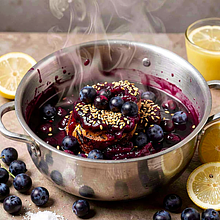
Cook the jam over medium heat for 12–18 minutes: the fruit will release juice and soften. If you want a smooth jam, mash the fruit with a potato masher or an immersion blender into a uniform mixture (be careful with the hot mixture!). If you are adding pectin, sprinkle it in according to the instructions (usually dissolved in a bit of cold water) 2–3 minutes before the end of cooking.

Ingredients: aronia, Sugar, Lemon juice, pectin
Stir every few seconds to prevent sticking. If the jam seems too watery, cook it longer; check the thickness by placing a teaspoon on a small plate — after cooling, the mixture should gel slightly.
3

When the jam reaches the desired thickness (after cooling, a drop on a plate does not spread), remove the pot from the heat. Pour the hot jam into sterilized jars and seal them. Turn the jars upside down for 5–10 minutes, then set them aside to cool. The jam should cool for a few hours before serving.

Ingredients: aronia
Sterilize the jars with boiling water or in the oven (120°C for 10 minutes). Use an oven mitt when filling the hot jars.

Cake

4

Activate the yeast: heat the milk to 35–37°C (it should feel pleasantly warm on your wrist). In a small bowl, crumble 25 g of fresh yeast, add 10 g of sugar (from the total amount), and 50 ml of warmed milk. Mix with a fork until the yeast is dissolved and set aside in a warm place for 8–10 minutes — a foam should form on the surface.

Ingredients: Fresh yeast, Milk, Sugar
Use a kitchen thermometer or check the temperature of the milk with your wrist. If there is no foam after 10 minutes, the yeast is inactive — start over with new yeast.
5

Prepare the dry and wet ingredients: sift 600 g of flour into a large bowl. Make a well in the flour. In a separate bowl, whisk 180 g of eggs (3 eggs) with 40 g of honey and the remaining warm milk (the rest from 200 ml). Pour the active yeast into the well and add part of the egg-milk mixture.

Ingredients: Wheat flour, Honey, Milk, Fresh yeast
Use a large metal or plastic bowl with a capacity of at least 4 l. Sifting the flour will aerate the dough and make kneading easier.
6

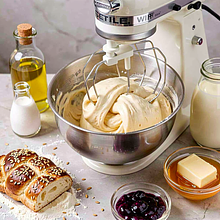
Mix the ingredients and start kneading: use a wooden spoon or a mixer with a dough hook (low speed). Gradually combine the flour with the liquids, add 15 g of rapeseed oil and 12 g of salt. Once the ingredients are combined, add pieces of soft butter (100 g) a few at a time. Knead the dough for 8–12 minutes with a mixer or 12–15 minutes by hand until it is smooth, elastic, and slightly springy — it should not stick to your hands.

Ingredients: Wheat flour, Rapeseed oil, Salt, Butter, Honey, Milk
If you don't have a mixer, knead by hand on a floured surface. Do not add more flour than indicated — the dough should be soft. Use a mixer with a hook if you have one; if not, start with a wooden spoon, then knead by hand.
7

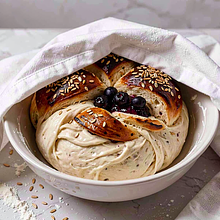
First rise: place the dough in a lightly oiled bowl, cover with a kitchen towel or plastic wrap. Set aside in a warm, draft-free place for 60–90 minutes, until the dough doubles in size (surface smooth, indentation slowly springs back when pressed with a finger).

Ingredients: Wheat flour
The best place for rising is an turned-off oven with the light on for a moment or next to a warm stove. Do not speed up the rising process with too high a temperature, as it may affect the flavor.

Assembly

8

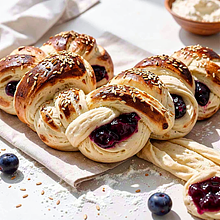
Shaping the challah: take the dough out onto a lightly floured surface, gently deflate it, dividing it into 3 equal parts (for simplicity in a 3-strand braid). Roll each part into a rope about 40–45 cm long. Place the three ropes next to each other, join them at the top, and braid in a classic manner: move the right strand over the middle one, then the left over the new middle, repeat until the end. Pinch the ends underneath.

Ingredients: Wheat flour
Use your hands to flatten the ends. If you want a 6-strand effect, divide the dough into 6 and braid a more advanced braid. Line the baking tray with parchment paper.

Baking and Finishing

9

Second rising: transfer the braided challah to a baking sheet lined with parchment paper. Loosely cover with a cloth and let it rise for 30–40 minutes for the second rising — the challah should noticeably puff up (but not necessarily double in size). In the meantime, toast the sesame: in a dry skillet, heat 80 g of sesame for 2–4 minutes, shaking the pan until the seeds become golden and smell nutty.

Ingredients: Sesame
Use a non-stick pan to toast the sesame seeds, watch the time — they can easily burn. For rising, use a cover that does not trap moisture directly on the dough.
10

Brush the challah: beat the remaining 60 g of egg (1 egg) and gently brush the top of the challah with a pastry brush. Evenly sprinkle with toasted sesame seeds (or optionally poppy seeds). Place the tray in the preheated oven at 180°C (top-bottom) and bake for 25–35 minutes: start with 25 minutes, then if the top is already golden brown, loosely cover with aluminum foil and bake for another 5–10 minutes, until the bottom sounds hollow when tapped.

Ingredients: Sesame, Poppy seeds
The best is a steel baking sheet or stone — the oven should be preheated. If you have a meat thermometer, the center of the challah should reach about 92°C.
11

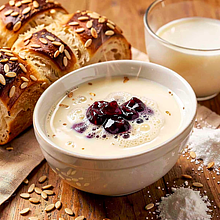
Cooling and serving: take the challah out of the oven and carefully transfer it to a cooling rack. Wait 30–60 minutes before slicing to allow the crumb to stabilize. Serve sliced pieces with aronia jam placed loosely on a plate or in a small bowl next to the challah.

Ingredients: aronia, Wheat flour
Use a long-bladed knife to slice the bread. Hot slicing can cause the crumb to become squished.

Serving

12

Serving: serve the challah slightly warm or at room temperature, with butter, cottage cheese, or aronia jam. You can serve fresh seasonal fruits alongside to bring a touch of summer freshness to the plate.

Ingredients: Sugar, Poppy seeds
Additionally, you can add poppy seeds for sprinkling instead of sesame for a different texture and appearance.

Fun Fact

💡

Challah is a bread with Jewish roots that has become part of regional cuisine in Poland, especially in the Masurian and borderlands areas, where it was baked for Sunday breakfasts and holidays. Combining it with local chokeberry adds a regional, Polish character.

Best for

Tips

🍽️ Serving

Serve the challah slightly warmed (10 minutes in the oven at 150°C) — this way the butter melts quickly, and the jam blends better with the crumb. It is best sliced with a sharp, long bread knife. For an elegant presentation, serve the slices on a wooden board with a small jar of jam and a spreading knife.

🥡 Storage

Store the challah wrapped in a cloth or in a container at room temperature for up to 2 days. Longer (up to 5 days) in the refrigerator, but it loses some softness — before serving, heat for 5–10 minutes at 150°C. Store the jam in jars in a cool place for 6–12 months, and after opening in the refrigerator for up to 3 weeks. For reheating, use the oven instead of the microwave to maintain the crispness of the crust.

📸 Cooked by the community

Log in to add a photo
Add a photo of the finished dish

After moderator approval, you will receive 10 experience points.

🍲

No one has added a photo yet. Be the first!

Comments (0)

Be the first to comment on this recipe!

Add a comment

You might also like

Recipe Categories

Homemade cakes and pastries are the heart of Polish culinary tradition - sweet memories from childhood. In our collection, you will find recipes for classic yeast cakes, shortcrust, sponge, and cheesecake. Apple pie, poppy seed cake, gingerbread, Easter babka, chocolate cake, and New York cheesec...

See all recipes in this category
Desserts
Desserts in: Easter

Desserts are the sweet finale of the Easter meal. Traditional cakes and sweet pastries make the holidays even more special.

See all recipes in this category
Advertisement