Menu

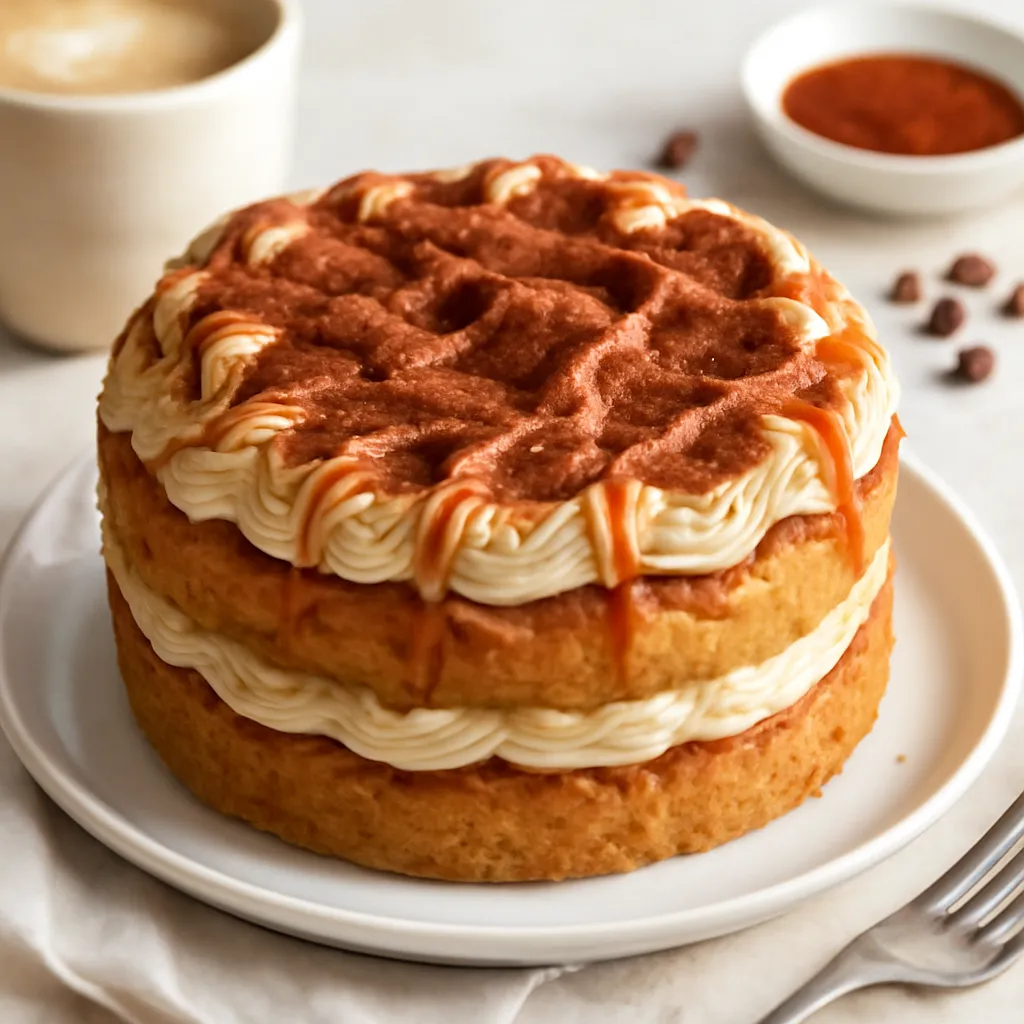
Cappuccino Cake in the Sweet Blog Style — fluffy sponge cake with coffee-mascarpone cream and cappuccino caramel

Cakes and Bakes Desserts 150 min Medium 11 wyświetleń ~37.37 PLN - (0)
Rate:
(0)

Description

A delicate cake inspired by the classic flavor of cappuccino, reimagined here as a light, elegant layered sweet in the "Sweet Blog" style. It consists of a fluffy sponge cake (genoise) soaked in intense espresso, a mascarpone cream with added instant coffee and whipped cream, and a subtle layer of caramelized espresso with gelatin that gives it a velvety consistency. The cake has a contrast of sweet cream, pleasant bitterness of coffee, and chocolate dust. Perfect for coffee, gatherings with friends, or as an elegant dessert after dinner. Visual version: distinct layers, smooth cream, a light dusting of cocoa, and optional shavings of dark chocolate and almond flakes for texture.

Składniki (16)

Servings:
8
  • Egg 4 szt.
  • sugar 200 g
  • Wheat flour 160 g
  • Butter 40 g
  • Natural cocoa 10 g
  • Instant coffee 12 g
  • Gelatin 8 g
  • Brewed espresso 200 ml
  • Mascarpone 400 g
  • 30% heavy cream 300 g
  • Powdered sugar 50 g
  • Vanilla 1 łyżeczka
  • Cold water 40 ml
  • 🌿 Przyprawy
  • Salt 0.0 szczypt
  • ✨ Opcjonalne
  • Bitter chocolate 70% 40 g
  • Almond flakes 30 g
💰 Szacowany koszt dania: ~37.37 PLN (4.67 PLN/porcję)

💡 Kliknij na składnik aby oznaczyć jako użyty

Preparation steps

Base

1

Preheat the oven to 180°C (top-bottom) without convection. Prepare a round baking pan with a diameter of 22 cm: line the bottom with parchment paper, grease the sides with a thin layer of butter, and dust with a little flour (shake off the excess). The capacity of the pan should be about 2-3 liters.

Use a 22 cm springform pan if you have one. Cut the paper in a circle to fit the bottom so the sponge cake doesn't burn.

2

Pour 240 g of eggs and 200 g of sugar into a large metal or heatproof bowl. Set the bowl over a pot of gently boiling water (bain-marie), making sure the bottom of the bowl does not touch the water. Heat and stir the mixture continuously with a wooden spoon or whisk until the mixture reaches a temperature of 40-45°C (pleasantly warm to the touch). This will dissolve the sugar crystals and make whipping easier.

Ingredients: Egg, sugar
Use a kitchen thermometer if you have one; if not, touch the inside of your wrist — the mixture should be warm, not hot. It's best to use a stand mixer or a hand mixer with a whisk attachment.
3

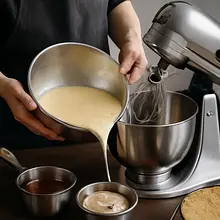
Transfer the bowl with the heated eggs and sugar to the mixer stand. Whip on high speed for 8-12 minutes (depending on the power of the mixer) until the mixture is light, fluffy, and when the whisk is lifted, it forms a 'ribbon' — a thick trail that falls slowly and retains its shape on the surface. The mixture should triple in volume.

Ingredients: Egg, sugar
If you don't have a mixer, whisk the egg whites vigorously with a hand whisk for about 15-20 minutes. Check if the egg whites are cool — if they are still warm, wait a few minutes.
4

Sift 160 g of wheat flour into a separate bowl. Add the flour to the whipped egg whites in three portions: sprinkle each portion over the egg whites and very gently fold with a spatula in an upward motion from the bottom to avoid deflating the mixture. After adding all the flour, the mixture should be uniform, without visible streaks of flour.

Ingredients: Wheat flour
Use a silicone or rubber spatula. The movements should be slow and deliberate — too vigorous mixing will 'squeeze' the foam and the sponge will turn out heavy.
5

Melt 40 g of butter in a small saucepan until liquid and set aside for 1-2 minutes to cool slightly. Pour the melted butter in a thin stream onto the inner wall of the bowl over the sponge mixture and very gently fold it in to distribute the butter evenly — the most effective way is to make 3-4 turns with a spatula.

Ingredients: Butter
The butter must not be hot (max ~40°C) — hot butter will cause the foam to collapse. Add the butter very slowly and gently fold it into the mixture.
6

Pour the prepared batter into the prepared pan (22 cm), gently smooth the surface with a silicone spatula. Place in the preheated oven and bake for 18-22 minutes — the sponge is ready when the top is lightly golden, springy to the touch, and a toothpick inserted comes out dry or with a few crumbs.

Do not open the oven in the first 12 minutes, otherwise the sponge cake may fall. If the top browns too quickly, loosely cover it with aluminum foil.

Baking and Cooling

7

After baking, remove the pan and let the sponge cool in the pan for 8-10 minutes. Then carefully transfer the sponge to a wire rack to cool completely (about 1 hour). When the sponge is cold, cut it horizontally into two equal layers using a long serrated knife or a special cake saw.

Ingredients: Egg
When cutting, hold the knife parallel to the countertop and make long sawing motions. If the sponge cake crumbles, wait longer for it to cool.
15

Place the cake in the refrigerator for at least 4 hours, preferably overnight — the cream will stabilize, the gelatin will set the caramel structure, and the flavors will meld. Chilling is crucial for the proper consistency and slicing.

Ingredients: Gelatin, Mascarpone
Loosely cover with a plate or bowl (not airtight) to prevent it from absorbing fridge odors. If you plan to decorate with fresh toppings, add them just before serving.

Coffee cream

8

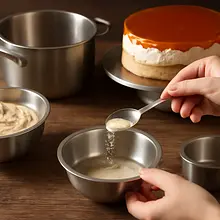
Prepare the gelatin: sprinkle 8 g of gelatin into a bowl and evenly cover it with 40 ml of cold water. Let it sit for 5 minutes until it swells (a swollen gelatinous mass will form). In the meantime, pour 50 ml of hot espresso from 200 ml brewed; heat it in a small saucepan until hot, almost boiling.

Ingredients: Gelatin, Cold water, Brewed espresso
Always soak the gelatin in cold water; if you skip this step, it may dissolve unevenly. Be careful not to boil the dissolved gelatin, as it will lose its gelling properties.
9

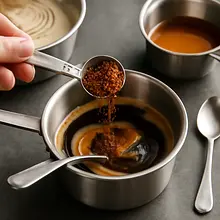
Add 12 g of instant coffee to the hot espresso and mix thoroughly until it dissolves. To the dissolved coffee, add the swollen gelatin and stir quickly until everything dissolves (the mixture will be clear). Set aside to cool slightly (to about 30-35°C).

Ingredients: Brewed espresso, Instant coffee, Gelatin
Use a small whisk to ensure the gelatin dissolves completely. The mixture must not be hot when combining with the mascarpone cheese (it will cause the cream to curdle).
10

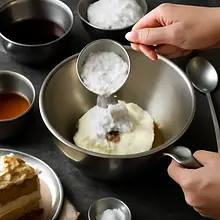
In a mixing bowl, place 400 g of mascarpone, 50 g of powdered sugar, 5 g of vanilla, and a pinch of salt. Mix briefly (15-20 seconds) on low speed just until combined — do not mix too long to avoid curdling the mascarpone. In a separate bowl, whip 300 g of chilled heavy cream until stiff (start at medium speed, then switch to high, monitoring the consistency). The whipped cream should hold its shape but be smooth and creamy.

Ingredients: Mascarpone, Powdered sugar, Vanilla, Salt, 30% heavy cream
It's a good idea to chill the bowl and whisk in the fridge for 10-15 minutes before whipping the cream — this will speed up the process. Don't overwhip the cream to avoid making butter.
11

To the cooled (30-35°C) liquid with coffee and gelatin, add a tablespoon of mascarpone cream, mix vigorously to equalize the temperature, and then pour everything into the main mascarpone mixture and gently mix. Finally, gently fold the whipped cream into the mascarpone mixture with a spatula, using an up-and-down motion, until a uniform cream is formed.

Ingredients: Mascarpone, 30% heavy cream, Instant coffee, Gelatin, Brewed espresso
The temperature adaptation step (first a tablespoon of cream) prevents the cream from curdling. Act quickly but gently — too vigorous mixing will kill the fluffiness.

Assembly

12

Prepare the soaking syrup: heat 50 ml of espresso with 30 g of sugar (you can use the sugar from the recipe) in a small saucepan, stirring until the sugar dissolves. Let the syrup cool to lukewarm temperature (about 30°C). Place the bottom layer of the sponge cake on a serving plate or the bottom of a mold and evenly soak it (use a brush or spoon) — don't overdo it, the goal is moisture, not sogginess.

Ingredients: Brewed espresso, sugar
Soak in batches: apply 2-3 tablespoons, wait a moment, if it absorbs quickly, apply another — the sponge should be moist but not soggy.
13

Spread half of the coffee cream (about 300-350 g) evenly on the soaked base. Gently smooth the surface with a spatula. Sift a thin layer of 5 g of natural cocoa through a sieve onto the cream, creating a subtle "flavor barrier."

Ingredients: Natural cocoa, Mascarpone
To achieve a perfectly smooth surface, hold the spatula at an angle and make long strokes from side to side.
14

Place the top layer of the sponge cake, lightly soak it with the remaining coffee syrup. Spread the rest of the cream and smooth the surface. If you want a more pronounced cappuccino effect, gently sift an additional 3-5 g of cocoa on top through a sieve.

Ingredients: Mascarpone, Natural cocoa, Brewed espresso
When trimming excess cream from the sides, hold a warm knife or spatula and wipe it every few strokes to achieve clean edges.

Decoration and serving

16

Before serving, you can decorate the top with grated dark chocolate (optional 40 g), sprinkle with almond flakes (optional 30 g), and sift a little cocoa on top. For an elegant effect, make a few chocolate shavings (grate the chocolate bar on the large holes of a grater) and arrange them in the center.

Ingredients: Bitter chocolate 70%, Almond flakes, Natural cocoa
If you are using almond flakes, you can lightly toast them in a dry pan (2-3 minutes) — toasted ones are crunchy and more aromatic. Additionally, you can add a pinch of coarse sea salt for a flavor contrast.
17

Slicing: use a long, sharp knife dipped in hot water and wipe it with a dry cloth before each cut — you will achieve smooth slices without tearing the cream. Serve slightly chilled.

A warm knife makes it easier to cut creamy cakes. If you plan to serve them at a party, take them out of the fridge about 10-15 minutes earlier so the cream softens slightly and releases its aroma.

Fun Fact

💡

Cappuccino coffee comes from Italy, and the name refers to the brown color of the robes of the Capuchin brothers. The combination of coffee with cream and cocoa in desserts naturally arose from the desire to recreate this aroma in a sweet form – hence the numerous variations of cappuccino cakes.

Best for

Tips

🍽️ Serving

Serve with a small cup of espresso for contrast or with a milky cappuccino for a milder combination. Cut with a knife dipped in hot water for smooth slices. Decorate just before serving to keep the almond flakes crunchy.

🥡 Storage

Store in the refrigerator covered loosely with plastic wrap or a plate for up to 3 days. Do not freeze, as mascarpone cream and whipped cream lose their texture after thawing. If you want to prepare the dessert a day in advance — the effect of flavors "mingling" is excellent, but add crunchy decorations just before serving.

📸 Ugotowane przez społeczność

Zaloguj się, aby dodać zdjęcie
Dodaj zdjęcie gotowej potrawy

Po zatwierdzeniu przez moderatora otrzymasz 10 punktów doświadczenia.

🍲

Nikt jeszcze nie dodał zdjęcia. Bądź pierwszy!

Comments (0)

Be the first to comment on this recipe!

Add a comment

You might also like

Recipe Categories

Homemade cakes and pastries are the heart of Polish culinary tradition - sweet memories from childhood. In our collection, you will find recipes for classic yeast cakes, shortcrust, sponge, and cheesecake. Apple pie, poppy seed cake, gingerbread, Easter babka, chocolate cake, and New York cheesec...

See all recipes in this category
Desserts
Desserts in: Christmas Eve Dinner

Desserts are a sweet ending to a meal that brings joy to both children and adults. In this category, we present recipes for a variety of sweets - from simple creams and mousses, to elegant panna cottas, and exquisite fruit tarts. Our desserts include both classics of Polish cuisine - fruit jelly,...

See all recipes in this category
Reklama