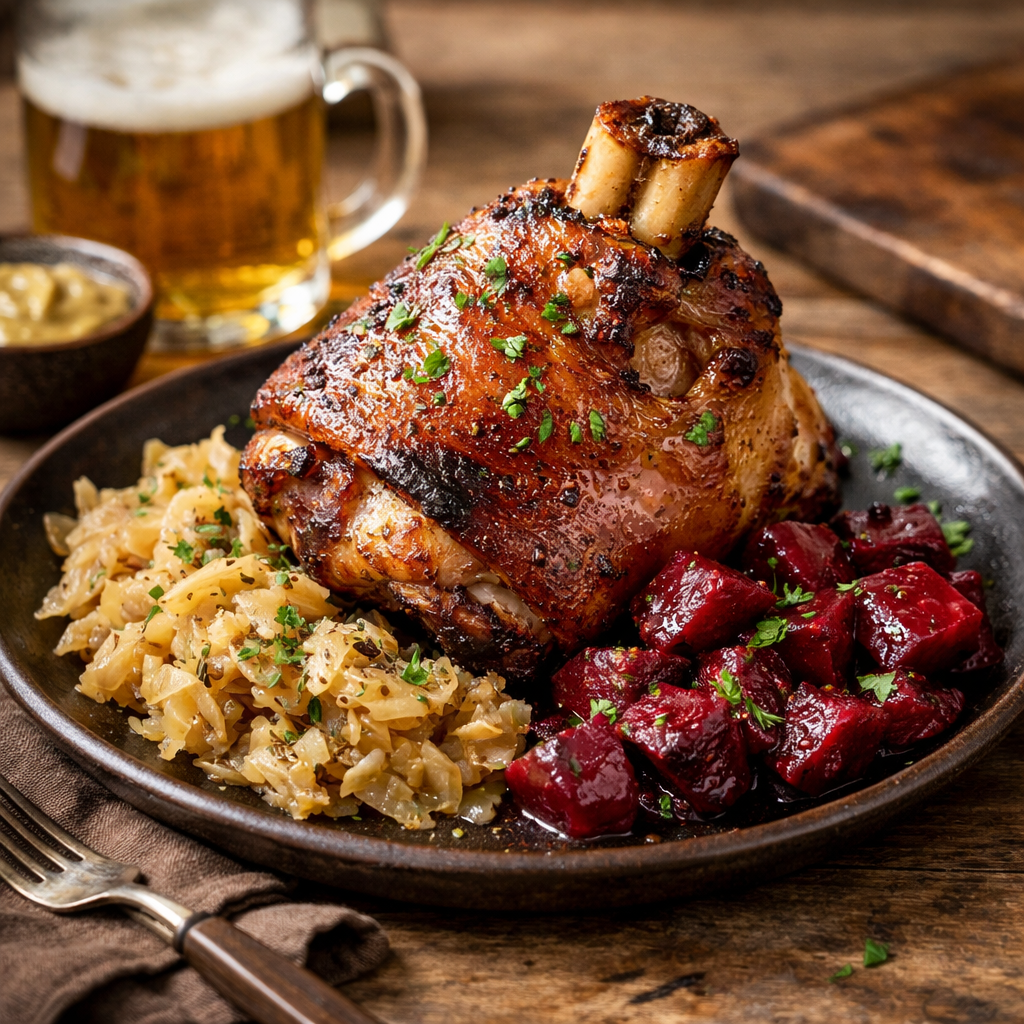
A traditional winter dish of Polish cuisine: juicy pork knuckle roasted to tenderness, served with aromatic sauerkraut stewed with onion and carrot, and caramelized stewed beets. The dish is warming, full of contrasts: the crispy skin of the knuckle, the sour cabbage with a delicate sweetness of sugar and vinegar, and the slightly sweet-sour beets. Perfect for family celebrations and winter gatherings — serve with horseradish, mustard, and sourdough bread or with mashed potatoes or buckwheat. The dish combines simmering and roasting techniques, offering distinct aromas of spices and the possibility to adjust the glaze (mustard, honey) to taste.
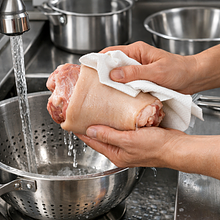
Check the pork knuckle: rinse it under cold water and dry it with a paper towel. If the skin has hairs, singe them over the gas flame or scrape them off with a knife. Rub the pork knuckle with salt (about 12 g evenly distributed), half of the freshly ground pepper, two halves of allspice, and one bay leaf, then place it in a large pot.
Ingredients:
pork knuckle, Salt, Black pepper, Bay leaf
Use a large pot with a capacity of at least 5 liters. Drying with a paper towel improves browning. A common mistake: too little salt - the meat will be bland; however, don't overdo it with salting the cabbage later.
2
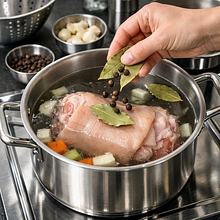
Cover the pork knuckle with cold water in a pot. Add the second half of the allspice and bay leaf, one marinated onion (cut in half), and 10 g of garlic (specifically: 2 crushed cloves). Bring to a boil over medium heat, skimming off the foam with a slotted spoon. Reduce the heat to very low and simmer covered for 1.5 - 2 hours, until the meat is tender (check with a fork: it should go in easily).
Ingredients:
pork knuckle, Onion, Garlic, Bay leaf, beer
Use a slotted spoon to remove the foam. Cooking over too high heat causes the proteins to harden and the broth to become cloudy. The meat is ready when a fork goes into it without resistance.
Roasting the pork knuckle
3
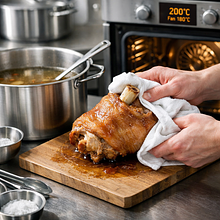
Remove the pork knuckle from the broth and dry it. Preheat the oven to 200°C (fan 180°C). Prepare the glaze: in a bowl, mix the mustard (50 g) with honey (30 g) if using, and a tablespoon of oil. Brush the pork knuckle with a thick layer of glaze, placing it in the roasting pan skin side up. Place in the preheated oven and bake for 30 minutes, then reduce the temperature to 180°C and bake for another 30-45 minutes, until the skin becomes crispy and golden. Every 15-20 minutes, baste the pork knuckle with the juices that have formed and possibly an additional portion of glaze.
For the glaze, use a tablespoon or a silicone brush. The best baking dish is cast iron or heat-resistant with dimensions of at least 30×20 cm. A common mistake: baking at too high a temperature for too long will cause the meat to dry out; therefore, we start with a higher temperature and then reduce it.
Cabbage
4
Slice the remaining onion into feathers (the remaining 150 g). In a wide skillet, heat 15 g of rapeseed oil over medium heat. Add the onion and sauté for 4-5 minutes until it becomes translucent. Add the grated carrot (200 g grated) and sauté for another 3 minutes. Add the sauerkraut (800 g), level it out. Add caraway seeds (2 g), 1 bay leaf, and 2 allspice berries. Pour in 50 ml of water or 50 ml of beer (if using) and cover. Simmer on low heat for 25-30 minutes, stirring occasionally. Finally, add sugar (10 g) and apple cider vinegar (30 g), and season with salt to taste if needed.
Ingredients:
Onion, Carrot, Sauerkraut, Cumin, Bay leaf, Sugar, Apple cider vinegar, beer, Rapeseed oil, Salt
Use a wide skillet or a saucepan with a diameter of at least 24 cm. Slicing the onion into wedges helps keep the pieces intact, and grated carrots will enhance the sweetness. A common mistake: adding vinegar too early - use it at the end to maintain fresh acidity.
Braised Beets
5
Peel the beets (600 g) and cut them into slices about 5 mm thick or into cubes. In a medium skillet, heat 10 g of oil, add 1 clove of chopped garlic (the leftover from preparation) and the carrot (if there are any pieces left). Add the beets, sauté for 3-4 minutes over high heat, then pour in 50 ml of water, add 1 teaspoon of sugar (5 g) and 1 tablespoon of apple cider vinegar (15 g). Cover and simmer on low heat for 25-30 minutes, until the beets are tender. Finally, uncover the skillet, increase the heat and caramelize for 5-7 minutes, stirring, until the water evaporates and the beets are coated with a glossy glaze.
Ingredients:
Garlic, Sugar, Apple cider vinegar, Rapeseed oil
When peeling beets, use gloves or a sink with cold water to avoid staining your hands. Check the softness of the beets with a fork: they should be soft but not falling apart. A common mistake: steaming with too much water — the beets should remain intense in flavor, not overcooked.
Checking the tenderness and finishing the pork knuckle
6
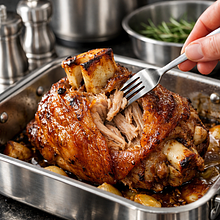
Check the pork knuckle with a fork: the meat should pull away from the bone and the skin should be crispy. If the skin is not sufficiently browned, set the oven to the broil function and roast for 3-6 minutes, watching closely to avoid burning. Let the pork knuckle rest for 10 minutes outside the oven before slicing, loosely covered with aluminum foil.
Ingredients:
pork knuckle
Resting the meat allows the juices to distribute evenly, making the sliced pork knuckle juicy. Use a meat thermometer: the internal temperature of the meat near the bone should be around 85°C after prolonged braising and roasting.
Assembly and serving
7
On a heated plate, place a portion of sauerkraut as a base, next to it place a portion of stewed beets. Slice the pork knuckle across the bone and arrange it next to the sauerkraut. Drizzle the meat with a bit of sauce from the roasting pan. Serve with mustard and optionally fresh horseradish, along with dark rye bread or mashed potatoes.
Ingredients:
Sauerkraut, pork knuckle, Mustard
Use a sharp knife to cut the pork knuckle; cutting while hot can be more difficult — wait 10 minutes. Serve on large plates to prevent the sauce from spilling over the edge.
Alternatives and Additions
8
If you are not using beer, add 100 ml of vegetable broth to the stock or for braising the cabbage instead. You can replace honey with maple syrup or omit the sweetener in the glaze. For a more aromatic version, add 1 tablespoon of marjoram to the cabbage at the end of braising.
Ingredients:
beer, Honey
Additions are optional; if you are using marjoram, add it at the end to preserve its aroma. A common mistake: adding herbs too early will cause their aroma to dissipate during long cooking.
Fun Fact
💡
Pork knuckle as an element of Polish cuisine has rural roots — it was popular due to its availability and heartiness. In traditional cooking, pork knuckle was often boiled in a vegetable broth to tenderize tougher pieces of meat and enhance the flavor.
Serve the pork knuckle hot, with mustard and horseradish; serve the cabbage hot as a base. Mashed potatoes, Silesian dumplings, or buckwheat groats pair well with the meat. Add fresh pickled cucumbers for contrast and a sprinkle of freshly ground pepper just before serving.
🥡Storage
Store the pork knuckle, cabbage, and beets in airtight containers in the refrigerator for up to 3 days. To reheat the pork knuckle, warm it in the oven at 150°C for 20-30 minutes covered, then for 5-7 minutes uncovered to restore the crispiness of the skin. Cabbage and beets can be frozen separately for up to 2 months; meat loses some texture after thawing.
Dishes for special occasions are culinary masterpieces for birthdays, anniversaries, and holidays. Grilled beef steak with herb butter - restaurant quality at home. Beef Wellington - beef in puff pastry with duxelles. Roast duck with apples - a holiday tradition in a new edition. Pink salmon with...
Comments (0)
Be the first to comment on this recipe!
Add a comment