Recipe for: Grilled Pork Knuckle with Horseradish Sauce and Sauerkraut

Spicy European cuisine Grilling Main dishes 720 min Medium 0 views ~64.99 PLN * - (0)
Rate:
(0)
Start Cooking

Description

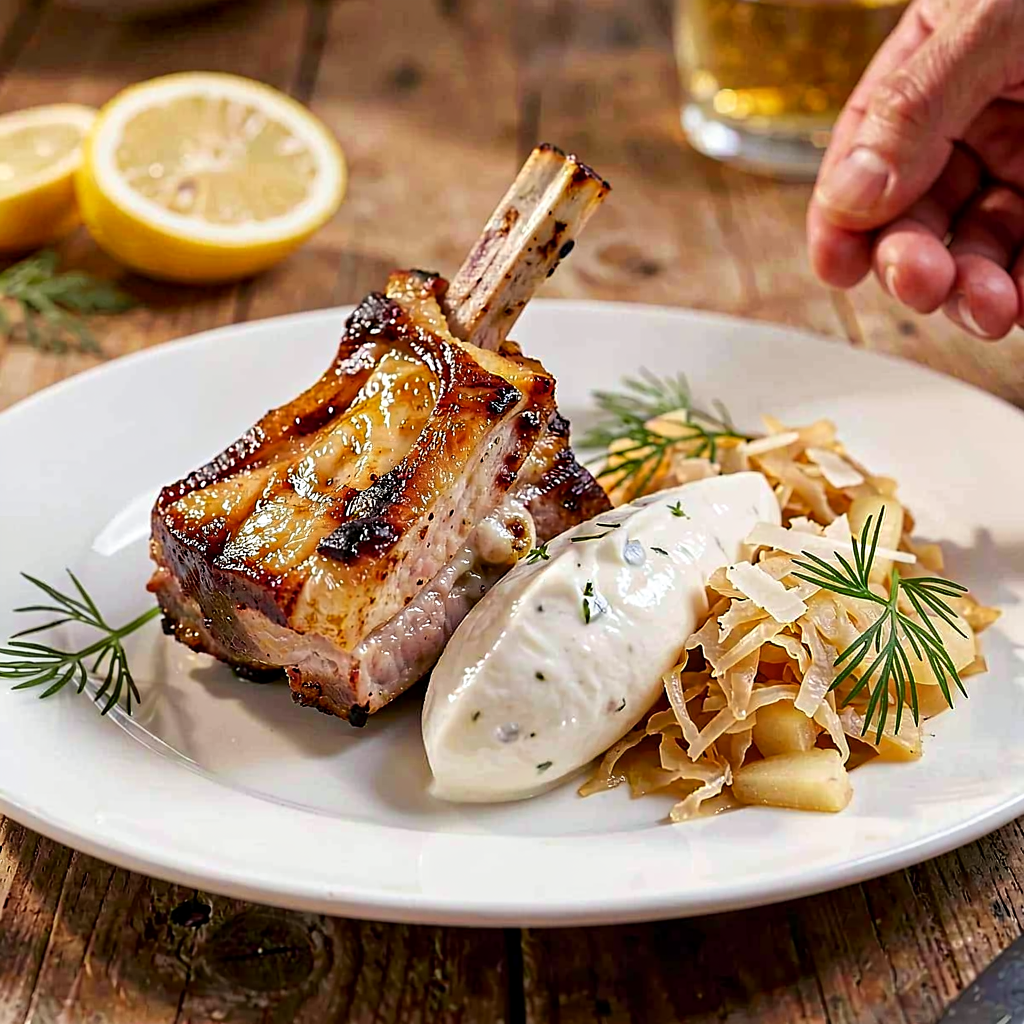
A traditional dish from Greater Poland brought to the summer grill: juicy pork knuckle that is pre-brined and gently parboiled, then finished on the grill to a crispy skin. Served with a creamy horseradish mousse and aromatic sauerkraut with apple, it creates a balance of the meat's richness, the spiciness of the horseradish, and the acidity of the cabbage. Perfect for summer gatherings by the grill, it pairs well with baked potatoes, fresh cucumber, or dark bread. A visually striking dish (golden skin, thick white mousse, and golden cabbage) and rich in flavor contrasts.

Ingredients Used

Ingredients (21)

Servings:
4
  • Pork knuckle 1600 g
  • Water 1800 ml
  • Sugar 40 g
  • Garlic 6 clove (~30 g)
  • Onion 1 pcs (~150 g)
  • Mustard 30 g
  • Rapeseed oil 30 g
  • Sauerkraut 800 g
  • Apple 0.8 pcs (~150 g)
  • Cottage cheese 200 g
  • Sour cream 200 g
  • Horseradish 80 g
  • Lemon 0.4 pcs (~30 g)
  • 🌿 Spices
  • Salt 90 g
  • Bay leaf 10 pcs (~3 g)
  • Allspice (berries) 6 pcs (~6 g)
  • Sweet paprika 10 g
  • Marjoram 4 g
  • Black pepper 4 pinch (~2 g)
  • ✨ Optional
  • Honey 30 ml
  • Dill 1.5 bunch (~30 g)
💰 Estimated dish cost: ~64.99 PLN (16.25 PLN/serving)
* Prices missing for some ingredients

💡 Click an ingredient to mark it as used

Preparation steps

Marinade and preparation

1

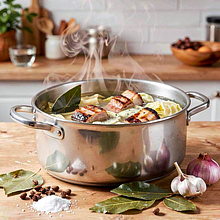
Prepare the brine: in a large pot, pour in 1.2 l of water, add 60 g of salt and 30 g of sugar. Heat over medium heat, stirring, until the salt and sugar are completely dissolved (about 5 minutes). Add 3 bay leaves, 6 g of allspice, 30 g of sliced garlic, and one chopped onion (150 g). Bring to a boil, cook for 2 minutes, then remove from heat. Pour in the remaining cold water (about 600 ml) to cool the brine to room temperature (max 25°C).

Ingredients: Water, Salt, Sugar, Bay leaf, Garlic, Onion
Use a large pot (at least 4 l) and a wooden spoon for stirring. Do not place the hocks in the hot brine (this will cook the outer layer) — the brine must be cool. Check the temperature with your hand — it should not be hot.
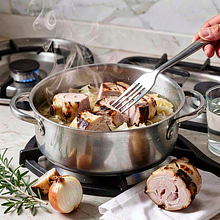
2

Place the pork hocks (1600 g) in a large brining container or a plastic tub. Pour the cooled brine over the hocks so that they are completely submerged. If the brine does not fully cover them, add more water. Cover and refrigerate for at least 12 hours (preferably 12–24 hours).

Ingredients: Pork knuckle, Water, Salt, Sugar, Bay leaf, Garlic, Onion
Use a heavy plate or a small plate weighted down with a can to keep the shanks submerged. The container should fit in the refrigerator. Brining is a key flavor and texture step.

Pre-cooking

3

After brining, remove the hocks from the brine, rinse under cold running water, and dry with a paper towel. Place the hocks in a large pot, cover with fresh water, add 1 chopped onion and 5 g of marjoram. Bring to a boil, reduce the heat to a very gentle simmer (small bubbles), and cook covered for 90 minutes. The meat is ready when a fork easily pierces it and part of the gelatin begins to break down.

Ingredients: Pork knuckle, Onion, Marjoram, Water
Use a large pot with a capacity of at least 4–5 l. Cook on low heat — too vigorous boiling will cause the proteins to harden and lose moisture. Check for tenderness with a fork after 60 minutes and every 15 minutes thereafter.

Preparing the skin

4

After cooking, remove the hocks and let them cool for 10-15 minutes. Remove excess fat from the surface with a spoon, and thoroughly dry the skin with paper towels. Using a sharp knife, make gentle cuts in the skin in the shape of diamonds, being careful not to cut deeper than 2-3 mm into the meat. Rub 30 g of mustard into the skin, sprinkle with 10 g of sweet paprika and 4 g of marjoram, and then lightly brush with 30 g of rapeseed oil.

Ingredients: Pork knuckle, Mustard, sweet paprika, Marjoram, Rapeseed oil
Use a sharp kitchen knife and a cutting board. The incisions help render the fat and achieve a crispy skin while grilling. Drying the skin is crucial — moisture will prevent it from becoming crispy.

Grilling

5

Preheat the grill to medium heat (indirect temperature around 180–200°C). Set up two zones: hot (direct) and warmer (indirect). Place the shanks first in the indirect zone, skin side up, closing the lid. Grill for 25–35 minutes, turning occasionally, until the skin starts to brown significantly and the meat reaches an internal temperature of about 70–75°C (use a thermometer).

Ingredients: Pork knuckle
If you are using a charcoal grill, arrange the coals on one side to create an indirect heat zone. Use kitchen gloves and long-handled tongs. Do not place the shanks directly over a very large flame at the beginning — the skin will burn while the inside remains cold.
6

In the last 8–12 minutes, move the pork knuckles over direct heat, skin side down, and turn them frequently every 2–3 minutes to achieve an even, crispy skin. If you like, 2 minutes before the end, brush with a thin layer of honey (30 g) mixed with a tablespoon of mustard — this will add shine and a hint of sweetness. Remove the pork knuckles and let them rest for 5–10 minutes before slicing.

Ingredients: Pork knuckle, Honey, Mustard
Be careful of grease flames — keep a container of water nearby and move the meat to the indirect heat zone if the fire flares up. Resting after grilling will allow the juices to distribute evenly throughout the meat.

Horseradish sauce

7

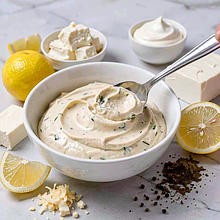
Prepare the horseradish mousse: peel and grate 80 g of horseradish on a fine grater (you can use a blender). In a bowl, mix 200 g of cottage cheese with 200 ml of cream, add the grated horseradish, 30 g of lemon juice (freshly squeezed from the lemon), 2 g of black pepper, and a pinch of salt (about 2 g). Blend with an immersion blender until smooth and creamy. Taste and if necessary, add a little more lemon juice or salt.

Ingredients: Cottage cheese, Sour cream, horseradish, Lemon, Black pepper, Salt
Use an immersion blender or food processor. If you want a milder flavor, wait 10 minutes after grating the horseradish before adding it to the puree, so that the sharpest note dissipates a bit.

Pickle

8

Prepare sauerkraut with apple: heat 15 g of rapeseed oil in a pan over medium heat. Add the sliced onion and sauté for 3–4 minutes until it becomes translucent. Add the grated apple (150 g) and 800 g of sauerkraut, and mix. Add 2 g of salt and 5 g of sugar if the cabbage is very sour. Cook over medium-low heat for 12–15 minutes, stirring every 2–3 minutes, until the flavors combine and the cabbage softens slightly. Season with 2 g of black pepper and 2 g of marjoram at the end.

Ingredients: Rapeseed oil, Onion, Apple, Sauerkraut, Sugar, Salt, Black pepper, Marjoram
Use a wide skillet or pot with a diameter of 24–28 cm, so the cabbage has space. If the cabbage is dry, add 50–100 ml of water or a bit of brine for flavor. Do not overcook the cabbage – it should be soft but firm.

Assembly and serving

9

On a plate, place a portion of sauerkraut, next to it set one pork knuckle (or slice it and arrange). On a spoon, place 2–3 tablespoons of horseradish sauce. Optionally, garnish with fresh dill (30 g) and a slice of lemon. Serve immediately while the skin is still crispy.

Ingredients: Sauerkraut, Pork knuckle, Cottage cheese, Sour cream, horseradish, Dill, Lemon
Use wide serving plates so the cabbage doesn't mix with the puree. Serve the hot meat after a short rest (5–10 minutes), then it will be juicy.

Fun Fact

💡

The Wielkopolska tradition of preparing pork knuckle combines curing and long cooking; using a grill is a summer twist that connects tradition with seasonal cuisine. Curing originally served to preserve meat before winter.

Best for

Tips

🍽️ Serving

Serve the pork knuckle hot, with a portion of horseradish sauce and warm cabbage. A lightly chilled wheat beer or a stronger cider pairs well. For a contrast in textures, add roasted potatoes or crispy bread.

🥡 Storage

Pork knuckle: store in the refrigerator in an airtight container for up to 48 hours; reheat in the oven at 160°C for 20–30 minutes to regain the crispiness of the skin. Horseradish sauce: keep in the refrigerator for up to 3 days. Cabbage can be stored for up to 3 days and reheated in a pan.

📸 Cooked by the community

Log in to add a photo
Add a photo of the finished dish

After moderator approval, you will receive 10 experience points.

🍲

No one has added a photo yet. Be the first!

Comments (0)

Be the first to comment on this recipe!

Add a comment

You might also like

Recipe Categories

European cuisine is a mosaic of culinary traditions from the Old Continent - from Spain to Scandinavia. Valencian paella and tapas from Spain - sunshine on a plate. Boeuf bourguignon and ratatouille from France - elegance and finesse. Wiener schnitzel and strudel from Austria - Central European c...

See all recipes in this category

Grilling is the art of preparing dishes over an open flame - the taste of summer and outdoor gatherings. Recipes for grilled meats: beef steak, pork neck, BBQ ribs, and chicken wings. Marinades that tenderize meat and add flavor: herb, Asian, honey-mustard. Grilled vegetables: bell peppers, zucch...

See all recipes in this category

Main courses are the heart of every meal - hearty, nutritious, and full of flavor. In this category, we present a rich selection of recipes for lunches and dinners that will satisfy even the most discerning palates. From classic Polish pork chops to aromatic chicken dishes, to exquisite steaks an...

See all recipes in this category
Advertisement