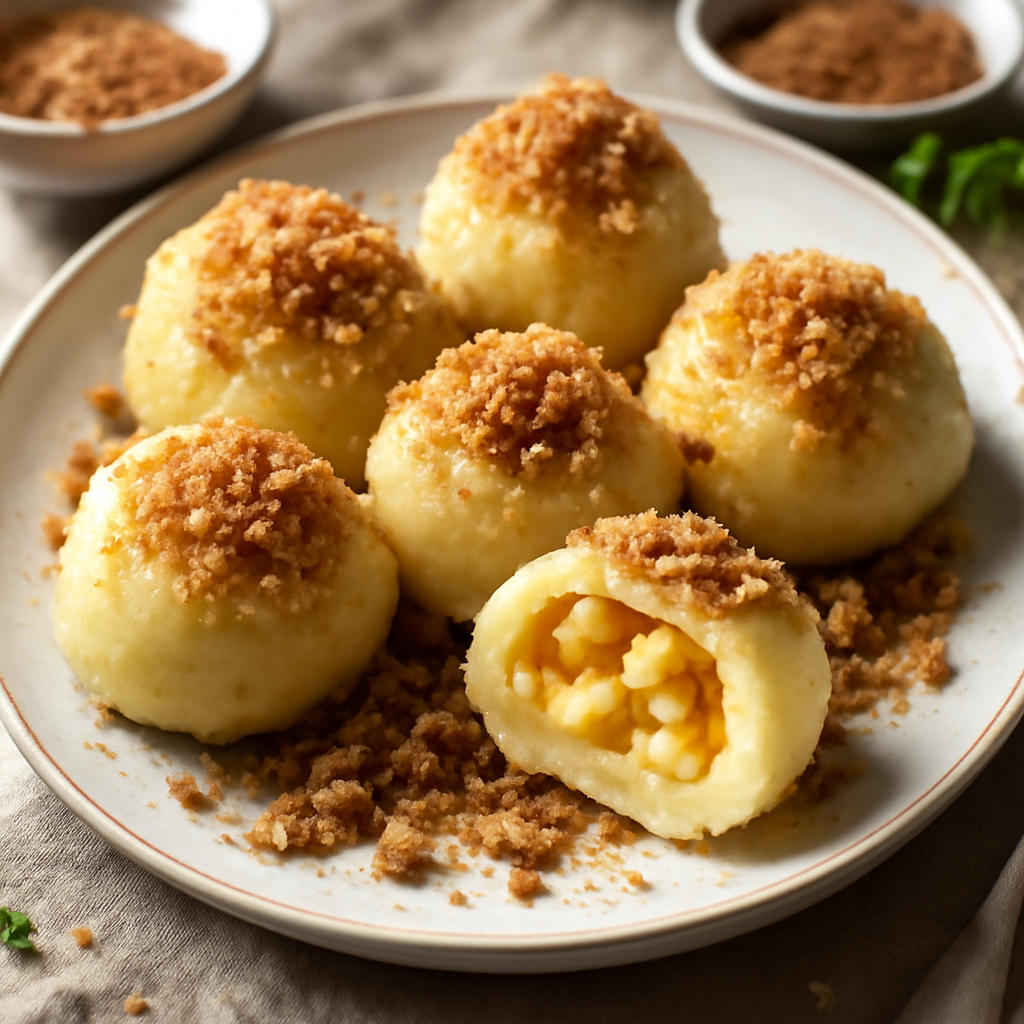
Potato dumplings with cottage cheese and apple filling, breadcrumbs, and cinnamon sugar

Main dishes Regional Cuisine of Poland 90 min Medium 51 wyświetleń ~20.44 PLN - (0)
Rate:
(0)
Start Cooking

Description

Dumplings are a classic, hearty dish of Polish cuisine — soft dumplings made from potato dough filled with aromatic filling. This version is a winter reinterpretation: instead of plum, we use sour apple combined with delicate cottage cheese, and finish it off with golden breadcrumbs sautéed in butter and sprinkle with cinnamon sugar. Perfect as a main meal for lunch or a dessert after a hearty broth. The dish combines the creamy texture of the dough, the tartness of the apple, and the sweetness of the sugar with a crunchy, buttery topping. Serve hot, preferably right after preparation; it pairs wonderfully with 18% cream (optional) or with sour cream for contrast.

Ingredients Used

Ingredients (12)

Servings:
4
  • Chicken egg 1 szt. (~60 g)
  • Potatoes 5.3 szt. (~800 g)
  • Semi-fat cottage cheese 250 g
  • Apple 1.1 szt. (~200 g)
  • Wheat flour 200 g
  • Butter 50 g
  • Breadcrumbs 80 g
  • Rapeseed oil 15 g
  • Sugar 30 g
  • 🌿 Przyprawy
  • Ground cinnamon 2 g
  • Salt 0.2 szczypt (~5 g)
  • ✨ Opcjonalne
  • Sour cream 18% 150 g
💰 Szacowany koszt dania: ~20.44 PLN (5.11 PLN/porcję)

💡 Kliknij na składnik aby oznaczyć jako użyty

Preparation steps

Preparing the potatoes

1

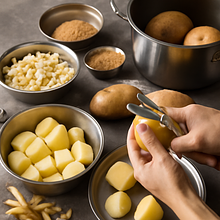
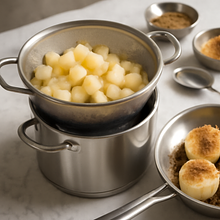
Choose 800 g of starchy potatoes. Peel them with a peeler. Cut into even pieces (about 3-4 cm) — this will allow them to cook evenly. Place in a large pot, cover with cold water (the water should cover them by about 2 cm) and add 1 teaspoon of salt (5 g). Bring to a boil over high heat, reduce the heat to medium and cook for 15-20 minutes from the moment of boiling, until they are soft (check with a fork — the fork should go in easily and the potato should break apart when pressed).

Use a large pot with a thick bottom and a lid. Do not salt the water too early — adding salt at the beginning is common practice. Check the tenderness with a few pieces to avoid overcooking.
2

After cooking, drain the potatoes in a colander. Set the colander with the potatoes over the pot for a minute or two to let excess moisture evaporate. Then, pass the potatoes through a potato ricer or press them through a fine sieve directly into a warm bowl — warm potatoes absorb flour well and do not create a gummy texture.

For mashing, use a potato ricer (preferably) or a masher. Do not use an immersion blender — it will turn into a paste. The goal is a dry, fluffy potato mixture.

Filling

3

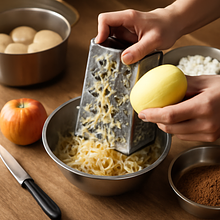
Peel 200 g of apple, remove the core, and grate the apple on a coarse grater directly into a bowl. Add 20 g of sugar (from the total of 30 g) and 1 teaspoon (2 g) of cinnamon. Mix thoroughly. If the apple is very juicy, squeeze out the excess juice with a spoon — the filling should be moist but not watery.

Use a grater with large holes and a knife to remove the seed cavity. Squeeze out the excess juice gradually, as too moist filling will make the dough soggy.
4

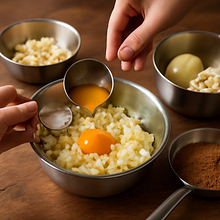
To the grated apple, add 250 g of cottage cheese. Mix with a spoon until you have a smooth mixture — the filling should be creamy and firm enough to easily form balls the size of a walnut. Taste and add the remaining 10 g of sugar if needed.

If the cottage cheese is lumpy, pass it through a sieve or briefly blend it with a blender — it should remain creamy, not completely liquid.

Cake

5

To the still warm, but no longer hot potato mixture (from step 2), add 60 g of egg and 5 g of salt. Mix with a wooden spoon, then gradually add 200 g of flour — one tablespoon at a time, kneading with your hand or spatula until the mixture starts to come together. Transfer to a lightly floured work surface and gently knead the dough: just 1-2 minutes, until the mixture is smooth and no longer sticky to your hands. Don't overdo it with the flour — the dough should be soft and slightly sticky.

Use a wooden spoon for initial mixing. If you have a mixer with a hook, set it to the lowest speed. Over-kneading (more than 3-4 minutes) will make the dumplings tough.

Shaping

6

Divide the dough into 12 equal parts (for 4 servings, 3 dumplings per person). To make it easier, divide it into two parts, roll each into a log the thickness of your hand, and cut into 12 pieces. Flatten each piece in your hand to form a circle about 0.5 cm thick. Place a portion of filling in the center (about 20-25 g — the size of a walnut). Wrap the dough around the filling, sealing the edges tightly and forming a smooth ball. Check for cracks — if there are any, re-seal the edges.

Use floured hands and work quickly to prevent the dough from drying out. If the filling is moist, gently squeeze it out before shaping to avoid softening the dough.

Cooking

7

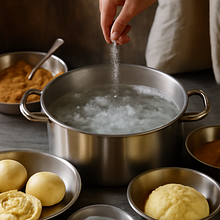
In a large pot, bring water to a boil (at least 2-3 l). Lightly salt the water (1/2 teaspoon). When the water is boiling, reduce the heat so that it simmers gently (small bubbles). Add the dumplings in batches (first 4-6 pieces), gently stirring with a wooden spoon to prevent them from sticking to the bottom. Cook for 6-8 minutes from the moment they float to the surface (after they float, cook for an additional 2-4 minutes — check one piece: the dough should be elastic, and the filling hot).

Use a large slotted spoon or sieve to remove the dumplings. Don't add too many at once — this will lower the temperature and cause them to become mushy.

Breadcrumbs

8

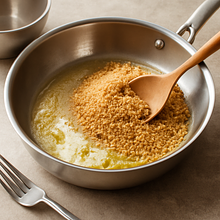
In a pan, heat 50 g of butter over medium heat, add 80 g of breadcrumbs and fry, stirring with a wooden spoon, for 4-6 minutes until the breadcrumbs are golden brown and crispy. Keep an eye on it, as the breadcrumbs can burn quickly — they should have a golden-brown color and a nutty aroma. Finally, add 10 g of sugar (optional) and quickly mix to dissolve the sugar and give a slight caramel flavor.

Use a 26–28 cm non-stick frying pan. Stir continuously to evenly brown the breadcrumbs.

Finishing

9

Remove the cooked dumplings with a slotted spoon and set them on a plate. Generously sprinkle them while hot with the prepared buttery breadcrumbs. In a small bowl, mix the remaining 20 g of sugar with 1 teaspoon of cinnamon (2 g) and gently sprinkle the dumplings just before serving.

Serve the dumplings immediately after finishing — they lose some of their charm when cold. If you're making a portion for later, store it in the fridge and reheat briefly in a steamer.

Serving

10

Serve 3 dumplings per person (a total of 12 dumplings for 4 servings). Next to it, place a tablespoon of 18% sour cream (150 g divided into portions) if you are using it. You can also drizzle with melted butter. Sprinkle a little cinnamon sugar on top for decorative effect.

For decoration, use additional breadcrumbs and cinnamon. Serve in deep plates or on traditional platters.

Storage and Reheating

11

If there are leftover dumplings, cool them to room temperature (max. 2 hours) and place them in an airtight container in the refrigerator — store for a maximum of 48 hours. To reheat: steam for 6-8 minutes or heat in a pan with a bit of butter covered on low heat for 5-7 minutes, until hot in the center.

Do not microwave for a long time — this will cause them to dry out. Steam with a cover to prevent the dumplings from becoming soggy.

Fun Fact

💡

Dumplings have many regional variations: from potato with fruit to yeast and cheese. In some regions of Poland, plum dumplings were a traditional signature dish at parties — here we made a winter version with apple and cottage cheese.

Best for

Tips

🍽️ Serving

Serve the dumplings hot. Place a bowl of sour cream and additional breadcrumbs next to them. For a breakfast variant, serve with natural yogurt and fresh apple slices.

🥡 Storage

Store in the refrigerator in an airtight container for up to 48 hours. Reheat in a steamer or in a covered pan to retain moisture. Do not freeze the filling with cottage cheese (it may change texture) — if you want to freeze, freeze the raw dumplings before cooking, and then cook them longer.

📸 Ugotowane przez społeczność

Zaloguj się, aby dodać zdjęcie
Dodaj zdjęcie gotowej potrawy

Po zatwierdzeniu przez moderatora otrzymasz 10 punktów doświadczenia.

🍲

Nikt jeszcze nie dodał zdjęcia. Bądź pierwszy!

Comments (0)

Be the first to comment on this recipe!

Add a comment

You might also like

Recipe Categories

Main courses are the heart of every meal - hearty, nutritious, and full of flavor. In this category, we present a rich selection of recipes for lunches and dinners that will satisfy even the most discerning palates. From classic Polish pork chops to aromatic chicken dishes, to exquisite steaks an...

See all recipes in this category

Traditional recipes from various regions of Poland that showcase the richness of local flavors and ingredients.

See all recipes in this category
Reklama