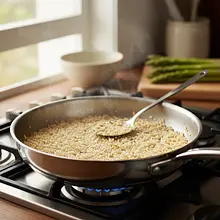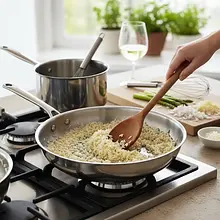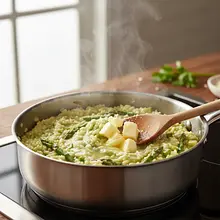
Start by preparing the broth. Pour 1200 ml of vegetable broth into a small pot and place it on a neighboring burner over low heat. The broth must be hot throughout the cooking of the risotto. This is crucial because adding cold liquid to the rice would halt the cooking process.
Description
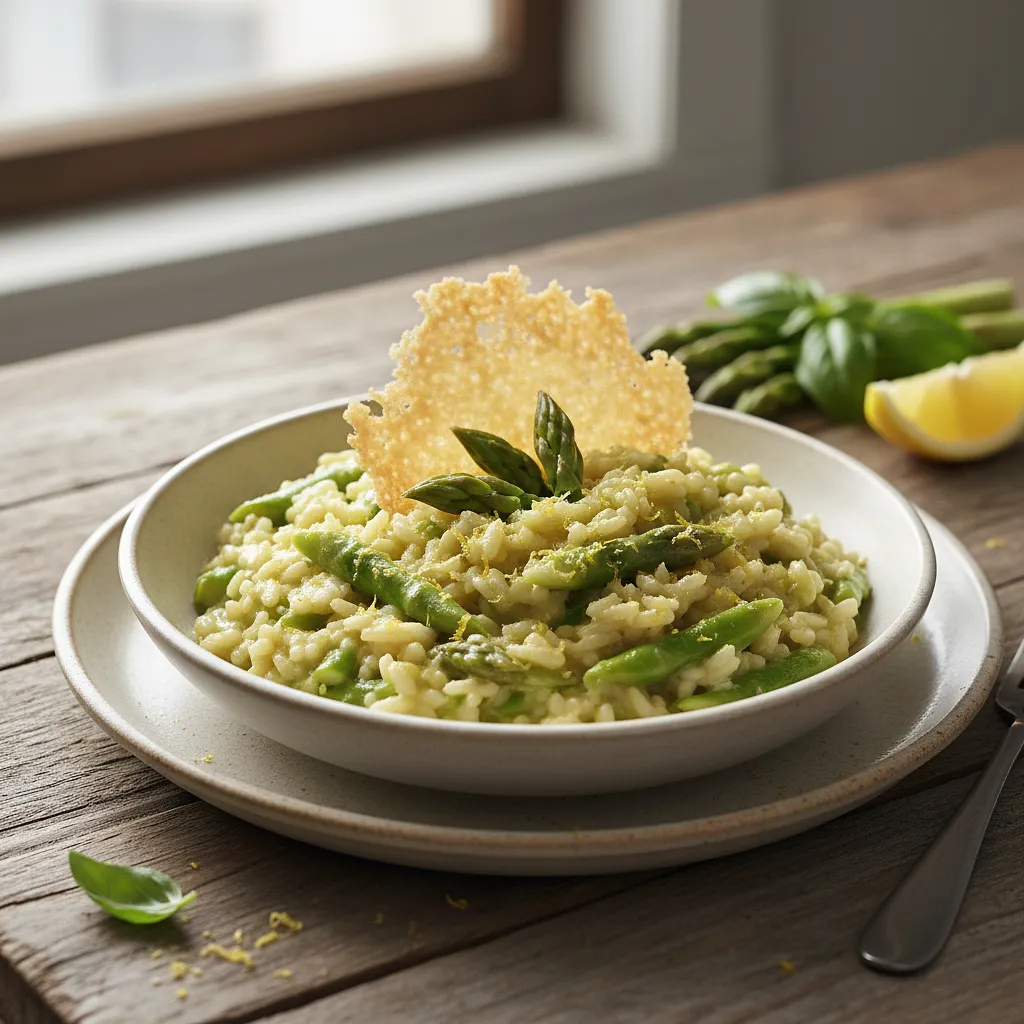
This dish is the essence of spring on a plate. Velvety, creamy risotto made with Arborio rice, which slowly releases its starch, creating the perfect consistency. The star of the show is fresh green asparagus – some of it cooks together with the rice, imparting its delicate flavor, while the crunchy tips serve as an elegant garnish. An unexpected element is the crispy parmesan chip, which adds texture and an intense, salty flavor. The whole is complemented by a refreshing hint of lemon zest, which cuts through the richness of the cheese and butter. Risotto is a dish from northern Italy that requires patience and attention, but the end result is absolutely worth every minute spent stirring. Perfect for an elegant dinner, a romantic evening for two, or simply when you want to treat yourself to a bit of luxury in everyday life.
Składniki (14)
- Arborio rice for risotto 300 g
- Green asparagus 1 pęczek
- Vegetable broth 1200 ml
- Ser parmezan (parmigiano reggiano) 120 g
- Białe wytrawne wino 100 ml
- Shallot 80 g
- Butter 45 g
- Extra virgin olive oil 0.2 łyżek
- Lemon 1.3 szt.
- Garlic 2 ząbki
- 🌿 Przyprawy
- Salt 0.1 szczypt
- Pieprz czarny świeżo mielony 2 szczypty
- ✨ Opcjonalne
- Pine nuts 20 g
- Fresh mint 0.2 pęczków
💡 Kliknij na składnik aby oznaczyć jako użyty
Preparation steps
Preparation of ingredients
Prepare the asparagus. Wash them thoroughly under running water. To remove the woody ends, hold each asparagus with both hands and bend it - it will break at the right spot. Discard the woody parts. Cut off the tips (about 4-5 cm from the top) and set them aside. Slice the remaining stalks into pieces about 1 cm thick.
Prepare the remaining ingredients so they are ready to use. Peel the shallots and chop them into very small cubes. Peel the garlic and also chop it very finely or press it through a garlic press. Grate the Parmesan cheese on a fine grater - set aside 80g for the risotto and 40g for making chips. Wash the lemon thoroughly and dry it, then zest it (only the yellow part, the white part is bitter).
Parmesan chips
In a large, dry non-stick skillet heated over medium heat, pile 4 small, thin pancakes made from the reserved 40g of grated Parmesan. Leave plenty of space between them. Fry for 1-2 minutes until the cheese melts and starts to bubble, and the edges turn golden. Very carefully, using a thin, flexible spatula, lift and flip the chips to the other side. Fry for another 30 seconds. Transfer the finished chips to a plate lined with paper towels to drain excess fat. Once cooled, they will become perfectly crispy.
Risotto
In a large, wide pot or deep skillet with a thick bottom, heat 2 tablespoons of olive oil and 1 tablespoon (15g) of butter over medium heat. When the butter melts, add the chopped shallot. Sauté, stirring with a wooden spoon, for about 4-5 minutes, until the shallot softens and becomes translucent, but not browned. Add the chopped garlic and sauté for another minute until fragrant.
Pour the dry Arborio rice into the pan. Increase the heat slightly and stir vigorously with a wooden spoon for about 2 minutes. Each grain of rice should be coated in fat and become slightly translucent at the edges, with a visible white dot in the center. This process is called 'tostatura' and is crucial because it 'seals' the grains, allowing them to absorb the broth gradually without overcooking immediately.
Pour 100 ml of white wine into the pan. Stir constantly until the wine completely evaporates and the intense smell of alcohol disappears. The rice will absorb the liquid, and the acidity of the wine will balance the flavors of the dish.
Reduce the heat to medium-low. Start adding hot broth, one ladle at a time. Pour in the first ladle and stir gently but regularly until the rice absorbs almost all the liquid. Only then add the next ladle. Repeat this process, patiently stirring. It is the stirring that releases the starch from the rice, creating a creamy emulsion.
After about 15 minutes of adding the broth, when the rice is halfway cooked, add the sliced asparagus stalks (keep the tips aside). Stir and continue the process of adding broth ladle by ladle and stirring for another 5-7 minutes.
In the meantime, heat the remaining tablespoon (15g) of butter in a small pan. Add the reserved asparagus tips and sauté for 3-4 minutes until they are bright green and slightly crisp (al dente). Season with a pinch of salt and pepper. Remove from heat and set aside.
After about 20-25 minutes of total cooking time, taste the rice. It should be 'al dente' - cooked but still with a slight bite in the center. The consistency of the entire dish should be fluid and creamy, flowing from the spoon like a wave (in Italian 'all'onda'). If the risotto is too thick, add a little more broth. If you've used all the broth and the rice is still hard, you can add a bit of hot water.
Remove the pot from the heat. This is the most important moment - 'mantecatura'. Add the remaining 15g of cold butter cut into cubes, 80g of grated Parmesan, and the grated lemon zest. Stir vigorously for about a minute until the butter and cheese completely melt, creating an incredibly creamy, glossy emulsion. Season to taste with salt and freshly ground pepper. Cover the pot and let it sit for 1-2 minutes to allow the flavors to meld.
Serving
Immediately after resting, spread the risotto onto warmed, deep plates. On top of each serving, arrange a few sautéed asparagus tips. Vertically insert a crispy parmesan chip in the center. If you are using optional ingredients, sprinkle everything with toasted pine nuts and garnish with a few fresh mint leaves. Serve immediately.
Fun Fact
Risotto comes from northern Italy, specifically from Lombardy, where rice cultivation has been popular since the 15th century. Legend has it that the dish was created by accident during a wedding when one of the artists working on the stained glass in the Milan Cathedral, using saffron as a pigment, added it to rice, creating the famous 'Risotto alla Milanese'.
Best for
Tips
Risotto is best served on slightly concave, warmed plates. Place a portion in the center and gently tap the bottom of the plate to let the risotto spread out, creating a perfect circle. Serve immediately, as it thickens quickly. It pairs wonderfully with a glass of chilled, dry white wine, the same one used for cooking.
Risotto tastes best when freshly made. Storing it is tricky because the rice absorbs all the liquid and loses its creamy consistency. However, if you have leftovers, store them in the fridge for up to 2 days. The best way to reheat is to add a little broth or water to a pan and warm it over low heat, stirring constantly. You can also shape the leftover risotto and fry delicious arancini balls.
📸 Ugotowane przez społeczność
Zaloguj się, aby dodać zdjęcieDodaj zdjęcie gotowej potrawy
Po zatwierdzeniu przez moderatora otrzymasz 10 punktów doświadczenia.
Nikt jeszcze nie dodał zdjęcia. Bądź pierwszy!
Comments (0)
Be the first to comment on this recipe!
Add a comment