Recipe for: Ossobuco with rhubarb and buckwheat honey

Pikantne Italian Cuisine Main dishes 180 min Medium 4 wyświetleń ~30.58 PLN * - (0)
Rate:
(0)
Start Cooking

Description

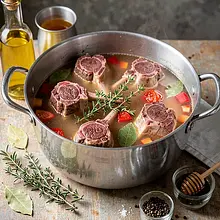
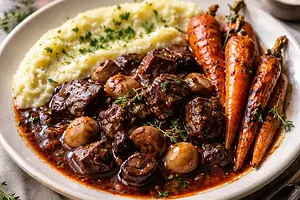
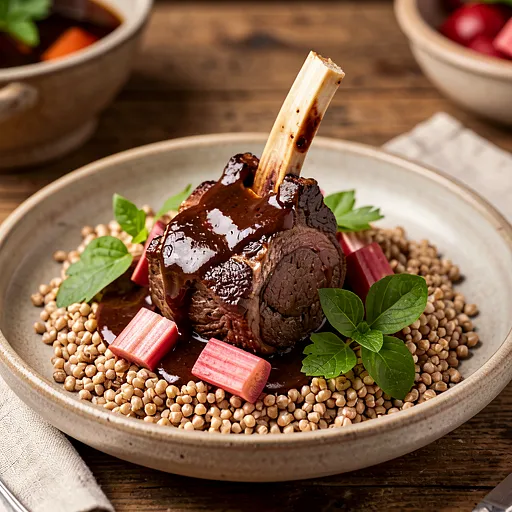
Ossobuco with rhubarb and buckwheat honey is a variation of the classic Italian braised veal shank with a distinct spring accent: the tart-sweet rhubarb and aromatic buckwheat honey. The dish combines a thick, deep vegetable sauce with a hint of honey-rhubarb glaze, while sorrel and parsley add freshness when served. This warming dish is perfect for a cooler spring or winter evening and pairs wonderfully with buckwheat or mashed potatoes. Visually: a dark, glossy sauce enveloping tender meat with a visible bone and scarlet pieces of rhubarb — an effect that is both rustic and elegant.

Ingredients Used

Ingredients (21)

Servings:
4
  • Veal shank 1200 g
  • Wheat flour 50 g
  • Rapeseed oil 30 g
  • Butter 40 g
  • Onion 1 szt. (~150 g)
  • Carrot 1.3 szt. (~100 g)
  • Celery 100 g
  • Garlic 3 ząbki (~15 g)
  • Tomato 3.3 szt. (~400 g)
  • White wine 250 g
  • Beef broth 700 ml
  • Rhubarb 200 g
  • Buckwheat honey 60 g
  • Buckwheat groats 200 g
  • Sorrel 30 g
  • 🌿 Przyprawy
  • Thyme 30 g
  • Bay leaf 6.7 szt. (~2 g)
  • Salt 0.2 szczypt (~5 g)
  • Black pepper 4 szczypty (~2 g)
  • ✨ Opcjonalne
  • Parsley 1 pęczek (~30 g)
  • Lemon 1.3 szt. (~100 g)
💰 Szacowany koszt dania: ~30.58 PLN (7.65 PLN/porcję)
* Brak cen dla niektórych składników

💡 Kliknij na składnik aby oznaczyć jako użyty

Preparation steps

Meat preparation

1

Pat the veal shank dry with a paper towel. If they are in large pieces, leave them whole. Season the meat with salt and pepper on both sides, then evenly coat in all-purpose flour — gently shake off the excess flour. Let it rest for 10 minutes at room temperature to allow the flour to adhere.

Ingredients: veal shank, Salt, Black pepper, Wheat flour
Use a large cutting board and paper towels. Pour the flour onto a plate and coat the meat with your fingers. Gently remove excess flour, otherwise the sauce will be floury.
2

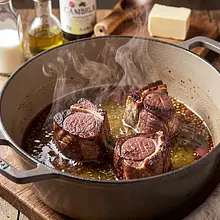
In a large, heavy pot with a thick bottom (saucepan or roasting pan), heat the rapeseed oil over high heat until it starts to lightly smoke. Add a tablespoon of butter. Sear the shank in batches for 4-5 minutes on each side, until a deep brown crust forms. Do not move the meat too often — let it brown well.

Ingredients: veal shank, Rapeseed oil, Butter
The best is a cast iron pot with a diameter of ~24-28 cm. Use kitchen tongs for flipping. If the pan is overcrowded, the meat will steam instead of browning — fry in two batches.

Vegetable base

3

After browning the meat, remove it to a plate. In the same pot, add the remaining butter, reduce the heat to medium, and add the chopped onion. Sauté for 6-8 minutes until the onion becomes translucent and slightly golden. Add the carrot and celery, sauté for another 5 minutes, stirring, until the vegetables soften. Finally, add the minced garlic and sauté for 30 seconds — it should not brown.

Ingredients: Onion, Carrot, Celery, Garlic, Butter
Use a wooden spoon or spatula. The onion should be soft and translucent, not burnt — monitor the temperature.

Deglazing and braising

4

Pour the white wine into the pot, increase the heat to medium-high, and scrape the browned bits from the bottom with a wooden spoon (deglazing). Cook for 2-3 minutes until most of the alcohol evaporates. Add the tomatoes and beef broth, toss in the bay leaf and thyme, and season with salt and pepper. Place the seared shank back into the pot with the bone on top. The liquid should reach about halfway up the meat — if needed, top up with broth or water.

Ingredients: white wine, Beef broth, Bay leaf, Thyme, Salt, Black pepper, veal shank
Use a wooden spoon to scrape. Flames may temporarily increase the steam, work carefully. The liquid should gently simmer, not boil violently.

Stewing

5

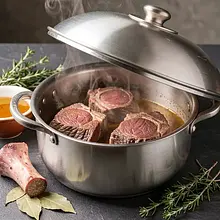
Cover the pot with a lid and reduce the heat to very low so that the liquid just gently simmers. Braise the shank for about 90-110 minutes. Every 30 minutes, check the liquid level — the sauce should be gently bubbling; if too much evaporates, add 50-100 ml of hot broth. The meat is ready when it easily pulls away from the bone, and when pulled with a fork, it nearly falls apart.

Ingredients: veal shank, Beef broth, Thyme, Bay leaf
Use a thermometer: the meat will be tender when the internal temperature reaches about 90°C and the meat easily pulls away from the bone. Do not lift the lid too often — you lose heat.

Adding rhubarb and honey

6

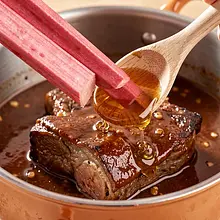
About 15 minutes before the end of cooking, add the chopped rhubarb to the pot around the meat. Gently mix so that the pieces of rhubarb are in the sauce. After 10 minutes, add the buckwheat honey: drizzle it over the pieces of rhubarb and a small amount of sauce, stirring carefully so that the honey dissolves evenly and slightly caramelizes. Cook for another 5 minutes — the rhubarb should soften but retain its shape.

Ingredients: Rhubarb, buckwheat honey, veal shank
Add the rhubarb at the end, as longer cooking will dissolve it and turn it into a puree. Honey burns easily — add it at low temperature and stir gently.

Buckwheat groats

7

In the meantime, prepare the buckwheat: place the buckwheat in a sieve and rinse it under cold water. In a pot, bring 400 ml of water to a boil (the ratio is 1:2 water to buckwheat), add a pinch of salt, add the buckwheat, cover, and cook on low heat for 12-15 minutes until the water is absorbed. After cooking, remove from heat and let it sit covered for 5 minutes, then fluff with a fork.

Ingredients: Buckwheat groats, Salt
Use a medium pot with a lid. The groats should be fluffy, not overcooked — if they are hard, add 1-2 tablespoons of hot water and simmer for another 2-3 minutes.

Finishing and serving

8

Remove the bay leaf and any large sprigs of thyme. If the sauce is too thin, take the meat out and cook the sauce over high heat for 3-6 minutes until it thickens slightly. Taste and season with salt and pepper. Serve the shank on a portion of buckwheat, drizzled with the sauce containing pieces of rhubarb. Sprinkle with fresh sorrel and optionally finely chopped parsley. Finally, you can drizzle a few drops of lemon juice.

Ingredients: sorrel, Parsley, Lemon, veal shank
Use a slotted spoon for mixing to avoid damaging the meat. Make sure the sauce has a rich, glossy sheen — this is a sign of proper reduction.

Serving

9

Spread the groats on the plates, place the shank with the bone in the center, and drizzle the rhubarb sauce around it. Garnish with sorrel leaves and parsley. Serve hot. For those interested: serve additional buckwheat honey in a small bowl for possible sweetening.

Ingredients: Buckwheat groats, buckwheat honey, sorrel, Parsley
Use a wide plate for warm dishes or a heatproof platter. The dish tastes best right away when the sauce is shiny and hot.

Fun Fact

💡

Ossobuco comes from Milan and is traditionally served with gremolata (a lemon-parsley salsa). In this version, a local touch of rhubarb and buckwheat honey has been introduced, creating a Polish-Italian fusion of flavors.

Best for

Tips

🍽️ Serving

Serve with smooth-cooked buckwheat or mashed potatoes. For a contrast in temperature and texture, add a slightly sour salad of young leaves (arugula, lamb's lettuce). For adults, a glass of dry white wine can be served.

🥡 Storage

Store in the refrigerator in an airtight container for 2-3 days. Reheat on low heat with a little broth to prevent the sauce from evaporating too quickly. Do not freeze the rhubarb in the dish — it loses its texture after thawing; it's better to freeze the meat or sauce separately.

📸 Ugotowane przez społeczność

Zaloguj się, aby dodać zdjęcie
Dodaj zdjęcie gotowej potrawy

Po zatwierdzeniu przez moderatora otrzymasz 10 punktów doświadczenia.

🍲

Nikt jeszcze nie dodał zdjęcia. Bądź pierwszy!

Comments (0)

Be the first to comment on this recipe!

Add a comment

You might also like

Recipe Categories

Italian cuisine is love at first bite - pasta, pizza, and amore on the plate. Pasta in all shapes: spaghetti, penne, rigatoni, tagliatelle, and lasagna with homemade sauces. Italian sauces: bolognese, carbonara, pomodoro, pesto, and aglio e olio - classics. Neapolitan pizza with a crispy crust an...

See all recipes in this category

Main courses are the heart of every meal - hearty, nutritious, and full of flavor. In this category, we present a rich selection of recipes for lunches and dinners that will satisfy even the most discerning palates. From classic Polish pork chops to aromatic chicken dishes, to exquisite steaks an...

See all recipes in this category
Reklama