Recipe for: Duck breast with pomegranate glaze, celery puree, and caramelized beets

Pikantne Main dishes European cuisine 90 min Medium 9 wyświetleń ~66.20 PLN - (0)
Rate:
(0)
Start Cooking

Description

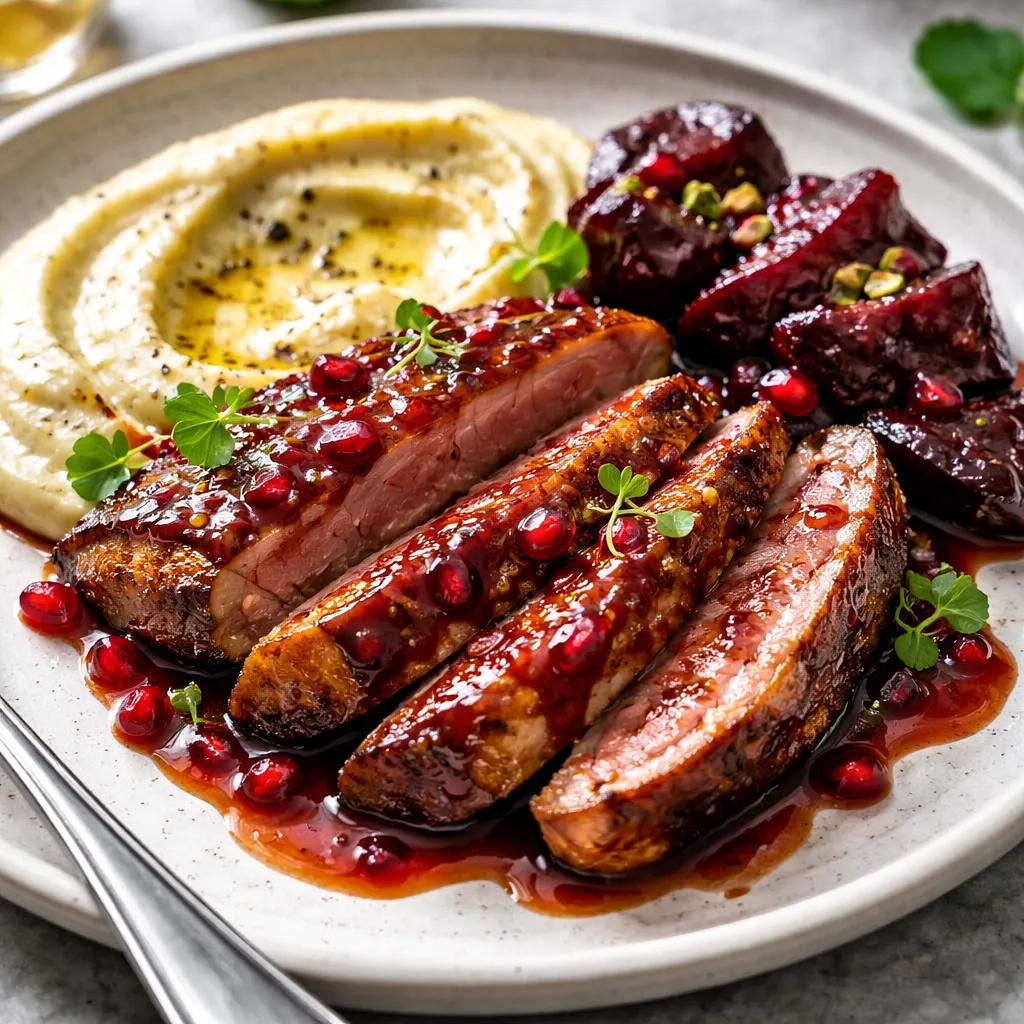
A seasonal, striking main dish that combines juicy, crispy duck breast with a glossy, sweet-and-sour glaze made from pomegranate juice and honey. Accompanied by velvety celeriac and parsnip puree and red, caramelized beets with a hint of orange — contrasting colors and textures: the golden, crispy skin of the duck, creamy puree, and shiny beets create an elegant composition. The dish has roots in European cuisine, with Mediterranean (balsamic vinegar) and Middle Eastern (pomegranate) accents. Serve warm, preferably with fresh microgreens or pomegranate seeds for color. Perfect for winter lunches and festive occasions — it catches the eye and delights guests with its bold flavor.

Ingredients Used

Ingredients (18)

Servings:
4
  • Duck breast 4 szt. (~800 g)
  • Pomegranate juice 150 ml
  • Honey 30 ml
  • Balsamic vinegar 15 ml
  • Butter 45 g
  • Celeriac 600 g
  • Parsnip 200 g
  • 18% cream 60 ml
  • Orange 0.8 szt. (~150 g)
  • Garlic 2 ząbki (~10 g)
  • Fresh thyme 0.1 pęczków (~10 g)
  • Rapeseed oil 30 g
  • Sea salt 4 g
  • Beets (raw) 600 g
  • Brown sugar 20 g
  • 🌿 Przyprawy
  • Black pepper 4 szczypty (~2 g)
  • ✨ Opcjonalne
  • Pomegranate seeds (for decoration) 80 g
  • Microgreens / sprouts 20 g
💰 Szacowany koszt dania: ~66.20 PLN (16.55 PLN/porcję)

💡 Kliknij na składnik aby oznaczyć jako użyty

Preparation steps

Preparation

1

Take the duck breast out of the refrigerator 30–40 minutes before cooking to reach room temperature — this will ensure even frying. During this time, wash and dry all the vegetables: celery, parsnip, beets, and orange. Prepare all the ingredients and measure the required amounts.

Ingredients: Duck breast, Celeriac, Parsnip, Beets (raw), Orange
Use a cutting board and paper towels to dry the meat. Taking the duck out of the fridge earlier prevents the meat from suddenly shrinking when frying.
Celeriac puree

2

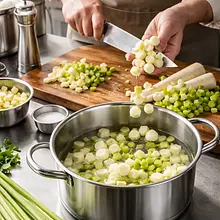
Peel the celery and parsnip with a knife, cut into equal pieces about 2–3 cm. Place in a large pot, cover with cold water so that the vegetables are submerged, add 1 teaspoon of salt (about 2 g). Bring to a boil, reduce the heat and cook for 20–25 minutes until the vegetables are soft — you can check with a fork: it should go in smoothly.

Ingredients: Celeriac, Parsnip, Sea salt
Use a large pot with a thick bottom; cooking in cold water ensures even cooking of the roots. Do not overcook — the vegetables should be tender but not falling apart.
3

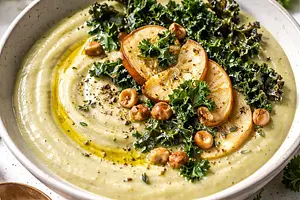
Drain the vegetables, reserving 1–2 tablespoons of the cooking water. Transfer the vegetables to a blender bowl or use a masher. Add 18% cream (60 ml) and 30 g of butter. Blend until smooth — if it's too thick, add a little of the reserved cooking water. Season with salt and freshly ground pepper to taste.

Ingredients: 18% cream, Butter, Black pepper, Sea salt
Use a hand blender or a countertop blender to achieve a smooth consistency. If you don't have a blender, mash thoroughly with a potato masher and strain through a sieve for a velvety texture.

Glazed Beets

4

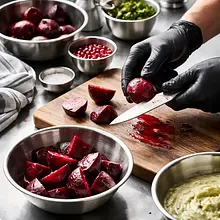
Peel the beets (using gloves to avoid staining your hands) and cut them into quarters or eighths depending on their size. Place them in a bowl, drizzle with 1 tablespoon of rapeseed oil (15 g) and sprinkle with 1 teaspoon of salt. Spread them on a baking sheet lined with parchment paper, skin side up, and bake in an oven preheated to 200°C for 30–35 minutes until they are soft — check with a sharp knife.

Ingredients: Beets (raw), Rapeseed oil, Sea salt
The best is a tray with a single layer of beets, do not stack them on top of each other. Baking without foil allows the skin to brown slightly and concentrate the flavor.
5

In a small skillet, heat 15 g of butter over medium heat, add 20 g of brown sugar and the juice squeezed from half an orange (about 40 ml). When the sugar dissolves and starts to bubble slightly (about 2 minutes), add the roasted beets and 1 finely chopped clove of garlic (5 g). Sauté together for 4–6 minutes, stirring constantly, until the beets are coated with a shiny, thick glaze. To taste, add the grated zest of 1/2 orange and 1 sprig of thyme (leaves).

Ingredients: Butter, Brown sugar, Orange, Garlic, Fresh thyme, Beets (raw)
Use a wide skillet so that the beets are in a single layer and glaze evenly. Be careful when caramelizing — too high a heat can burn the sugar.

Duck - preparation

6

Prepare the duck breasts: pat dry with a paper towel. Using a sharp knife, make diagonal cuts in the skin in a crisscross pattern (do not cut into the meat), about 1 cm apart, creating diamonds — this will allow the fat to render and achieve a crispy skin. Sprinkle the skin and meat with salt (about 2 g of salt per breast) and freshly ground pepper.

Ingredients: Duck breast, Sea salt, Black pepper
Use a very sharp knife and work on a stable cutting board. The cuts should be shallow, just in the skin and fat layer.

Duck - frying

7

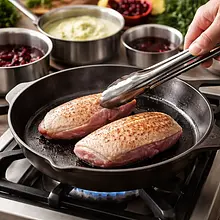
Preheat a dry, cold skillet (preferably cast iron or heavy) over medium-low heat. Place the duck breasts skin side down — do not add oil (the fat from the duck will render). Cook for 8–12 minutes, regularly tilting the skillet and pouring off excess fat into a bowl, so the skin browns evenly and becomes crispy. The duck is ready when it has a golden, crispy skin and an internal meat temperature of about 58–60°C (medium rare).

Ingredients: Duck breast
Use a kitchen thermometer for precision. If you don't have one - press the meat: it should be firm but yield slightly when pressed. Drain excess fat so the meat doesn't stew.

Duck - finishing in the oven

8

After searing, turn the breasts skin-side up and place the pan in an oven preheated to 180°C (if your pan is oven-safe) for 6–8 minutes to finish cooking to your desired doneness. Once cooked, remove the breasts and set them on a cutting board, loosely cover with aluminum foil, and let rest for 8–10 minutes — this will allow the juices to redistribute evenly.

Ingredients: Duck breast
If your pan is not oven-safe, transfer the breasts to a baking sheet and place them in the oven. Resting the meat is crucial — if you cut it right away, the juices will run out and the meat will be dry.

Pomegranate sauce

9

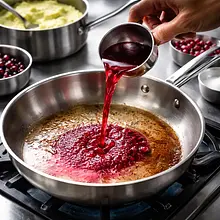
In the same pan (after removing excess fat, leaving 1 tablespoon), pour in 150 ml of pomegranate juice and 15 g of balsamic vinegar. Add 30 g of honey. Cook over medium heat for 6–8 minutes, reducing the liquid by about half, until the sauce thickens and starts to coat the back of a spoon. Remove from heat and whisk in 15 g of cold butter vigorously to thicken the sauce and make it glossy. Taste and season with a pinch of salt if needed.

Ingredients: Pomegranate juice, Balsamic vinegar, Honey, Butter, Sea salt
Use a wooden spoon or spatula. The reduction should be gentle; too vigorous boiling can make the sauce too thick or bitter.

Additional preparations

10

If you want to add a green touch: prepare kale chips — wash the kale leaves, dry them, and remove the thick stems. Drizzle with a teaspoon of rapeseed oil, lightly salt, and bake at 150°C for 8–10 minutes until crispy. Keep them close to serving to prevent them from getting soft.

Ingredients: Rapeseed oil, Sea salt
Kale chips are an optional element - they add texture and color. Be careful not to burn them in the oven.

Assembly and decoration

11

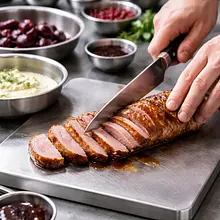
Slice the duck breasts diagonally into 1 cm thick pieces, ensuring each slice has skin. On a plate, place 3–4 tablespoons of celery puree as a base (use a spoon to create a teardrop shape). Arrange the duck slices on top of the puree, skin side up. Next to it, place 3–4 pieces of caramelized beets. Drizzle 1–2 tablespoons of pomegranate glaze over the meat, adding a few drops of sauce around the plate for decoration. Garnish with pomegranate seeds and microgreens (optional) as well as kale chips.

Ingredients: Duck breast, Beets (raw), Pomegranate seeds (for decoration), Microgreens / sprouts
Use a small teaspoon or brush for drizzling to control the amount of sauce and achieve an aesthetic effect. Serve immediately while everything is hot.

Serving and final tips

12

Serve the dish hot. Each portion should contain about 200 g of duck breast (sliced), 150 g of puree (approximately 150 g per serving with the assumed distribution), and 150 g of beets arranged on the plates. Ensure a contrast of colors: red sauce and beets vs. light puree and green microgreens.

Ingredients: Duck breast, Beets (raw), Pomegranate juice
If you are preparing the dish in advance, keep the glaze and beets separate and heat briefly before serving. The meat should not wait long after being sliced — this leads to a loss of juiciness.

Fun Fact

💡

Pomegranate has been valued since ancient times as a symbol of fertility and life — its intense, ruby juice has long been used in Middle Eastern kitchens for glazes and sauces, where it combines sweetness with a pleasant acidity.

Best for

Tips

🍽️ Serving

Serve on warmed plates to keep the dish warm longer. If you want a lighter version, reduce the amount of butter in the sauce and puree or replace the cream with plant-based milk. The gluten-free and nut-free version is ready by default.

🥡 Storage

Store the puree, beets, and meat separately in airtight containers in the fridge for up to 48 hours. Reheat the puree slowly over low heat with a bit of cream or water. Briefly heat the duck in the oven at 150°C for 6–8 minutes, basting with a little sauce to prevent it from drying out. The pomegranate sauce can be warmed over low heat and optionally diluted with a tablespoon of water.

📸 Ugotowane przez społeczność

Zaloguj się, aby dodać zdjęcie
Dodaj zdjęcie gotowej potrawy

Po zatwierdzeniu przez moderatora otrzymasz 10 punktów doświadczenia.

🍲

Nikt jeszcze nie dodał zdjęcia. Bądź pierwszy!

Comments (0)

Be the first to comment on this recipe!

Add a comment

You might also like

Recipe Categories

Main courses are the heart of every meal - hearty, nutritious, and full of flavor. In this category, we present a rich selection of recipes for lunches and dinners that will satisfy even the most discerning palates. From classic Polish pork chops to aromatic chicken dishes, to exquisite steaks an...

See all recipes in this category

European cuisine is a mosaic of culinary traditions from the Old Continent - from Spain to Scandinavia. Valencian paella and tapas from Spain - sunshine on a plate. Boeuf bourguignon and ratatouille from France - elegance and finesse. Wiener schnitzel and strudel from Austria - Central European c...

See all recipes in this category
Reklama