Preheat the oven to 220°C (fan). Prepare a springform pan with a diameter of 23-24 cm. Take two large sheets of baking paper. Crumple each one well in your hands into a ball, then unfold it. Line the pan with the paper so that it extends at least 5 cm above the edges. The crumpled texture of the paper will create the characteristic rustic sides of the cheesecake.
Description
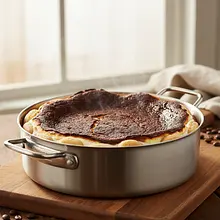
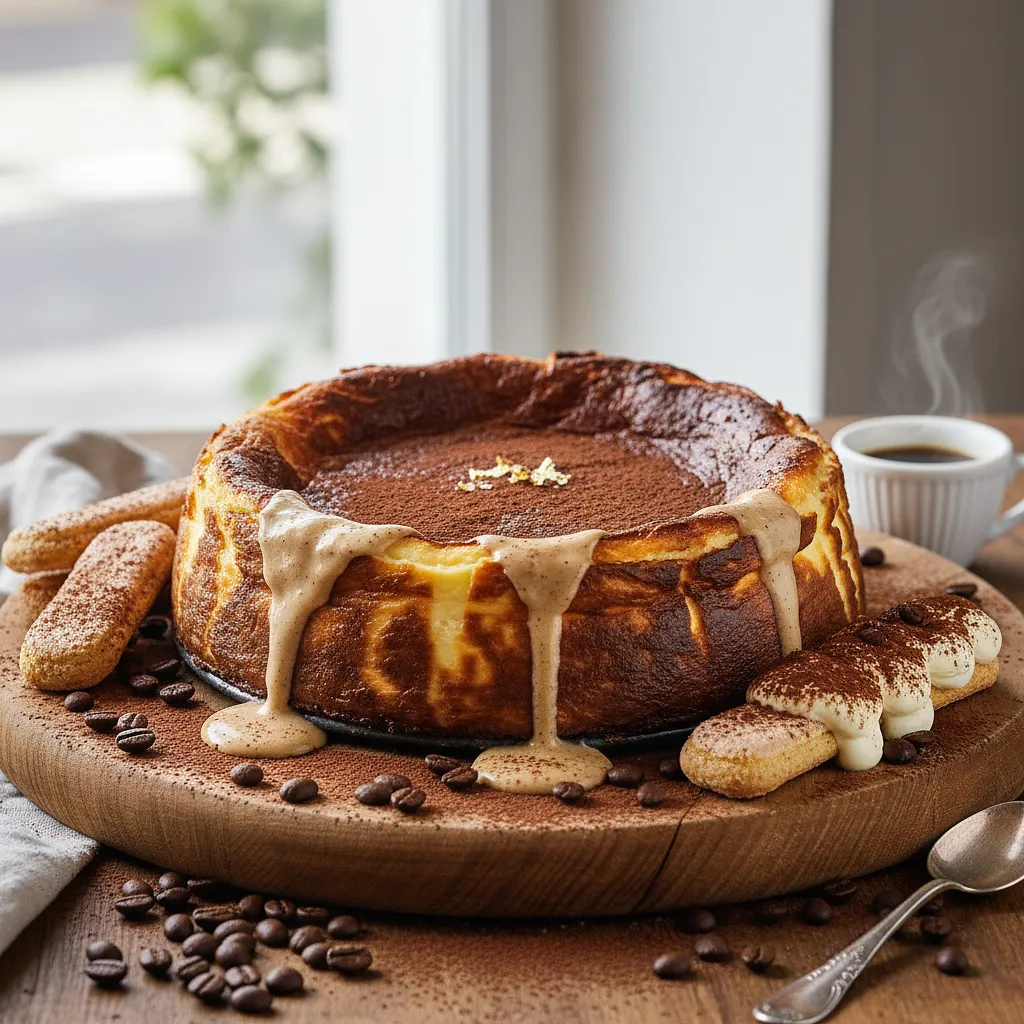
Here is a dessert that combines two iconic European flavors: the creamy decadence of Basque cheesecake and the aromatic depth of Italian Tiramisu. Imagine a velvety, almost liquid cheesecake filling made from cream cheese and mascarpone, which, when baked at an extremely high temperature, forms a characteristic caramelized, almost burnt crust. This gives the whole dish a unique, slightly bitter aftertaste that perfectly balances the sweetness of the interior. Instead of a traditional base, we have hidden Savoiardi ladyfingers at the heart of the cake, gently soaked in strong, aromatic espresso. Each bite is a journey from the crunchy, caramel surface, through the silky cheesecake filling, to the intensely coffee-flavored, biscuit center. The whole is finished with a generous layer of bitter cocoa, which completes the illusion of classic Tiramisu. This cake is stunning both visually and in taste – perfect for special occasions when you want to impress your guests with something absolutely unique.
Składniki (11)
- Serek śmietankowy typu philadelphia 600 g
- Serek mascarpone 250 g
- Cukier drobny do wypieków 16.7 łyżek
- Eggs 4 szt.
- 36% heavy cream 300 ml
- Savoiardi biscuits (long) 150 g
- Strong espresso 200 ml
- Vanilla extract 1 łyżeczka
- 🌿 Przyprawy
- Natural cocoa powder, bitter 2 łyżki
- Salt 0.0 szczypt
- ✨ Opcjonalne
- Coffee liqueur (e.g. Kahlua) 2 łyżki
💡 Kliknij na składnik aby oznaczyć jako użyty
Preparation steps
Preparing the pan and sponge cakes
Brew a strong espresso and pour it into a wide, flat dish (e.g., a deep plate) to cool it down faster. The coffee must be completely cold. If you are using it, now is the time to add coffee liqueur to the coffee and mix well.
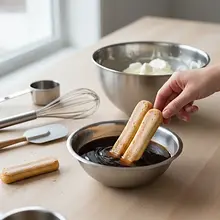
Taking one ladyfinger at a time, dip it in cold coffee for literally 1-2 seconds on each side. The ladyfinger should be soaked but still firm. Arrange the soaked ladyfingers side by side at the bottom of the prepared springform pan, creating a compact layer. If necessary, you can break the ladyfingers to fill in the gaps.
Cheese mixture
In a large bowl, place the cream cheese, mascarpone cheese, and fine sugar. All ingredients must be at room temperature. Using a mixer with a whisk attachment, mix the ingredients on medium speed for about 2-3 minutes, until the mixture is perfectly smooth, creamy, and free of any lumps. Scrape the mixture from the sides of the bowl with a spatula while mixing.
Reduce the mixer speed to the minimum. Add the eggs one by one, mixing only until each egg is incorporated into the mixture. Do not add the next egg until the previous one is fully absorbed. Finally, add the salt and vanilla extract, mixing briefly.
Without stopping the mixing on the lowest speed, slowly pour in the heavy cream in a thin stream. Mix only until the ingredients are combined, about 30 seconds. The mixture should be smooth and fairly liquid. Scrape the sides of the bowl one last time and gently fold with a spatula to ensure everything is evenly combined.
Baking and Cooling
Carefully pour the prepared cheese mixture over the ladyfingers arranged in the mold. Do this slowly, pouring the mixture over the convex side of a spoon or spatula to avoid disturbing the ladyfingers at the bottom. Gently smooth the top. Place the mold in the preheated oven at 220°C, on the middle rack.
Bake the cheesecake for 35-40 minutes. The top should become very dark brown, almost black in some places - this is the desired effect! The sides of the cheesecake should be set, but the center (an area with a diameter of about 10 cm) must remain distinctly wobbly and 'jelly-like' when you gently shake the pan. Do not bake it longer, even if it seems raw in the middle.
Remove the cheesecake from the oven and set it on a wire rack to cool completely (about 2-3 hours). The cheesecake will sink in the middle - this is normal. After cooling, without removing it from the pan, place the cheesecake in the refrigerator for at least 4 hours, preferably overnight. This step is essential for the cheesecake to set and achieve the right creamy consistency.
Just before serving, carefully remove the chilled cheesecake from the springform pan, gently peeling the paper away from the sides. Transfer it to a serving platter. Using a small sieve, generously dust the entire top of the cheesecake with unsweetened cocoa powder, creating a thick, velvety layer.
Fun Fact
Basque cheesecake, known as 'tarta de queso', comes from the La Viña bar in San Sebastián, Spain. Its 'burnt' appearance was initially a result of chance, but quickly became its trademark. Our recipe combines this rustic Spanish tradition with the Italian elegance of Tiramisu, whose name means 'pick me up' or 'cheer me up', perfectly describing the effect of this dessert!
Best for
Tips
The cheesecake tastes best slightly chilled, but it's worth taking it out of the fridge 15-20 minutes before serving to make its texture even creamier. Serve it alongside a cup of strong espresso, which will enhance its coffee flavor. For a contrast in taste and appearance, you can add a few fresh raspberries or cherries.
Store the cheesecake in the refrigerator, in an airtight container or wrapped in plastic wrap, for up to 4 days. Interestingly, many people believe that it tastes even better on the second or even third day, when the flavors have fully melded.
📸 Ugotowane przez społeczność
Zaloguj się, aby dodać zdjęcieDodaj zdjęcie gotowej potrawy
Po zatwierdzeniu przez moderatora otrzymasz 10 punktów doświadczenia.
Nikt jeszcze nie dodał zdjęcia. Bądź pierwszy!
Comments (0)
Be the first to comment on this recipe!
Add a comment