Prepare the base: place 150 g of biscuits into a plastic bag or bowl. If using a bag, seal it tightly and crush with a rolling pin into fine crumbs; if you have a blender, pulse to finely grind (a few short pulses). The cookies should resemble fine sand with a few larger pieces.
Description
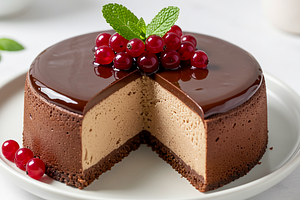
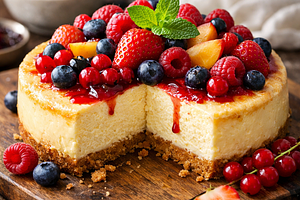
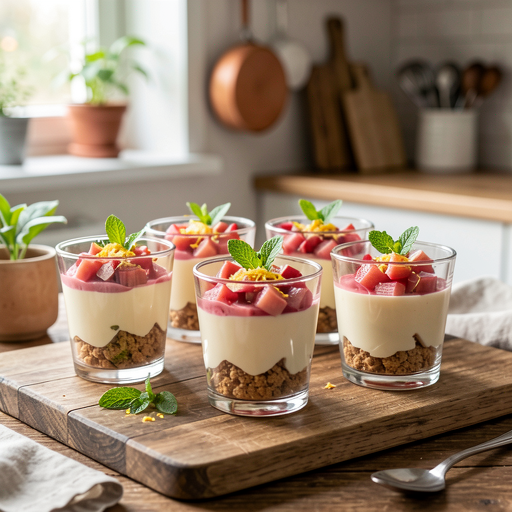
A delicate no-bake cheesecake served in small cups, with tangy spring rhubarb — a version in Silesian, homemade style, tailored for a children's breakfast. The buttery biscuit base provides a pleasant crumble, while the filling made of curd and cream is light, slightly sweetened with powdered sugar and optionally sweetened with honey. The rhubarb enhances the flavor with its fresh acidity and beautiful pink color. The dish is visually appealing: the layers contrast — the brown base, creamy filling, and pink rhubarb, decorated with mint leaves. Perfect for a spring breakfast or dessert for children when rhubarb is fresh; it also works well for a picnic or family gathering.
Ingredients Used
Ingredients (12)
- Biscuits 150 g
- Butter 70 g
- Cottage cheese 600 g
- Sour cream 200 g
- Powdered sugar 60 g
- Gelatin 10 g
- Milk 50 ml
- Rhubarb 400 g
- Sugar 40 g
- Lemon 0.8 szt. (~60 g)
- ✨ Opcjonalne
- Honey 30 ml
- Mint 10 g
💡 Kliknij na składnik aby oznaczyć jako użyty
Preparation steps
Base
Melt 70 g of butter in a small saucepan over very low heat or in the microwave until it reaches a liquid consistency. Pour the melted butter into a bowl with the crushed biscuits and mix with a wooden spoon until all the crumbs are slightly moist and easily stick together, forming wet sand.
Portioning the base: prepare 6 cups (about 200–250 ml each). In each cup, evenly sprinkle about 25 g of the cookie-butter mixture (weight by eye: 150 g / 6 = 25 g per cup). Press the base down with a teaspoon or the bottom of a small glass, forming an even layer about 0.5–1 cm thick. Place the cups in the refrigerator while preparing the cheese mixture (at least 20 minutes) to allow the base to set.
Rhubarb compote
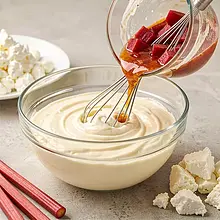
Prepare rhubarb compote: wash and dry 400 g of rhubarb, trim the ends, and cut into 1–2 cm pieces. Place the rhubarb in a saucepan, add 40 g of sugar and the juice of half a lemon (about 30 g of juice; you can also grate 1/2 teaspoon of zest if you want a more intense aroma). Heat over medium heat, stirring, until the rhubarb releases its juice and starts to break down — cook for 6–8 minutes. If you want a firmer compote, cook for an additional 1–2 minutes.
Cool the compote: after cooking, remove the pot from the heat and let it sit at room temperature or until slightly warm (about 30 minutes). The compote should cool down before you pour it over the cold cheese layer — otherwise, you may dissolve the gelatin and soak the crust.
Cheese dough
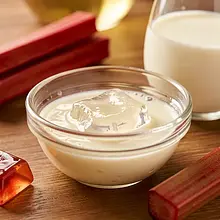
Prepare the gelatin: sprinkle 10 g of gelatin into a small bowl and pour in 50 ml of cold milk. Mix and let it sit for 5 minutes for the gelatin to swell (it should expand and absorb the liquid).
Dissolve the gelatin: after 5 minutes, heat the swollen gelatin in a water bath or in the microwave on low power for 8–12 seconds until it becomes liquid and lump-free. Do not boil! After dissolving, set aside for 1 minute to cool down.
Whipping cream: pour 200 g of chilled cream into a large bowl. Beat with a mixer on low speed until it starts to thicken (about 1–2 minutes), then increase the speed to medium and beat until soft peaks form (another 1–2 minutes). The cream should be smooth and fluffy, not whipped into butter.
Prepare the cheese mixture: place 600 g of cottage cheese in a large bowl. Add 60 g of powdered sugar and, if using, 30 g of honey (optional) and the grated zest of half a lemon (optional — about 0.5 g). Stir with a wooden spoon or spatula, and for smoothness, briefly mix with a mixer on the lowest speed (10–15 seconds). The mixture should be uniform and free of large lumps.
Combine the gelatin with the cheese mixture: pour warm (not hot) gelatin in a thin stream into the bowl with the cottage cheese, while vigorously mixing with a whisk or mixer on the lowest speed, so that the gelatin is well distributed in the mixture. Mix for 30–45 seconds until the mixture becomes smooth.
A delicate combination with cream: add whipped cream to the cheese mixture and gently fold it in with a silicone spatula using an up-and-down motion to avoid destroying the fluffy structure. Mix for 20–30 seconds until you achieve a uniform, light mixture.
Assembly and decoration
Filling the cups: remove the cups with the chilled base. Evenly distribute about 100 g of cheese mixture into each cup (600 g / 6 = 100 g per cup). Smooth the surface with a spoon.
On the cheese mass, spread about 50–70 g of cooled rhubarb compote (the amount depends on how much fruit you like). You can save some compote for drizzling before serving.
Chilling: place the filled ramekins in the refrigerator for at least 3 hours, preferably 4 hours, until the mixture is completely set. Before serving, decorate each ramekin with fresh mint (a few leaves or finely chopped) and lemon zest, if desired.
Serving: serve chilled in bowls as a spring breakfast for children or as a dessert. Before serving, you can drizzle a bit of the remaining compote or a teaspoon of honey on top (optional).
Fun Fact
Rhubarb gained popularity in Poland in the 19th century and is still a symbol of spring; in Silesian cuisine, rhubarb was often combined with cottage cheese and buttery pastries.
Best for
Tips
Serve the bowls well chilled. For children, cut larger pieces of rhubarb into smaller, softer portions or strain the compote. You can prepare a version without honey for toddlers under 1 year old.
Store in the refrigerator for up to 48 hours covered with plastic wrap or in covered bowls. Do not freeze (the texture of the cheesecake will deteriorate after thawing). If the mixture slightly separates, gently stir before serving.
📸 Ugotowane przez społeczność
Zaloguj się, aby dodać zdjęcieDodaj zdjęcie gotowej potrawy
Po zatwierdzeniu przez moderatora otrzymasz 10 punktów doświadczenia.
Nikt jeszcze nie dodał zdjęcia. Bądź pierwszy!
Comments (0)
Be the first to comment on this recipe!
Add a comment