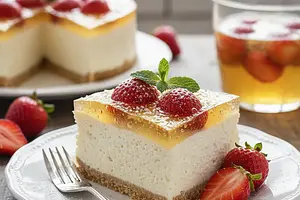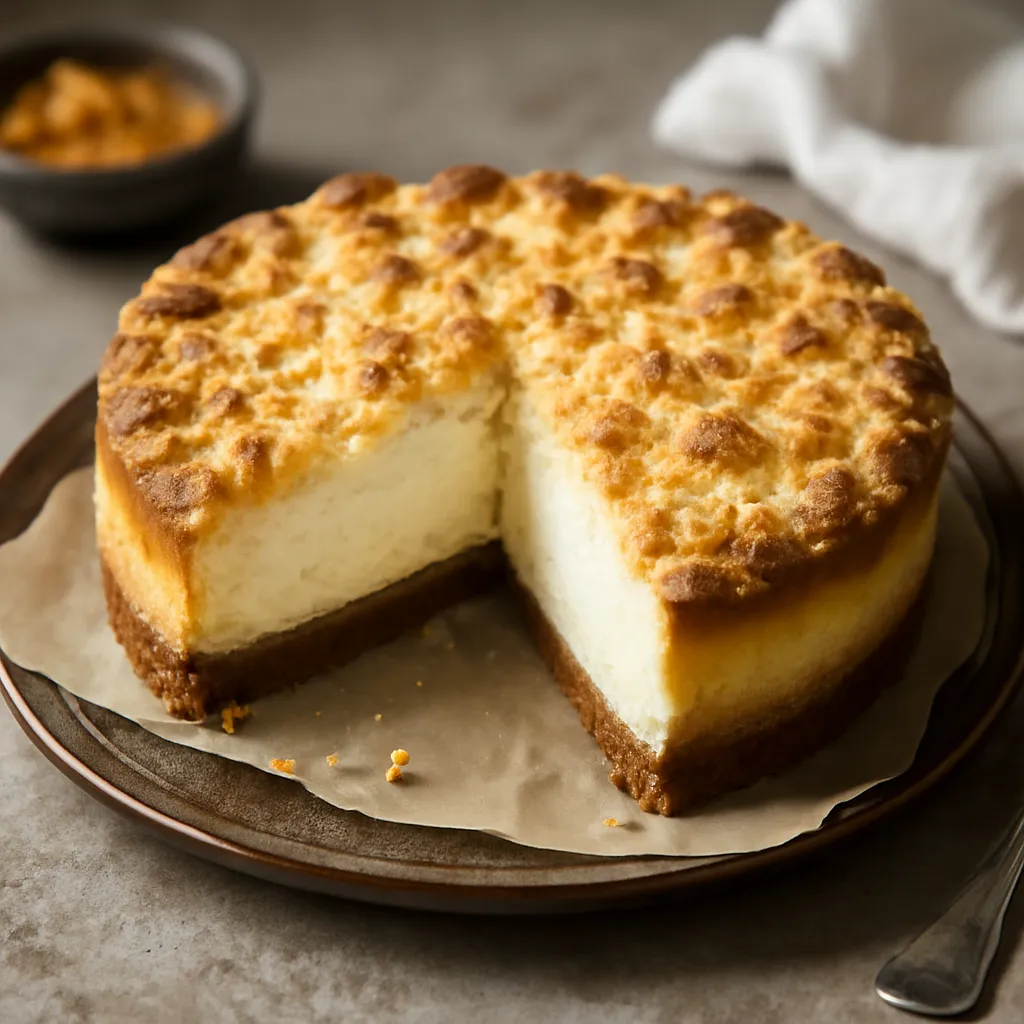
Viennese cheesecake is a creamy, delicate cheesecake with a traditional, slightly moist interior and a crumbly base. It comes from the Austrian pastry tradition, adopted in Poland in the form of cheesecake made from ground twaróg cheese and with the addition of cream for a velvety texture. It has a subtle vanilla flavor and a citrus note from lemon zest, a golden crumbly base, and a smooth, slightly springy cheese mass. Perfect for Christmas Eve — it looks beautiful under a thin layer of icing or dusted with powdered sugar and decorated with candied orange peel or raisins. Flavor qualities: delicate, unsweetened cheese with hints of vanilla and lemon; visual qualities: even, creamy center and golden, even base. Serve chilled, in slices, preferably with a cup of aromatic tea or vanilla liqueur.
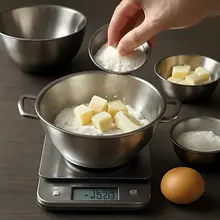
Prepare the ingredients for the shortcrust base: weigh 200 g of flour, 100 g of cold butter, 50 g of powdered sugar, 1 egg (60 g), and 6 g of baking powder. Cut the butter into cubes and place it in the freezer for 10 minutes to make it very cold — this will help achieve a crumbly texture. In a large bowl, place the sifted flour, powdered sugar, and baking powder. Make a well in the center.
Use a large bowl and a grater for butter or a knife to cut the butter into pieces; it's best to use cold ingredients. Typical form: a springform pan with a diameter of 23-24 cm; use baking paper. Do not knead for too long - the goal is to quickly combine the ingredients into a crumbly structure.
2
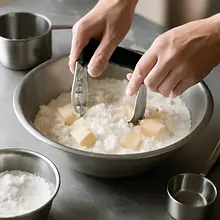
Rub the butter with the flour and powdered sugar using your fingers or a pastry cutter: quickly work the butter into the flour until the mixture resembles crumbs (small lumps of butter visible in the flour). Add 1 egg (60 g) and briefly knead with your hands or a spatula — just until the ingredients come together into a uniform, but not overly elastic, mass. If the dough is too dry, add 1 teaspoon of cold water and knead briefly.
Use a spatula or knife for initial mixing, then move to a lightly floured surface for kneading. Do not warm the dough with your hands for too long, as it will become sticky. The dough is ready when it forms a cohesive ball and does not crumble excessively.
3
Roll out the dough into a thin circle (about 3-4 mm) on a lightly floured countertop. Line a 23-24 cm springform pan with parchment paper and transfer the dough, pressing the edges to create an even base and a 1.5-2 cm rim. Trim any excess. Prick the bottom with a fork several times to allow air to escape during pre-baking.
Ingredients:
Wheat flour, Butter, Egg
If the dough is sticky, wrap it in plastic wrap and chill for 15-20 minutes. A metal springform pan 23-24 cm is best; parchment paper makes it easier to remove the cheesecake.
4
Place the crust in the refrigerator for 30 minutes to cool the dough and prevent it from shrinking during baking. Meanwhile, preheat the oven to 180°C (top-bottom). After cooling, pre-bake the crust for 12-15 minutes at 180°C until it is lightly golden. Remove and set aside to cool (do not turn off the oven — it will be needed for baking the cheesecake).
Ingredients:
Wheat flour, Butter, Egg
Chilling prevents the dough from shrinking; use the convection function only if you can control the temperature (reduce by 10-15°C). The bottom should be golden, not burnt.
Cheese mixture
5
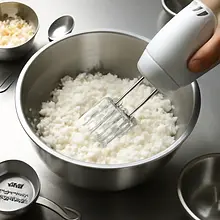
Prepare the cheese mixture: place 1000 g of semi-fat cottage cheese in a large bowl. Use a mixer with a flat attachment (spatula) or mix by hand with a wooden spoon. First, blend the cheese on low speed for 30-60 seconds to break up the lumps.
Ingredients:
Semi-fat curd cheese
If the cottage cheese is grainy, blend it briefly with a blender, but not into a thin paste. Use a large, deep bowl to avoid splashes. This is the key to a smooth mixture.
6
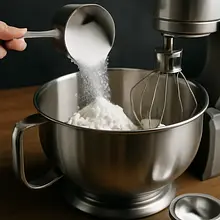
Add 150 g of sugar and 1 pinch of salt (1 g) to the cheese. Mix on medium speed until the sugar dissolves (about 1-2 minutes). Add 4 eggs (240 g) one at a time — after adding each egg, mix for 10-15 seconds just until combined. Avoid overmixing to prevent incorporating too much air into the mixture.
Ingredients:
White sugar, Salt, Egg, Semi-fat curd cheese
Use a stand mixer with a paddle attachment or a hand mixer. If the mixture starts to foam, reduce the speed. The mixture should not be fluffy, but smooth and creamy.
7
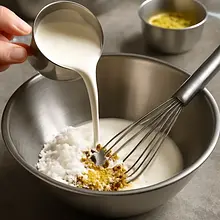
Add 200 ml of 30% cream, 30 g of cornstarch, 5 ml of vanilla extract, and the zest of 1 lemon (grate only the yellow part on a fine grater) to the mixture. Mix on low speed until you achieve a smooth, homogeneous consistency — the mixture should be thick but pourable.
The starch should first be mixed with a small amount of cream to dissolve any lumps, and then added to the rest. Do not mix too long to avoid aerating the mixture.
8
If you are using raisins (optional 50 g), soak them for 10-15 minutes in boiling water, rum, or tea, then drain and gently fold them into the mixture (at the end, with a spoon). You can also add candied orange peel for decoration.
When adding raisins, gently coat them in 1 tablespoon of flour beforehand so they don't sink to the bottom while baking.
Assembly
9
Pour the prepared cheese mixture evenly over the pre-baked crust. Smooth the surface with a spatula. Gently tap the pan on the counter a few times to remove larger air bubbles. Place the pan in the preheated oven.
Use a silicone spatula to spread evenly. If air bubbles appear on the surface, gently pierce them with a toothpick.
Baking
10
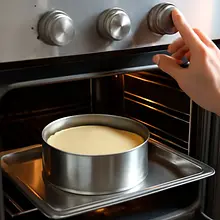
Baking: bake the cheesecake at 180°C for the first 15 minutes, then reduce the temperature to 150-160°C and bake for another 50-60 minutes. The total baking time is about 65-75 minutes. The cheesecake is ready when the edges are set and start to gently pull away from the pan, while the center is still slightly jiggly (it should have a gentle, central 'quiver').
Ingredients:
Semi-fat curd cheese, Egg, 30% cream
A good way to prevent cracks is to bake in a water bath — place the pan wrapped in aluminum foil in a larger baking dish with hot water up to 1/3 the height of the pan. If you are not using a water bath, lower the temperature as indicated above and do not open the oven in the first 40 minutes.
11
After baking, turn off the oven and leave the cheesecake in the closed oven for another 15 minutes with the door slightly ajar (you can use a spoon to prop the door open). This will prevent sudden shrinking and cracking of the surface.
Use a kitchen towel to gently hold the oven door. Be careful of the hot steam when opening.
Cooling and Decoration
12
Remove the pan from the oven and place it on a rack to cool completely (about 2 hours). Once cooled, place the cheesecake in the refrigerator for at least 4 hours, preferably overnight — chilling will allow the filling to set and make it easier to slice.
Chilling in the fridge is key to achieving perfect slices. Loosely cover the cheesecake with plastic wrap to prevent it from absorbing odors from the fridge.
13
Before serving, decorate the cheesecake: sift a small amount of powdered sugar on top or garnish with candied orange peel and possibly soaked raisins. Cut into 12 equal slices with a sharp, hot knife (wipe the knife and heat it by briefly dipping it in hot water before each cut).
Use a long, thin kitchen knife and clean it between cuts to achieve clean slices. Additionally, you can add a bit of grated lemon zest on top for freshness.
Fun Fact
💡
The cheesecake in Vienna has a long tradition — in the 19th century, Viennese patisseries became famous for their delicate cheesecakes and cakes, and the Polish version adapted local curd, creating a unique hybrid of flavor and texture.
Serve well chilled at a temperature of 6–8°C. When cutting, use a warmed and dried knife to ensure smooth slices. The cheesecake pairs wonderfully with aromatic citrus tea, coffee with a hint of vanilla, or a small glass of vanilla liqueur. For an elegant presentation, arrange a thin strip of candied peel on the plate and lightly dust with powdered sugar.
🥡Storage
Store in the refrigerator covered with plastic wrap or in a sealed container for 4-5 days. You can also cut portions and freeze them raw (not recommended) or baked — it's best to freeze already sliced pieces for up to 2 months, thawing slowly in the refrigerator overnight. Reheating is not recommended — cheesecake tastes best chilled.
Christmas Eve is the most important evening of the year - a time for tradition, family, and special dishes. Our collection of Christmas Eve recipes includes all 12 traditional dishes: from red borscht with dumplings to poppy seed cake and kutia. Recipes for carp in various versions: fried, baked,...
Desserts are a sweet ending to a meal that brings joy to both children and adults. In this category, we present recipes for a variety of sweets - from simple creams and mousses, to elegant panna cottas, and exquisite fruit tarts. Our desserts include both classics of Polish cuisine - fruit jelly,...
Comments (0)
Be the first to comment on this recipe!
Add a comment