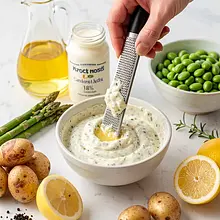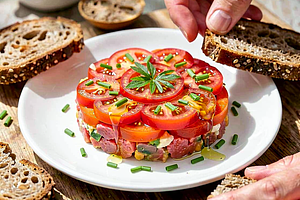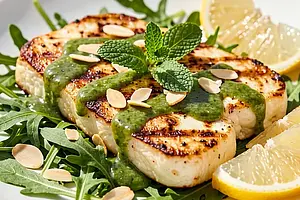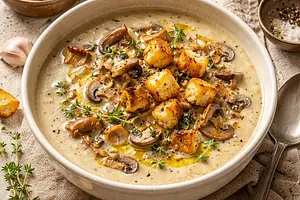
Preheat the oven to 200°C (top-bottom). Wash the potatoes with a brush under running water, dry with a kitchen towel. If the potatoes are larger than 3-4 cm, cut them in half or quarters so that the pieces are of similar size (about 2-3 cm thick). In a large bowl, mix the potatoes with 30 g of rapeseed oil, 2 g of black pepper, and 2 g of salt (leaving a little salt for the water to cook the broad beans). Spread the potatoes in a single layer on a baking sheet lined with parchment paper. Bake for 35-40 minutes, stirring/turning every 18-20 minutes — the potatoes are ready when the surface is golden and crispy, and the inside is soft (check with a fork).
Description
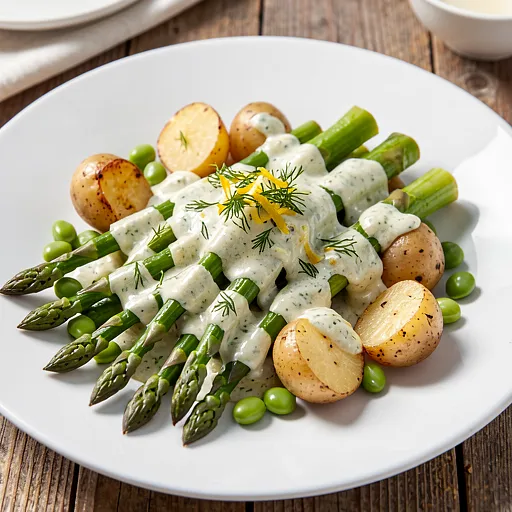
Spring salad combining green asparagus, sweet fresh broad beans, and crunchy roasted young potatoes, drizzled with a creamy horseradish-lemon dressing with the addition of fresh dill. The dish is light, colorful, and modern — it combines Polish, seasonal ingredients with a delicate, spicy twist of horseradish. It works well as a standalone dish for a light lunch, as a side to baked fish or grilled meat, or as part of a spring buffet. Visually, it captures attention with the contrast of green and golden potatoes and the creamy consistency of the dressing.
Ingredients Used
Ingredients (12)
- Asparagus 400 g
- Broad beans 300 g
- Potatoes 5.3 szt. (~800 g)
- Rapeseed oil 30 g
- 18% cream 100 ml
- Horseradish 50 g
- Lemon 0.8 szt. (~60 g)
- Dill 30 g
- 🌿 Przyprawy
- Salt 0.1 szczypt (~3 g)
- Black pepper 4 szczypty (~2 g)
- ✨ Opcjonalne
- Sorrel 30 g
- Cottage cheese 100 g
💡 Kliknij na składnik aby oznaczyć jako użyty
Preparation steps
Baking Potatoes
Cooking broad beans
If the broad beans are in pods: open the pod and remove the seeds, then remove the green skin after blanching (description below). Bring 1.5 liters of water to a boil in a medium pot with 1 g of salt. Place the broad beans in the boiling water and cook for 3-5 minutes — the time depends on the size of the seeds; young broad beans should be tender yet firm after 3 minutes. After cooking, drain and immediately transfer to a bowl of very cold water and ice (cooling) to stop the cooking process and maintain their vibrant green color. Once cooled, peel the broad beans from the thin middle skin (if noticeable) by pressing with your fingers to extract the fleshy pulp.
Preparing asparagus
Trim the woody ends of the asparagus: hold the asparagus with both hands and snap it at the natural breaking point (usually 2-3 cm from the bottom). If the stalks are thick, gently peel the lower half with a vegetable peeler. Place the prepared asparagus into boiling salted water (1 g of salt), and cook for 2-4 minutes — thin ones for 2 minutes, thicker ones for 3-4 minutes. After cooking, transfer to ice water to stop the cooking process and preserve the color. The asparagus should be tender but crisp; if you find they are too soft, reduce the cooking time next time.
Dressing
Prepare the horseradish-lemon dressing. Grate 50 g of horseradish on a fine grater in a bowl (if it is very spicy, grate less and add gradually). Add 100 ml of 18% cream, the juice of half a lemon (about 30 g), and 1 tablespoon (15 g) of rapeseed oil. Mix thoroughly with a whisk or fork until you achieve a smooth, slightly runny consistency. Season with 1 g of salt and 1 g of black pepper, taste, and if necessary, add more lemon juice or horseradish if you want a spicier flavor. The dressing should be creamy, slightly tangy with a distinct but not overpowering horseradish note.
Finishing ingredients
Prepare the ingredients for assembly: take the baked potatoes out of the oven and let them rest for 5 minutes, then cut the larger pieces in half. Dry the asparagus and cut it into 3-4 cm pieces (you can leave the tips whole for decoration). Drain the broad beans after cooling. Finely chop the dill (use only the tender leaves and thin stems). If you are using lemon, save a bit of the zest (grated on a fine grater) for decoration.
Salad assembly
In a large bowl, first place the warm (not hot) pieces of potatoes, add the broad beans and chopped asparagus. Drizzle with 2/3 of the prepared dressing and gently mix with a wide spoon or spatula for 20-30 seconds, so that the ingredients combine but do not break apart. Taste and add the remaining dressing to your liking. Transfer the salad to a serving platter or four plates. Sprinkle with chopped dill and a bit of lemon zest.
Additions and options
If you are using optional sorrel — finely chop it and sprinkle on top just before serving for a fresh, tangy contrast. Optionally crumble 100 g of cottage cheese and sprinkle it over the salad for creaminess. Additionally, you can drizzle a bit of cold rapeseed oil just before serving for shine.
Serving
Serve the salad slightly warm or at room temperature. On a plate, arrange a portion of the salad, garnish with a few whole asparagus tips and an additional sprig of dill. Serve the remaining dressing in a small sauce boat on the side, so guests can season to their liking.
Fun Fact
Asparagus and broad beans are among the most characteristic ingredients of Polish spring — broad beans were already valued in noble cuisine, while asparagus grew in manor gardens as a delicacy. Combining them with horseradish is a reference to traditional, sharper flavors of Poland, presented in a modern form.
Best for
Tips
Serve slightly warm or at room temperature. If preparing in advance, bake the potatoes and make the dressing ahead of time, but blanch the asparagus and broad beans just before serving for the best texture. Serve with whole grain bread or simple baked fish.
Store the dressing separately in an airtight container in the refrigerator for up to 3 days. Store the salad with dressing for a maximum of 24 hours in the refrigerator — the potatoes will soften and absorb the dressing. Heat a portion of the potatoes in the oven or on the skillet, then combine with the remaining ingredients just before serving.
📸 Ugotowane przez społeczność
Zaloguj się, aby dodać zdjęcieDodaj zdjęcie gotowej potrawy
Po zatwierdzeniu przez moderatora otrzymasz 10 punktów doświadczenia.
Nikt jeszcze nie dodał zdjęcia. Bądź pierwszy!
Comments (0)
Be the first to comment on this recipe!
Add a comment