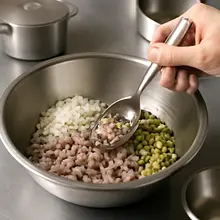
Prepare your workspace: wipe the countertop, get a cutting board ready, a sharp knife, 2 bowls (one larger for mixing, one for draining the herring), a spoon, forks, and a strainer. Remove the herring fillets from the packaging, place them in the strainer, and drain for 10 minutes to get rid of excess brine or oil. If the fillets are very salty, rinse them briefly under cold water and drain again for a few minutes.
Description
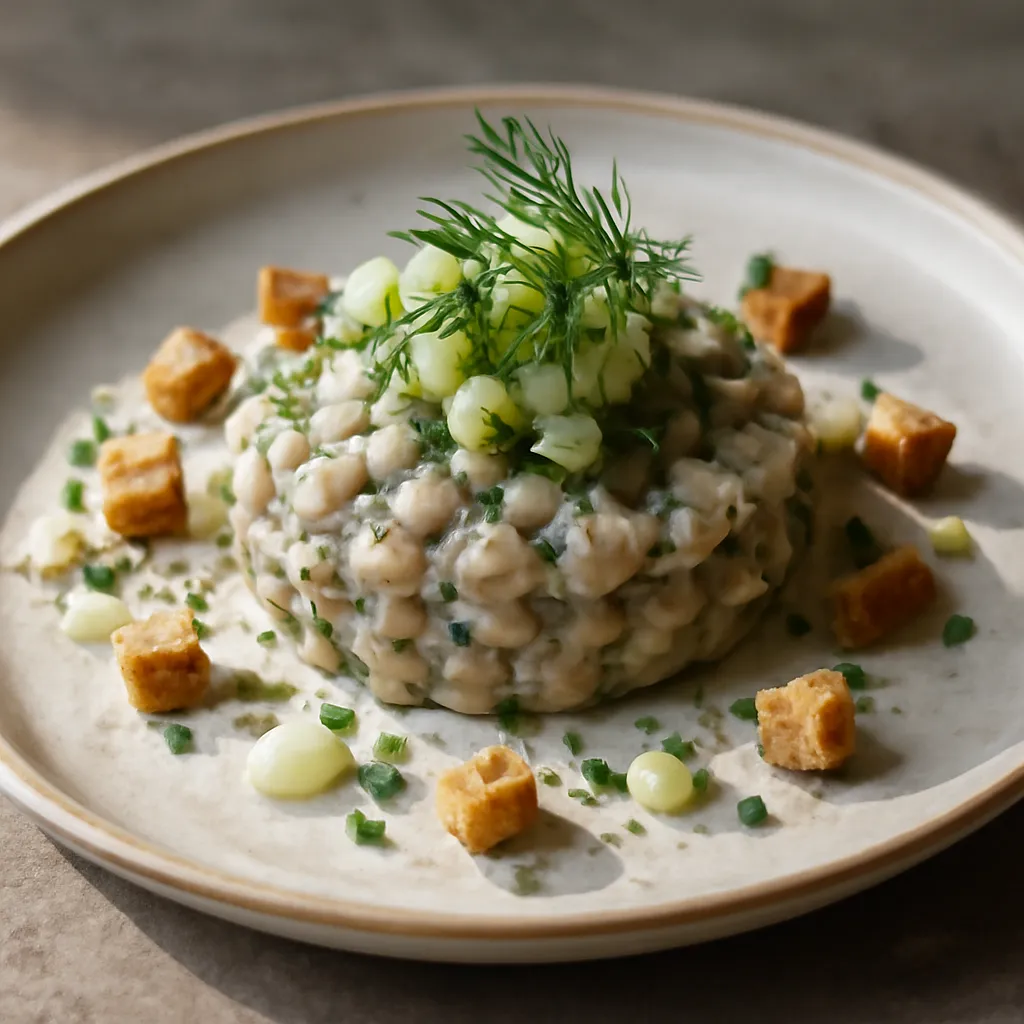
Herring tartare is a traditional, aromatic fish appetizer perfect for the Christmas Eve table. It is made from finely chopped herring fillets (preferably matjas), combined with onion, pickled cucumber, egg, and a delicate dressing of mustard and cream. It has a distinct salty-sour taste with hints of pepper and dill; the texture is creamy with noticeable pieces of herring and crunchy elements. It is served on small plates as an appetizer, with dark bread, wafers, or small crackers. The dish is visually striking — bright strands of herring intertwine with the green of dill and slices of cucumber, and the whole can be decorated with egg quarters and capers. The tartare is easy to prepare in advance (chilled, it tastes best) and fits perfectly into the tradition of a meatless Christmas Eve, while also offering an intense, satisfying flavor.
Składniki (11)
- Matjes herring fillets (drained) 300 g
- Red onion 150 g
- Pickled cucumber 1.2 szt.
- Hard-boiled egg 2 szt.
- Dijon mustard 15 g
- 18% cream 50 ml
- Lemon juice 15 ml
- Fresh dill (chopped) 10 g
- 🌿 Przyprawy
- Freshly ground black pepper 2 szczypty
- ✨ Opcjonalne
- Capers (optional) 30 g
- Freshly grated horseradish (optional) 20 g
💡 Kliknij na składnik aby oznaczyć jako użyty
Preparation steps
Preparation of ingredients
Check the fillets for bones: gently run your finger along each fillet. If you feel a bone, remove it with fish tweezers or a thin knife. Then cut the fillets into cubes with a side of about 5 mm. Do not blend with a blender — the tartare should have a texture with discernible pieces.
Peel and finely chop the onion: cut the onion in half, trim the ends, peel off the skin, and slice it thinly, then dice it into small cubes. If you want to mellow the sharpness of the onion, pour boiling water over the chopped onion for 30 seconds, drain, rinse with cold water, and then thoroughly dry on a paper towel.
Chop the pickled cucumber into small cubes similar in size to the herring (about 5 mm). If the cucumber is very moist, drain the pieces on a paper towel to prevent the tartare from becoming too watery.
Peel the hard-boiled eggs, cut one egg in half, and set the quarters aside for decoration. Mash the remaining eggs finely with a fork or knife — you can chop the white and yolk together so that small pieces are visible in the texture.
Mixing
In a large bowl, combine the chopped herring fillets, finely chopped onion, pickled cucumber, and chopped eggs. Add 15 g of Dijon mustard, 50 ml of 18% cream, and 15 ml of freshly squeezed lemon juice. Gently mix with a wooden spoon or silicone spatula for about 1–2 minutes, until the ingredients are evenly coated with the dressing. The texture should be compact, but pieces of herring and cucumber should still be visible.
Seasoning and testing
Season the tartare with freshly ground pepper (about 2 g) and taste a small amount on a teaspoon. Assess the intensity of the flavor: if the dish is too salty (often with herring), add another 10–15 ml of cream and/or a teaspoon of finely grated horseradish (optional). If the flavor is too bland, add more lemon juice in increments of 5 ml and taste again. If using capers, add them now (30 g) and gently mix in.
Cooling
Cover the bowl with plastic wrap and place the tartare in the refrigerator for 30 minutes — chilling allows the ingredients to 'meld' and the flavors to develop evenly. If you plan to prepare it in advance, the tartare can be chilled for up to 24 hours (see storage tips).
Serving
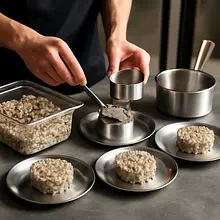
Remove the tartare from the fridge. On a plate, arrange portions of 80–100 g per person (for 4 people, the total weight should yield four aesthetically pleasing portions). Shape nice mounds using a spoon or a metal ring for molding. Decorate with quartered eggs, freshly chopped dill, and optionally a few capers on top. Serve with dark rye bread, dry crackers, or wafers.
Fun Fact
Herring tartare is a variation of the classic meat tartare — the technique of finely chopping and seasoning comes from peasant and fishing cuisine, where herring was one of the staple products. In many regions of Poland, herring tartare was a festive dish as early as the 19th century.
Best for
Tips
Serve the tartare chilled, with dark bread (rye) or crackers; it pairs well with cold water or light cider. It can be served in small portions on cocktail spoons as finger food. If you are preparing more, keep the garnishes (dill, eggs) until the last moment to ensure they look fresh.
Store the tartare in an airtight container in the refrigerator for up to 24 hours. After 24 hours, the texture may deteriorate and the flavor will become more intense. Freezing tartare is not recommended (thawing traces will ruin the delicate texture). If the tartare seems too salty after chilling, serve it with more bread.
📸 Ugotowane przez społeczność
Zaloguj się, aby dodać zdjęcieDodaj zdjęcie gotowej potrawy
Po zatwierdzeniu przez moderatora otrzymasz 10 punktów doświadczenia.
Nikt jeszcze nie dodał zdjęcia. Bądź pierwszy!
Comments (0)
Be the first to comment on this recipe!
Add a comment