Take the duck out of the fridge 30–60 minutes before roasting to reach room temperature — this will ensure even cooking. Wash the duck and dry it thoroughly with paper towels, especially the skin. Check if there are any giblets left inside — if so, remove them and set them aside in a separate bowl.
Description
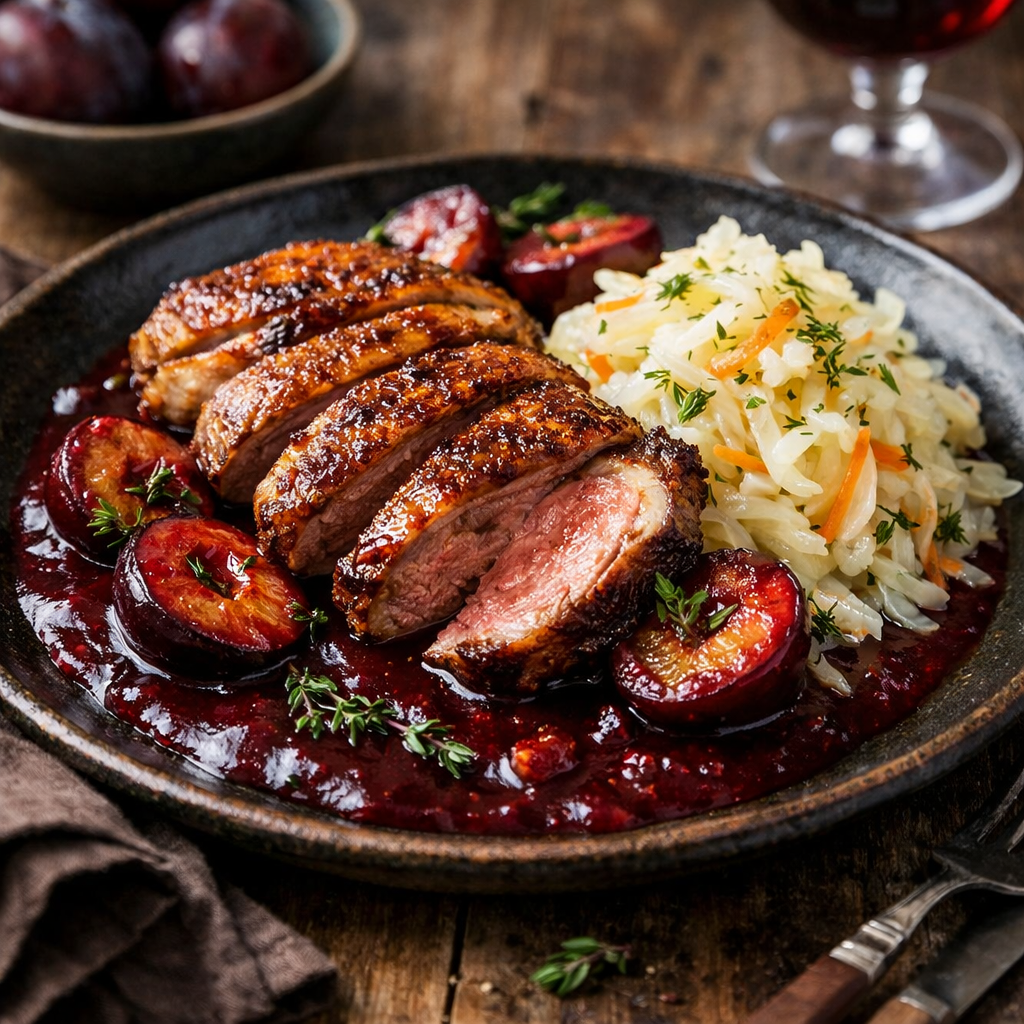
A flavorful winter dish perfect for festive banquets: roasted duck served with a thick, sweet-and-sour plum and beet sauce, along with gently braised young sauerkraut. The dish combines traditional Polish winter ingredients—sauerkraut and beets—with the sweetness of dried plums and honey, resulting in a rich, deep aroma and striking color. The duck has a crispy, golden skin and juicy meat; the sauce is velvety with a slightly smoky, slightly sweet aftertaste. Serve with roasted potatoes or barley, garnished with chopped walnuts. This dish is ideal for winter occasions—family evenings, holidays, or dinners for guests when you want to serve something impressive, warming, and seasonal.
Ingredients Used
Ingredients (20)
- Duck 2200 g
- Rapeseed oil 30 g
- Onion 1 szt. (~150 g)
- Garlic 3 ząbki (~15 g)
- Dried plum 200 g
- Beets (raw) 300 g
- Butter 30 g
- Chicken broth 500 ml
- Balsamic vinegar 30 ml
- Honey 50 ml
- Sauerkraut 800 g
- Sugar 10 g
- Mustard 30 g
- 🌿 Przyprawy
- Salt 10 g
- Black pepper 4 szczypty (~2 g)
- Thyme 4 g
- Bay leaf 6.7 szt. (~2 g)
- Cumin 2 g
- ✨ Opcjonalne
- Sour cream 100 g
- Walnuts 50 g
💡 Kliknij na składnik aby oznaczyć jako użyty
Preparation steps
Preparing the duck
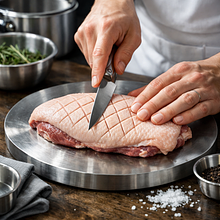
Prepare incisions on the skin: with a sharp but shallow knife (do not cut into the meat), make a grid every 2 cm on the breasts and thighs. Brush the skin evenly with rapeseed oil (about 30 g) — this helps the spices adhere. Then rub the meat with salt (about 10 g) and freshly ground pepper (about 2 g), also inside the cavity. Insert a few sprigs of thyme under the skin or into the cavity, and place the bay leaves inside.
Roasting the duck
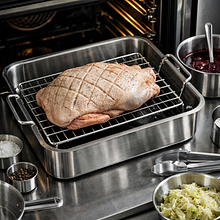
Preheat the oven to 220°C (top-bottom). Place the duck breast side up on a rack set over a deep baking tray (the tray will catch the dripping fat). Insert a thermometer into the thickest part of the thigh, avoiding the bone. Put the duck in for 20 minutes at 220°C to crisp the skin and allow some fat to render.
After 20 minutes, reduce the temperature to 160–170°C and continue baking for about 90–120 minutes depending on the weight (for 2.2 kg, approximately 100–120 minutes). Every 25–30 minutes, baste the duck with the rendered fat from the pan to ensure the skin is crispy and evenly browned. If the skin starts to brown too much, loosely cover the duck with aluminum foil.
When the internal temperature of the thighs reaches 72–75°C, remove the duck from the oven and let it rest for 10–15 minutes loosely covered with foil. During the resting period, the juices in the meat will stabilize, and the meat will be juicy.
Preparation of plum and beetroot sauce
While the duck is roasting and resting, prepare the sauce: if the beets are raw, peel them and cut into 1–2 cm cubes, then roast in the oven or boil until tender (about 30–40 minutes of baking in foil or 25–30 minutes of boiling). If you are using pre-cooked beets, cut them right away.
In a medium skillet, heat 1 tablespoon of butter (30 g) and optionally 1 teaspoon of oil. Sauté the chopped onion (150 g) over medium heat for 6–8 minutes, until it softens and becomes translucent. Add the minced garlic (15 g) and sauté for 30–45 seconds, until it becomes fragrant — be careful not to burn it.
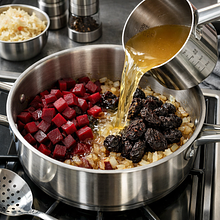
To the sautéed onion, add the chopped beets (300 g) and dried plums (200 g). Pour in the chicken broth (500 ml) and balsamic vinegar (30 ml). Add mustard (30 g) and 2 teaspoons of thyme (we used a total of 4 g), cover, and simmer on low heat for 15–20 minutes, until the plums soften and the beets are tender.
Remove the pot from the heat. Using an immersion blender, blend the mixture into a smooth puree. If you want a very smooth sauce, strain it through a fine sieve. Season to taste with honey (50 g), salt, and freshly ground pepper. Cook for another 3–5 minutes, allowing it to reduce slightly, and at the end, add the cold butter (remaining approx. 20 g) and mix vigorously to achieve a glossy emulsion consistency.
Cabbage
If the sauerkraut is very sour, rinse it briefly in cold water and squeeze it well with your hands. Chop the cabbage into smaller strips (if it's thick). In a wide pot, heat 1–2 tablespoons of oil or 10 g of butter, and sauté the chopped onion (if you want extra sweetness, use half an onion from the sauce or an additional one). Add the cabbage (800 g), caraway seeds (2 g), and bay leaf (previously used can be added again). Sauté over medium heat for 5–7 minutes, stirring.
Add sugar (10 g) to the cabbage and 50–100 ml of hot water or broth, cover, and simmer on low heat for 12–18 minutes, stirring every 3–4 minutes. Taste, and if the cabbage is too sour, you can add 2 tablespoons (about 30 g) of 18% cream (optional) and mix well — this will soften the flavor and add creaminess.
Assembly and serving
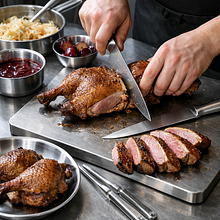
Cut the duck: first separate the thighs from the body, then slice the breasts into pieces about 1–1.5 cm thick. On a large plate, spread a portion of sauerkraut, place the duck slices next to it, and drizzle with 2–3 tablespoons of hot plum-beet sauce. Serve the remaining sauce in a gravy boat. Sprinkle everything with chopped walnuts (50 g, optional) for crunch.
Cleaning and Using Fat
Strain the fat that has collected in the baking tray after roasting the duck through a fine sieve into a jar and set aside to cool. It can be used for frying potatoes or roasting vegetables — it will add a wonderful duck flavor to them. Store in the refrigerator for up to 2 weeks.
Fun Fact
In Polish cuisine, dried plums and beets appear in traditional dishes during the cooler months — combining them with plum preserves or dried plums is an old practice of flavor preservation, now used in a modern version of duck sauce.
Best for
Tips
Serve the duck hot, sliced just before serving. Complement it with roasted potatoes or pearl barley with butter. Serve the sauce separately in a gravy boat so guests can add more to their taste. The dish looks impressive on ceramic, rustic plates with a sprinkle of parsley for color.
Store leftover duck in the refrigerator for up to 2 days in an airtight container. The sauce can be stored for up to 3 days and reheated over low heat — if it thickens, you can add a few tablespoons of broth. It is not recommended to freeze cabbage with cream; store the cabbage separately for up to 3 days.
📸 Ugotowane przez społeczność
Zaloguj się, aby dodać zdjęcieDodaj zdjęcie gotowej potrawy
Po zatwierdzeniu przez moderatora otrzymasz 10 punktów doświadczenia.
Nikt jeszcze nie dodał zdjęcia. Bądź pierwszy!
Comments (0)
Be the first to comment on this recipe!
Add a comment