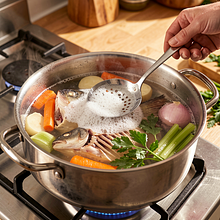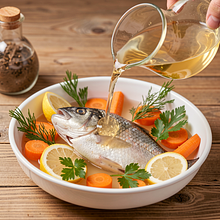
Prepare the ingredients for the broth: peel the carrot, parsley root, celery, and onion. Cut the vegetables into larger pieces (about 3–4 cm), do not chop finely — larger pieces cooked longer will yield a clearer broth. If you have the head and bones of the carp, rinse them under cold water, remove the gills and any blood remnants; if you have fillets, keep the heads or ask the seller for bony pieces.
Description
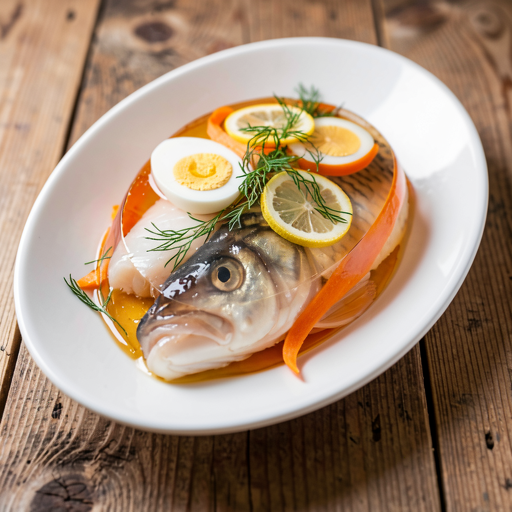
Traditional Polish carp in jelly is a classic holiday and occasional appetizer, here enriched with a spring touch of fresh dill and a slightly tangy note of apple cider vinegar. The dish consists of tender carp meat combined with clear, aromatic jelly made from a broth of fish heads and bones, along with root vegetables. Visually impressive: the transparent jelly envelops pieces of fish, strips of carrot, and slices of egg, creating a rustic yet elegant effect. Flavor-wise, it combines the marine, slightly fatty taste of carp with the spicy depth of the broth, the sweetness of carrots, and the freshness of herbs. Serve chilled as an appetizer or as one of the dishes on the family table; it pairs wonderfully with dark bread, beetroot, or horseradish. The recipe includes tips for beginners on filleting and clarifying the broth, as well as an alternative with gelatin if the jelly doesn't set.
Ingredients Used
Ingredients (15)
- Carp 1600 g
- Water 2000 ml
- Carrot 3.1 szt. (~250 g)
- Celery 120 g
- Onion 1 szt. (~150 g)
- Chicken egg 6 szt. (~360 g)
- Apple cider vinegar 30 ml
- Lemon 1.3 szt. (~100 g)
- 🌿 Przyprawy
- Parsley 150 g
- Bay leaf 10 szt. (~3 g)
- Allspice (berries) 4 szt. (~4 g)
- Salt 8 g
- Black pepper 4 szczypty (~2 g)
- ✨ Opcjonalne
- Dill 1.5 pęczki (~30 g)
- Gelatin 10 g
💡 Kliknij na składnik aby oznaczyć jako użyty
Preparation steps
Preparing the broth
Place the carp bones/head (if available) and raw vegetables in a large pot. Cover with cold water so that everything is submerged (about 2 l). Slowly bring to a boil over medium heat — do not cover the pot. When the first bubbles and scum appear, reduce the heat and gently skim off the scum with a slotted spoon for the first 10–15 minutes.
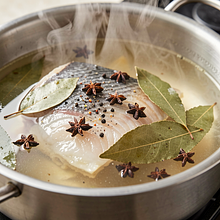
Add the bay leaf and allspice, as well as black pepper, and simmer on very low heat for 30–35 minutes. The broth should only gently bubble; intense boiling will disperse the fats and impurities. After 30–35 minutes, turn off the heat and let the pot sit for 10 minutes to allow the flavors to settle.
Processing carp
If you are using a whole fish, now is the time to fillet it: place the fish on the board, first remove the skin (optionally leave the skin for a nice appearance), then cut along the spine with a filleting knife, separating the flesh from the bones. Cut the fillets into portions for arranging in the dish (pieces about 2–3 cm thick).
Cooking and processing
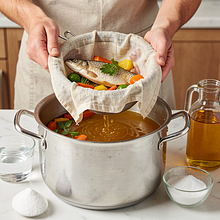
Strain the broth through a sieve lined with cheesecloth or a very fine sieve into a clean pot to remove the bones and vegetables. Taste the broth and season with salt and, if desired, a spoonful of apple cider vinegar — the vinegar will enhance the flavor of the fish. If the broth is too fatty, chill it for 10–20 minutes and remove the solidified fat with a spoon.
Hard boil the eggs: place the eggs in a small pot, cover with cold water, bring to a boil, after boiling cook for 8 minutes, then rinse with cold water and cool. Peel and slice for decoration.
Assembly and cooling
Prepare a mold or a large flat salad bowl. Arrange slices of egg, thin slices of carrot (you can use a peeler to make even strips), and lemon slices at the bottom of the mold in a nice, slightly overlapping pattern. On top of that, place pieces of carp fillet so that there are no empty spaces. If you are using dill for decoration, set it aside for later.
Heat the strained broth to a temperature of about 60–70°C — it should be hot, but not boiling. If you are using gelatin, dissolve it according to the instructions: sprinkle 10 g of gelatin over 4 tablespoons of cold water, let it sit for 3–5 minutes, then dissolve it in a few tablespoons of hot broth and mix, then pour it into the rest of the broth. If you are not using gelatin, simply heat the broth slightly until it is liquid.
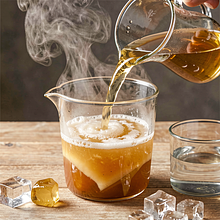
Gently and slowly pour the warm broth into the mold so as not to disturb the arranged decorations. Leave about 1 cm of space from the edge. Check for any floating bones or loose pieces — if necessary, remove them with a spoon.
Set the mold aside to cool, first on the counter to room temperature (20–30 minutes), and then place it in the refrigerator for at least 4 hours, preferably overnight, so that the jelly sets completely. If the jelly does not set after 6 hours, you can gently heat a small amount of broth, dissolve additional gelatin, and pour a thin layer on top, then chill again.
Serving
Remove the chilled jelly from the refrigerator. To make it easier to remove from the mold, briefly dip the bottom of the mold in hot water (3–5 seconds), then turn it onto a wide platter. Sprinkle with finely chopped dill and decorate with lemon slices. Serve chilled at a temperature of about 8–12°C with black bread and horseradish or beetroot relish.
Fun Fact
In traditional Polish cuisine, fish jelly was a way to utilize the whole fish and preserve its flavor for longer; in the past, local spices and wine were added instead of vinegar.
Best for
Tips
Serve well chilled, sliced into even pieces. To make slicing easier, slightly warm the knife blade under hot water and dry it before each cut. For a flavor contrast, serve with horseradish or beetroot and fresh bread.
Store in the refrigerator in a tightly covered container for up to 3 days. Do not freeze the jelly — the gelling structure will be destroyed. If the jelly partially softens, you can pour a thin layer of broth with dissolved gelatin and chill again.
📸 Ugotowane przez społeczność
Zaloguj się, aby dodać zdjęcieDodaj zdjęcie gotowej potrawy
Po zatwierdzeniu przez moderatora otrzymasz 10 punktów doświadczenia.
Nikt jeszcze nie dodał zdjęcia. Bądź pierwszy!
Comments (0)
Be the first to comment on this recipe!
Add a comment