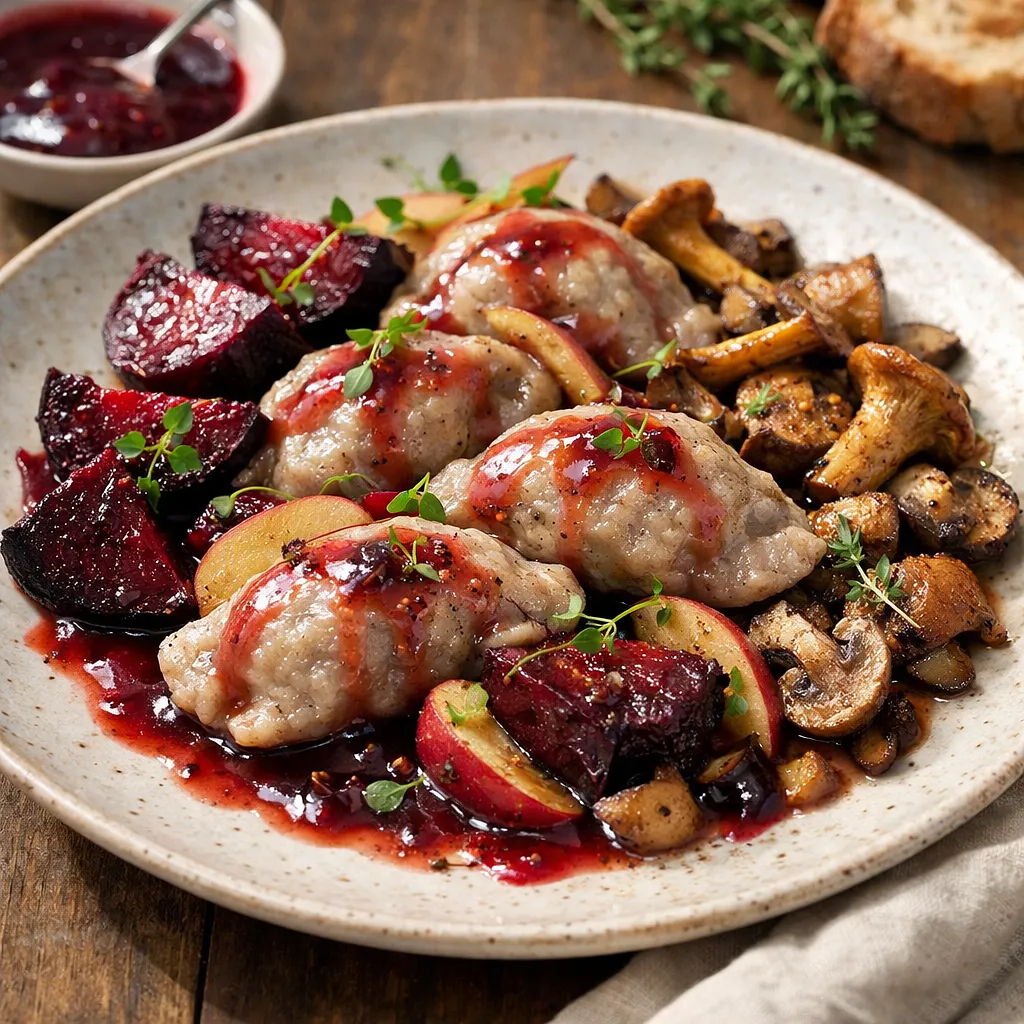
Recipe for: Buckwheat dumplings with roasted beetroot, apple-plum glaze, and sautéed mushrooms (fb2db830 version)

Pikantne Plant-based cuisine Main dishes 90 min Medium 9 wyświetleń ~24.04 PLN - (0)
Rate:
(0)
Start Cooking

Description

A vegetarian and fully plant-based reinterpretation of Polish winter cuisine: soft potato and buckwheat dumplings served with a sweet and sour glaze made from roasted beets, apples, and plums, along with sautéed wild mushrooms and crunchy sauerkraut. The dish combines the dense, nutty notes of buckwheat with the earthiness of beets and the umami of mushrooms, while the addition of caramelized apples and dried plums brings depth and elegance. Bold, seasonal ingredients make this a perfect option for winter lunches and holiday variations without animal products. The dish can be served as a warm main course, with a drizzle of plant-based cream or sprinkled with toasted nuts for a contrast in textures.

Ingredients Used

Ingredients (20)

Servings:
4
  • Buckwheat groats (dry) 200 g
  • Potatoes 2 szt. (~300 g)
  • Wheat flour 100 g
  • Beets (raw) 300 g
  • Dried plums (dried prunes) 80 g
  • Onion 1 szt. (~150 g)
  • Carrot 1.3 szt. (~100 g)
  • Garlic 3 ząbki (~15 g)
  • Sauerkraut 200 g
  • Rapeseed oil 30 g
  • Apple cider vinegar 15 ml
  • Dried thyme 2 g
  • Wild mushrooms (fresh) 250 g
  • Sugar 10 g
  • Apple 1.1 szt. (~200 g)
  • 🌿 Przyprawy
  • Salt 0.2 szczypt (~5 g)
  • Ground black pepper 2 szczypty (~2 g)
  • Cumin (whole or ground) 2 g
  • ✨ Opcjonalne
  • Plant-based cream (optional) 100 g
  • Roasted walnuts 30 g
💰 Szacowany koszt dania: ~24.04 PLN (6.01 PLN/porcję)

💡 Kliknij na składnik aby oznaczyć jako użyty

Preparation steps

Buckwheat and dough for gnocchi

1

Prepare the buckwheat: pour 200 g of dry buckwheat into a sieve and rinse under cold running water until the water runs clear. Transfer to a heavy-bottomed pot, add 400 ml of cold water (ratio 1:2), add 1 g of salt (about a pinch) and bring to a boil over medium heat. Once the water starts to boil, reduce the heat to low, cover the pot and cook for 12-15 minutes until tender — the buckwheat should absorb the water and be fluffy but soft. After cooking, remove the pot from the heat and let it sit covered for 10 minutes, then fluff the buckwheat with a fork.

Ingredients: Buckwheat groats (dry), Salt
Use a pot with a lid and a thick bottom (e.g., steel, cast iron) for even cooking. If the grain is hard after 15 minutes, add 1-2 tablespoons of boiling water and press the lid down for another 2-3 minutes. Do not stir while cooking to avoid overcooking the grain.
2

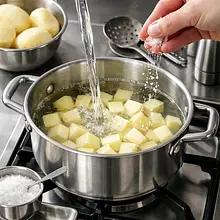
Cook the potatoes: wash 300 g of potatoes (preferably starchy), place them in cold, salted water in a pot and cook for 20-25 minutes from the boiling point, until they are soft — check with a fork: it should go in easily. Drain, steam for 2-3 minutes, peel (if cooked with skins) and pass through a potato ricer into a bowl or mash with a masher until smooth. Let the potatoes cool for a few minutes so they are not hot when combined with the groats.

Ingredients: Potatoes, Salt
Use a potato ricer or masher; avoid a mixer (it adds a gummy texture). Properly drying the potatoes allows for better absorption of flour and less sticky dough.
3

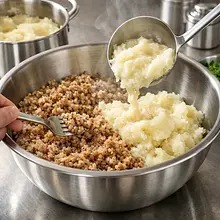
Combine the groats with the potatoes: in a large bowl, place the cooked groats (fluffed with a fork) and hot mashed potatoes. Use a wooden spoon to gently mix, then add 100 g of wheat flour and 2 g of pepper (about two pinches). Start kneading by hand (if the mixture is still hot, wait a few minutes) — the goal is a uniform dough that is moist but not sticky to the hands. If the mixture is too sticky, add flour in portions of 10 g; if it is too dry and crumbles, add 1-2 tablespoons of water.

Ingredients: Buckwheat groats (dry), Potatoes, Wheat flour, Ground black pepper
Use a bowl with a capacity of at least 3 liters and a wooden spoon. Do not knead too intensely — 1-2 minutes is enough, just to combine the ingredients. The finished mixture should be pliable and easy to roll out.
4

Shaping the gnocchi: sprinkle the countertop or board with a thin layer of flour (20-30 g). Divide the dough into 4 equal parts. Shape each part into a roll about 2-3 cm thick (be careful — the dough is delicate). Using a sharp knife, cut the roll diagonally into 2 cm pieces, optionally pressing lightly with a fork to create the characteristic ridges. Place the gnocchi on a lightly floured tray, being careful not to press them too hard.

Ingredients: Wheat flour
Use a knife with a straight edge and a work surface for shaping. If the dough is sticky, wet your hands with cold water and lightly dust with flour. Avoid over-aerating the dough.

Roasting beets and apple-plum glaze

5

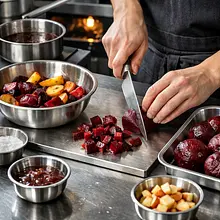
Prepare the roasted beets and apples: preheat the oven to 200°C (top-bottom). Peel the beets and cut them into quarters (300 g), peel the apples (200 g) and cut them into quarters, removing the cores. Arrange them on a baking sheet lined with parchment paper, drizzle with 10 g of rapeseed oil, sprinkle with 1 g of salt, and place in the oven for 35-40 minutes until the beets are tender (check by inserting a knife — it should go in easily), and the apples are nicely softened and slightly caramelized. After baking, set aside to cool.

Ingredients: Beets (raw), Apple, Rapeseed oil, Salt
Use kitchen gloves when removing and check the softness of the beets with a knife. Bake the beets and apples on the same tray — the apples may be ready faster, but a slight softness doesn't bother them.
6

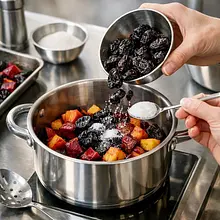
Make the glaze: transfer the roasted beets and apples to a saucepan, add 80 g of dried plums, 10 g of sugar, and 15 ml of apple cider vinegar, along with 2 g of thyme. Blend with an immersion blender or in a jug until smooth. Place the saucepan over medium heat and reduce for 6-8 minutes — the glaze should thicken and lightly coat the back of a spoon. Taste and season with salt (about 1 g) and pepper. It should be intense, sweet and sour, and glossy.

Ingredients: Beets (raw), Apple, Dried plums (dried prunes), Sugar, Apple cider vinegar, Dried thyme, Salt, Ground black pepper
Use a high-power blender or an immersion blender to achieve a smooth consistency. If the glaze is too thick, add 1-2 tablespoons of water; if too thin, cook longer over low heat.

Mushrooms

7

Prepare the mushrooms: heat 10 g of oil in a large skillet, add 150 g of chopped onion and 50 g of carrot diced finely. Sauté for 4-5 minutes over medium heat until the onion is translucent. Add 250 g of chopped mushrooms and sauté over high heat for 6-8 minutes, until most of the liquid evaporates and the mushrooms are slightly browned. At the end, add 15 g of chopped garlic and 2 g of thyme, season to taste with 2-3 g of salt and pepper. The mushrooms should be juicy but not watery.

Ingredients: Rapeseed oil, Onion, Carrot, Wild mushrooms (fresh), Garlic, Dried thyme, Salt, Ground black pepper
The best is a pan with a diameter of 26-28 cm with a non-stick coating or a heavy steel pan. Don't throw in too many mushrooms at once — they may steam instead of frying. If the pan releases a lot of juice, increase the heat and evaporate the liquid.

Sauerkraut

8

Prepare the cabbage: thoroughly squeeze 200 g of sauerkraut to remove excess brine (you can use cheesecloth or a strainer and press with your hand). In a separate pan, heat 10 g of oil, add 1 g of cumin and a little (about 3 g) of onion, sauté for 2 minutes, then add the drained cabbage and fry over medium heat for 6-8 minutes until slightly caramelized — it should be soft but still have a delicate crunch and slightly brown edges.

Ingredients: Sauerkraut, Rapeseed oil, Onion, Cumin (whole or ground)
Use a wooden spatula. If the cabbage is very sour, you can add 5-10 g of sugar to balance the flavor. Be careful not to burn it — stir regularly.

Cooking gnocchi

9

Cooking the gnocchi: in a large pot, bring 2 liters of salted water to a boil (about 10 g of salt). Add the gnocchi in batches (12-15 pieces at a time) to avoid lowering the water temperature too much. Once they float to the surface, cook for another 2 minutes, then remove with a slotted spoon to a plate. The finished gnocchi will be soft, elastic, and will not fall apart when touched. Continue with the next batches.

Ingredients: Salt
Use a large pot and a slotted spoon. Do not cook all the dumplings at once — overcrowding the pot will cause them to stick together and cook unevenly.

Frying the dumplings and assembly

10

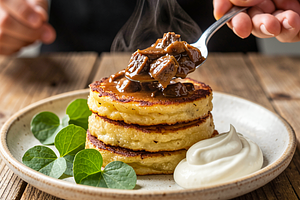
Frying and combining flavors: in a large skillet, heat 10 g of oil, add the cooked gnocchi and fry over medium heat for 4-6 minutes — turning until they develop a lightly golden, crispy exterior. Reduce the heat, add 2-3 tablespoons (30-40 g) of the previously prepared beet-apple-plum glaze and gently stir to coat the gnocchi with the sauce. Fry for another 1-2 minutes, until the glaze begins to glaze on the surface of the gnocchi.

Ingredients: Rapeseed oil, Plant-based cream (optional), Beets (raw)
The best pan is one with a large surface area (28 cm). Be careful not to burn the glaze — use medium or low heat and stir gently.

Assembly and serving

11

Plating: On a warm plate, place a layer of sauerkraut (about 50 g), next to it arrange a portion of glazed potato dumplings (about 200-250 g), and on top add a portion of stewed mushrooms (about 100 g). If using, drizzle with a light spoonful of plant-based cream and sprinkle with chopped, toasted walnuts (optional). Serve immediately — the plate should have a contrast of colors: ruby dumplings, brown mushrooms, and golden-white cabbage.

Ingredients: Sauerkraut, Wild mushrooms (fresh), Plant-based cream (optional), Roasted walnuts
Use a shallow, wide plate so the elements are clearly visible. Serve the dish hot; the glaze will set if left too long.

Final tips

12

Taste and season: before serving, taste the whole dish and if necessary, add more salt or a bit of apple cider vinegar to the cabbage/glaze. If you want more sweetness, dust a little sugar on the glaze and briefly caramelize the surface with a kitchen torch (caramelization effect).

Ingredients: Apple cider vinegar, Sugar
If you are using a torch for caramelizing, be careful and keep the plates away from the flame. Additionally, you can add fresh parsley or dill to add freshness.

Fun Fact

💡

Buckwheat was one of the most important grains in traditional Polish cuisine, especially in mountainous and eastern regions. The combination of buckwheat and beetroot makes sense in terms of flavor: buckwheat provides a nutty texture, while beetroot offers a sweet-sour, earthy counterpoint.

Best for

Tips

🍽️ Serving

Serve hot, with a drizzle of plant-based cream to soften the acidity. For visual effect, use shallow, dark plates — the color of the glaze will contrast and look more elegant. It pairs well with sour plum compote or lightly sparkling water with a slice of apple.

🥡 Storage

Store the gnocchi, glaze, and mushrooms separately in airtight containers in the fridge for up to 3 days. To reheat the gnocchi, briefly sauté them in a pan with a bit of oil and add the glaze at the end. Gently warm the glaze over low heat with a tablespoon of water to restore its consistency.

📸 Ugotowane przez społeczność

Zaloguj się, aby dodać zdjęcie
Dodaj zdjęcie gotowej potrawy

Po zatwierdzeniu przez moderatora otrzymasz 10 punktów doświadczenia.

🍲

Nikt jeszcze nie dodał zdjęcia. Bądź pierwszy!

Comments (0)

Be the first to comment on this recipe!

Add a comment

You might also like

Recipe Categories

Plant-based recipes that are healthy and full of flavor, perfect for those seeking alternatives to traditional animal ingredients.

See all recipes in this category
Main dishes
Main dishes in: New Year's Eve

Main dishes for New Year's Eve should be hearty and impressive to satisfy the palates of all guests.

See all recipes in this category
Reklama