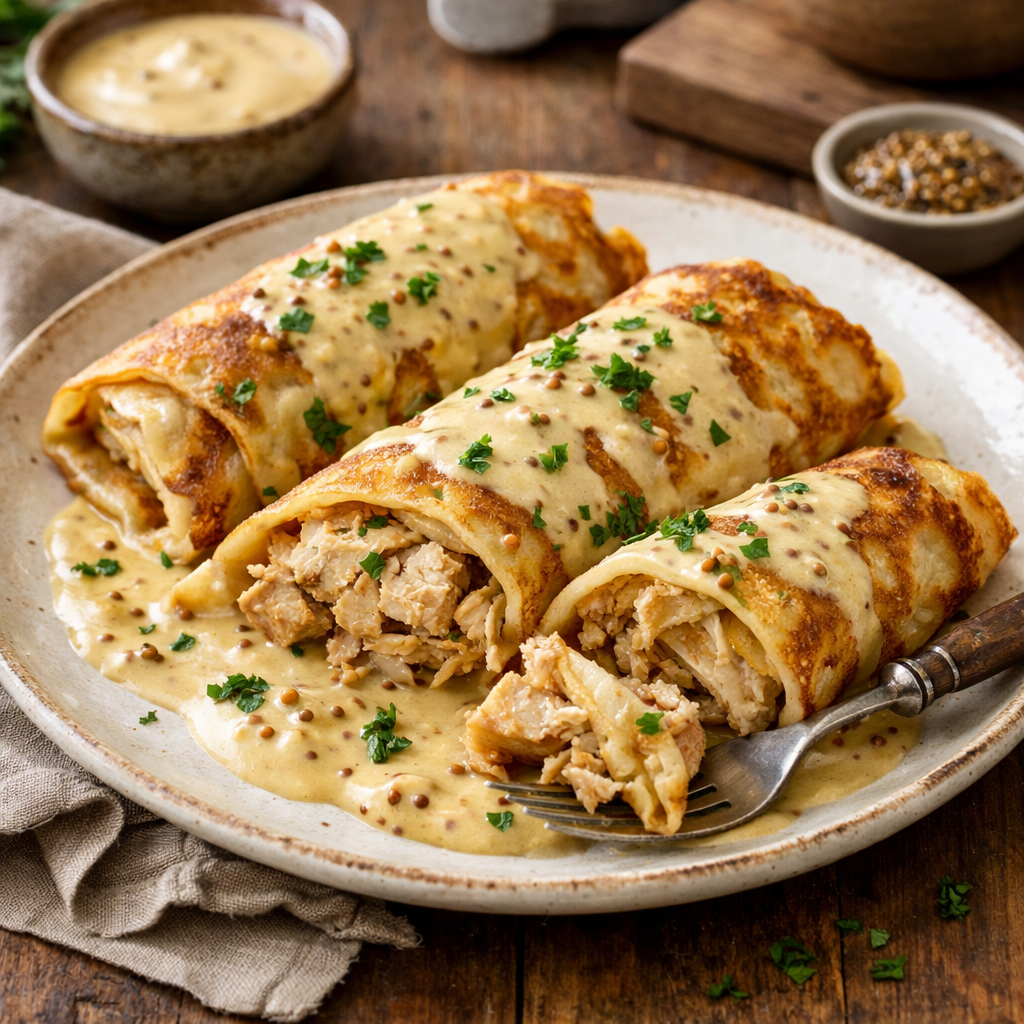
Chicken and Sauerkraut Pancakes in Creamy Mustard Sauce

Pikantne Main dishes Regional Cuisine of Poland Lunches 75 min Medium 41 wyświetleń ~28.91 PLN * - (0)
Rate:
(0)
Start Cooking

Description

This is a hearty, winter version of classic Polish pancakes — thin crepes filled with aromatic stuffing of chicken breast, stewed sauerkraut, and a creamy mustard-sour cream sauce. The dish combines the traditional, slightly sour taste of sauerkraut with tender chicken meat and velvety cream and mustard, creating a balanced composition of flavors: salty-sour, creamy, and slightly spicy. The pancakes can be baked with yellow cheese or served unbaked — they are perfect for a family lunch, a Sunday gathering, or as a warm option during winter days. Appearance: golden, rolled-up tubes, possibly with slightly melted cheese on top and sprinkled with parsley.

Ingredients Used

Ingredients (16)

Servings:
4
  • Chicken egg 4 szt. (~240 g)
  • Wheat flour 250 g
  • Milk 500 ml
  • Rapeseed oil 60 g
  • Chicken breast 600 g
  • Onion 1 szt. (~150 g)
  • Garlic 2 ząbki (~10 g)
  • Sauerkraut 250 g
  • 18% cream 200 ml
  • Mustard 30 g
  • 🌿 Przyprawy
  • Salt 0.1 szczypt (~3 g)
  • Black pepper 4 szczypty (~2 g)
  • Sweet paprika (powder) 1 łyżeczka (~5 g)
  • ✨ Opcjonalne
  • Butter 20 g
  • Yellow cheese 100 g
  • Parsley 1 pęczek (~30 g)
💰 Szacowany koszt dania: ~28.91 PLN (7.23 PLN/porcję)
* Brak cen dla niektórych składników

💡 Kliknij na składnik aby oznaczyć jako użyty

Preparation steps

Pancake batter

1

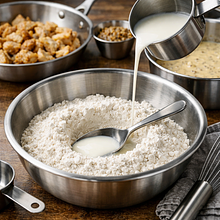
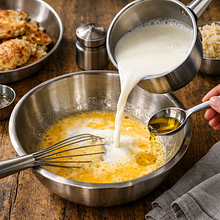
Prepare the ingredients: weigh the flour (250 g) and sift it into a large bowl to eliminate lumps and aerate it. In a separate container, crack the eggs (240 g = 4 pieces) and lightly beat them with a fork or whisk.

Use a large bowl (min. 2–3 l) and a metal or silicone whisk. Sifting the flour will prevent lumps in the batter.
2

Pour half of the warm (not hot) milk (about 250 ml) into the beaten eggs and add a tablespoon of oil (15 g). Whisk together until you have a smooth, slightly frothy mixture.

The milk should be slightly warm (about 25–30°C) — cold milk can cause lumps. Use a measuring cup or a jug with a spout for easier pouring.
3

Make a 'well' in the flour: in the center of the bowl with flour, create a depression with a spoon. Pour the egg-milk mixture into the flour in a thin stream, constantly mixing with a whisk from the inside out to avoid lumps. After it has absorbed, pour in the remaining milk (about 250 ml) and mix until you achieve a smooth consistency resembling thin cream — the mixture should flow freely from the spoon.

Mix vigorously and evenly. If lumps appear, you can strain the batter through a sieve or blend it with an immersion blender for 10–15 seconds. Check the consistency: a thin stream of batter should spread out on the pan.
4

Add salt (3 g) and if you want, 1 teaspoon of oil (optional) to the dough, and mix briefly again. Cover the bowl with a clean cloth and let the dough rest for 20–30 minutes at room temperature — the flour will 'rest' and the dough will be more elastic.

Letting the dough rest allows the gluten to relax and reduces the risk of tearing the pancakes. If you're in a hurry, you can fry them right away, but the results will be less than ideal.

Frying pancakes

5

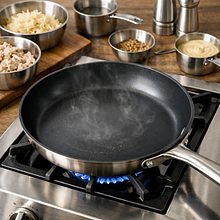
Heat a 24–26 cm frying pan over medium heat (it should be well heated but not smoking). Soak a paper towel in a little oil and lightly grease the bottom of the pan (use about 5–10 g of oil). Pour a ladle of batter (about 60–80 ml) in the center and, tilting the pan, spread the batter in a thin layer.

The best is a non-stick pan 24–26 cm. Use a ladle to portion the batter. If the batter spreads unevenly, lift the pan and rotate it until the layer is thin and even.
6

Fry the pancake for 1–1.5 minutes until the edges slightly lift and the bottom is golden. Flip with a spatula and fry the other side for 30–40 seconds. Transfer the cooked pancakes to a plate, stacking them on top of each other — this will make rolling easier.

Do not fry at too high a temperature — the pancakes will be burnt on the outside and raw on the inside. The first pancake often turns out less than perfect — use it to check the temperature and adjust the amount of oil if necessary.

Filling

7

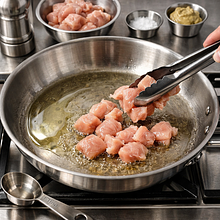
Prepare the meat: rinse the chicken fillet (600 g), dry it with a paper towel, and cut it into small cubes about 1 cm on each side. Lightly salt the pieces (about 1 g of salt from the entire portion) and sprinkle with 1/2 teaspoon of sweet paprika (about 2.5 g) — mix well.

Use a sharp knife and a larger cutting board. Even pieces of meat cook evenly. If you are using a kitchen thermometer, the internal temperature of the chicken should reach 75°C.
8

In a large skillet, heat 1 tablespoon of oil (15 g) over medium-high heat. Add the chicken and cook without stirring for 2–3 minutes until lightly browned, then stir for another 3–4 minutes until the meat is no longer pink — there should be hints of golden color. Check a piece: the juices should be clear, and the meat should not be pink in the center.

Use a pan with a diameter of at least 26 cm. If the pieces are too large, fry them longer. Do not overcrowd the pan — it's better to fry in batches. This is a key food safety step.
9

To the sautéed chicken, add the sliced onion (150 g). Sauté together for 4–5 minutes until the onion is soft and slightly translucent. Then add the chopped garlic (10 g, 2 cloves) and sauté for 30–45 seconds — the garlic should be fragrant, not burnt.

The onion should become soft and translucent; if it starts to burn, lower the heat. Adding garlic at the end prevents a bitter taste from burnt cloves.
10

Add well-drained sauerkraut (250 g). If the sauerkraut is very sour, rinse it under cold water and squeeze it out well by hand before adding. Sauté everything for 6–8 minutes, stirring every few minutes, until the excess moisture evaporates and the sauerkraut is lightly browned.

To prevent the cabbage from releasing too much juice while frying, it's good to squeeze it out. If the pan becomes dry, add a little water (1–2 tablespoons), but don't overdo it — the filling should be slightly moist, not watery.
11

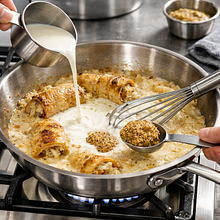
Reduce the heat to low. Pour in the 18% cream (200 g) and add the mustard (30 g). Gently mix, bring to a simmer over low heat for 2–3 minutes to allow the sauce to thicken slightly. Taste and season with salt (remember that the cabbage may be salty) and pepper (2 g) to your liking.

Cook over low heat to prevent the cream from curdling. If the sauce seems too thin, cook for a few more minutes; if too thick, add 1–2 tablespoons of water.

Assembling and baking

12

In the center of each pancake, evenly place about 3–4 tablespoons of filling (approx. 80–100 g). Roll the pancakes into a cylinder or fold them like an envelope (first fold the sides, then roll). Arrange the wrapped pancakes next to each other in a baking dish (grease the bottom with 10 g of butter, if using).

Use a baking dish measuring about 20x30 cm. If there is a lot of filling, pour less onto each pancake so that they can be properly closed.
13

If you are using cheese, sprinkle the top of the pancakes with grated yellow cheese (100 g). Place the dish in the oven preheated to 180°C and bake for 10–12 minutes, until the cheese melts and lightly browns. Alternatively, you can sauté the rolled pancakes briefly in a pan with a bit of butter to brown them.

If you don't want to bake, heat the pancakes in the oven for 6–8 minutes at 160°C to ensure everything is hot. Be careful not to dry out the filling during prolonged baking.

Serving

14

Remove the pancakes from the oven, set aside for 2 minutes. Sprinkle with chopped parsley (optional) and serve hot. On the plate, garnish with a parsley leaf and serve with a light pickled cucumber salad or soup as an appetizer.

Pancakes are best served immediately after baking — they will have the best texture. If cheese was used, wait a moment before cutting so that the cheese doesn't melt too much.

Fun Fact

💡

Pancakes (naleśniki) have been known in Poland since the 19th century — traditionally served sweet and savory. The combination of chicken with sauerkraut is a variation on classic Polish flavors, blending tender meat with the "winter" tartness of cabbage.

Best for

Tips

🍽️ Serving

Serve hot, sprinkled with fresh parsley. A light salad of carrots or pickled cucumber goes well with the pancakes, along with a sour apple on the plate for contrast. If you are using cheese, serve arugula or fresh herbs to balance the richness.

🥡 Storage

In the fridge: store in a closed container for up to 48 hours. Reheating: bake for 10–15 minutes at 180°C or heat in a pan over low heat covered. In the freezer: you can freeze raw, assembled pancakes without cheese (layered with baking paper) for up to 2 months; thaw in the fridge and bake for 15–20 minutes at 180°C.

📸 Ugotowane przez społeczność

Zaloguj się, aby dodać zdjęcie
Dodaj zdjęcie gotowej potrawy

Po zatwierdzeniu przez moderatora otrzymasz 10 punktów doświadczenia.

🍲

Nikt jeszcze nie dodał zdjęcia. Bądź pierwszy!

Comments (0)

Be the first to comment on this recipe!

Add a comment

You might also like

Recipe Categories

Main courses are the heart of every meal - hearty, nutritious, and full of flavor. In this category, we present a rich selection of recipes for lunches and dinners that will satisfy even the most discerning palates. From classic Polish pork chops to aromatic chicken dishes, to exquisite steaks an...

See all recipes in this category

Traditional recipes from various regions of Poland that showcase the richness of local flavors and ingredients.

See all recipes in this category

Lunches are the main meal of the day - filling, balanced, and full of flavor. Traditional two-course lunches: soup and a main dish in Polish tradition. Pork chop with potatoes and cabbage - a classic of Polish lunches. Dumplings with meat, cheese, and fruit - hand-formed delicacies. Beef goulash,...

See all recipes in this category
Reklama