Menu

Brioche doughnuts with pistachio-mascarpone cream and glazed topping

Cakes and Bakes Desserts 180 min Medium 12 wyświetleń ~55.20 PLN - (0)
Rate:
(0)

Description

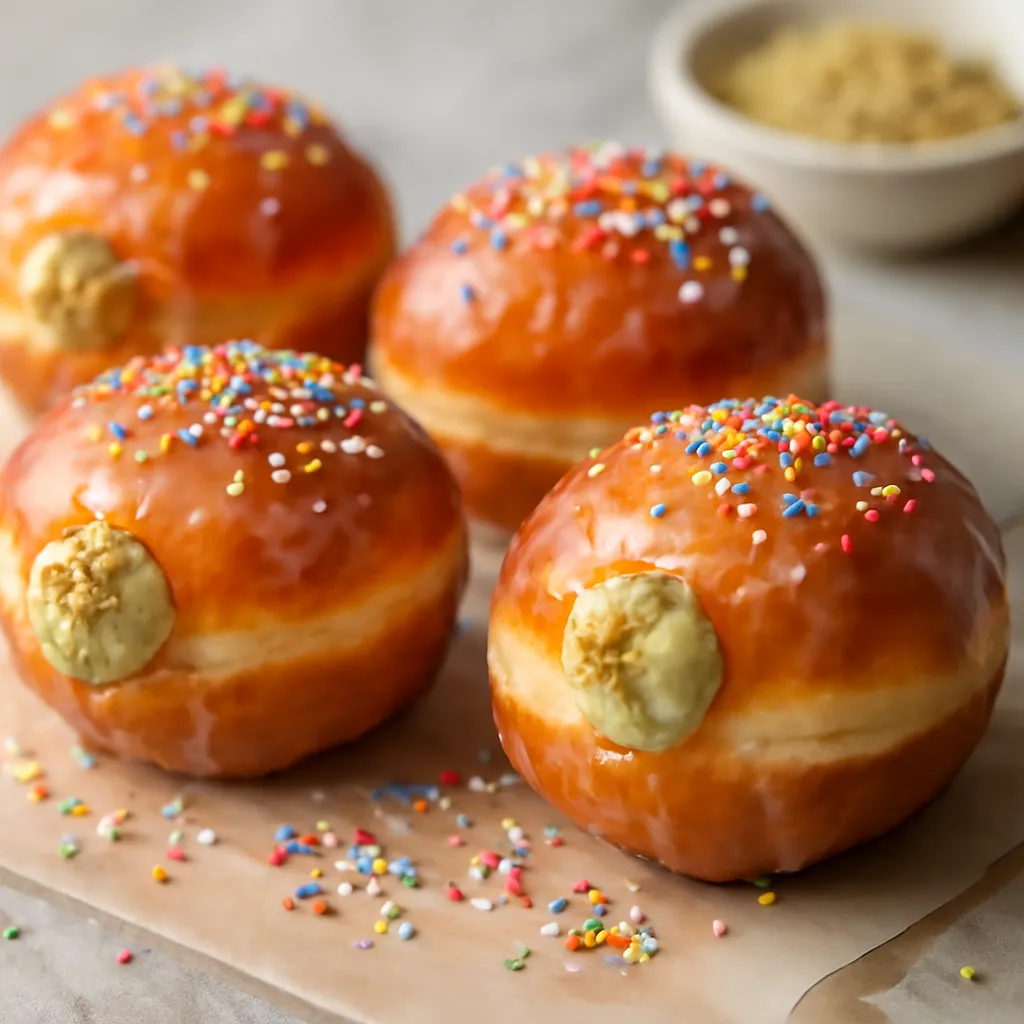
Delicate doughnuts inspired by tradition, but in a modern, sweet blog style: fluffy brioche dough with butter, infused with the aroma of roasted pistachios and filled with a velvety pistachio-mascarpone cream. The whole is finished with a glossy, milk-sugar glaze, freshly chopped pistachios, and optional lemon zest for freshness. The dish combines sweetness and creamy texture with a slightly nutty, subtly salted aroma of pistachios. Perfect for a Sunday afternoon with coffee, as a dessert for a party, or an elegant treat — it looks appetizing, has a pleasant golden crust, and a creamy interior that melts in your mouth.

Składniki (13)

Servings:
8
  • Wheat flour 500 g
  • sugar 100 g
  • Egg 2 szt.
  • Butter 100 g
  • Milk 200 ml
  • Fresh yeast 20 g
  • Rapeseed oil 1200 g
  • Pistachios (for the cream) 200 g
  • Mascarpone 200 g
  • Powdered sugar 230 g
  • 🌿 Przyprawy
  • Salt 8 g
  • ✨ Opcjonalne
  • Roasted pistachios for topping 30 g
  • Lemon zest 5 g
💰 Szacowany koszt dania: ~55.20 PLN (6.90 PLN/porcję)

💡 Kliknij na składnik aby oznaczyć jako użyty

Preparation steps

Pistachio cream

1

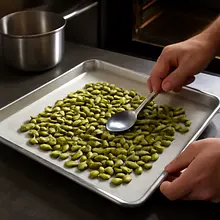
Preparation of pistachio paste: Preheat the oven to 170°C (without convection). Spread 200 g of pistachios on a baking sheet and roast for 8–10 minutes until they start to smell and lightly brown. Remove and let cool completely (about 15–20 minutes) — it is important that the blender does not heat them too much. Transfer the cooled pistachios to a food processor or a strong blender and blend initially in pulses, then continuously; occasionally scrape the mixture from the walls. First, pistachio flour will form, then a chunky paste, and finally a smooth, oily paste. The process may take 4–7 minutes depending on the device.

Ingredients: Pistachios (for the cream)
Use a food processor with a steel blade or a strong blender. If the mixture is too dry, add 1–2 teaspoons of neutral oil (e.g., canola oil). Do not blend continuously for too long — breaks help prevent the motor from overheating.
2

Prepare the cream: In a bowl, place 200 g of mascarpone and 80 g of powdered sugar (part of the 230 g). Add 140 g of prepared pistachio paste (blended mixture). Whip with a spoon or mixer on low speed for 1–2 minutes until the mixture is uniform, smooth, and slightly shiny. Taste, and if the cream needs more sweetness, add up to a teaspoon more of powdered sugar.

Ingredients: Mascarpone, Powdered sugar, Pistachios (for the cream)
Use a spatula or mixer on low speed — mascarpone can easily curdle if worked too quickly. The cream should have the consistency of thick cream, suitable for filling a piping bag. Chill in the refrigerator for 30–45 minutes if it is too soft.

Cake

3

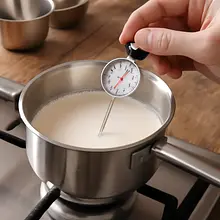
Activating the yeast: Heat 200 ml of milk to a temperature of about 35–37°C (it should be pleasantly warm, not hot — check with the inside of your wrist). In a small bowl, crumble 20 g of fresh yeast and add 10 g of sugar (from 100 g). Pour in the warm milk and mix with a fork until the yeast dissolves. Set aside in a warm place for 8–10 minutes; a foam and the smell of fermentation should appear — this is a sign that the yeast is active.

Ingredients: Milk, Fresh yeast, sugar
Use a bowl with a capacity of 300–500 ml. If there is no foam after 10 minutes, the yeast may be inactive — start over with a new batch of yeast.
4

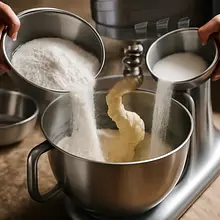
Mixing the dough: In a large bowl (or mixer bowl), sift 500 g of flour, add 90 g of sugar (the rest from 100 g), 8 g of salt and mix. Make a well, pour in the activated yeast with milk and add 120 g of eggs (beaten). Start mixing with a wooden spoon, gradually combining the liquids with the flour. Once the ingredients are combined, begin kneading with a hook mixer on low speed for 5 minutes or by hand for 8–10 minutes, until the dough is elastic and slightly sticky.

Ingredients: Wheat flour, sugar, Salt, Egg, Milk, Fresh yeast
Use a large bowl (at least 3 l) or a stand mixer with a hook. If you don't have a mixer, knead by hand (first with a spatula, then with your hands). The dough is ready when it stretches without tearing immediately and forms a thin membrane (the so-called 'gluten window').
5

Adding butter: After the initial kneading, add 100 g of soft butter piece by piece. Add the next piece only when the previous one has been absorbed into the dough. Continue kneading with a mixer for 6–8 minutes (by hand for 12–15 minutes) until the dough is smooth, shiny, and stops sticking strongly to your hands. The dough will be sticky, but it should form an elastic ball.

Ingredients: Butter
Use a stand mixer if you have one (dough hook). If you are kneading by hand, grease your hands with a little oil to make it easier. Do not add flour "by eye" — a sticky dough with butter is the correct consistency.
6

First rise: Transfer the dough to a lightly oiled bowl, cover with plastic wrap or a damp cloth, and leave in a warm, draft-free place for 60–90 minutes, until it doubles in size. To check: gently press the surface of the dough with your finger — the indentation should slowly spring back, but not disappear immediately.

The best option is an oven with only the light on (temperature around 30–35°C). Do not speed up the process by heating the oven, as too high a temperature can ruin the structure of the butter in the dough.

Shaping and second rising

7

Shaping the doughnuts: After rising, take the dough out onto a lightly floured surface. Gently deflate it (press with your hand), divide into equal pieces of about 65 g (use a kitchen scale; you should get about 16 pieces). Shape into balls: fold the edges underneath, roll in your hands to achieve a smooth surface. Place the balls on a baking sheet lined with parchment paper, leaving space between them, then loosely cover with plastic wrap or a damp cloth and let rise for another 30–45 minutes: the balls should be fluffy and nearly doubled in size.

Ingredients: Wheat flour, Butter, Egg
Use a kitchen scale to ensure the doughnuts are the same size (for aesthetics and even frying). Don't press too hard — you want to leave plenty of air inside.

Frying

8

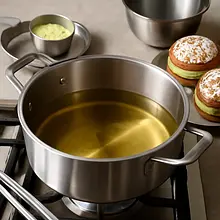
Heating the oil: In a large, deep pot (minimum bottom diameter 22–24 cm), pour in the rapeseed oil. Heat to a steady temperature of 170–175°C (use a frying thermometer). If you don't have a thermometer: drop in a small piece of dough — it should float and start to lightly brown after 20–30 seconds.

Ingredients: Rapeseed oil
The best option is a large, heavy baking dish or a pot with a thick bottom (temperature stability). Do not fill the pot too much — fry the doughnuts in batches of 3–4 pieces to prevent the temperature from dropping sharply.
9

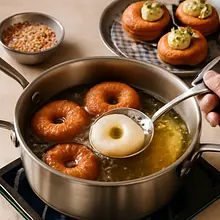
Frying the donuts: Gently slide the donuts into the hot oil using a slotted spoon. Fry for 2–3 minutes on each side, turning gently every 60–90 seconds, until the donuts are evenly golden. The entire frying process for one batch takes about 4–6 minutes. After frying, transfer the donuts to a rack lined with paper towels to drain excess fat.

Ingredients: Rapeseed oil, Wheat flour
Use a slotted spoon or tongs. The donuts are ready when they have a deep golden color and a slightly springy texture — they bounce back to shape when pressed with a finger.

Filling with cream

10

Filling the donuts with cream: Transfer the chilled pistachio cream to a piping bag with a round tip (diameter 6–8 mm). If you don't have a piping bag, use a large pastry syringe or a teaspoon, and by dipping the tip, inject the cream into the center of the donut through the side incision. Insert the tip into the side of the donut to a depth of about 2–3 cm, gently squeeze and fill until you feel resistance (about 20–30 g of cream per donut).

Ingredients: Mascarpone, Pistachios (for the cream), Powdered sugar
Use a piping bag with a metal or silicone tip. If the donuts are still very hot, the cream may melt — wait until they are warm or lukewarm.

Glaze and decoration

11

Prepare the glaze: In a small bowl, mix 150 g of powdered sugar with 30 ml of milk (from the remaining amount), add a pinch of salt (1 g) and stir until a smooth, slightly runny icing forms. If it's too thick, add 5 ml of milk at a time until you reach a dip-like consistency. Dip the top of the doughnut in the glaze, set it on a rack, and immediately sprinkle with chopped pistachios (30 g optional) and possibly a bit of lemon zest (5 g optional) for freshness.

Ingredients: Powdered sugar, Milk, Roasted pistachios for topping, Lemon zest
Use a wide bowl for the glaze — dip only the top part of the donuts. If the glaze sets too quickly, stir it occasionally to keep it fluid.

Serving

12

Set the donuts aside for 10–15 minutes until the glaze slightly sets. Serve warm or at room temperature, arranged on a large platter, garnished with additional crushed pistachios and possibly mint leaves. Best on the same day — that’s when the texture and aroma are most pronounced.

Ingredients: Roasted pistachios for topping, Lemon zest
Use a flat plate or a cake stand — an aesthetic arrangement enhances the 'sweet blog' impression. Donuts can also be served with a cup of espresso or bergamot tea.

Fun Fact

💡

Pistachios have been valued since ancient times — scholars claim they appeared in the cuisine of the Middle East and quickly became a symbol of luxury. Their green color traditionally suggests freshness and spring, making them a perfect match for delicate pastries.

Best for

Tips

🍽️ Serving

Serve slightly warm or at room temperature. To maintain the structure of the cream during longer serving times, keep the doughnuts chilled and take them out 20 minutes before serving. For decoration, add fresh mint or edible gold flakes for a "sweet blog" effect.

🥡 Storage

Store in an airtight container in the refrigerator for up to 48 hours (mascarpone cream requires cooling). Before serving, take out for 20–30 minutes to regain softness. Freezing cream-filled donuts is not recommended — the texture of the cream may change.

📸 Ugotowane przez społeczność

Zaloguj się, aby dodać zdjęcie
Dodaj zdjęcie gotowej potrawy

Po zatwierdzeniu przez moderatora otrzymasz 10 punktów doświadczenia.

🍲

Nikt jeszcze nie dodał zdjęcia. Bądź pierwszy!

Comments (0)

Be the first to comment on this recipe!

Add a comment

You might also like

Recipe Categories

Homemade cakes and pastries are the heart of Polish culinary tradition - sweet memories from childhood. In our collection, you will find recipes for classic yeast cakes, shortcrust, sponge, and cheesecake. Apple pie, poppy seed cake, gingerbread, Easter babka, chocolate cake, and New York cheesec...

See all recipes in this category
Desserts
Desserts in: Christmas Eve Dinner

Desserts are a sweet ending to a meal that brings joy to both children and adults. In this category, we present recipes for a variety of sweets - from simple creams and mousses, to elegant panna cottas, and exquisite fruit tarts. Our desserts include both classics of Polish cuisine - fruit jelly,...

See all recipes in this category
Reklama