Prepare your workspace so that cooking is calm and unhurried. Take out a large pot or wide saucepan with a thick bottom (min. 3–4 l) for the stew, a fine grater for the potatoes, a large bowl, a colander, and a clean cloth or cheesecloth for squeezing. Also, prepare 2 frying pans: one large for frying the pancakes (26–28 cm, preferably non-stick), and the other (or the same pot) for sautéing the stew base. Measure out the ingredients, and rinse/peel the meat and vegetables if necessary.
Description
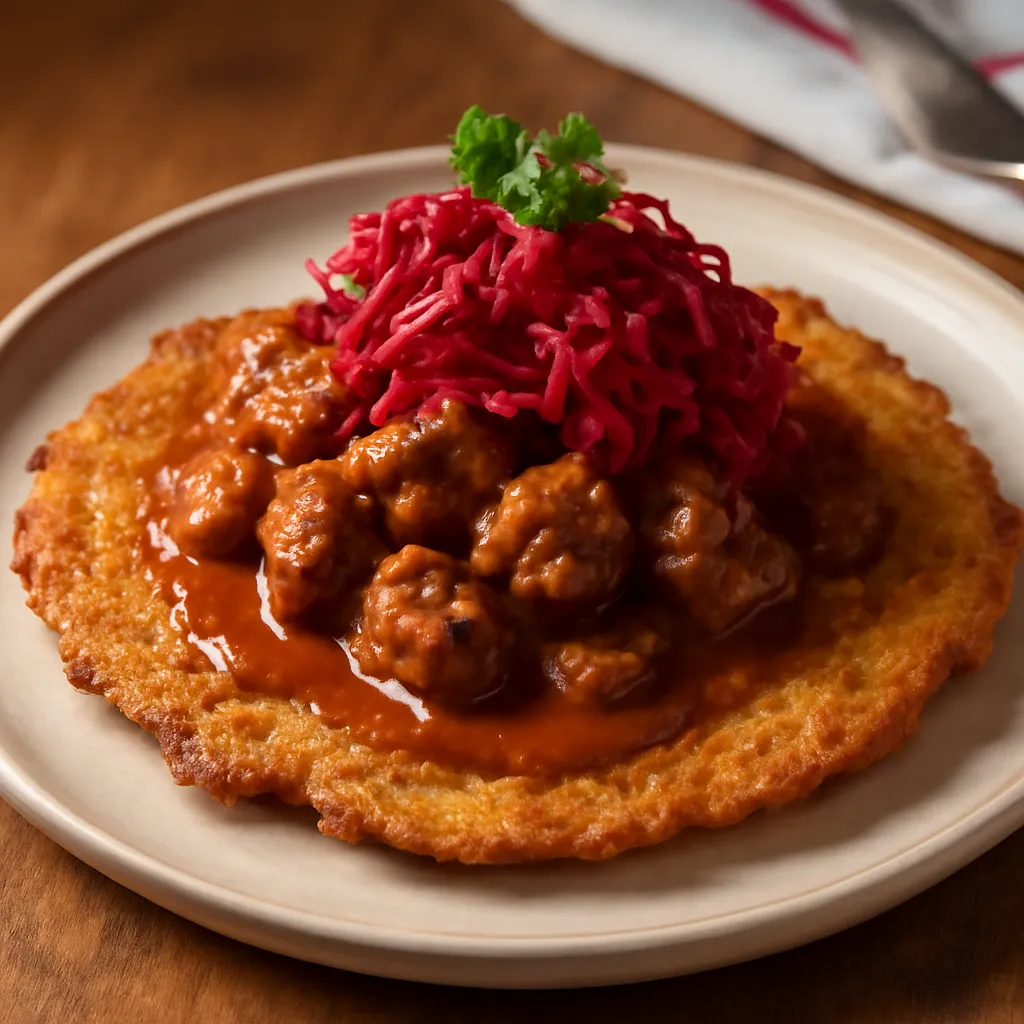
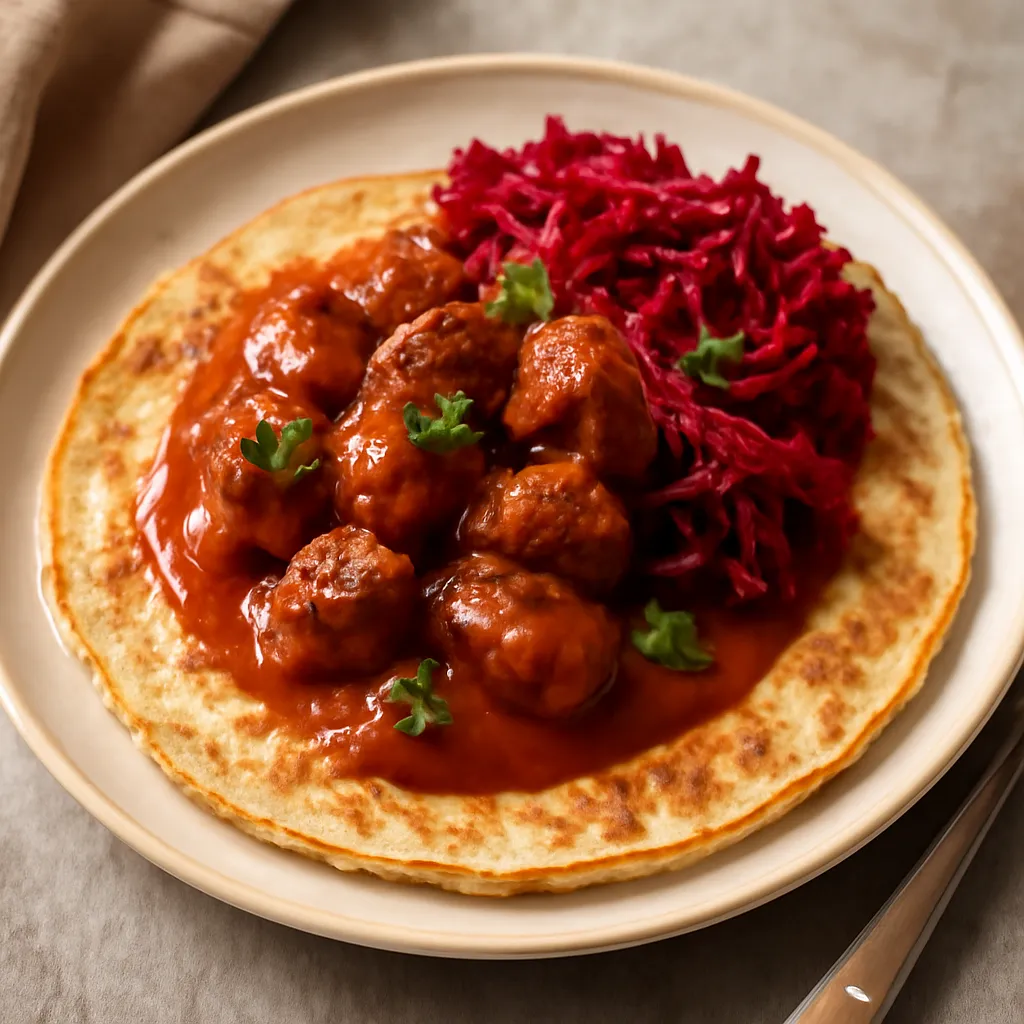
Hungarian-style potato pancake is a popular lunch dish inspired by Hungarian cuisine: a crispy, large potato pancake serves as a "plate" for aromatic goulash with peppers and tomatoes. The version with beets (served warm or cold) adds a sweet-and-sour contrast that perfectly balances the greasiness of the pancake and the depth of the sauce. The dish has a strong, warming flavor (paprika, onion, garlic) and a very appetizing appearance: golden pancakes, red-brown goulash, and ruby beets. It is best served immediately after frying the pancakes, with an extra serving of beets on the side and optionally a dollop of sour cream to soften the spiciness and enhance the creaminess of the sauce.
Składniki (24)
- Beef for goulash (shoulder or brisket) 700 g
- Onion 3 szt.
- Garlic 3 ząbki
- Red bell pepper 2.2 szt.
- Tomato paste 60 g
- Canned diced tomatoes 400 g
- Beef broth (or chicken) / water 500 ml
- Rapeseed oil 120 g
- Wheat flour 80 g
- Ground cumin 2 g
- Potatoes 6.7 szt.
- Egg 2 szt.
- Boiled beets 600 g
- Apple 0.8 szt.
- Apple cider vinegar 15 ml
- sugar 10 g
- 🌿 Przyprawy
- Sweet paprika powder 4 łyżeczki
- Bay leaf 6.7 szt.
- Allspice 3 g
- Salt 8 g
- Black pepper 6 szczypt
- ✨ Opcjonalne
- Ground chili pepper 1 g
- 18% cream 120 ml
- Parsley 1 pęczek
💡 Kliknij na składnik aby oznaczyć jako użyty
Preparation steps
Preparation (work organization)
Beef goulash
Cut the beef into even pieces about 2–3 cm in size. If you see long, tough membranes (silvery "veins"), trim them off with a sharp knife, as they will not soften even after braising. Pat the meat dry with paper towels — dry meat browns more easily (instead of "cooking" in water).
Peel 2 onions (about 300 g) and chop them into small cubes. They don't have to be perfectly even, but try to make the pieces similar in size — this way the onion will fry evenly and there won't be any burnt parts. Peel the garlic and chop it finely or press it through a garlic press.
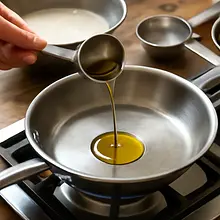
Heat 30 g of oil (2 tablespoons) in a pot/pan over medium-high heat for about 1 minute. Add the chopped onion and sauté for 8–10 minutes, stirring every 1–2 minutes, until the onion softens, becomes translucent, and starts to lightly brown at the edges. Then add the garlic and sauté for another 30–45 seconds — just until it becomes fragrant.
Move the onion to the sides of the pot to make room for the meat. Increase the heat to high, add another 30 g of oil (2 tablespoons). Add the beef in 2–3 batches (not all at once), ensuring there is space between the pieces. Sear each batch for 2–3 minutes on one side, then 2 minutes on the other, until a noticeable browning appears. After searing each batch, set the meat aside on a plate.
Reduce the heat to medium. Return the whole browned meat to the pot (along with the juices from the plate). Add sweet paprika and cumin. Stir vigorously for 15–20 seconds to combine the spices with the fat, but be careful not to let them burn. Immediately add the tomato paste and sauté for 1 minute, stirring until the paste darkens slightly and starts to smell "tomatoey" instead of raw.
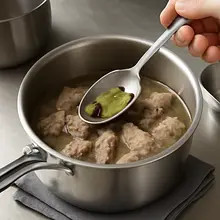
Cut the red bell pepper into cubes about 1.5–2 cm (remove the seeds and white membranes, as they can be bitter). Add the pepper to the pot, pour in the canned tomatoes and broth (or water). Stir, scraping the brown bits from the bottom with a spoon — they will dissolve into the liquid and enhance the flavor. Add the bay leaf and allspice. Bring to a gentle simmer (it should "bubble gently," not boil like water for pasta).
Reduce the heat to low and simmer the stew covered for 70–90 minutes. Stir every 15–20 minutes and check that nothing is sticking to the bottom. After about 70 minutes, taste the meat: it should be noticeably tender (a fork goes in easily), but not falling apart. If it is still tough, simmer for another 10–20 minutes.
Beets
Grate the beets on a coarse grater or cut them into thin strips — choose one technique so the beets have a uniform texture. Peel 1/2 onion (about 75 g) and chop it as finely as possible. Grate the apple on a coarse grater (if it has a very tough skin, you can peel it). In a bowl, combine the beets, onion, and apple.
Season the beets: add apple cider vinegar and sugar, a pinch of salt, and 1 pinch of pepper (from the total amount specified in the recipe). Pour in 15 g of oil (1 tablespoon) and mix very well. Taste and adjust the flavor: the beets should be sweet and sour, with a slight spiciness from the pepper. Set aside for at least 15 minutes to let the flavors meld.
Potato pancakes (batter)
Peel the potatoes, rinse them, and grate them on a fine grater directly into a large bowl. Peel the remaining onion (about 75 g, if it was left from the beets) and also grate it into the potatoes — the onion will limit the darkening of the mixture and add flavor. Set the mixture aside for 2–3 minutes: water will start to collect at the bottom.
Transfer the potato mixture to a sieve set over a bowl. Gather the mixture in a clean cloth/cheesecloth and squeeze very hard, twisting the fabric like a "candy," until it stops dripping. Carefully pour out the water from the bowl, but leave the starch sediment (white residue) at the bottom — you will add it back to the mixture, which will improve the crispiness of the pancakes. Transfer the drained potatoes back to the bowl, add the starch sediment.
In a bowl with the drained potatoes, crack in the eggs, add 60 g of flour, 3–4 pinches of salt (from the salt pool in the recipe), and 1–2 pinches of pepper (from the pepper pool). Mix vigorously with a spoon for 30–45 seconds until the mixture is uniform and sticky. If it looks too runny (spills like soup), add 10 g of flour and mix again.
Beef goulash (finishing)
When the meat is tender, turn off the heat and remove the bay leaf and allspice (the easiest way is with a spoon). Taste the sauce and season: add any missing salt and pepper to taste. If you want it spicier, you can also add hot paprika (chili). If the sauce is too thin, mix 20 g of flour with 50 ml of cold water to make a smooth slurry (without lumps), pour it in a thin stream into the gently simmering goulash, and stir for 1–2 minutes until the sauce thickens. (The flour for thickening is already included in the ingredients).
Potato pancakes (frying)
Heat a pancake pan over medium-high heat for 2 minutes. Pour in a portion of oil (about 30 g to start) and spread it around. Check the temperature: place a small amount of batter on the pan — if it starts to sizzle immediately and the edges begin to set slightly, you can start frying. For each pancake, place about 1/4 of the batter and spread it with a spoon into a circle with a diameter of 18–20 cm and a thickness of about 7–10 mm. Fry for 4–5 minutes without moving it, until the bottom is deep golden and holds together.
Flip the pancake with a wide spatula: slide it under the pancake from several sides until you feel that it has completely detached. Flip it quickly. Fry the other side for 3–4 minutes until it is golden and crispy. Transfer the finished pancake to a plate lined with paper towels. Repeat frying 3 more times, adding oil if necessary. Keep the pancakes warm: set the oven to 90°C and place the pancakes on a rack or baking sheet to prevent them from getting soft.
Assembly and serving
On each plate, place 1 large, crispy potato pancake. In the center, add a portion of the stew (about 1/4 of the total), allowing the sauce to slightly run down the pancake — this looks appetizing, but do not drown the entire pancake so that the edges remain crispy. Next to it, place a portion of beetroot. Additionally, you can add 18% sour cream as a dollop on the stew and sprinkle with parsley for freshness and color.
Fun Fact
Although the name suggests Hungarian origins, "Hungarian pancake" is a dish that has become very popular in Poland in bars and restaurants as an impressive combination of potato pancake and goulash in the paprikás/pörkölt style, which is stewed meat with paprika. In practice, it is a Polish interpretation of Hungarian flavors.
Best for
Tips
To keep the edges of the pie crispy, place the stew in the center. If you prefer a more pronounced paprika flavor, add another 1/2 teaspoon of sweet paprika after stewing (at the very end) and mix well. You can serve the beets cold (for a temperature contrast) or gently heat them in a saucepan for 2–3 minutes.
Store the goulash in the refrigerator for up to 3 days in an airtight container; reheat on low heat for 6–10 minutes, adding a little water if it has thickened. Keep the beets in the refrigerator for up to 3 days. It's best to fry the pancakes fresh, but if there are leftovers: reheat them dry in the oven at 200°C for 6–8 minutes (on a rack) to regain their crispiness; the microwave softens the pancakes.
📸 Ugotowane przez społeczność
Zaloguj się, aby dodać zdjęcieDodaj zdjęcie gotowej potrawy
Po zatwierdzeniu przez moderatora otrzymasz 10 punktów doświadczenia.
Nikt jeszcze nie dodał zdjęcia. Bądź pierwszy!
Comments (0)
Be the first to comment on this recipe!
Add a comment