Take the beef tenderloin out of the fridge 25-30 minutes before frying to reach room temperature. This will ensure the meat cooks evenly and doesn't shrink excessively.
Description
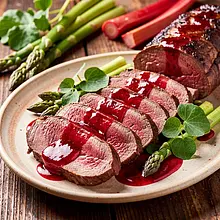
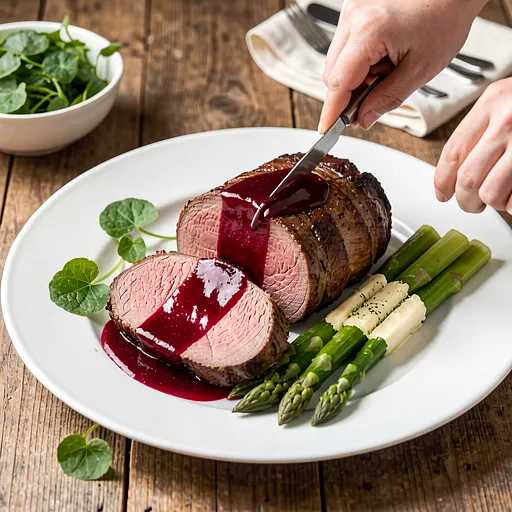
Delicate beef tenderloin served with a thick, slightly tangy rhubarb-red wine sauce and fresh al dente asparagus. A dish inspired by the simplicity of Masuria and spring flavors – rhubarb and sorrel bring a fresh acidity that contrasts with the meaty sweetness of the tenderloin. This elegant composition is perfect for a family dinner or a special occasion; it pairs wonderfully with young potatoes in their skins, roasted buckwheat, or a delicate puree. Visually, the dish features a glossy deep red sauce, pink meat interior, and green asparagus creating a contrast of colors.
Ingredients Used
Ingredients (15)
- Beef tenderloin 600 g
- Asparagus 400 g
- Rhubarb 300 g
- Red wine 250 ml
- Beef broth 300 ml
- Onion 1 szt. (~150 g)
- Garlic 2 ząbki (~10 g)
- Butter 50 g
- Rapeseed oil 15 g
- 🌿 Przyprawy
- Salt 0.1 szczypt (~3 g)
- Black pepper 4 szczypty (~2 g)
- Thyme 4 g
- ✨ Opcjonalne
- Sugar 20 g
- Sorrel 30 g
- 18% cream 60 ml
💡 Kliknij na składnik aby oznaczyć jako użyty
Preparation steps
Meat preparation
Pat the tenderloin dry with a paper towel. Evenly sprinkle 2 g of salt and 1 pinch of pepper on each side. If the tenderloin is 2-3 cm thick, let the seasoned meat rest for 5 minutes before frying, so the salt can slightly penetrate.
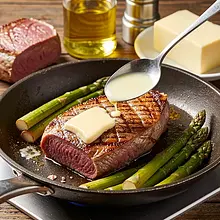
Heat a large skillet (preferably steel or cast iron) over high heat. Add a tablespoon of canola oil (15 g). When the oil is very hot and starts to lightly smoke, place the tenderloin in the skillet and sear for 2-3 minutes on each side until the surface is nicely browned. In the last minute, add 30 g of butter, tilt the skillet, and spoon the melted butter over the meat, which will give it shine and flavor.
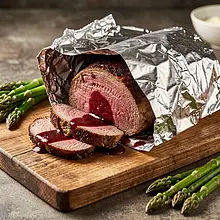
Transfer the browned tenderloin to a cutting board, loosely cover it with aluminum foil, and let it rest for 10 minutes. The inside of the tenderloin will reach the perfect doneness during the resting period; for medium doneness, aim for an internal temperature of 52-55°C before resting.
Rhubarb-Wine Sauce
Prepare the sauce ingredients: peel and chop the onion (150 g) into small cubes. Peel the lower parts of the rhubarb if necessary and cut the stalks into 1 cm pieces (300 g). Chop the garlic (10 g) or press it through a garlic press.
In the same pan, after removing the meat, reduce the heat to medium-high and add 20 g of butter. Add the chopped onion and sauté for 3-4 minutes until the onion becomes translucent and soft, but does not brown.
Add garlic (10 g) and sauté for another 30 seconds until you can smell the garlic aroma — be careful not to burn it, as it will become bitter.
Add the chopped rhubarb (300 g) and optionally 20 g of sugar if you want to soften the acidity. Sauté for 4-5 minutes over medium heat until the rhubarb starts to break down and release its juice — stir every 1-2 minutes.
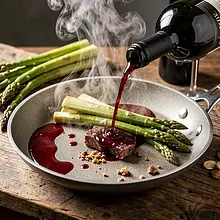
Increase the heat, pour in the red wine (250 ml) and vigorously scrape the browned bits from the bottom of the pan with a wooden spoon. Cook for 2-3 minutes until the alcohol partially evaporates and the liquid slightly reduces.
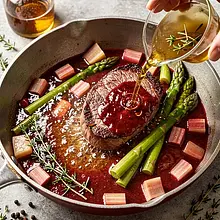
Pour in the beef broth (300 ml), add thyme (4 g) and cook over medium heat for 8-10 minutes, until the volume of the sauce reduces by about half and thickens. Taste and season with salt (to taste) and pepper.
If you want a creamier sauce, remove the pan from the heat and add 60 g of 18% cream (optional). Stir vigorously to combine. You can also strain the sauce through a fine sieve for a smooth consistency. Taste and adjust the seasoning.
Asparagus
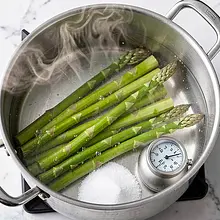
Prepare the asparagus: snap off the tough ends (press with your fingers where the stem will naturally break) and, if they are thick, peel the lower third with a vegetable peeler.
In a large pot, bring plenty of salted water to a boil (about 2-3% salt). Add the asparagus and blanch for 2-3 minutes (2 minutes for thinner ones, 3 minutes for thicker ones) — they should be firm al dente. Drain and immediately transfer to a plate or cold water only if you want to stop the cooking process.
After draining, transfer the asparagus to a pan with 20 g of butter and sauté for 1 minute to give them a glossy surface and a slightly buttery flavor. Drizzle with a bit of the wine juice left in the pan, if desired.
Assembly and serving
Slice the tenderloin across the grain into 1.5-2 cm thick pieces. Arrange the slices on a warm plate and generously drizzle with rhubarb-wine sauce. Place asparagus alongside. Optionally, sprinkle chopped sorrel (30 g) on top for a fresh, lemony touch.
Fun Fact
Rhubarb was valued in ancient times as a medicine and only later gained popularity as a culinary ingredient. In Masurian farms, sour ingredients like rhubarb or sorrel were added to balance the rich flavors of meat dishes.
Best for
Tips
Serve the tenderloin immediately after slicing, while the meat is still warm. Young potatoes in their skins or roasted buckwheat go well with it. Add a tablespoon of 18% cream to the sauce just before serving if you prefer a milder taste. When serving for guests, slice the meat before pouring the sauce so that everyone can see the pink center.
Store the sauce separately in an airtight container for up to 3 days in the refrigerator. The tenderloin can be stored cut for up to 2 days, but the best flavor is fresh. To reheat the meat, use an oven set to 100-120°C and heat for 5-8 minutes until the desired temperature is reached, to avoid drying it out.
📸 Ugotowane przez społeczność
Zaloguj się, aby dodać zdjęcieDodaj zdjęcie gotowej potrawy
Po zatwierdzeniu przez moderatora otrzymasz 10 punktów doświadczenia.
Nikt jeszcze nie dodał zdjęcia. Bądź pierwszy!
Comments (0)
Be the first to comment on this recipe!
Add a comment