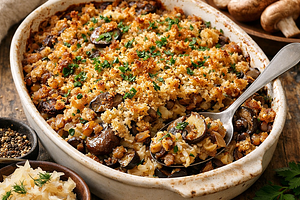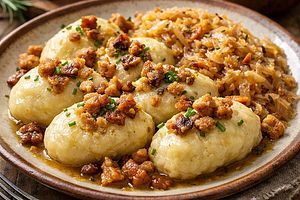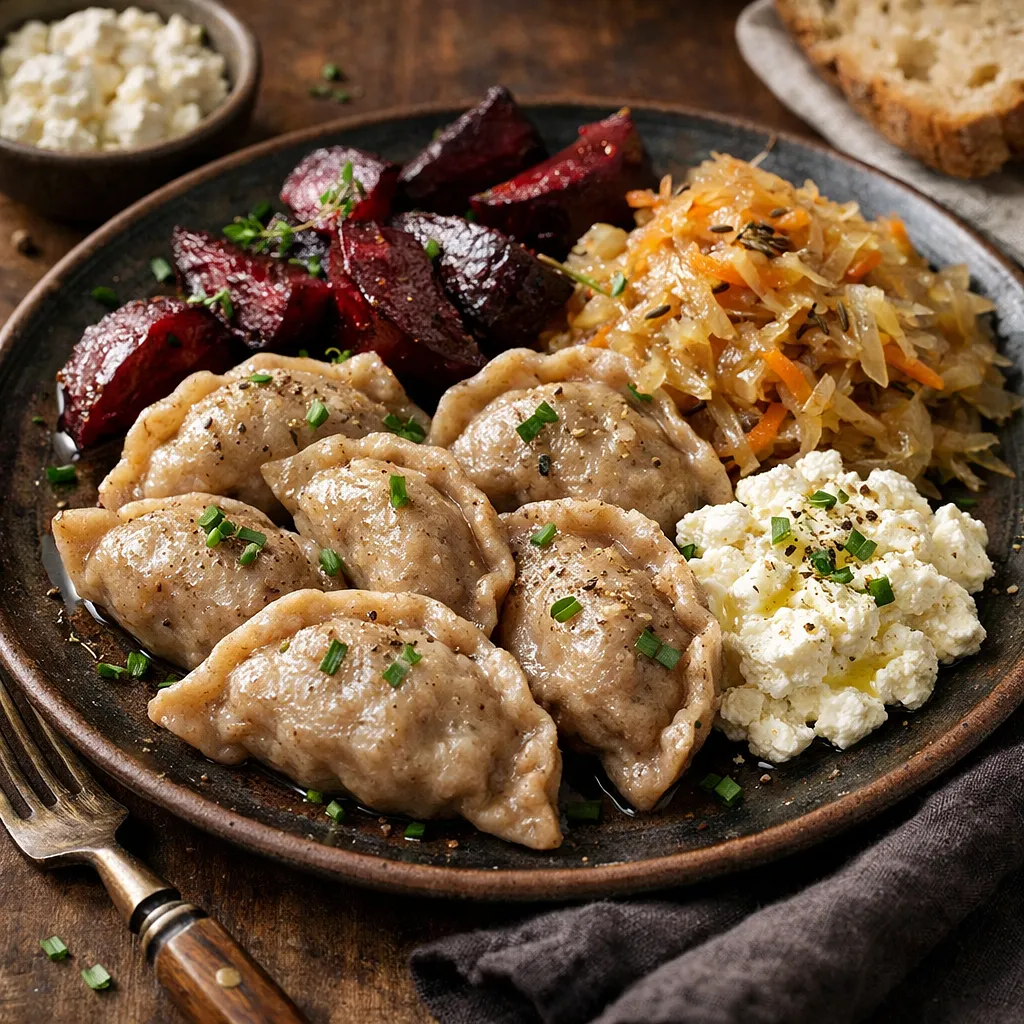
A seasonal, winter dish in the spirit of traditional Polish cuisine, yet fully plant-based and unconventional: soft buckwheat pouches filled with a sweet-herb filling of roasted beets, dried plums, and sautéed sauerkraut with forest mushrooms. The dish is complemented by a creamy "cheese" made from natural tofu and plant-based buttermilk, along with a lightly vinegary apple dressing. This dish combines familiar Polish flavors (beet, sauerkraut, forest mushrooms, plums) with the innovative form of buckwheat pouches, resulting in a rustic, aromatic, and warming effect. Serve hot as a main dish or on the holiday table in a meatless version — it looks beautiful garnished with chopped dill and toasted walnuts.
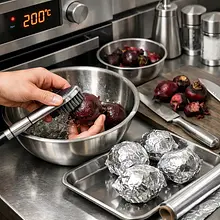
Preheat the oven to 200°C (top-bottom). Wash the beets with a brush, trim the ends, wrap them in aluminum foil or place them in a baking dish and drizzle with 1 tablespoon of rapeseed oil (15 g). Bake for 50-60 minutes depending on size, until a knife inserted lightly goes through the beet without resistance. After removing, let cool to a touchable temperature, peel the skin off with your hands or a knife, and cut into cubes of 1–1.5 cm.
Ingredients:
Beets (raw), Rapeseed oil
Use a covered baking dish or well-wrapped beets to prevent them from drying out. Check for tenderness with a knife — if it goes in smoothly, the beets are ready.
2
In a small saucepan, pour 100 ml of hot water over the dried plums and set aside for 10 minutes until they swell. After soaking, drain (reserve the liquid). To the chopped beets, add the diced apple (without the core), chopped plums, and 1 tablespoon of apple cider vinegar (15 g). Season with 1 g of salt and 1 g of pepper, and gently mix — the mixture should be slightly sweet and sour and aromatic.
Ingredients:
Dried plums, Beets (raw), Apple, Apple cider vinegar, Salt, Black pepper
Hot water helps to soften the plums faster. If you want extra sweetness, add 5-10 g of honey or maple syrup (optional, not included).
Braised cabbage with mushrooms
3
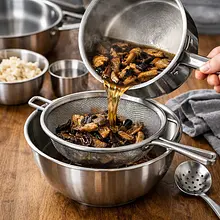
Soak the dried mushrooms in 150 ml of hot water and let them sit for 20 minutes. After soaking, drain the mushrooms (reserve the water), and chop them finely. In a pan, heat 1 tablespoon of oil (15 g), add the finely chopped onion (150 g), and sauté for 6-8 minutes over medium heat until it becomes translucent and golden. Add the chopped garlic (10 g) and sauté for another 30 seconds. Add the sauerkraut (300 g), the drained and chopped mushrooms, and 1 tablespoon of the soaking liquid (if it has a strong aroma). Add 1 teaspoon of marjoram (2 g) and 3 g of salt (if the cabbage is not very salty). Simmer covered for 15-20 minutes over low heat, stirring every 5 minutes — the cabbage should become soft but not mushy.
Use a wide skillet or a heavy-bottomed pot to ensure the cabbage stews evenly. If the cabbage is very sour, rinse it lightly and squeeze it out, then adjust the salt.
Buckwheat Cake
4
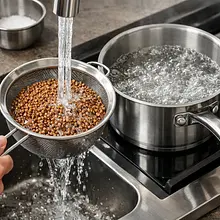
Cook the buckwheat: pour 200 g of buckwheat into a sieve and rinse with cold water. In a pot, bring 400 ml of water to a boil, add 1 g of salt, pour in the buckwheat, and cook covered on low heat for 12-15 minutes, until it absorbs the water. After cooking, let it sit covered for 10 minutes, then fluff with a fork and leave to cool slightly. To the warm (but not hot) buckwheat, add ground oats (80 g), wheat flour (50 g), and flaxseed mixed with 30 g of water (wait 5 minutes until it thickens). Mix vigorously with a wooden spoon, then knead by hand — the mixture should be pliable, not overly sticky to the hands; if it is too dry, add 1-2 tablespoons of plant-based buttermilk (15–30 ml).
Use a large bowl and a wooden spoon; for hand kneading, silicone gloves or oil on your hands work best. The mixture is ready when you can form balls from it, and the surface does not stick to your hands.
Shaping the pouches
5
Divide the buckwheat mixture into 8 equal parts (about 80–90 g each). On a clean board dusted with flour, roll out each part into a circle about 0.6–0.8 cm thick (use your hands or a rolling pin). Place 2 tablespoons of beet and plum filling and 1 tablespoon of stewed cabbage with mushrooms in the center of the circle. Fold the edges of the circle to form a pouch: first, bring together the opposite sides, then connect the remaining ones to create a closed pocket. Pinch the edges tightly with your fingers, and if the mixture doesn't stick, moisten the edges with a small amount of plant-based buttermilk.
Work quickly while the buckwheat mixture is still warm — it sticks together better then. Use a spoon to portion the filling to avoid overloading the pouches.
Frying the pouches
6
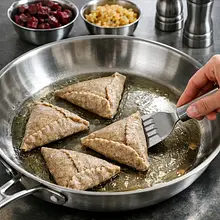
In a large skillet, heat 1 tablespoon of oil (15 g) over medium heat. Place the dumplings seam side down and fry for 3-4 minutes until the bottom is golden brown. Gently turn the dumplings on their sides and fry for another 2-3 minutes to heat through and lightly glaze. The dumplings should be golden and firm — if they burst while frying, reduce the heat and cover the skillet for 2 minutes to steam them through.
Ingredients:
Rapeseed oil, Buckwheat groats (dry)
The best pan is 26-28 cm in diameter; do not transfer too many pouches at once to avoid lowering the oil temperature.
Tofu cheese
7
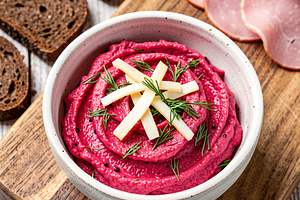
Place the drained tofu (200 g), 50 ml of plant-based buttermilk (from the remaining 150 ml used earlier), juice from 1/2 lemon (about 15 g), 1 g of salt, and 1 g of pepper into the blender. Blend in pulses until the mixture is creamy, smooth, and resembles cottage cheese. Taste and adjust seasoning if necessary. You can adjust the consistency by adding 1 tablespoon of plant-based buttermilk at a time.
Ingredients:
Tofu, Plant-based buttermilk (soy or oat), Salt, Black pepper
Use an immersion blender in a tall container or a food processor. If the cottage cheese is too runny, add a tablespoon of ground oats to thicken it.
Assembly and finishing
8
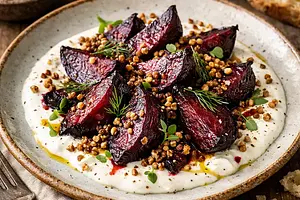
Place 2 pouches on a plate, next to them put 1 tablespoon of tofu cheese. Sprinkle the pouches with chopped, toasted walnuts (if using) and freshly chopped dill (optional). Drizzle gently (about 5-10 g) with the liquid from the soaked plums or a teaspoon of rapeseed oil for shine. Serve immediately while the pouches are still warm.
If you are preparing the dish in advance, sauté the pouches fresh before serving to regain their crispness. Additionally, you can add plant-based yogurt mixed with a bit of honey (optional) for contrast.
Final tips
9
While eating, pay attention to the contrast of temperatures and textures: warm dumplings and cool tofu cheese. If you prefer a more "cutlery" version, cut the dumplings in half and arrange them upright. You can use any excess filling as a topping for sandwiches or salads.
A common mistake: too moist filling causes the pouches to become soggy. If the filling is very juicy, squeeze out the excess liquid before filling.
Fun Fact
💡
Buckwheat appeared in Polish cuisine as early as the Middle Ages and for centuries was a staple of peasant diets. The combination of a buckwheat base with beets and cabbage connects tradition with modern plant-based cooking.
Serve the pouches hot, with a spoonful of cool tofu cheese on the side. For a more pronounced aroma, add a few drops of good walnut oil or rapeseed oil on top. It pairs wonderfully with sour apples or a simple salad of pickled cucumbers.
🥡Storage
Store the pouches and the cheese separately in the refrigerator for up to 2 days. Reheat the pouches in a pan over medium heat for 3-4 minutes to regain their crispiness; microwaving is not recommended (they will become rubbery). Store the cheese in a tightly sealed container for up to 3 days.
Comments (0)
Be the first to comment on this recipe!
Add a comment