Take the butter and eggs out of the fridge about 30 minutes before starting, so they reach room temperature — this will help them combine better with the other ingredients. Preheat the oven to 200°C (top-bottom). Place the middle rack. If you are using a cast iron pot (Dutch oven), place it in the oven while preheating without the lid to heat it up.
Description
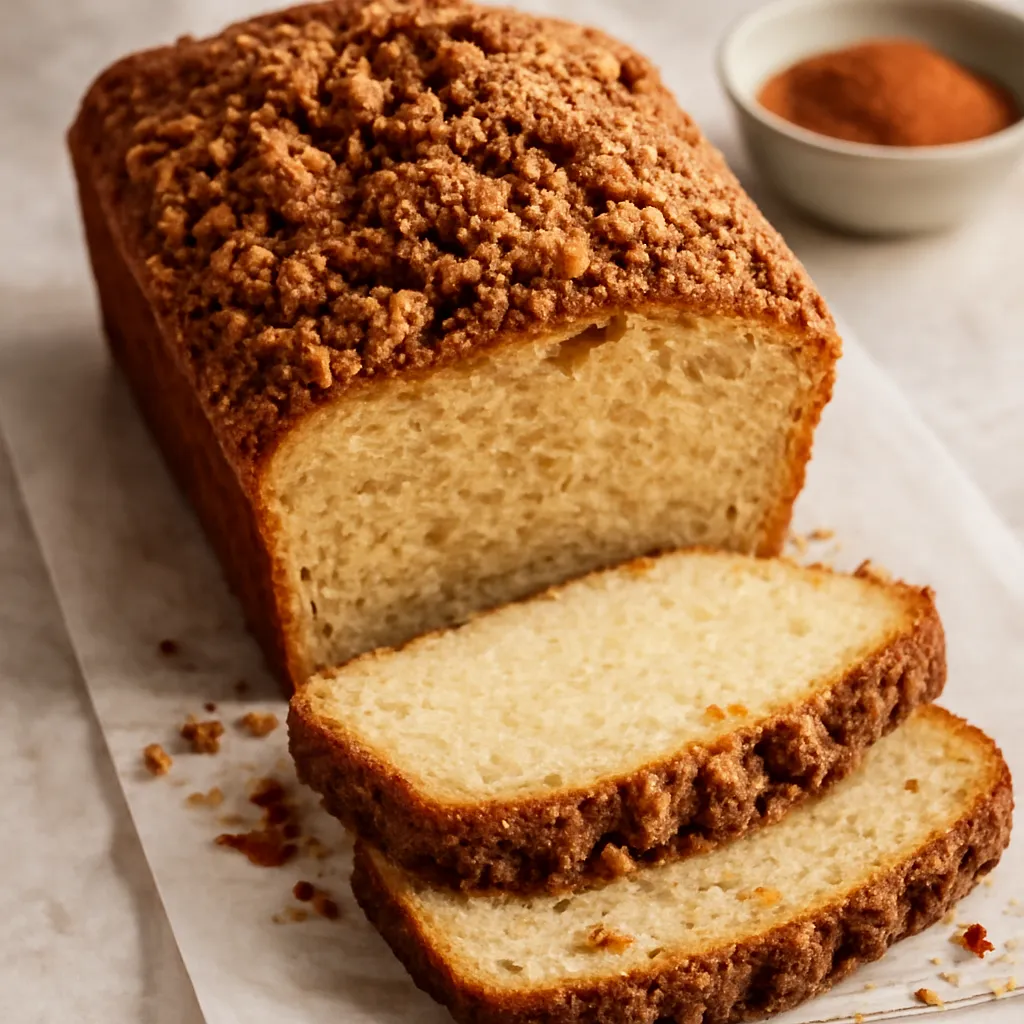
A delicate, moist bread baked in a pot (inspired by pot bread with buttermilk), but in a sweet, blogger's version: with buttermilk, honey, and cinnamon crumble. It has a golden, slightly crispy crust and a soft crumb with hints of citrus zest and vanilla. It is perfect for a sweet breakfast, with afternoon coffee, or as a dessert served warm with a milk glaze. During baking in a closed pot, the bread retains moisture, while the crumble and toasted almonds add a contrast of textures. The recipe is accessible for beginners — each step is described in detail, including times, tool indications, and common mistakes, ensuring that even someone baking for the first time will achieve excellent results.
Składniki (15)
- Wheat flour 400 g
- White sugar 100 g
- Butter 80 g
- Buttermilk 300 g
- Egg 2 szt.
- Honey 50 ml
- Baking powder 10 g
- Baking soda 3 g
- Lemon zest 6 g
- Vanilla extract 1 łyżeczka
- 🌿 Przyprawy
- Salt 0.2 szczypt
- Ground cinnamon 5 g
- ✨ Opcjonalne
- Raisins 80 g
- Toasted almond flakes 60 g
- Powdered sugar (for icing) 60 g
💡 Kliknij na składnik aby oznaczyć jako użyty
Preparation steps
Preliminary preparations
Preparation of the toppings
If you are using raisins: soak them in 80 ml of hot water or rum and set aside for 10-15 minutes to plump up. After soaking, drain in a sieve and gently dry with a paper towel. This will prevent the pieces from drying out in the cake.
Cinnamon Crumble
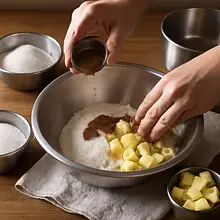
Prepare the crumble: in a bowl, combine 40 g of flour, 40 g of white sugar, and 40 g of cold butter cut into cubes (remove 40 g of the butter, the rest will be used for the dough). Add 2 g (0.4 teaspoon) of cinnamon (part of the total amount). Rub with your fingers or use two knives until clumps form that resemble wet sand and pea-sized pieces. The crumble should hold together in clumps when squeezed in your hand.
Mixing dry ingredients
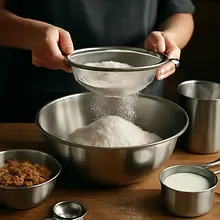
In a large bowl, sift 400 g of wheat flour together with 10 g of baking powder, 3 g of baking soda, 5 g of salt, and 3 g of cinnamon (the remaining cinnamon). Mix the dry ingredients with a spoon or whisk to ensure all the powders are evenly distributed. Check for any lumps of baking powder.
Wet ingredients
In a separate bowl, beat 120 g of eggs with 100 g of white sugar for about 2-3 minutes using a hand whisk or a mixer on low speed, until the mixture is light and slightly fluffy. Add 50 g of honey, 300 ml of buttermilk, 5 g of vanilla extract, and 6 g of lemon zest. Mix with a wooden spoon or silicone spatula until you achieve a uniform consistency.
Combining ingredients
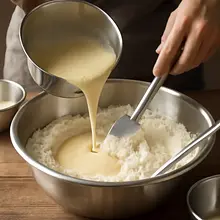
Pour the wet mixture into the bowl with the dry ingredients in one stream. Use a spatula and mix just until combined — fold from the center outwards until there are no dry streaks of flour (this will take about 20–30 seconds). The dough will be thick and sticky — do not mix too long to avoid developing gluten.
Adding toppings
Gently fold in the drained raisins (if using) and leave about 2 tablespoons of the batter on the edges to better adhere the crumble. Use a spatula, mixing 6-8 times, until the additions are evenly distributed in the batter.
Preparing the pot and shaping
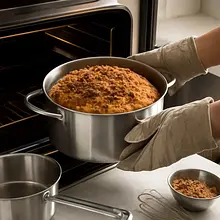
Remove the heated pot from the oven (use oven mitts — it will be very hot). Line the bottom and sides of the pot with a piece of parchment paper (trim any excess). Transfer the batter to the pot using a spoon or spatula and smooth the top. The batter should reach about 2/3 of the height of the pot.
Topping with crumble and almonds
Sprinkle the prepared crumble evenly on top of the cake, gently pressing it down with your fingers (do not press too deeply). Top with toasted almond flakes (if using). Leave about 1 cm from the edge without crumble so that it doesn't fall too much to the sides while baking.
Baking
Cover the pot with a lid and place it in the preheated oven. Bake for 25 minutes covered at 200°C, then remove the lid and bake for another 15-20 minutes at 200°C, until the top is golden and a skewer inserted in the center comes out dry (if moist batter sticks to it, bake for another 3-5 minutes and check again). Total baking time: 40-45 minutes.
Cooling and icing
Remove the pot from the oven and let it sit for about 10 minutes with the lid on. Then, carefully take the bread out of the pot, holding it by the parchment paper, and transfer it to a cooling rack. If you are using icing: mix 60 g of powdered sugar with 15–20 ml of warm milk (add 5 ml at a time until you achieve a smooth, fluid consistency) and drizzle it over the cooled (not hot) bread in a thin stream.
Slicing and serving
After completely cooling (about 30 minutes), slice the bread with a sharp, serrated knife into pieces 1.5–2 cm thick. Serve slightly warm or at room temperature — great with butter, natural yogurt, or a scoop of vanilla ice cream as a dessert.
Fun Fact
Baking in a closed pot (the 'no-knead' method / pot bread) was popular in the 20th century because a cast-iron pot mimics a stone bread oven — it retains steam and evenly distributes heat, resulting in a crispy crust and a moist interior.
Best for
Tips
Serve slightly cooled, with a portion of soft butter, natural yogurt, or sour cream for contrast. You can serve with homemade apricot jam or cream cheese. On the plate, garnish with additional almond flakes and fresh lemon zest.
Store in an airtight container at room temperature for up to 2 days. For longer storage (up to 5 days), keep wrapped in foil in the refrigerator. To refresh: heat a slice in the oven for 5–7 minutes at 160°C or in a toaster until lightly crispy. Do not freeze with the crumble — it loses its crunch after thawing.
📸 Ugotowane przez społeczność
Zaloguj się, aby dodać zdjęcieDodaj zdjęcie gotowej potrawy
Po zatwierdzeniu przez moderatora otrzymasz 10 punktów doświadczenia.
Nikt jeszcze nie dodał zdjęcia. Bądź pierwszy!
Comments (0)
Be the first to comment on this recipe!
Add a comment