Recipe for: Fried Zander in Millet Flour Batter

Main Dishes Regional Cuisine of Poland 30 min Medium 6 wyświetleń ~6.21 PLN * - (0)
Rate:
(0)
Start Cooking

Description

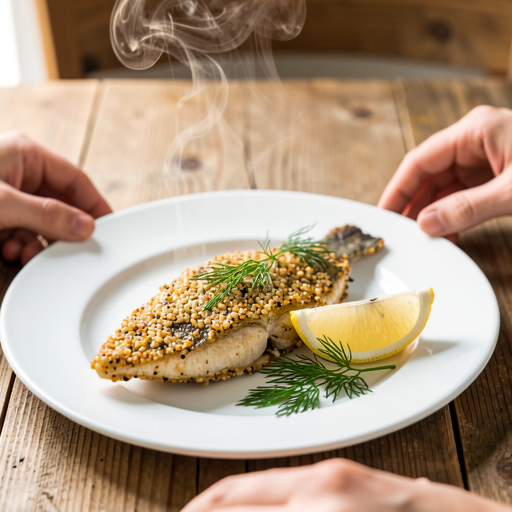
Delicate fillets of zander coated in a crispy, golden millet crust. The dish combines the lightness of the fish with the nutty note of millet — a Polish twist on the classic breading. Perfect as a spring lunch served with young potatoes or a salad of seasonal vegetables, drizzled with lemon and sprinkled with fresh dill. The millet crust adds texture and a more intense flavor than traditional breadcrumbs; it is also an interesting option for those looking for an alternative to wheat breading.

Ingredients Used

Ingredients (11)

Servings:
4
  • Zander fillet 600 g
  • Millet 120 g
  • Chicken egg 2 szt. (~120 g)
  • Wheat flour 60 g
  • Rapeseed oil 60 g
  • Butter 20 g
  • 🌿 Przyprawy
  • Salt 0.1 szczypt (~4 g)
  • Black pepper 4 szczypty (~2 g)
  • Sweet paprika 2 g
  • ✨ Opcjonalne
  • Lemon 0.6 szt. (~50 g)
  • Dill 0.8 pęczek (~15 g)
💰 Szacowany koszt dania: ~6.21 PLN (1.55 PLN/porcję)
* Brak cen dla niektórych składników

💡 Kliknij na składnik aby oznaczyć jako użyty

Preparation steps

Preparing the groats

1

Prepare the millet: pour 120 g of millet into a fine sieve and rinse under cold running water until the water runs clear (usually 1-2 minutes) — this removes the bitterness. Transfer the millet to a small pot, add 240 ml of water (ratio 1:2), and add 1 g of salt. Bring to a boil over high heat, then reduce the heat to the lowest setting and cook covered for 10-12 minutes, until the water is absorbed. After removing from heat, let it sit covered for 5 minutes.

Ingredients: Millet, Salt
Use a small pot with a fitting lid. Check the cooking time from the moment you reduce the heat; the grains are ready when they are soft and the water is absorbed. Do not stir too vigorously to avoid making a mush.
2

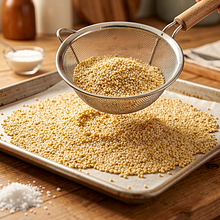
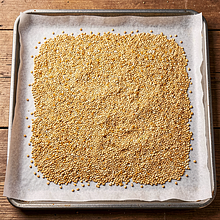
Spread the drained grains in a thin layer on a large baking sheet/parchment paper. Place in the preheated oven at 180°C (without convection) for 8-10 minutes to gently dry and lightly brown the grains — stir with a wooden spatula after 4-5 minutes to ensure even drying. Once removed, set aside to cool.

Ingredients: Millet
Use a baking tray and parchment paper; the toasted groats should be dry but not burnt. If you don't have an oven, you can toast the groats in a dry pan for 6-8 minutes over medium heat.

Preparing the breading

3

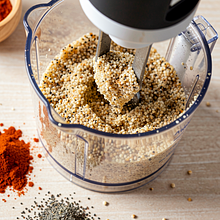
Transfer the cooled, dry groats to a food processor or blender. Pulse 10–15 times for 1 second until you achieve a coarse texture resembling coarsely ground breadcrumbs — do not grind to a powder. Transfer the groats to a wide, flat bowl and add 2 g of sweet paprika and 2 g of black pepper. Mix with a fork.

Ingredients: Millet, sweet paprika, Black pepper
Use a food processor with a pulse function; short pulses give the best, crunchy texture. The goal is to achieve visible small pieces of the grain that will crunch when fried.

Breading and preparing the fish

4

Prepare your breading station: on three plates/containers, prepare flour (60 g), beaten egg (120 g) with the addition of 1 g of salt and 1 g of pepper, and a bowl with prepared breadcrumbs made from groats. Pat the pikeperch fillets dry with a paper towel, check for and remove any bones with tweezers if necessary. Cut the fillets into portions of equal thickness, 2–3 cm (this helps with even frying). Salt both sides (distribute the remaining 2 g of salt evenly).

Ingredients: Wheat flour, Salt, Black pepper, zander fillet
Use tweezers for bones and a cutting board. Thoroughly drying the fillet is crucial — a wet surface prevents the coating from sticking.
5

Bread the fillets: dust each piece with flour on both sides, shake off the excess, dip in beaten egg (cover the entire meat), and then press firmly into the millet mixture so that the coating adheres well. Set aside on a plate and let it rest for 5 minutes — the coating will slightly set on the surface and will hold better during frying.

Ingredients: Wheat flour, Millet, zander fillet
Use kitchen gloves or two spoons to avoid tearing the coating. Pressing with your hand is effective — gently press down, but do not squeeze too hard.

Frying

6

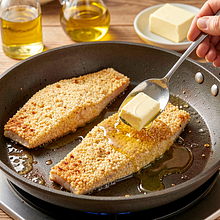
Heat a large skillet (preferably 26–28 cm) over medium-high heat for 2–3 minutes. Pour in the canola oil (60 g) to cover the bottom of the skillet in a thin layer. When the oil starts to shimmer gently (not smoke), place the fillets skin-side down or the side where the skin was if it has been removed. Fry for 3–4 minutes without moving, until the coating turns golden. Flip and fry the other side for 3–4 minutes. In the last minute, add the butter (20 g) to the skillet and spoon the melting butter over the fillets to enhance their color and flavor.

Ingredients: Rapeseed oil, Butter, zander fillet
Use a non-stick or cast iron skillet. Check readiness by gently pressing with a fork: the meat should be firm, not raw; the center should be opaque and gently flake apart. The oil temperature should be moderate — too hot oil will burn the coating before the fish is cooked.

Resting and Serving

7

Transfer the fried fillets to a rack or a plate lined with paper towels and let them rest for 2 minutes — this will allow the coating to 'set' and the juices to distribute evenly in the meat. Cut the lemon (if using) into wedges, chop the dill. Serve the pike perch drizzled with a bit of lemon juice and sprinkled with dill.

Ingredients: Lemon, Dill, zander fillet
Use a baking rack if you have one — it will prevent the bottom of the coating from getting soggy. Additionally, you can add a slice of butter on each fillet for a glossy glaze.

Serving

8

Serve the fillets immediately after a short rest. Suggested sides: young potatoes with dill, a light salad with radishes and cucumber, or blanched asparagus in season. Place the fillet in the center of the plate, drizzle with lemon, and sprinkle with dill.

Ingredients: zander fillet, Lemon, Dill
Serve immediately — the coating loses its crispness after sitting for a while. If you are preparing portions in advance, fry the fillets just before serving.

Fun Fact

💡

Millet is one of the oldest grains in Europe; in Polish cuisine, it has been a traditional ingredient in farm dishes. Using it as a coating is a modern reference to local ingredients.

Best for

Tips

🍽️ Serving

Serve the pikeperch hot with a sour element (lemon, pickled cucumber) and a delicate, creamy addition (e.g. sour cream with dill) for contrast. Crispy breading pairs well with young potatoes sprinkled with dill or a light salad of arugula and cucumber.

🥡 Storage

Best consumed immediately. If there are leftovers, store in the refrigerator for up to 24 hours in an airtight container; before serving, reheat in a pan for 2-3 minutes over medium heat to restore some crispiness to the coating. Freezing fried fillets is not recommended.

📸 Ugotowane przez społeczność

Zaloguj się, aby dodać zdjęcie
Dodaj zdjęcie gotowej potrawy

Po zatwierdzeniu przez moderatora otrzymasz 10 punktów doświadczenia.

🍲

Nikt jeszcze nie dodał zdjęcia. Bądź pierwszy!

Comments (0)

Be the first to comment on this recipe!

Add a comment

You might also like

Recipe Categories

Main Dishes
Main Dishes in: Christmas Eve Dinner

Main courses are the heart of every meal - hearty, delicious, and full of nutrients. Meats: beef, pork, poultry, and lamb in various versions. Fish and seafood: baked, fried, grilled, and stewed. Vegetarian dishes: tofu, tempeh, legumes as the main protein. Casseroles: pasta, potato, vegetable wi...

See all recipes in this category

Traditional recipes from various regions of Poland that showcase the richness of local flavors and ingredients.

See all recipes in this category
Reklama