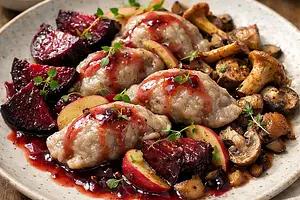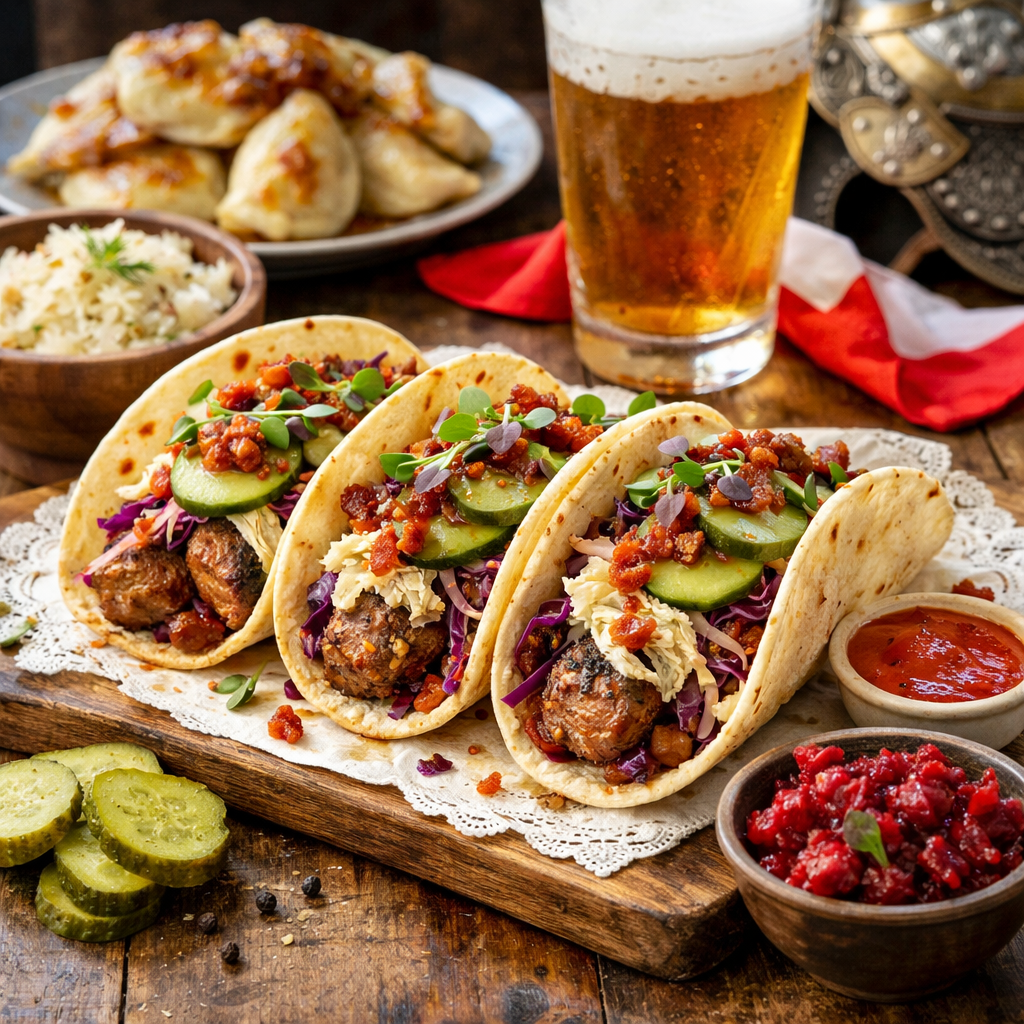
Turtle tacos are a fun, winter interpretation of tacos using Polish ingredients: juicy pork seasoned with marjoram and sweet paprika, crunchy sauerkraut with apple, and a creamy sauce made from roasted beetroot and sour cream. The dish combines textures (meat, creamy sauce, sweet-sour salad) and color contrasts (pink beet sauce, golden meat, white cabbage with green apple) — it looks impressive on the plate and warms you on cold days. Serve with homemade wheat flatbreads as "tortillas," and you can also add toasted buckwheat for crunch. This dish is perfect for a family lunch or an informal gathering with friends; easy to modify (swap pork for duck or increase the roasted beetroot for a vegetarian version), seasonal accents (sauerkraut, beetroot) emphasize its Polish character.
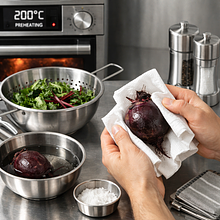
Preheat the oven to 200°C. Wash the beetroot, remove the leaves (if any), and dry it with a paper towel. Wrap the beetroot tightly in aluminum foil (single layer) and place it on a baking sheet or in a baking dish. Bake for 30–35 minutes in the middle of the oven. Check with a fork: the beetroot is ready when a knife goes in easily without resistance.
Use a small baking pot or tray. If the beets are very small, you can shorten the time to 25 minutes; if large — extend it to 40 minutes. Gloves are useful for peeling (they stain your hands).
5
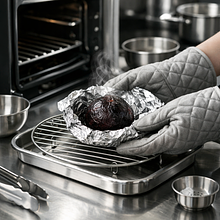
When the beet is roasted, take it out of the oven and let it rest for 5 minutes until it cools down. Remove the foil, carefully peel the beet with a knife (the skin comes off easily after roasting) or rub it with a towel. Cut it into smaller pieces and place them in a blender or in a bowl if you will be mashing with a fork. Add 120 g sour cream (the remaining part), 1 small clove of garlic (chopped), and 1/2 teaspoon of salt (about 2 g). Blend until smooth and creamy (about 30–60 seconds) — if the mixture is too thick, add 1–2 tablespoons of water. Taste and season with pepper. The sauce should be velvety and distinctly pink.
If you don't have a blender, mash the beetroot with a potato masher and mix vigorously with the cream until you achieve a smooth emulsion. The sauce is key for the visual effect of the dish.
Wheat pancakes
2
In a large bowl, sift the wheat flour and baking powder. Add 1/2 teaspoon of salt (about 3 g from the total amount of salt). Make a well in the center of the flour. Pour in warm water (about 25–30°C) and 1 tablespoon of rapeseed oil (15 g). Using a wooden spoon or your hands, quickly combine the ingredients until a loose dough forms. Then, transfer the dough to a lightly floured surface and knead for 3–4 minutes until smooth and elastic. Shape into a ball, cover the bowl with a cloth, and let it rest for 10 minutes — the dough relaxes and is easier to roll out.
Use a wooden spoon and a silicone pastry mat if you have one. If you don't have a mixer, knead by hand; if you have a stand mixer, use the dough hook for 2–3 minutes. The dough should not be sticky to the hands — if it is, sprinkle with 1 tablespoon of flour.
6
Divide the rested dough into 8 equal parts (about 55–60 g each). Shape each part into a ball, flatten it with your hand, and then roll it out into a thin round (about 2–3 mm) on a lightly floured surface. Heat a large dry skillet (preferably non-stick) over medium-high heat. Place the round on the hot skillet and cook for 1.5–2 minutes until bubbles form and brown spots appear, flip and cook for another 1–2 minutes. Transfer the cooked rounds to a plate and cover with a clean cloth to keep them from hardening.
Use a rolling pin and lightly dust with flour to prevent the dough from sticking. The pan should be very hot — if the dough browns too early, the heat is too high. Keep covered with a cloth; the dough will soften and become flexible.
Meat and marinade
3
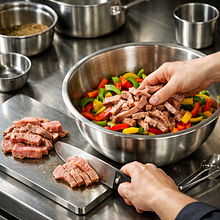
Cut the pork into thin strips (about 0.5–1 cm thick). In a large bowl, mix the meat with sweet paprika (6 g), 1 teaspoon of marjoram (2 g), 1/2 teaspoon of salt (about 3 g), and freshly ground black pepper (1 pinch). Heat a wide frying pan (preferably 26–28 cm) over medium-high heat, pour in 2 tablespoons of rapeseed oil (30 g). When the oil is hot (slight smoke and slightly shimmering), fry the meat in batches, not overcrowding the pan — fry for 4–5 minutes on one side until browned, turn and fry for another 3–4 minutes until the strips are well browned and tender. At the end, add 1 clove of finely chopped garlic and the remaining marjoram, fry for 30 seconds until the garlic releases its aroma, but do not burn it.
Use a wide steel or cast iron skillet for the best browned surface. Fry in batches if necessary, so the meat fries rather than stews. The meat is ready when there is no pink in the center and the juices run clear.
Sauerkraut Slaw
4
Sauerkraut: if it is very sour and watery, spread it on a sieve and squeeze out the excess liquid with your hands (don't throw away the juice — you can add 1 tablespoon to the sauce if you need acidity). Chop the cabbage finer if the strips are long. Wash the apple, cut it into quarters, remove the core, and slice it into thin sticks (julienne) or grate it on a coarse grater. In a bowl, combine the squeezed cabbage, apple, and 2 tablespoons of sour cream (about 30 g) — mix gently with a fork. Season with a pinch of salt and pepper to taste (remember that the cabbage is already salty). Set the salad aside — the flavors will meld while you finish the rest.
Use a grater with large holes for the apple if you want a finer consistency. If the cabbage is too sour, add another tablespoon of sour cream. The salad should be juicy, but not watery.
Assembly and serving
7
Spread 1–2 tablespoons of beet sauce on each wheat pancake. Place a portion of pork (about 200 g for 2 pancakes, evenly divided) on the sauce, then add 2–3 tablespoons of slaw sauerkraut. If you are using roasted buckwheat (optional), sprinkle 1–2 tablespoons on top for crunch. Fold the pancake in half or roll it like a taco and serve immediately while the pancakes are warm and the meat is juicy.
Use a large serving plate and a cloth to wrap the pancakes before serving to keep them soft. Additionally, you can serve slices of fresh cucumber or sprouts as a fresh contrast.
Final tips
8
Check the taste: if necessary, season the salad with salt or add more beetroot sauce. Serve immediately, as the pancakes and meat taste best warm. If you have prepared excess ingredients, refer to the storage tips.
To heat the pancakes, use a dry skillet or an oven at 120°C for a few minutes. Do not use a microwave — the pancakes become rubbery.
Fun Fact
💡
Sauerkraut is a traditional winter ingredient in Polish cuisine — it has been stored for centuries as a source of vitamin C. The combination of sauerkraut with meat appears in many regional dishes, which is why it naturally fits into this Polish-fusion version of tacos.
Serve the tacos warm on a wooden board. A slightly sour wheat beer or dried fruit compote pairs well with this. For children, serve the meat chopped finer and less seasoned.
🥡Storage
Store the meat, beet sauce, and sauerkraut separately in airtight containers in the refrigerator for up to 2 days. Keep the pancakes in a container lined with parchment paper. To reheat: meat and sauce in a pan over low heat, pancakes in a dry pan or in the oven at 120°C for 5–7 minutes.
Fusion cuisine is a bold combination of culinary traditions from different corners of the world. Asian-European pairings, Mexican-Japanese experiments, and Mediterranean-Asian fusions. Sushi burritos, ramen burgers, kimchi pierogi, and curry pizza - the boundaries of flavor do not exist. Our reci...
Comments (0)
Be the first to comment on this recipe!
Add a comment