Prepare all the ingredients before cooking: rinse the spinach under cold water and dry it in a salad spinner or on a towel. Chop the onion into small cubes (about 5 mm). Peel the garlic cloves and finely chop them or press them through a garlic press. Open the ricotta and drain any excess whey with a spoon or through a sieve for 5–10 minutes if it is very watery.
Description
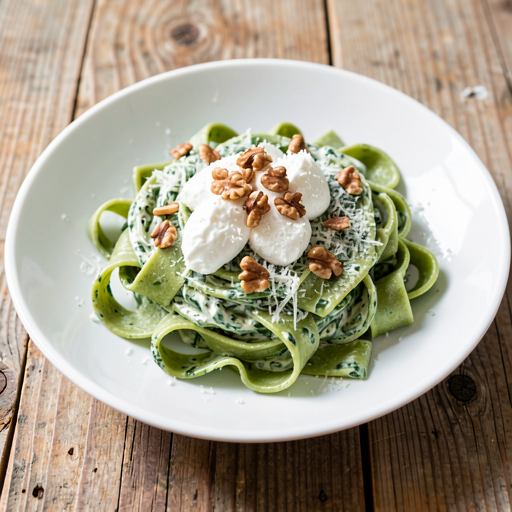
Delicate tagliatelle in a creamy sauce made with fresh spinach and ricotta — a modern version of a simple spring dish that combines Italian technique with Polish ingredients. The dish has a velvety, light green color, a mild, slightly tangy note from the ricotta and lemon, and a distinct aroma of sautéed onion and garlic. It works well as a light lunch or dinner; it can be served with toasted walnuts and grated parmesan for texture and umami. It presents beautifully on a flat plate — the pasta arranged in a nest, topped with a dollop of ricotta and young spinach leaves.
Ingredients Used
Ingredients (13)
- Tagliatelle pasta 320 g
- Spinach 400 g
- Ricotta 250 g
- Onion 1 szt. (~150 g)
- Garlic 2 ząbki (~10 g)
- 18% cream 100 ml
- Rapeseed oil 30 g
- Butter 20 g
- 🌿 Przyprawy
- Salt 0.1 szczypt (~3 g)
- Black pepper 4 szczypty (~2 g)
- ✨ Opcjonalne
- Parmesan 30 g
- Walnuts 30 g
- Lemon juice 15 ml
💡 Kliknij na składnik aby oznaczyć jako użyty
Preparation steps
Preparation of ingredients
Cooking pasta
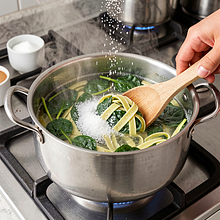
In a large pot, bring at least 3 liters of water to a boil. Salt the water to taste — about 10 g of salt per liter (a total of about 30 g) gives well-seasoned pasta. Add the tagliatelle and cook according to the package instructions, usually 7–9 minutes, starting from the moment you add it. Cook until al dente — the pasta should be soft with a slight bite.
Sauce
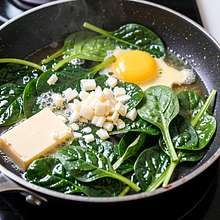
In a large wide skillet, heat canola oil over medium heat. Add the chopped onion and sauté for 4–5 minutes, stirring with a wooden spoon, until the onion becomes translucent and lightly golden. Add the butter and let it melt.
Add the chopped garlic and sauté for 30–45 seconds, just until fragrant — the garlic should be aromatic, not burnt. Then add the fresh spinach in batches: add the first batch and stir for 30 seconds until wilted, only then add the next. Once all the spinach has wilted and reduced in volume (about 3–4 minutes), lower the heat.
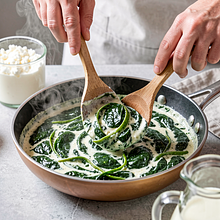
Add 18% cream to the pan with spinach and mix, heating for 1–2 minutes until the cream slightly thickens. Remove the pan from the heat and add the ricotta. Using a wooden spoon or spatula, vigorously mix the ricotta with the hot cream and spinach to create a creamy sauce. If the sauce is too thick, add 50–100 ml of reserved pasta cooking water, a little at a time, until you achieve the desired consistency.
Assembly and seasoning
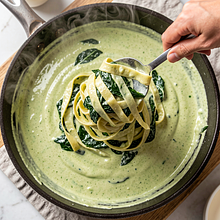
Add the drained pasta directly to the pan with the sauce (if the pan is too small, use a large bowl). Turn on low heat and vigorously mix the pasta with the sauce for 1–2 minutes to ensure each strand of pasta is coated. If the sauce seems dry, add the remaining cooking water 1 tablespoon (15 ml) at a time until you achieve a smooth consistency.
Taste the sauce and season with salt and freshly ground pepper to taste. If you are using lemon juice (optional), add 1–2 teaspoons (5–15 ml) and mix — the lemon will enhance the flavor of the ricotta and refresh the dish.
Serving and decoration
Portion the pasta onto plates: form nests using tongs. On top, add a few tablespoons of fresh ricotta, optionally sprinkle with grated Parmesan and finely chopped, toasted walnuts. Serve immediately; the dish tastes best hot, with a light sheen of oil on the surface.
Fun Fact
Historically, ricotta was made as a 'second milking' cheese in Italy — from the whey left over from the production of other cheeses. The combination with spinach is a classic Italian theme, here interpreted in a Polish, spring version.
Best for
Tips
Serve immediately after preparation. For a heartier option, add sautéed chicken breast sliced or pieces of roasted pumpkin in the fall. Instead of parmesan, you can sprinkle mature yellow cheese for a Polish touch.
Store in an airtight container in the refrigerator for up to 48 hours. When reheating, add 1–2 tablespoons of cooking water or cream and heat over low heat to prevent the sauce from separating. Freezing creamy sauces based on cream and ricotta is not recommended.
📸 Ugotowane przez społeczność
Zaloguj się, aby dodać zdjęcieDodaj zdjęcie gotowej potrawy
Po zatwierdzeniu przez moderatora otrzymasz 10 punktów doświadczenia.
Nikt jeszcze nie dodał zdjęcia. Bądź pierwszy!
Comments (0)
Be the first to comment on this recipe!
Add a comment