Vegetable Burek with Buckwheat and Sauerkraut (vegetarian)

Pikantne Vegetarian Dishes Main dishes Fusion cuisine 90 min Medium 42 wyświetleń ~14.81 PLN * - (0)
Rate:
(0)
Start Cooking

Description

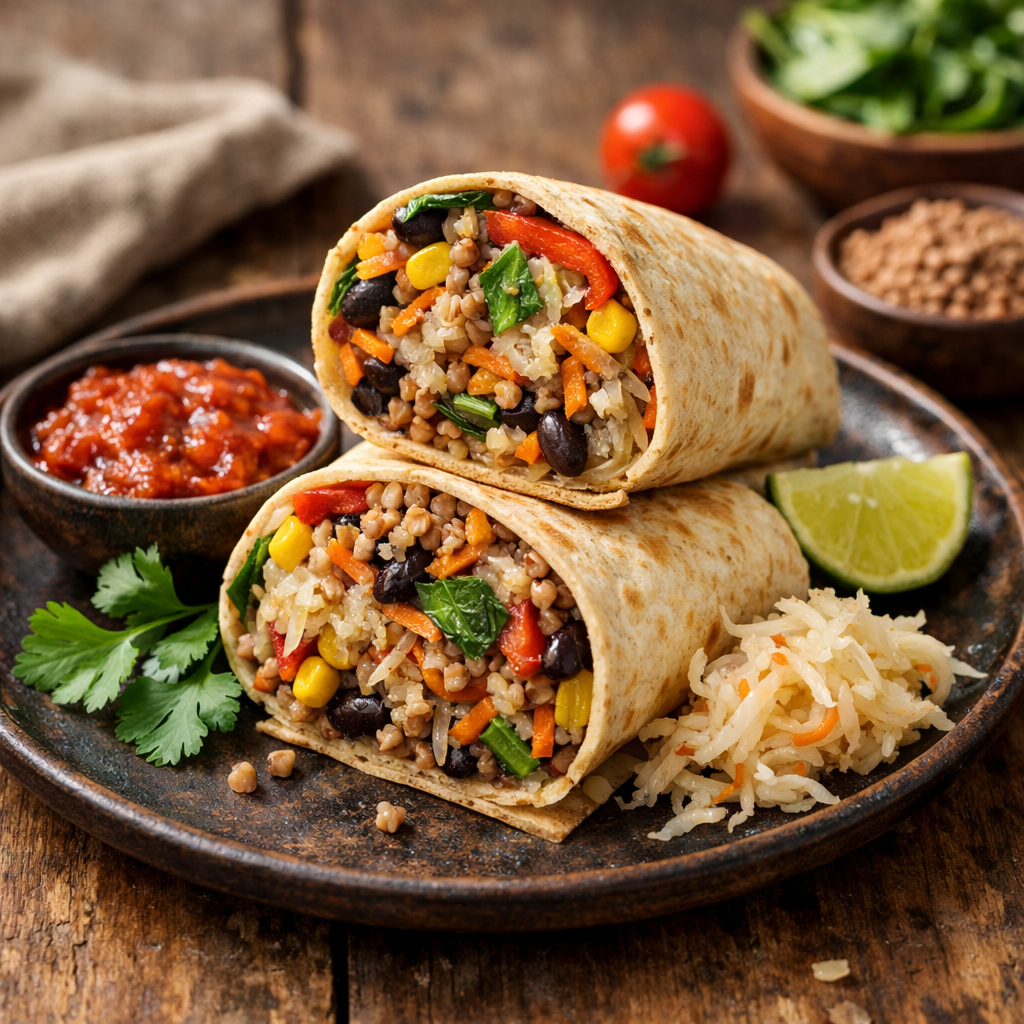
Vegetable burrito is an original winter reinterpretation of the Mexican burrito, composed of Polish, seasonal ingredients: roasted beets and roots, aromatic buckwheat groats, and slightly sour sauerkraut. The dish combines the sweetness of roasted vegetables with the tartness of the cabbage and creamy sour cream, while homemade, thin tortillas made from wheat and whole grain flour give it a rustic character. This hearty main dish is perfect for a family dinner in winter — it pairs wonderfully with fresh parsley, cottage cheese for a milder taste, or roasted sunflower seeds for crunch. The bold, contrasting flavors and beautiful colors (deep red beet, golden root, green parsley) make the dish as visually appealing as it is filling.

Ingredients Used

Ingredients (21)

Servings:
4
  • Wheat flour 400 g
  • Whole grain flour 100 g
  • Rapeseed oil 90 g
  • Baking powder 8 g
  • Buckwheat groats (dry) 200 g
  • Carrot 2.5 szt. (~200 g)
  • Parsley root 1.5 szt. (~150 g)
  • Onion 1 szt. (~150 g)
  • Garlic 3 ząbki (~15 g)
  • Sauerkraut 200 g
  • 18% cream 200 ml
  • Lemon juice 30 ml
  • Cumin 4 g
  • Water 300 ml
  • Beets (raw) 400 g
  • 🌿 Przyprawy
  • Salt 20 g
  • Black pepper 4 szczypty (~2 g)
  • Dried marjoram 1 łyżeczka (~2 g)
  • Parsley 0.7 pęczek (~20 g)
  • ✨ Opcjonalne
  • Cottage cheese (optional) 100 g
  • Roasted hulled sunflower seeds (optional) 50 g
💰 Szacowany koszt dania: ~14.81 PLN (3.70 PLN/porcję)
* Brak cen dla niektórych składników

💡 Kliknij na składnik aby oznaczyć jako użyty

Preparation steps

Tortilla

1

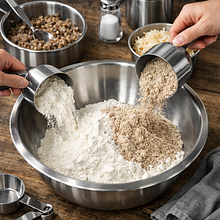
Prepare the tortilla dough: in a large bowl, combine all-purpose flour (400 g) and whole wheat flour (100 g). Add baking powder (8 g) and salt (measure 10 g from the total salt). Mix the dry ingredients with a wooden spoon until uniform. Make a well in the center and pour in warm water (300 ml) and canola oil (60 g). Mix with a fork or by hand only the center until the ingredients come together, then transfer the dough to a lightly floured surface and knead for about 5-7 minutes until smooth, elastic, and no longer sticky to the hands.

Use a large bowl and a wooden spoon or a mixer with a dough hook. If the dough is too dry, add 1 tablespoon (about 15 ml) of water at a time; if it's too sticky, sprinkle a little flour. Do not knead for too long (over 10 min) — the tortillas should be flexible, not hard.
2

Set the dough aside for 20-30 minutes covered with a cloth to allow the gluten to relax — this will make it easier to roll out the tortillas. After resting, divide the dough into 8 equal parts (for 4 servings of 2 tortillas each). Shape each piece into a ball, flatten it with your hand, and then roll it out into a round flatbread about 22-24 cm in diameter on a lightly floured surface.

Use a rolling pin and lightly dust with flour to prevent the dough from sticking. If you don't have time for resting, you can still roll out the dough, but the dough may shrink.
3

Fry the tortillas in a dry, well-heated non-stick or cast iron skillet (24-28 cm in diameter) for about 30-45 seconds on each side, until darker spots and slight bubbles appear. After frying, stack them on top of each other in a clean cloth to keep them flexible.

The best pan is one with a flat bottom. Do not use fat for frying the tortillas. If the edges darken too quickly, lower the heat — the tortillas should only be lightly browned.

Filling - groats

4

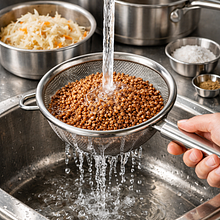
Prepare the buckwheat: rinse the buckwheat (200 g) thoroughly under cold water in a sieve to remove impurities. In a medium pot, bring water to a boil (water for the buckwheat 500 ml), add 1/3 teaspoon of salt (about 4 g from the salt pool). Add the buckwheat, reduce the heat to low, and cook covered for 15-18 minutes, until the buckwheat absorbs the water. After cooking, remove from heat and let it sit covered for 5 minutes, then fluff with a fork.

Use a pot with a tight-fitting lid. The groats are ready when they have a delicate, fluffy texture and there are no hard grains; if the water hasn't been absorbed, simmer it for a moment without the lid.

Filling - roasted vegetables

5

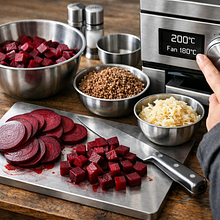
Preheat the oven to 200°C (fan 180°C). Peel the beets (400 g) and cut them into thin slices or cubes (~1–1.5 cm). Peel the carrot (200 g) and cut it into sticks, and peel the parsley root (150 g) and cut it similarly. In a bowl, mix the vegetables with 30 g of rapeseed oil, 2 g of cumin (some cumin will be used later), and a light pinch of salt (about 4 g). Spread the vegetables on a baking sheet lined with parchment paper in a single layer and bake for 30-35 minutes, until they are tender when pierced and slightly caramelized at the edges.

Use a large baking tray, do not overcrowd — the vegetables should roast, not steam, to achieve caramelization. Check for tenderness with a fork: they should be easily pierced but not falling apart.

Filling - sautéing

6

In a large skillet, heat 30 g of canola oil. Slice the onion (150 g) into wedges and sauté over medium heat for 4-6 minutes, until it softens and becomes translucent. Add finely chopped garlic (15 g) and sauté for 30-45 seconds, until fragrant. Add the drained sauerkraut (200 g) and sauté together for 5-7 minutes, until the flavors meld. Season with black pepper (2 g), marjoram (2 g), and the remaining cumin (the other 2 g).

Use a pan with a diameter of 26-28 cm; fry over medium heat, stirring occasionally to prevent burning. If the cabbage is very sour, you can rinse it lightly with water and drain it again.

Filling - combining ingredients

7

When the roasted vegetables are ready and the buckwheat and sautéed cabbage are done, combine everything: add the roasted beets and roots to the pan with the cabbage, then add the cooked buckwheat (the whole amount). Gently mix with a wooden or silicone spatula to evenly combine the ingredients. Taste and season with additional salt from the pool (use the remaining salt if needed). The filling should be aromatic, with a contrast of sweet roasted vegetables and tangy cabbage.

Gently mix to avoid crushing the roasted beets. If the filling is too dry, add 1-2 tablespoons of cream to bind it.

Sauce

8

Prepare a simple sauce: in a bowl, mix sour cream (200 g) with lemon juice (30 ml), add finely chopped parsley (15 g), a pinch of salt (about 1-2 g), and a little pepper (1 g). Whisk with a spoon until smooth. The sauce should be slightly tangy and creamy — it will balance the sweetness of the beets and the acidity of the cabbage.

Use a small bowl and a whisk or fork. If you prefer a vegan version, substitute the cream with soy Greek yogurt.

Assembly and serving

9

Heat the tortilla for 10–15 seconds in a dry pan to make it more pliable. Spread 2–3 tablespoons of the vegetable-grain filling in the center of the tortilla, add 1 tablespoon of sour cream sauce, optionally crumble some cottage cheese (100 g per serving to taste) and sprinkle with toasted sunflower seeds (about 12 g per serving). Fold the bottom of the tortilla over the filling, then fold the sides in and roll it up in a way that allows for holding — creating a compact "burrito." Serve immediately, garnished with fresh parsley (the remaining chopped parsley).

If you plan to transport the dish, wrap the burrito in parchment paper and aluminum foil. For a nice presentation, cut the burrito in half diagonally and serve with extra sauce on the side.

Final tips

10

Check the seasoning — the bureto should have a distinct flavor: the sweetness of the roasted vegetables, the acidity of the cabbage, and the creaminess of the sour cream. If you want to add some spiciness, serve pickled cucumbers or homemade chili pepper sauce on the side. Leftover filling can be stored and used for a salad or as a filling for pancakes.

Do not overfill the tortilla with the filling — 2-3 tablespoons of filling per tortilla is the right amount to roll the burrito without tearing it.

Fun Fact

💡

The combination of buckwheat and sauerkraut is a classic duo of Polish cuisine — here it replaces rice in a burrito and creates an interesting blend of culinary cultures: the Mexican wrap and the Polish winter pantry.

Best for

Tips

🍽️ Serving

Serve the burrito hot, cut in half diagonally for an impressive cross-section view. An additional sour cream or yogurt sauce on the side will make the dish juicier. You can add pickled cucumbers or marinated peppers to the plate for a spicy contrast.

🥡 Storage

Store tortillas and filling separately in the refrigerator for up to 48 hours in an airtight container. The filling can be heated in a pan over medium heat for 5-7 minutes, and the tortillas should be warmed in a dry pan for 20-30 seconds on each side before serving. Avoid storing wrapped burritos in foil for a long time, as the tortillas may become soggy.

📸 Ugotowane przez społeczność

Zaloguj się, aby dodać zdjęcie
Dodaj zdjęcie gotowej potrawy

Po zatwierdzeniu przez moderatora otrzymasz 10 punktów doświadczenia.

🍲

Nikt jeszcze nie dodał zdjęcia. Bądź pierwszy!

Comments (0)

Be the first to comment on this recipe!

Add a comment

You might also like

Recipe Categories

Vegetarian cuisine is a wealth of flavors without meat - healthy, colorful, and filling. Plant-based proteins: lentils, chickpeas, beans, peas, and soy take center stage. Cheeses and dairy: feta, halloumi, ricotta, and mascarpone in main dishes. Eggs in various forms: omelets, frittata, shakshuka...

See all recipes in this category
Main dishes
Main dishes in: New Year's Eve

Main dishes for New Year's Eve should be hearty and impressive to satisfy the palates of all guests.

See all recipes in this category

Fusion cuisine is a bold combination of culinary traditions from different corners of the world. Asian-European pairings, Mexican-Japanese experiments, and Mediterranean-Asian fusions. Sushi burritos, ramen burgers, kimchi pierogi, and curry pizza - the boundaries of flavor do not exist. Our reci...

See all recipes in this category
Reklama