Prepare your workspace: a large bowl, a pastry board or clean kitchen countertop, a rolling pin, a lemon grater, a kitchen scale, plastic wrap, and a liquid measuring cup. Measure all the ingredients according to the list (sifted flour). Make sure the cream is at room temperature and the eggs are not straight from the fridge (they will combine more easily with the dough).
Description
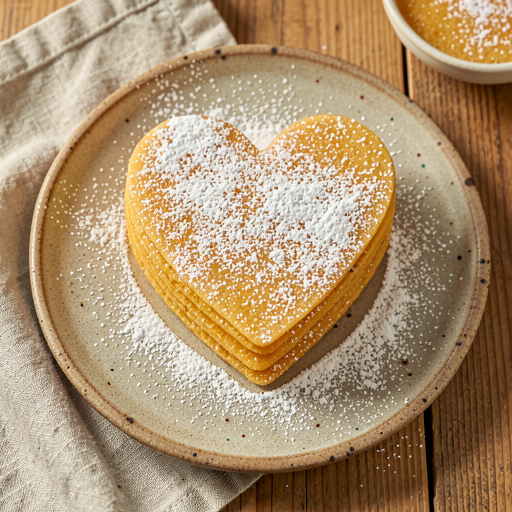
Heart-shaped faworki are a modern yet traditional variation of classic angel wings known in Polish cuisine. Delicate, thinly rolled strips of dough fried in clear rapeseed oil become crispy and fluffy, while the heart shape gives them a romantic character — perfect for Carnival, Fat Thursday, or as a dessert for Valentine's Day. The recipe uses cream and a bit of vodka, which prevents the dough from absorbing too much fat during frying, making it exceptionally crispy. We serve the finished faworki generously dusted with powdered sugar, with optional lemon zest for a fresh note and vanilla sugar for a deeper aroma. The recipe includes detailed step-by-step instructions for beginners: how to knead the dough, how to roll it out into appropriately thin sheets, how to cut out hearts without special molds, and how to control the oil temperature during frying.
Ingredients Used
Ingredients (10)
- Wheat flour 500 g
- Chicken egg 3 szt. (~180 g)
- Sour cream 120 g
- Vodka 30 ml
- Sugar 20 g
- Rapeseed oil 1200 g
- Powdered sugar 80 g
- 🌿 Przyprawy
- Salt 1 g
- ✨ Opcjonalne
- Lemon 1.3 szt. (~100 g)
- Vanilla sugar 8 g
💡 Kliknij na składnik aby oznaczyć jako użyty
Preparation steps
Cake
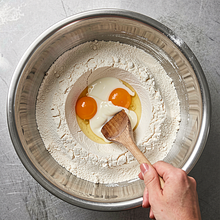
In a large bowl, sift the flour and make a well in the center to create a 'well'. Crack the eggs directly into the well, add the sugar and a pinch of salt. In a separate small bowl, mix the sour cream with the vodka and gradually pour this mixture into the flour. Start mixing with a fork or a stick from the center, first combining the ingredients in the middle, and then gradually incorporating the flour from the sides — do not mix too vigorously until the ingredients partially combine and form a rough mass.
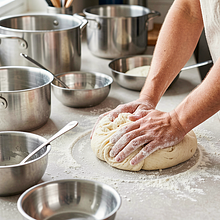
Transfer the thick dough onto a surface dusted with a thin layer of flour and knead with your hands for 6–8 minutes: press the dough with your palm, fold, and push until it becomes smooth, elastic, and stops sticking to your fingers. If the dough is very sticky, sprinkle a little flour (a tablespoon at a time) — do not add too much, as the dough will become tough. The consistency should be soft and springy.
Shape the dough into a ball, cover it with a cloth or plastic wrap, and let it rest for at least 20–30 minutes at room temperature. The resting period allows the gluten to relax, making the dough easier to roll out and preventing it from shrinking.
Rolling and Shaping
Divide the dough into 3 equal parts (this will make rolling easier). Take one part and keep the remaining parts covered. Lightly dust the countertop with flour and roll out the piece of dough as thin as possible — ideally 1–2 mm. Thinner dough will yield crispier faworki. Use a heart-shaped cutter with a diameter of about 6–8 cm to cut out hearts. If you don't have a cutter: use a glass with a round diameter of 6–7 cm to cut out circles, then lightly make an indentation at the top and taper it at the bottom with a knife to form the shape of a heart; pinch the edges with your fingers.
Frying
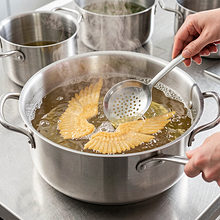
Prepare a large saucepan or deep skillet and pour in canola oil to a height of about 6–8 cm. Heat the oil to a temperature of about 170–180°C. If you don't have a thermometer, drop in a small piece of dough — it should gently sizzle and float to the surface, browning in 20–30 seconds. Fry the hearts in batches (3–4 at a time, do not overcrowd the pan) for about 40–60 seconds on one side and another 30–40 seconds on the other, until they are light golden and crispy. Gently turn them with tongs or a slotted spoon. Once fried, remove them to a plate lined with paper towels to drain excess fat.
Topping and finishing
When the angel wings have cooled slightly (but are still warm), sift powdered sugar over them through a fine sieve to create an even layer. If you are using vanilla sugar, you can mix it with the powdered sugar before sifting (a mixture of 3:1 powdered sugar to vanilla sugar). For added aroma, finely grate the zest of a lemon and gently sprinkle it over a few angel wings (optional). Layer the angel wings on a serving platter, lightly dusting each layer with sugar to achieve a snowy sprinkle effect.
Serving
Serve the angel wings in the shape of hearts on a large, flat plate or platter. For visual contrast, use light or navy blue ceramic. You can stack a few angel wings and tie them with a decorative ribbon if you are presenting them as a gift. Angel wings pair well with coffee with milk, tea, or a warming infusion of forest fruits in winter.
Fun Fact
Faworki (also known as chrust) have a long tradition in Poland and were popular as a sweet carnival snack since the old Polish times. The addition of alcohol to the dough is an old trick used by bakers to achieve lightness and crispness in baked goods.
Best for
Tips
Serve the angel wings immediately after dusting with powdered sugar. For serving, add a cup of strong coffee or tea with citrus. For dessert, serve alongside blackcurrant jam or slightly warmed apple puree for a sweet and sour contrast.
Store the angel wings in an airtight, dry container at room temperature for up to 24 hours — after that, they lose their crunchiness. To refresh slightly softened angel wings, place them in an oven preheated to 150°C for 2-3 minutes, making sure they do not burn. Do not store in the refrigerator (moisture will have a negative effect).
📸 Ugotowane przez społeczność
Zaloguj się, aby dodać zdjęcieDodaj zdjęcie gotowej potrawy
Po zatwierdzeniu przez moderatora otrzymasz 10 punktów doświadczenia.
Nikt jeszcze nie dodał zdjęcia. Bądź pierwszy!
Comments (0)
Be the first to comment on this recipe!
Add a comment