Prepare the ingredients: cut and remove the leaves of the rhubarb (the leaves are toxic, discard them) and trim the woody ends. Cut the rhubarb stalks into pieces about 2 cm long. Wash and dry the sorrel leaves, remove the thicker stems (cut the tender stalks along with the leaves). Measure out the water and the remaining ingredients.
Description
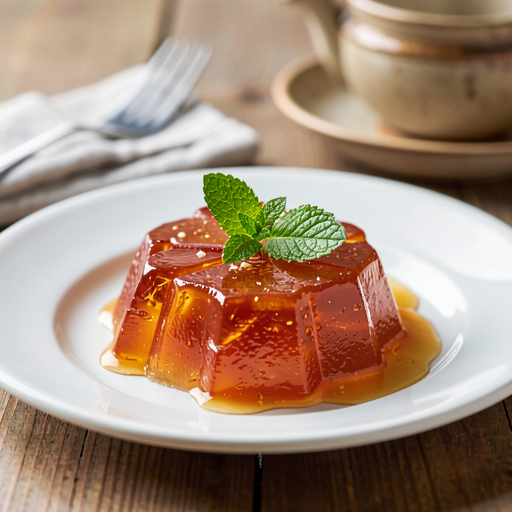
Delicate, slightly tangy jellies combining two very spring-like ingredients: rhubarb and sorrel, with the soothing sweetness of honey. The inspiration from Kashubian cuisine is evident in the simplicity, freshness, and respect for local products — the jellies are light, creamy in flavor, and have a beautiful pink-green color. Served as an accessible snack for children, they are perfect for spring picnics, family gatherings, or afternoon desserts. They can be served solo, with a dollop of natural yogurt, or decorated with small pieces of blanched green asparagus and fresh mint for the effect of a Kashubian "field garden." The jellies are also a good idea when you're looking for an alternative to traditional sweet treats — they contain less sugar, natural ingredients, and an interesting acidity balanced by honey.
Ingredients Used
Ingredients (10)
- Rhubarb 600 g
- Sorrel 80 g
- Honey 80 ml
- Sugar 50 g
- Agar-agar 6 g
- Water 800 ml
- Lemon juice 30 ml
- ✨ Opcjonalne
- Green asparagus 120 g
- Natural yogurt 200 g
- Mint 30 g
💡 Kliknij na składnik aby oznaczyć jako użyty
Preparation steps
Preparation of ingredients
Optional additions
If you are using asparagus: snap off the woody ends (they will break naturally at the breaking point). Cut into thin diagonal slices (about 1 cm). Prepare a bowl of ice-cold water to cool the asparagus after blanching.
Blanching asparagus: bring 500 ml of water to a boil in a small pot, add the chopped asparagus and cook for 1–2 minutes until they turn bright green and slightly tender. Immediately transfer to ice-cold water for 1 minute, drain, and dry on a paper towel.
Cooking the base
Place the chopped rhubarb, chopped sorrel, 800 ml of water, sugar, and 60 g of honey (leave the remaining 20 g for possible sweetening) into a large pot. Set over medium heat and bring to a gentle boil. Cook for 8–10 minutes, stirring every 1–2 minutes with a wooden spoon, until the rhubarb breaks down and releases its juice, and the mixture is soft.
Reduction and purée
When the rhubarb is soft, remove the saucepan from the heat. Strain the hot mixture through a fine sieve into a large bowl, pressing with a spoon to extract as much clear juice as possible. You can discard the remaining fibrous pieces or use them for compote. Measure the amount of liquid obtained — it should be about 750–850 ml; if it is more, pour some into a measuring cup.
Gelatinization
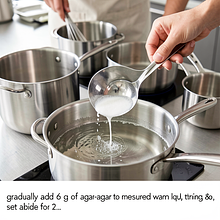
Pour the measured, warm (not boiling) liquid, evenly sprinkle in 6 g of agar-agar, stirring. Set aside for 2 minutes to allow the agar to "bloom." Then place the saucepan over low heat and bring to a boil, stirring constantly. Cook for 2 minutes from the moment it boils to ensure the agar is completely dissolved — stir evenly, collecting any foam from the surface.
Seasoning and texture test
Remove the saucepan from the heat. Add lemon juice (30 ml) and the remaining 20 g of honey, stir and taste — adjust with a bit more honey or sugar (5 g at a time) to achieve a milder flavor for children. To check if the agar has set, place 1 teaspoon of the hot mixture on a cold plate and put it in the fridge for 1–2 minutes — it should quickly firm up into a jelly-like consistency.
Assembly
If you prefer jellies with visual additions, arrange blanched asparagus (if using) at the bottom of the molds. Then carefully pour the cooled mixture (but still liquid) into the molds or silicone cupcake molds. Fill to about 1 cm below the edge. Leave to cool at room temperature for 20–30 minutes.
Cooling
Place the filled molds in the refrigerator for at least 1.5–2 hours, until the jellies are completely set. Agar will solidify at room temperature, but cooling will improve the texture and flavor.
Removing and serving
To remove the jelly from the mold: dip the bottom of the mold for 1–2 seconds in a bowl of warm (not hot) water, quickly turn it over and remove the jelly onto a plate. Serve with a teaspoon of natural yogurt and a mint leaf. For children, you can decorate with a small piece of fresh rhubarb or a slice of asparagus.
Suggestions for kids
Serve the jelly in fun molds (hearts, stars) or in small cups. You can make a mini school version: place a piece of cooked apple or sponge cake at the bottom of the cups, and then add the jelly. A small dollop of yogurt balances the acidity and makes the flavor more acceptable for little ones.
Fun Fact
In Kashubian cuisine, local plants and simple preserves were valued — rhubarb and sorrel were popular in spring as a source of tartness before citrus fruits became widely available. Combining them in a jelly is a modern twist on tradition.
Best for
Tips
Serve chilled, decorated with a dollop of natural yogurt and a mint leaf. For adults, you can drizzle a bit of sunflower honey and serve with thinly sliced, blanched asparagus. The jellies look great in transparent cups or colorful molds.
Store in the refrigerator covered with plastic wrap for 3–4 days. Do not freeze the jellies (agar changes structure after thawing). If the jellies have settled in the mold, cover them tightly to prevent them from absorbing refrigerator odors.
📸 Ugotowane przez społeczność
Zaloguj się, aby dodać zdjęcieDodaj zdjęcie gotowej potrawy
Po zatwierdzeniu przez moderatora otrzymasz 10 punktów doświadczenia.
Nikt jeszcze nie dodał zdjęcia. Bądź pierwszy!
Comments (0)
Be the first to comment on this recipe!
Add a comment